
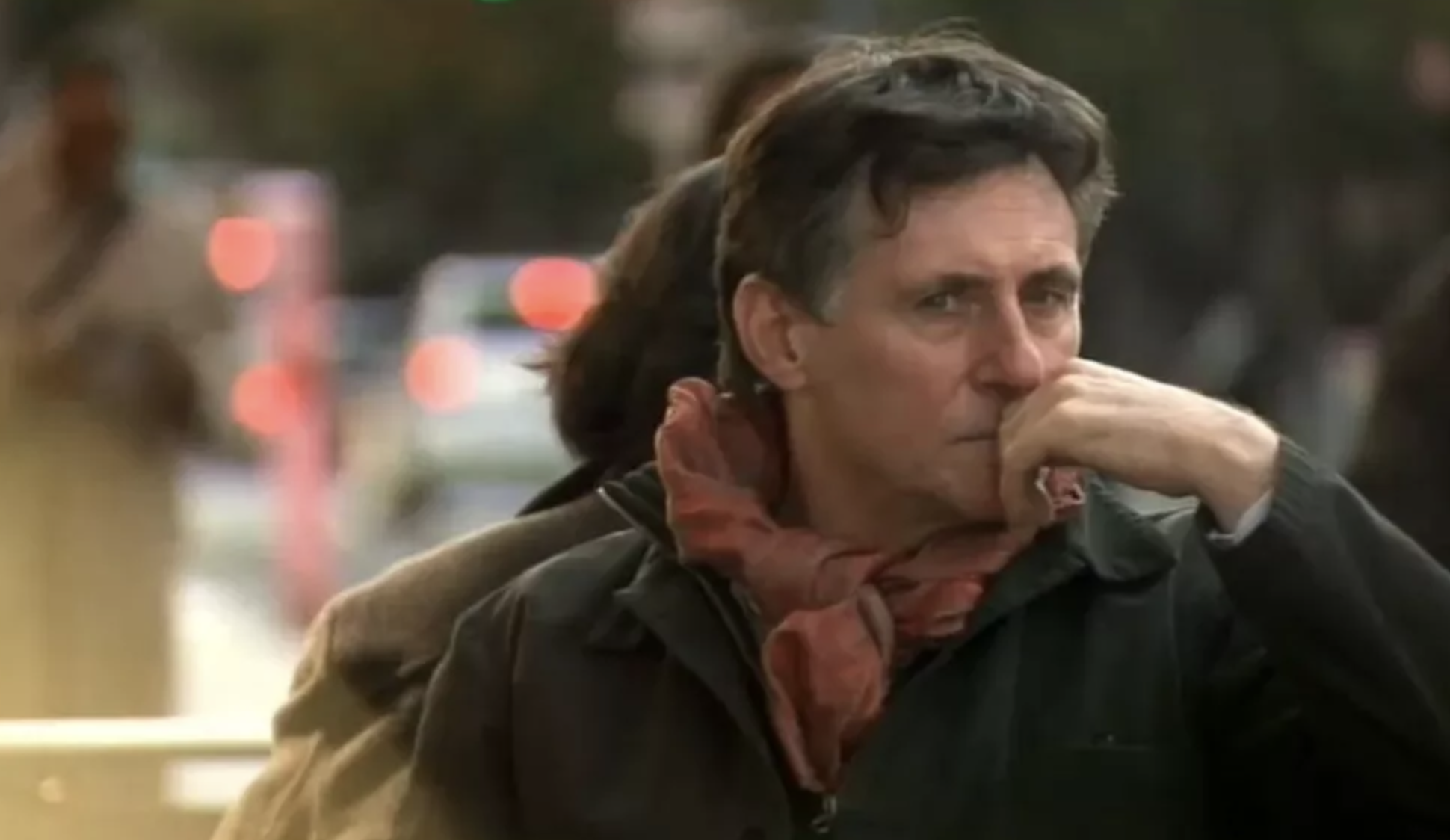
Vanessa Gildea asks Pat Collins, director of Gabriel Byrne – Stories from Home, which premiered at the 2008 Galway Film Fleadh, about his filmmaking background and his approach to documentary making.
Vanessa Gildea: So how did you get started in filmmaking?
Pat Collins: I didn’t make my first film until I was thirty, so I was a slow starter. First step, I think, was a film foundation course in Galway Film Centre in my early twenties and then I went from that to training to be an editor with Arthur Keating for a few months in Dublin. Then I left Dublin to return to Galway, wound up editing Film West and eventually making my first documentary, which was the one on Michael Hartnett. But it took years to get to that point where I felt that I could do something.
What draws you to a particular subject?
I don’t go looking for subject matter really. It’s what I read or come across. I don’t really differentiate between what I read and watch and experience and the work I do. It all feeds into it. Sometimes there are ideas that are with me for years and then other ones I do simply because I’m asked to. But I never work on something that I’m not very interested in. To make a documentary just for money wouldn’t work out well for anyone concerned. I would prefer to do almost any other job than trying to manufacture enthusiasm to make a film.
Would it be fair to say that in your work there is a certain fascination with the past, old traditions, a dying way of life?
Well, probably at this stage I am somewhat aware of that strain in the programmes I’ve made. For the McGahern film, I was trying to echo the tone and atmosphere of That They May Face the Rising Sun. Personally, it is an important book for me in that it is very close to the world I grew up in. The characters are all very familiar to me. And it’s a world that is gone; most parts of rural Ireland aren’t that settled anymore. There is much more movement and flux and all the old certainties have disappeared. Oileán Thoraí (Tory Island) is probably the same in that regard. Even though I made it in 2002 it feels like a much older time. But that film was as much about the past as the present. It wasn’t an attempt to capture an everyday reality. Somebody said that McGahern’s books were all about the recent past. So I suppose there is that recognition but also a sense of loss.
You’ve made quite a few docs about writers and some filmmakers. Are you primarily making films about people you admire?
Well, I couldn’t make a documentary about someone I didn’t admire. I’ve often thought that a purely observational documentary on Michael O’Leary would be an interesting film but I couldn’t make it. I couldn’t spend that much time with someone I didn’t share some common ground with. Now people might think that’s not in the spirit of documentary making but I don’t see filmmaking in that way at all. There are political films I feel I should make but when it comes down to it I just don’t see myself in that role.
Where do you mostly get the funding for your documentaries?
I think it divides evenly between the Film Board, the Arts Council, TG4 and RTÉ. I’ve made several documentaries for RTÉ but out of the twenty films I’ve made, I’ve only been commissioned directly by RTÉ perhaps two or three times. The rest of the docs I’ve made for RTÉ have already been commissioned before I got involved.
You’ve won quite a few awards for your films, does this make it easier to get funded?
I don’t think awards make any difference at all. After winning an IFTA for John McGahern, the next year I sent in five proposals to RTÉ and they were all turned down with a standard letter. And one of those was the film on Gabriel Byrne. I haven’t submitted anything to RTÉ for the last two years. But I didn’t actually take it personally. Someone more experienced than myself told me not to take it personally and I believed him!
How do you view the current climate for documentary in Ireland?
It is a lot healthier than when I started ten years ago. There were so few opportunities then. Personally, I’ve been very lucky with the Arts Council and the Film Board. They allow me to work almost exclusively on what I want to work on. And their funding has allowed me to develop at a pace that works well for me and allows me to find my own way through things. TG4 are very open as long as you satisfy the language criteria, which is fair enough, of course. They make films that RTÉ have stopped making. The Film Board has improved greatly over the last few years, but I think chasing the idea of the cinema release is a false one, really. It doesn’t matter to me if my films get a cinema release or if they’re twenty minutes or three hours. It should be about the subject matter and the way it’s told.
And the other Broadcasters?
Apart from the Gabriel Byrne film, I’ve had no experience with TV3 and looking at their schedule, I don’t see them commissioning me again. I think there is still a great problem with RTÉ. They do some magnificent work and for an Irish audience RTÉ1 is still pound for pound as good if not better than each of their individual counterparts in the UK. But as we are discussing documentary here, apart from a few notable exceptions RTÉ’s commitment to documentary is practically reduced now to the arts and history. That accounts for maybe twelve films a year through the Independent Productions Unit. And the Hidden History series is obsessed with our relationship with England and especially the War of Independence. I made one myself so I should know. It’s a very narrow view of history. A new development that seems to be happening is that now commissioning editors are contacting companies directly with their own ideas and getting companies to make them. That is not healthy. I’m sure RTÉ would deny it but I’ve heard it from enough people now to know that it is happening.
With your film about John McGahern you deliberately moved away from a norm in Irish portrait documentaries of having experts or fellow writers discussing his work. Why?
I wasn’t trying to make a statement. It happened very simply. I was talking to John about who might be suitable to talk about his work and he said ‘I think you’ll find I have enough to say myself.’ And he was right of course. Even not using music came from him. We were talking about music and he said he rarely listened to music and was never a great dancer. So from that point on I never considered music again.
How did your latest film about Gabriel Byrne come about?
Well, I wrote a letter to him and a few months later we met up. It was a relaxed process, and a very relaxed shoot. I always thought he was an extremely articulate speaker and an old-fashioned Irish man in many ways. And I suppose the contradiction between that kind of man and his life in Hollywood and being a major actor is what interested me. It changed a lot in the course of making the film, a lot of things came up that I wasn’t expecting. And the edit was a very intense one. There were several stories battling against each other.
How important is it to you what your subject thinks of the film you’ve made about them?
Of course it’s great if they respond enthusiastically, but you have to remember that the film is about them and not for them. It is one of the most uncomfortable parts of the process for sure.
How does art come into your filmmaking? Does it conflict with depicting the truth?
I’d be reluctant to discuss art in my filmmaking. And truth too, for that matter. I can talk about truth in other people’s work but not in my own. Truth is not important and all-important at the same time.
Is it important to you that your films make an impact internationally?
It is nice when people see it abroad and I personally get a kick out of Oileán Thoraí screening in South America or wherever. But I’m not trying to, you know, ‘break out’ internationally. I’m only interested in the work itself. At least, that’s what I believe. Someone could contradict me, I’m sure.
Is it important to you to be up to date with changing technology? Does the format you’re shooting on matter?
I would still prefer to shoot on film if I had the choice. I think film has a quality that is absent from most video cameras. However, there is another part of me that doesn’t care at all what it’s shot on.
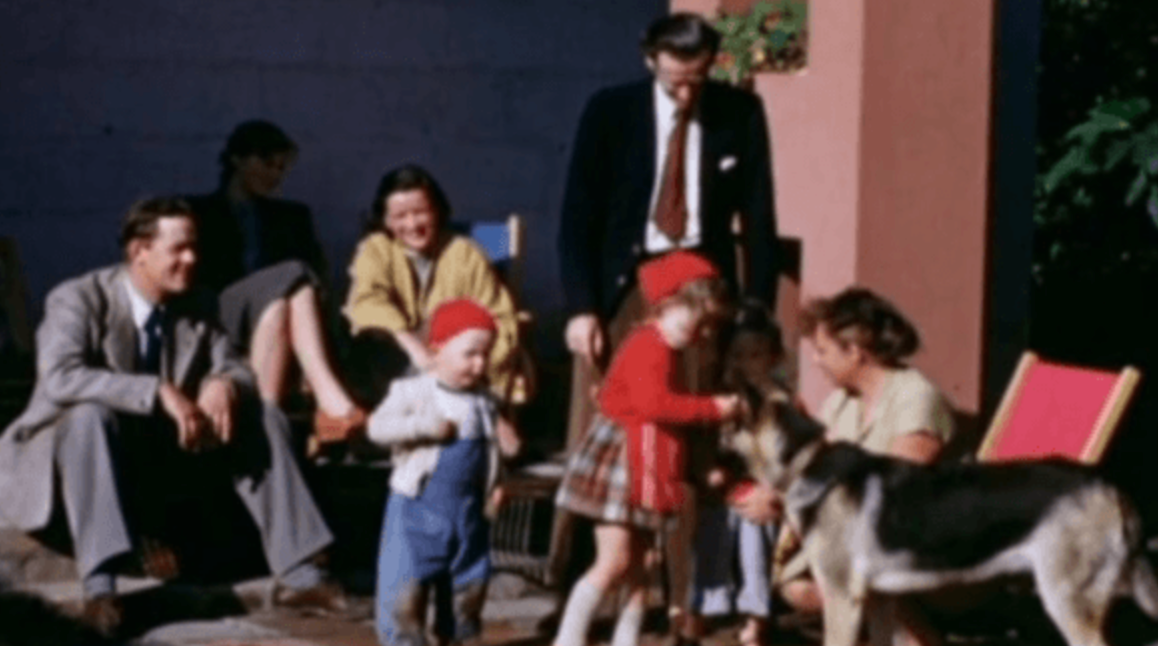
You’ve used Super 8 footage alongside video in your films. What is it about this format that appeals to you?
I suppose I like mystery and Super 8 has that quality. I know it’s a cliché that if you want to be artistic, knock it out of focus, but sometimes I prefer narrative gaps and fragments and images that are not explicit. Cynics would say that you muddy the waters to appear deep but there has to be something else going on that is inexplicable for it to be interesting to me.
Can you talk a bit about how you approach editing and that all-important relationship with the editor?
The editor is crucial. If you’re going to spend so many hours with them then you have to be able to get on with them and you have to be both aiming for the same thing. But there are disagreements. I’ve always felt that, for me anyway, editors have a huge impact on the film. I think I would nearly always chose to work with an editor because I enjoy that process and if they are good they will bring something of their own to the process.
What kind of documentaries/films do you watch?
I would watch much more drama than documentary. And very specific drama. I have got more from a two-minute clip of a Terrence Malick film than from the majority of documentaries I’ve seen.
Your next project is a drama feature film. Why the transition from documentary? Can you tell us about this project?
Well, I’d prefer not to talk about the story too much. I don’t see it as being too much of a move away from what I have been making all along. I’m not trying to become a film director in that sense; I may never make another drama. It’s just this particular story that I have been dwelling on for that last five or six years, it’s got a lot of documentary elements in that there are no actors. I’m approaching it as if I was making a documentary rather than a feature film.
Do you find it difficult making a living in documentaries?
Making a living is extremely difficult. But to be honest, the last couple of years have been better for me, I understand how things work now and I rarely miss an opportunity for accessing funding. It’s out of necessity, really. Everyone gets a proposal. No exceptions. Well except RTÉ in the last two years [laughs]. If you’re making single documentaries then you’ll find it difficult. But they say there’s no money in drama either so I don’t know…
What would you say to someone about to make their first documentary?
It’s difficult to know what to say in a general way. I suppose the subject matter is what is most important. If it’s not an interesting idea to begin with then it will hardly develop into an interesting film, no matter how obscure the idea is. That sounds very basic but a surprising amount of people make that mistake. I would try to hold on to as much editing time as possible. People spend tens of thousands on shooting a documentary and then try to edit it in four weeks. Editing is cheap now. For the Gabriel Byrne doc we showed a short rough cut after seven weeks to the Film Board but by week twelve 90% of that had hit the floor. I think it is important to work on the material that you want to work on. Find out what your material is. Work with the people you want to work with and try to only work on films that are rewarding. And keep the head down.
The article is also printed in Film Ireland 125.


