
Niamh Creely talks to director Brian Durnin and DOP Ivan McCullough about using the Genesis in their short Of Best Intentions.
No, it’s not one of the top 30 highest-selling bands of all time, it’s Panavision's digital movie camera, which uses a proprietary, full frame 35 mm-width, 1.78:1 (16:9) aspect ratio, 12.4-megapixel RGB filtered CCD. Yes, it’s the Genesis. Of Apocalypto and, eh, Deja Vu and ‘sometimes you can’t tell it’s not 35 mm’ fame. So what’s it like to work with? I spoke to Brian Durnin (writer/director) and Ivan McCullough (DOP) who used the Genesis for their short film Of Best Intentions.
Firstly, why digital? Well that’s easy: money. Skipping the rather kerching! step of processing allows one’s budget to go that little bit further. But also, and rather importantly for this particular short, digital would provide really clean keys. Of Best Intentions is all about the green screen, with the entirety of the film’s backgrounds to be added in post.
So, then: why the Genesis? Well, the lads had looked into a RED, but there wasn’t one available that had been tested. Understandably reluctant to shoot blind, it was necessary to limit themselves to ‘big nerdy talks’ about it on set. It was the same story with the Viper. No one they knew had one and, as they were making this movie with money that was not their own, taking a gamble just wasn’t an option.
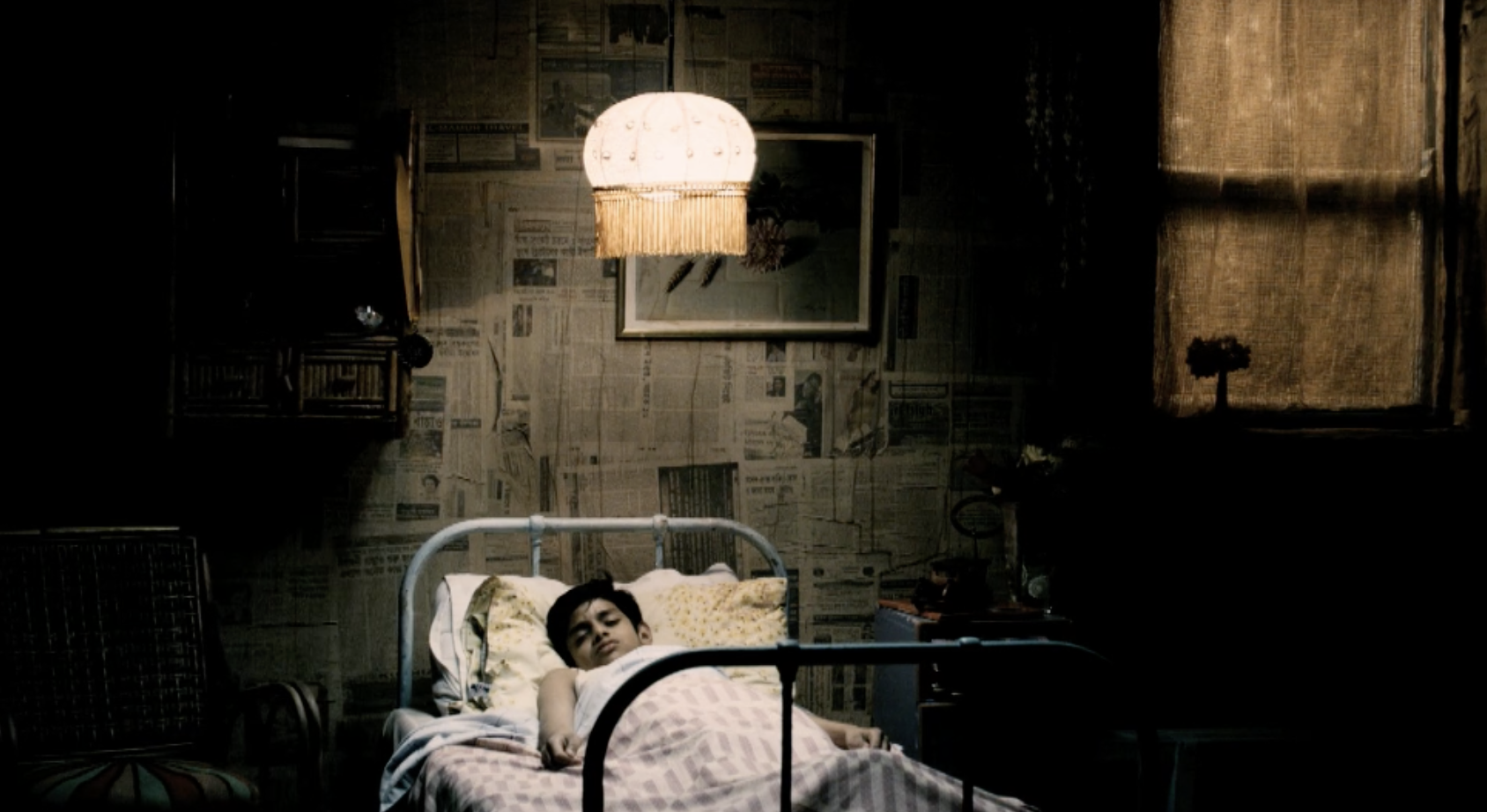
So the Genesis, then? Because they’d be using a studio, they knew they wouldn’t need to push the f-stop as far as Mel, shooting in those Mexican rainforests. The camera’s shutter can be set at any angle between 3.8 and 360 degrees, something Ivan was more than pleased to play with. One particular scene (a young boy perusing his beloved hippo books) was lit solely by the practical, in this case a 75w light bulb, in a lampshade, 6ft from the paper. This Ivan informs me in tones of awed disbelief. Rating the Genesis as 600 to 400 ISO, he for safety took it as 400. With its 4:4:4 ratio of luma to colour to shadows, the Genesis doesn’t give you artefacts and, having experienced the amazing lack of noise when underexposed as compared to film, both Ivan and Brian are dying to try shooting at night.
So, of course, there was extensive testing before shooting began. A ginger guy was asked to stand in front of the green screen (we of the titian locks being famed for our ability to clash with everything), but all was well. Ivan used tungsten balance to try and see what daylight would look like and according to John Kennedy of Windmill Lane, the whole thing keyed beautifully.
Also working beautifully were the green (525nm lamps) Kinoflos. As the short’s theme is green in more than one way, the team were happy to do whatever they could to keep down electricity consumption. Four green Kinoflos were more than enough to do the job and kept the electricity down to 5-10% of what a bunch of Blondes would have used. The extra reflected green light also meant the difference of a whole stop and a half, which will make a huge difference in post.
So far, so good. However, inspired by Fight Club and the work of Tony Scott, Brian decided he wanted to give a greenish tinge to proceedings. Green people, against a green background. Impossible, surely? Not so. The subjects were lit blue both by applying blue gels to the lights and balancing the camera's white balance for tungsten whilst using daylight-balanced lamps. Also, when shooting the plates, the camera was balanced for a cold look and this comped together very nicely. In the final grading stage the hue will be shifted from blue to green (a simple tweak as, on the colour wheel, the two colours are directly adjacent to each other), all of which will be done in HiDef on the Baselight Grading System at Windmill Lane.
The conversation moves on to the camera’s size and Ivan reveals that the Genesis, whilst large, is not unwieldy. Wearing the Genesis with the Easyrig may make you look like the kid with the gadget backpack from The Goonies, but it’s surprisingly well-balanced. For handheld, it’s actually pretty good, provided the zoom lens isn’t attached and it’s clear that the position of the handle has been well thought out.
So what about post? Well, Brian knows he’ll be getting super-clean digital. After a grade across everything, he’ll probably put some grain in. It’s amazing to want to add the little imperfections of film, but that’s the luxury of digital. It’s certainly a lot easier than trying to remove them…
Of Best Intentions is currently in post-production and will screen at the Galway Film Fleadh.


