

Khushi Jain in conversation with the director of All That Glitters at this years' Dublin International Film Festival.
Of the many films that I saw at the Dublin International Film Festival this year, Peter Lavery’s All That Glitters was special because the only thing it wanted me to take away was a little bit of joy. When Dublin-born Peter premiered his debut feature in the Light House in Smithfield, he introduced the film by saying, ‘I just hope it makes you smile’. And so it did, beautifully, wonderfully and dramatically.
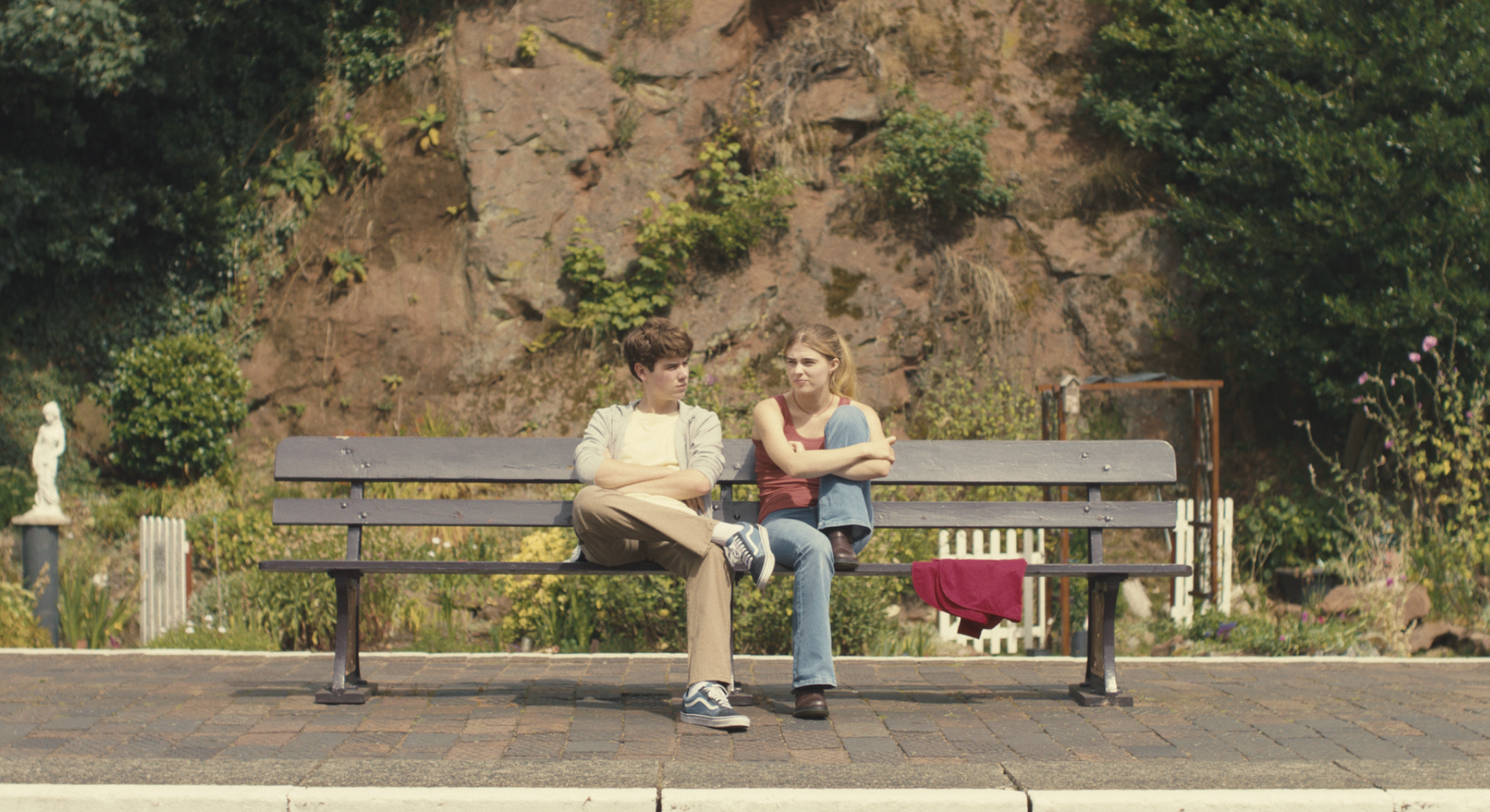
ATG is a project of Clover Fox Films, an independent film production company co-founded by Peter alongside his friend Joe. It follows the shy and awkward teenager Ryan (Elliot Grihault) after he mistakenly summons the ghost of William Shakespeare (played by Paul Ready). The two realise that the only way for Shakespeare to return to his world is helping Ryan get together with his crush Jasmine (Flo Thompstone). And thus, begins a Shakespearean crash course in 21st century teenage romance, as Romeo tries to win his Juliet. Peter’s writing is sometimes funny and sometimes serious, but always emotional and vulnerable. He knows exactly when to let the cat out of the bag, and his twists and reveals are mapped to comedic perfection. Not surprisingly then, he was nominated for a DIFF Discovery Award in association with Screen Ireland.
In this innocent and playful film, all that glitters really is gold but even more importantly, it is also all that which does not glitter that is gold. I was lucky I had the opportunity of talking to Peter both before and after the film’s premiere. The following conversation has been edited and formatted to make it readable.
Where did the concept of the film come from?
PL: The seed of the idea goes back to a short story I wrote for an English class at school nearly ten years ago. In that version, a boy struggling with his homework summons the ghost of James Joyce for help. I tucked the concept away in the back of my mind, and it stayed there for years. Then, in the summer of 2023, I revisited it and reshaped it into something new: a boy conjuring the ghost of Shakespeare to help him win the role of Romeo in his school play and, in turn, win the heart of his Juliet.
It made sense for the ghost to be Shakespeare in a way it never quite did with James Joyce. When you’re a teenager, everything feels heightened: your first love, betrayal, heartbreak, so dramatising those feelings through the literal conjuring of Shakespeare felt right. At that age, it can feel as though you’re performing in your own Shakespearean drama, so I figured the best person to coach, Ryan, our young doughy-eyed protagonist, was the Bard himself.
Does this mean you read a lot of Shakespeare as a teenager yourself?
PL: I struggled with Shakespeare; I loved a lot about English as a subject in school, in particular, creative writing. I could also get my head around poetry and Of Mice and Men, but Shakespeare was my Achilles heel. It wasn’t until I started writing this script and spending time learning more about him that I really gained an appreciation for his writing and how he is still relevant today. And somewhere along the way, I heard someone say that Shakespeare, when performed well, is like music: you don’t have to understand it on a technical level to appreciate it. If it’s done properly, you should just feel it in the same way you feel music.
When did Paul Ready become involved?
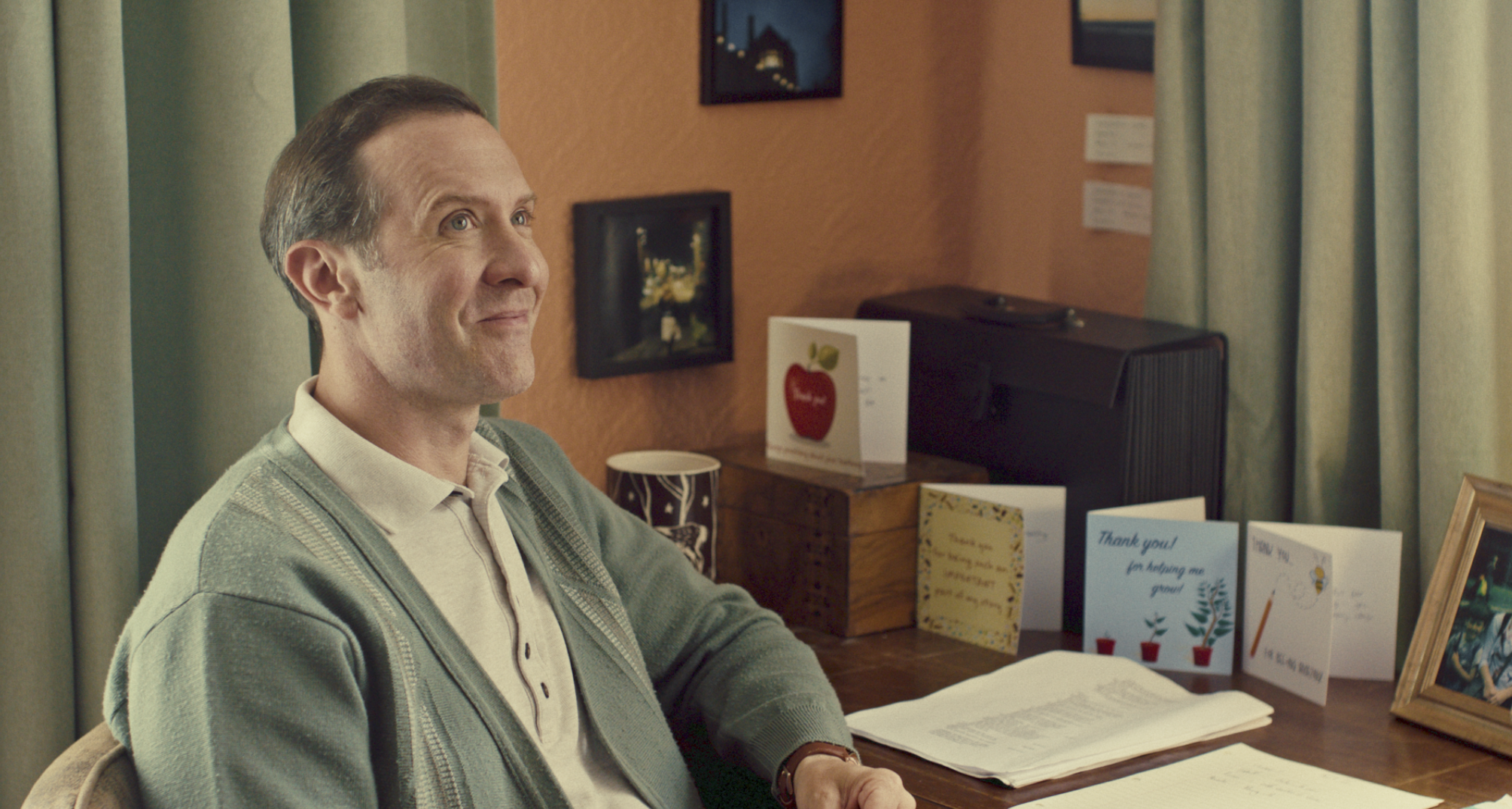
PL: From the first meeting with Paul, it was evident how much he cared about Shakespeare and how keen he was on bringing depth to him as a character. When I started working with him, the Shakespeare on the page leaned more in the direction of an aloof, fish out of water character, and to Paul’s credit, he pushed me further to find more than just the easy comedy, and to find the heart of him, and convey Shakespeare’s love for life, for art, and for the messy things that make us us. Shakespeare (the real one) wrote about the deep complexities of being human, and in those late drafts of ATG, we found a version of our own Shakespeare that was both authentic and honest, yet very fresh. I couldn’t have asked for a better person for the role, as he handled it with a tender delicacy and, of course, brought such brilliant comedic wit.
How did you go about casting Ryan? What did Elliot Grihault bring to the character?
PL: Elliot stood out from the moment we first saw him, and when we got him in the room with Flo [Thompstone] for chemistry reads, we knew we’d found something special in both of them. It was actually Elliot’s first time doing comedy, but watching how he plays Ryan, you’d never know. Holding your own in scenes with actors as brilliant as Paul [Ready] and Tim [Downie] is no small task, and he absolutely did that. One moment that consistently gets one of the biggest laughs in the film is a scene where Ryan tries to light a cigarette for Billy, played brilliantly by Mark [Lavery]. That was found in playful improv on the day. He showed such sharp comedic instinct in finding that with Mark, which is a sign of a naturally gifted comic actor.
Speaking of improv, can you tell me a little bit more about your writing process? You mentioned finishing the script in an airport hotel room during the post-screening Q&A.
PL: Yes, that was around draft-six stage, when I’d hit a plateau – the point where creative projects often run out of steam. I was determined to see this one through, though, so I spent three or four days alone in an airport hotel near Heathrow, locked in with those pages. It’s all a bit writer-romanticising-writing, but for me, that kind of thing genuinely helps. At home, you can be distracted by a million and one things, so being in a sparse, utilitarian environment where you’ve carved out time just for writing can really help when you’re stuck, or when you can see that you’re about to get stuck.
Funnily, in contrast, the first draft of ATG came very easily; I wrote it in three days at home. But the parts that needed more time, which I might otherwise have procrastinated over, were worked out by those few days in that soulless Hounslow hotel, as there was quite literally nothing else to do.
Let’s talk about the film’s ending. While so much of ATG is about Shakespeare, the ending is quite un-Shakespearean (even the school production of Romeo and Juliet turns into something totally different from the original tragedy). Can you expand on that?
PL: Without giving too much away, it isn’t a conventional happily-ever-after, but it’s certainly not tragic either. I’ve always been drawn to bittersweet endings, especially in coming-of-age stories, because they feel more truthful to that stage of life, where people grow, relationships shift, and not everything resolves neatly like at the end of a movie. With that being said, the ending of ATG does lean more toward the “sweet” side of bittersweet: it’s warm and hopeful, but it avoids the obvious, clichéd resolution you might expect from the genre. From a writing perspective, it was very important that the ending felt emotionally satisfying. Whether a viewer connects most with the love story, the friendships, or the family plotline, I wanted the ending to be something everyone could take something from. In a way, that impulse does come from Shakespeare, in that his plays often end with a gathering of characters reflecting on everything that’s happened, like some sort of collective exhale after the chaos of the story.
What viewing experience did you have in mind for ATG? Is it a cinema film or a laptop film?
PL: Cinema! When I was working with the sound team and our colourist, the starting point was always the cinema screen, thinking about how the colours, contrast and grain would look projected on a large screen, and how the 5.1 mix would feel in a cinema space. But at the same time, you’re very aware that many people will ultimately watch the film on smaller screens, so part of the process is constantly toggling between those experiences and making the film work in both. Always, we’d begin with the cinematic version in mind, but then fold the sound down into stereo and make sure the grade still holds up on a laptop or TV. It’s really about balancing those two viewing environments and making it the best it can be in both.
What was it like collaborating with your friend and producer Joe on this? What can we expect from Clover Fox next?
PL: Joe and I started making short films together when we met in film school in London. Joe is a brilliant producer in the way he leads his team and always brings a calm, measured approach to the set. He has a real ability to keep everyone focused and motivated, even when the pressure inevitably builds during a shoot. There’s a cliché that producers spend most of their time saying no, but Joe is never that kind of producer who shuts things down just to assert authority. When he does push back on something I want, it’s always because it genuinely can’t happen or because he’s protecting the film. Which I’m usually grateful for afterwards. It’s very annoying when he’s right.
Next for Clover Fox, we’re developing a slate of projects: a fully written magical realism feature set in the UK that’s ready to move toward pre-production, a magical realism TV series set in Dublin in early development, and a coming-of-age feature set in a small Irish village. At the moment, we’re really focused on building on the momentum after ATG and continuing to show the kind of voice we have as filmmakers: stories that blend the everyday with a touch of the magical, and that are rooted in very specific places and communities. Those are the kinds of worlds we want to continue to explore, both in film and television, as Clover Fox continues to grow.
And finally, the most pertinent question of all - to be or not to be?
PL: That’s the question!
Peter Lavery
Born in Dublin, Ireland, Peter is a 27-year-old emerging screenwriter and director with a passion for crafting emotionally resonant, character-driven stories. In 2019, he relocated to London to pursue filmmaking full-time, earning a BA in Practical Filmmaking from MetFilm School in 2022.
Peter’s debut short film, Tequila Dream (2021), became an award-winning success, earning Best Director at the Prague International Film Festival, Best Student Film at the Birmingham Film Festival, and Best Long Short Film at the British Short Film Awards, among others. Building on that success, Peter developed a signature style that blends magical realism with grounded emotional storytelling. His follow-up short, Alone With You, was selected for the BAFTA-qualifying Carmarthen Bay Film Festival and nominated for Young Filmmaker of the Year at Cinemagic Belfast.
According to Executive Producer Johnny Gogan (All That Glitters), “Peter’s unique writing is witty, poignant, and dialogue-driven comedy-drama that will make audiences laugh, cry, and squirm.” Peter's writing has attracted interest from the likes of RTE and Britbox, and he makes his directorial debut with All That Glitters at the Dublin International Film Festival, where he is also nominated for a DIFF Discovery Award in association with Screen Ireland.