
In this article, filmmaker and writer MK Quane speaks to writer, director, and producer Maeve Shaw about bringing Old Dogs, New Tricks to the screen, navigating an Ireland/Sweden co-production, and her growing body of work, including producing feature documentary Chris Kent Goes Offline.
Old Dogs, New Tricks marks Maeve's directorial debut and follows the story of Eleanor, an 88-year old woman who decides to join a psychological experiment. The film is partly inspired by Professor Ellen Langer's Counterclockwise experiment in which she proved the impact that mindset can have on physical health in elderly people.
What inspired you to write Old Dogs, New Tricks, and why did it feel like the right story for your directing debut?
Old Dogs, New Tricks is inspired by Professor Ellen Langer's Counterclockwise study of 1979, where a group of elderly men were brought to a retreat and lived as though they were in their twenties. The study proved how much mindset affects ageing. I really wanted my debut short to be meaningful and loved the idea of the intersection between social sciences and film. I had also lived in Sweden for the year and wanted the film to be a reflection of everything I had learned about the place, the colours, the sounds, the language, and the incredible Swedish actors.
The film challenges some assumptions we make about ageing, particularly when it comes to older women. How did you want to approach the representation of older people on screen?
I wanted to give an opportunity to older women to play characters that didn't diminish them. I have an incredible step-grandmother in her eighties who has never seemed old to me. She is funny, smart, and cool, and I always want to hang out with her. I always thought it silly that older women were represented as less capable, as this has never been my image of ageing. I wanted to see these women as true reflections of themselves on screen and to enjoy the process.
Agency and independence are two themes that come across really strongly in Old Dogs, New Tricks. Why were these particularly important themes for you to explore?
Absolutely. I strongly believe that once you take away a person's independence, they are far more likely to become reliant. I think society has a lot to learn about how we treat our older citizens, and I would love to explore ways of using filmmaking to bridge the gap in time spent between younger and older people. I felt as though living together as we did throughout the filming gave us this sense of hope, like we had built a special kind of community where we were all learning from one another.
As writer-director-producer, how do you manage the balance of moving between roles?
Well, I tried my best. Any filmmaker knows how difficult it is to get anything made, especially at this time in the industry, where we have so many changes rapidly occurring. Writing is difficult because when you fall in love with characters, you never want to stop writing for them. I overwrote, which meant I had to edit quite ruthlessly. Directing was the easy part. I loved my actors. I knew my story, and it became more of a flow state on set, especially surrounded by the perfection of Jonsarbo Manor.
Producing was intense and long! But it was worth knowing that I had made something. It's my first film, and it exists!
This film is a co-production between Ireland and Sweden. How did that come about?
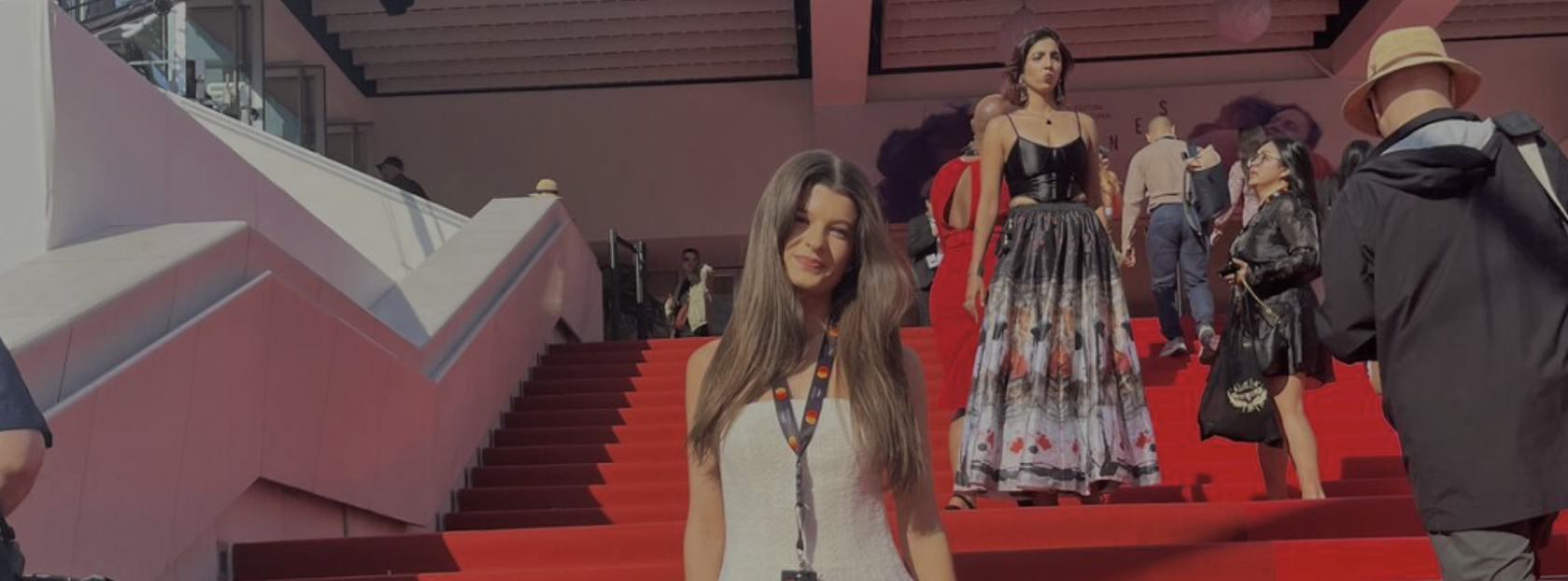
The Swedish element stemmed from the year I spent at Stockholms Filmskola in Stockholm. It was one of the best years of my life, and I learned so much, made so many friends, and feel as though I have a little part of my heart still there. Ireland came about through Avenue Productions, which is an Irish-based production company led by Lee Crowley. I met Lee during the Screen Ireland gathering at Cannes Film Festival and told him all about my film. He has an interest in developing Irish talent and took the film on for the post-production phase and into the festival circuit. It has been great to have a little piece of Ireland in the project, as I am hugely proud of my home country.
The location of Jönsarbo Manor in Sweden is hugely atmospheric. How did the setting affect the visual language of the film?
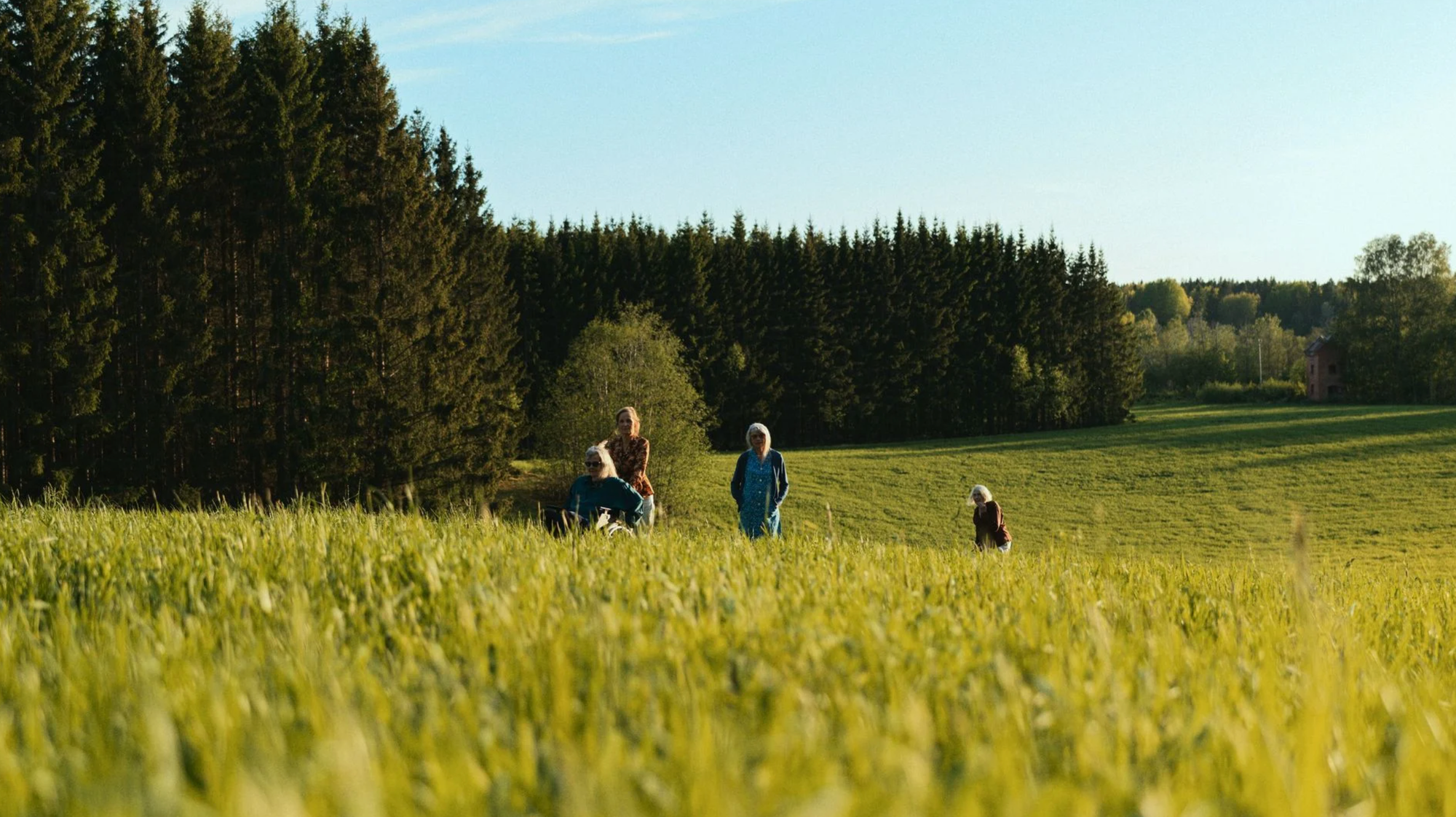
Jonsarbo was essential in the visual language of the film. Until I found it, I was still writing, and when Andrew (Director of Photography) and I arrived there and felt the energy and saw the landscape, we suddenly realised we knew exactly how the film should look. The history of the place, the fact that the owner was a relative of the manor's original owners (their portraits on the walls), and the attention to detail in every room. The textures, the colour scape, the unique spaces. We spent a day just going from room to room, looking at each other with huge smiles on our faces. When we found the field in which the ladies walk through, we couldn't believe it. The location was the film, and the film was the location. Especially as we all (cast and crew!) lived there together!
The cast of the film are spectacular, particularly Karin Bertling in the lead role...who I believe celebrated her 88th birthday during filming! What did Karin bring to the character that wasn't on the page?
Karin was incredible. I had seen her in the Netflix series Tore, where she has an incredible scene getting high on mushrooms. I thought her energy fit perfectly, and when her agent said she would be up for it, I just remember staying up all night in excitement. She did celebrate her 88th birthday during filming, and we had a cake and all sang together. It was a moment I'll never forget. And she was right back on set the week following our shoot. She works exceptionally hard. Nina, who plays Magda, was in the great Irish series Bad Sisters, where she plays Claes Bang's daughter and gets locked in a freezer. I spent time trying to find her contact, and when I did and she said yes, I thought, okay, now this is real.
What has the audience reaction been to the film, and what have you learned the most through its festival run?
It's been great to watch the film with international audiences, and I have connected with some incredible Irish filmmakers. I have watched so many shorts and have been really honoured to have my work shown alongside theirs. I'm constantly writing down the names of filmmakers I want to work with one day. Irish short film is of such a high standard. I would highly recommend that audiences try to see Stuck, Bowling Roads, and A Vinyl Goodbye. Those have all stuck with me in different ways over the festival run. Mostly, I just love film. It gives me hope.
Where do you see the film going next, and what's next for you?
Our last screening was at Silk Road Film Festival in Dublin on 14th November. I would love for it also to have a Swedish premiere and to go back to its original home. Aside from that, I have a number of projects that I'm working on at the moment. I've always really wanted to do a project as Gaeilge, as I went to all-Irish schools for my whole primary and secondary school education. I'm writing a lot in Irish at the moment and hopefully will find the perfect team and home for the next one! I'm also developing a feature documentary at the moment and figuring out financing for that. Mostly, I can't wait to get back on set and to make things that find their way to audiences that will hopefully feel something from them. In the meantime, I continue my work in television distribution for Fremantle Media in London, where I continue to learn about the industry and its ebbs and flows.
What was the original spark behind the idea for Chris Kent Goes Offline?
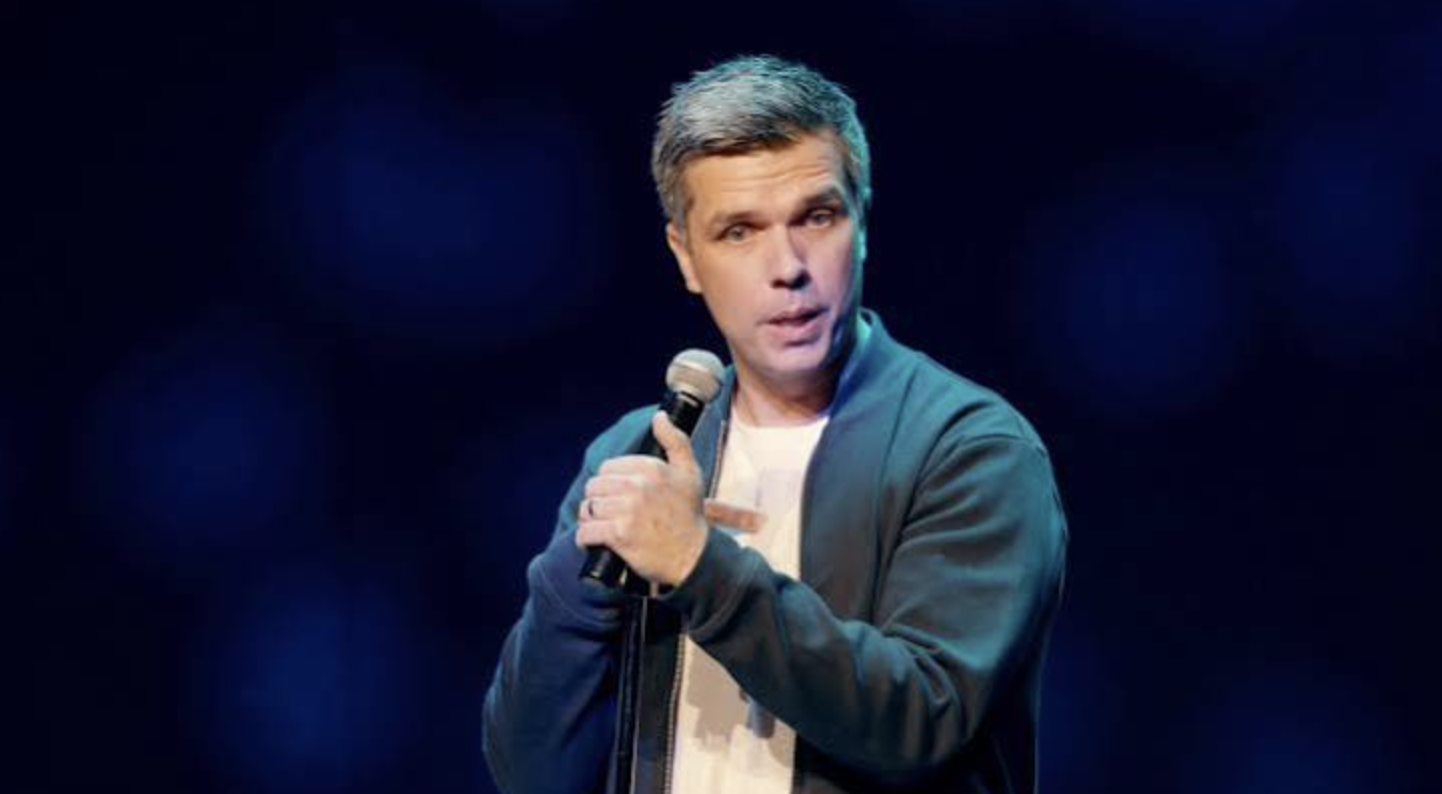
Chris' spark for this project was the shock of having the issue of phone addiction manifest itself as a physical problem. Having to go to the hospital with heart palpitations due to time spent on his devices was a huge wake-up call and the catalyst for the documentary.
This is, of course, a massively personal story. How did you go about putting together a team for this particular project, and how did you work together to create an open, trusting environment on set?
We worked in a very small team. Chris and David had worked together before on a number of projects, and Richard (Executive Producer) and I have worked together for many years. We all trusted each other and wanted to tell an honest story which would be nuanced rather than direct the audience into having a singular opinion. It also helped that Chris' lovely family, his wife, children, and parents, were all on board with being included in the documentary, as a project like this can feel intrusive without buy-in at home.
Chris Kent is obviously an incredibly funny person who is dealing with a sobering emotional event in his life. How did you manage to toe the tonal balance between comedy and vulnerability?
David does an excellent job, in my opinion, of stepping back and allowing Chris to deal with the events of the documentary as they come. It is easy for entertainers and comedians especially to want to consistently entertain and only show the shinier moments of their lives. But I feel as though the process wasn't always easy for Chris, especially with the impact giving up his phone had on his wife Niamh's life. We had lots of conversations throughout the process on what these pressures would manifest as, and having the conversations with Samantha Dockray also gave Chris a huge amount of perspective on the process. We had a huge amount of footage, so the edit was integral to finding the film's tonal balance. We spent many months discussing each minute of the film.
As producer, what was your collaboration with director David Murphy like, and what were some of the biggest creative challenges you faced throughout filming?
I really enjoyed collaborating with David. He is exceptionally talented and was the DP, Director, and Editor on this project. It was very inspiring to see him get involved in all of the aspects, and I know he will go on to direct some incredible films. Of course, there were challenging times, as there always are when making films, especially since I had moved to Stockholm by the end of the shoot and we worked remotely for the entire edit. I think that we both wanted to make the best film, so even when we disagreed, we sought to conclude in a way that the film would benefit.
I believe this is your first feature film as a producer...congratulations! What did you learn from producing a feature-length documentary? Has it changed the kinds of work you'd like to focus on in the future?
Thank you! I learned a lot. I think that I fell more in love with documentary filmmaking and the impact that a film like this can have both on its subject and its audience. I have recently begun developing another documentary based in Ireland, which I will direct myself, and that wouldn't have happened if I hadn't made this film!
What is one thing you hope audiences take away from Chris Kent Goes Offline?
As Chris touches on at the end of the documentary, I hope that people will really consider their choices. The most important things in life are the moments you share with loved ones. You'll never regret those. I hope also that people recognise the huge efforts comedians make in writing the shows that bring joy to people all over the world. Quite often, I feel as though comedians aren't treated with equal respect compared to other artists and performers, so hopefully this documentary shows the true graft of a comedian.
Thanks so much for chatting with us!
Maeve Shaw
Maeve Shaw is a writer, director, and producer from Kilkenny, Ireland. She holds a BA in English, Drama, and Film from UCD and a Diploma in International Film from Stockholms Filmskola, Sweden. She currently works for Fremantle Media in London. She began her career in casting, working with Subtitle Film Festival and Subtitle Talent Agency, as well as in the Lisa Richards agency, before working in production on SisterS (2023) and The Inheritance (2023) with Peer Pressure Productions. This experience has given her access to a wide range of talent in the industry and an understanding of high-quality writing and production values. Her debut short, Old Dogs, New Tricks, was shot on location in Stockholm and highlights her passion for showcasing talent of all ages and casting a light on today's societal issues. Maeve has also completed her debut feature documentary as producer of Chris Kent Goes Offline, which will premiere in November 2026 and stars Irish comedian Chris Kent.