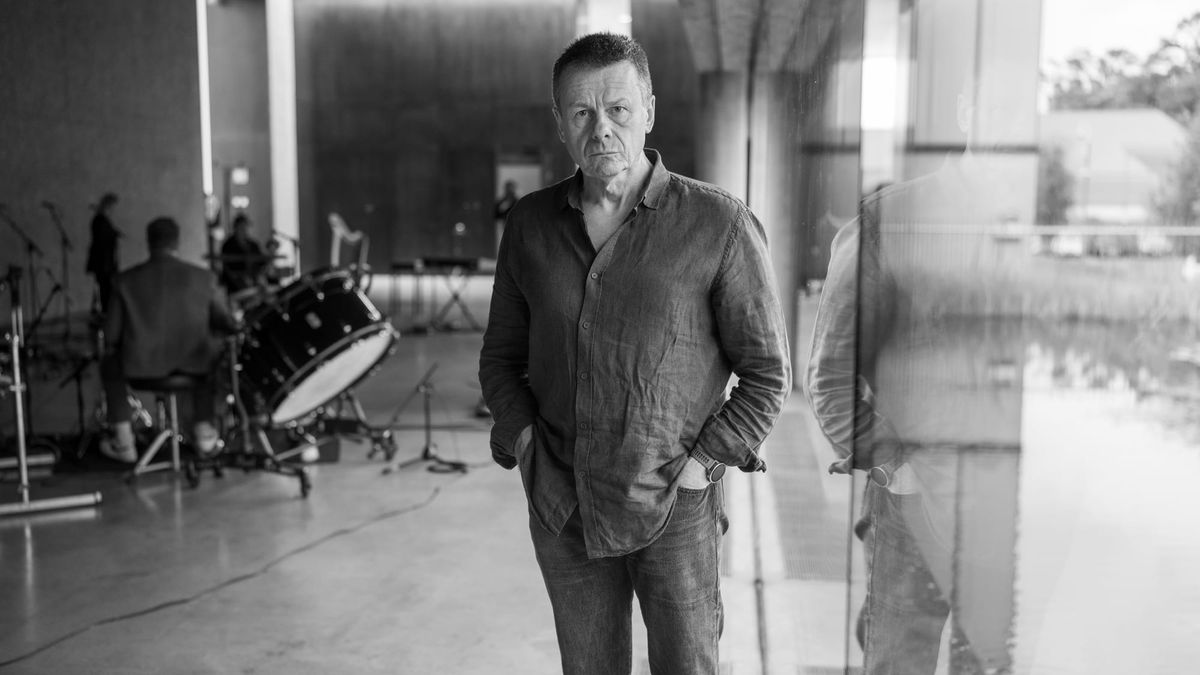

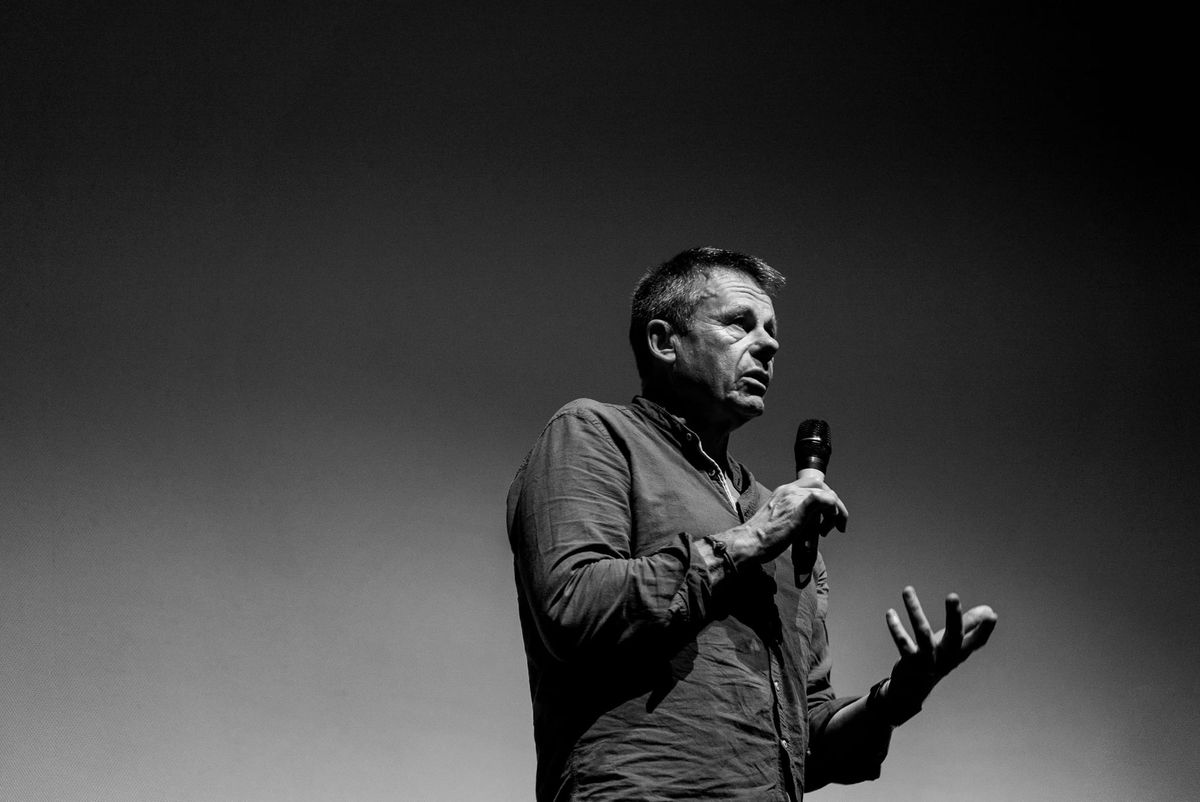
With a career spanning nearly four decades, Alan Gilsenan has built a singular body of work across film and theatre, directing dramas and documentaries marked by curiosity and a deep understanding of humanity. Now, the Irish Film Institute is hosting a selective retrospective of his work, giving audiences an opportunity to revisit a richly varied oeuvre that moves between investigation, essay and observation.
Screenings throughout the programme will be introduced by Gilsenan and his collaborators, with special guests including Stephen Rea, Jim O’Rourke and Caoimhín Ó Raghallaigh attending a special advance preview of The Journey of Weather-Exposed Bones.
Writer and journalist Lynn Larkin catches up with Alan to reflect on his work and career.
What were the first thoughts that went through your mind when you were approached about the retrospective?
Naturally, there was a little surprise and apprehension as well as great appreciation for the honour. It is very gratifying to acknowledge the older work but, to be honest, I only feel I really know what I'm doing now and generally tend to look ahead rather than backwards.
Could you talk us through some of the works that have been selected? What do they mean to you?
The wonderful Sunniva O’Flynn (guardian of the flame of all things Irish film) and I discussed it and I suppose, in the end, we went for a slightly eccentric and eclectic selection. We felt that many of the newer films had been seen recently, so we dipped back into the past. I was happy to resurrect a couple of the older, madder pieces as well, such as All Souls’ Day and Ó Pheann an Phiarsaigh, although I'm struck now by how dark and radical they are, watching them all these years later.
Has your practice changed or evolved much over the years?
I don't really believe in analysing your own work. I think that's really for others to do, and I generally prefer to work on instinct and intuition rather than intellect. But, obviously, I can see themes and obsessions that recur and echo down the years, and I don't mind that. But, looking back, I think I take greater pleasure from the more radical films, the ones that were pushing the boat out more in terms of their subject matter and their creative approach.
Did you ever struggle as an artist?
I've been very blessed to be able to continue making the films I want and I'm very appreciative of that but, of course, I certainly relate to the sense of disillusionment that many artists feel at present: the increasing endless bureaucracy, the general aversion to risk-taking, and the constant challenge of making a living. But I'm also aware that I've been very lucky and, generally, I think I have a reasonably resilient personality and a perhaps misguided belief that the next film I make will be a good one.
Was there anyone who inspired you over the years?
Many, of course. In the early days, when there were very few Irish films to watch, I admired the radical creative spirit of people like Pat Murphy, Joe Comerford, Bob Quinn, Cathal Black, Neil Jordan and John T. Davis. But, in terms of mentors, one of the great things about looking back in a retrospective like this is that you realise who you learned from over the years, and I was lucky to work with many great people that taught me much as I went along: the actor Tom Hickey, of course, who introduced me to the mysteries of acting, but also writers like Tom Murphy, John Banville, Paul Durcan and Paul Muldoon. And, of course, experienced film people too, like Thaddeus O’Sullivan, Kieran Horgan, Mary Alleguen, Tiernan MacBride, Davy Hammond, Lelia Doolan and Morgan O’Sullivan, who were always both wise and supportive.
What were some career highlights over the years?
They’re mostly unprintable! But connected to wonderful memories, shared with people and places, one of the unique pleasures of our work and our lives.
What do you see the role of filmmaker as meaning?
That’s a difficult one. The role of the film-maker is complex and multi-faceted, if we’ve any role at all. It can be to inspire and enlighten, to inform and enrage, to reflect and challenge, but it’s equally to bring joy and distraction and wonder and to widen the horizons of our imaginations. But I also feel that film-making is a creative art form that interacts with all other art forms and somehow comes at the convergence of all those other forms of artistic expression, drawing on each to differing degrees at different times.
What do you feel are the unifying themes of your work?
I can certainly recognise some consistent threads and I wonder, do our obsessions and preoccupations really change that much over the years? Or do we just revisit those themes and the old stories in different ways at different times? There is definitely a connection with outcasts and outsiders, with a lack of certainties, a resistance to received wisdoms. But probably a resistance also to conventional forms and a love of literature and maybe an attraction to the spiritual and transcendent. But, again, this is for others to discern.
Looking back, at the creative or artist who made that earliest piece of work, how would you describe yourself?
Brave and foolish!
Finally, what would you say to that version of you?
Well, at least you’re still alive and still going!
Thanks so much for chatting with us.
Read more of our coverage of Alan's work here, or see the full schedule of films at the IFI's retrospective here.
 Film Ireland Editor
 Steven
 Kevin Dowling
 Gemma
Gemma