
The Irish Film and Television Academy Awards are always an exciting time in the screen industry's calendar, especially for co-directors Christian Spurling and Delphine Coudray, whose film ReRooted has been nominated for Best Animation. Emma Donnelly sits down with Christian and Delphine to discuss their inspiration, experiences and why the film’s message is more important now than ever.
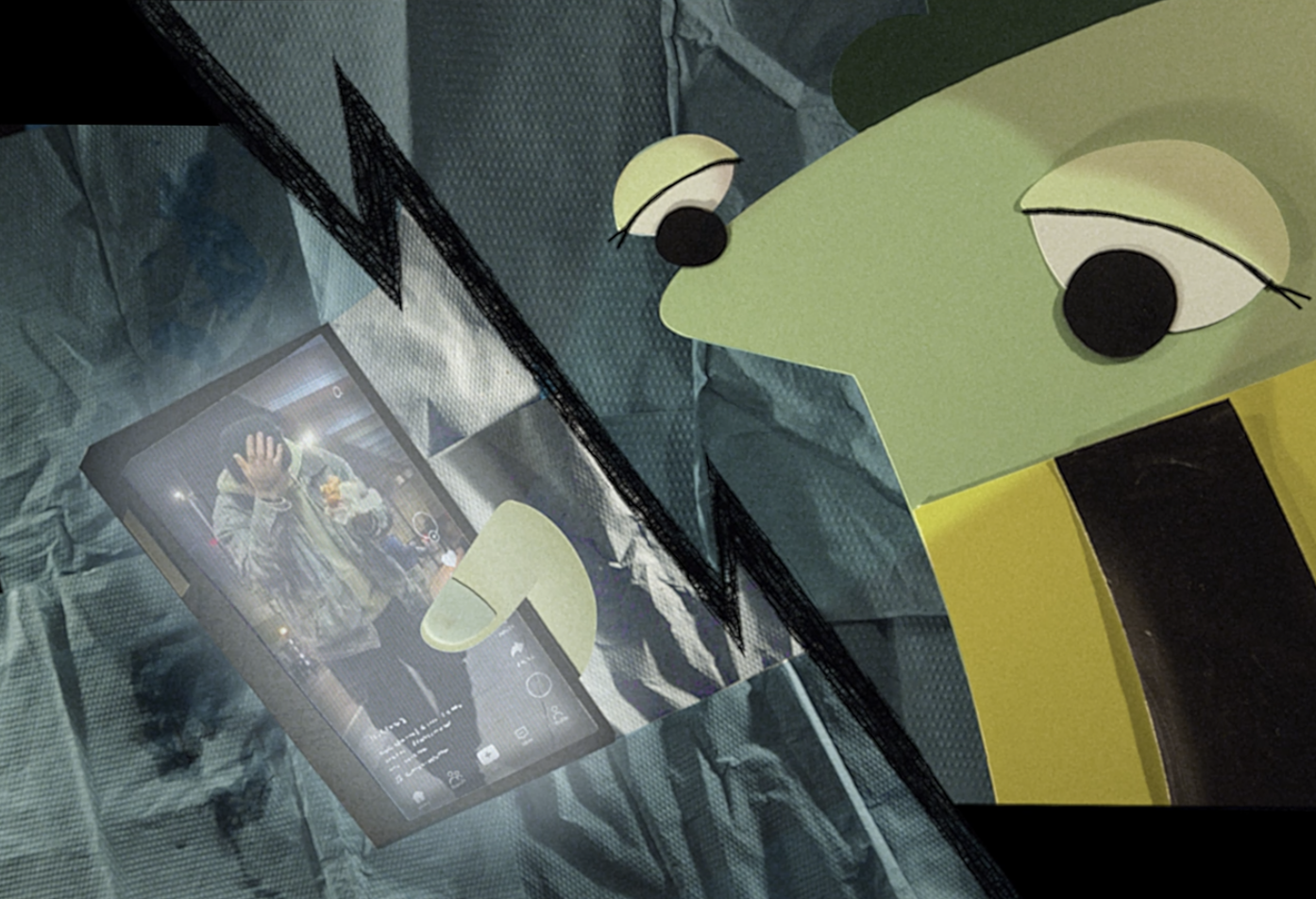
ReRooted follows a bored warehouse worker whose dream of leaving a lasting legacy as an animator takes a darkly comedic twist when she signs up for an eco-friendly burial.
Was this always an environmental story, or did the ecological angle grow out of something more personal?
DC: The environmental topic was always at the core of this film: it began with a discussion that our team had during a road trip, travelling back from the Animation festival in Dingle in 2023. We talked about eco-burials. From there, everything else fell into place as we developed the central character around that main decision of choosing a tree over a tombstone. We naturally progressed on to the themes of legacy, corporate justice, etc.
CS: It definitely was. As Delphine mentioned, the four of us just joked about a fun idea for an animated comedy involving a warehouse worker and an eco-burial on a road trip. I had gone tree planting in February 2023, the month before, with Reforestnation and so had trees on the brain. I was also very lucky as a kid and got to grow up surrounded by a forest. Climate change is such a vast topic though, so we found early on that we had to be focused on what aspect of environmentalism we’d target in the film. So we chose individual emancipation, corporate greed and legacy, to name a few.
Wonderful! How did you balance the absurdity of that premise with its emotional weight?
CS: Edit. Edit. Edit. That’s what we did virtually the entire way through. Always we were talking with one another, bouncing ideas around and making changes. You obviously have to lock some things in and avoid changing them if you can, otherwise you’ll never get anything done. But, due to the varied nature of the medium and how certain jokes needed live action footage or a crayon drawing to make proper sense, others were written down in the script and others were done in the storyboarding stage, as we got to know our film more intimately it meant that it was constantly being revised and changed as we went along. So we really had to constantly keep on top of the edit and always ask ourselves if we’re leaning too much one way and need to bring it back or keep going because it’s almost there.
DC: The script evolved quite a bit from the original idea. It was definitely a collaborative effort and a lot of the gags and ideas came from various people on the team, not just Christian and I. Marta, as the designer and animation director, had a lot of creative input. We were lucky with our brilliant storyboard artist and animators, who also suggested and crafted specific parts of the film that were not in the script.
The film looks at corporate disregard for both people and the planet. Did you consciously set out to make something political?
CS: I don’t think it’s possible to make a film that touches on the environment that isn’t political. Our planet is being ravaged, human lives ruined forever because 500 people in the whole world make unfathomable amounts of money from doing so. Our society rewards them egregiously for it, we even call them ‘elites’. The rise of AI, the genocide in Palestine, the rise of fascism in the UK and US, all of them are dire environmental and humanitarian plights and our film was made with these all around us. It would be disingenuous to make a film about climate change and not point the finger at those we deem responsible.
DC: I think we were eager to make a film that was quite engaged politically from the start. It definitely got more and more political as we were working on it. You have to remember that the project started in early 2023. Since then, we have seen corporations getting greedier, sillier and more ruthless in the devastation they cause. Trump was re-elected in 2024 and completely enabled, even encouraged them in that direction. They have become less apologetic about what they do, as they found very little resistance and barely any legal consequence. It’s desperate but Trump isn’t the only culprit now, as other governments globally have joined forces to cause more destruction with the proliferation of nasty data centres.
The tone is musical comedy, yet the themes are existential. Why was comedy the right vehicle?
CS: I think the two often go hand in hand. If you can’t laugh when faced with the grim reality that one day all this will come to an end, then my goodness what’s the point? I think absurdity, with a sprinkle of unbridled rage, was our answer to the existential dread we felt because the other option is pure nihilism and that doesn’t make an entertaining film. Existentialism enhances the comedic aspects and the comedy enhances the existentialism. It’s symbiotic that way. I think it also helps to keep the message of the film accessible, which was really important for us.
DC: Our creative team is a group of friends before being a group of colleagues. While our initial conversation about eco-burial was very serious, it also quickly turned into joking, laughing and imagining very funny and crazy situations, which led to Sam’s story being developed. Humour is very much part of our relationship. Personally, it comes from my background in theatre and storytelling. I get a real kick out of making people laugh. Christian, Marta and I have the same sense of humour, which is why we gel so well. There’s also a lot of darkness in the news and in the issues exposed in the film. I suppose, the gags and humour are the spoonful of sugar that helps the medicine go down. It certainly helped us during the hardest times of the production.
Sam is stuck in a warehouse job but dreams of being an animator. How autobiographical is that tension between creative ambition and economic survival? Were there any home truths in there?
CS: There definitely are, though I’ve not the same life experience Delphine has and I don’t, to my knowledge, have two kids I need to support. So for now I can attempt to live the fantasy of making it as an artist and supporting myself as I live at home at 28 because I’ve no money. Joking aside I think it’s a question people in the creative fields ask themselves every day. Is this sustainable for the future? Am I kidding myself? For Sam it works out and then she dies anyway. If I’m still making art by the time I kick the bucket, well I won’t be happy because I’ll be dead, but the idea comforts me now at least.
DC: Absolutely! I’ll always remember a talk that Nora Twomey gave to us aspiring animators a few years ago, how she was dreaming up stories while working in a chicken factory (this might need to be fact-checked!!) and then she went on to found Cartoon Saloon with her college friends. I was listening to her with admiration and some melancholy. I had followed my dreams early in life to work in the arts, but it was just not sustainable, especially in theatre and with two young children. We see Sam following her dreams and achieving success and a balanced family life but there’s a part of me that knows it’s fiction.
Tell us more about the ‘enduring legacy’ through eco-burial marketing…
CS: Marta, Delphine and I share a deep love of trees. I was very fortunate to grow up surrounded by trees in Wexford and I spent every day outside with my siblings. Before I knew about the burials I always joked and said that I’d like to be buried on a hill and for people to plant a willow tree over me. I too think cemeteries are very depressing spaces and fantasised about strolling gorgeous woodland where you could gaze at the names of people buried there and feel them shading you from the sun as ash, oak and willow and be comforted that where your relatives lie there is real and tangible life emerging.
DC: The forest is definitely my happy place. Trees are just fascinating, healing organisms and they outlive us by hundreds of years. When Roy told us about that eco-burial option on that road trip, I had never heard about it and immediately thought it was an amazing idea. Cemeteries are such depressing, cold places and there is a shortage of space in many urban areas. We finally got to visit one of these natural burial sites after we completed the film. It was so peaceful, so respectful of native species and yet a space suitable for surviving humans of all denominations to come and pay their respects in whatever way they wish. I was so grateful to Christian to introduce us to Reforest Nation and the amazing work they do too.
The film combines papercraft, digital 2D, live action and pixelation. Was a hand-crafted aesthetic essential to telling this story? Why this form?
CS: Absolutely essential. We mentioned before that this was made when everybody was beginning to talk about AI and how this will be the end of artists and now art, through AI, is ‘finally accessible!’. It was always accessible. All this artificial stolen slop was shoved in our faces and the angrier we got the more we wanted to make ReRooted feel handmade, like it was made by human beings. We even added a ‘made by humans’ in our credits just to make our point clear. It felt fitting that a film about re-rooting one’s self, nature, legacy, the environment, our absurd lives that you would see the imperfections in the paper, a crinkle on the edge of a nose, the tiny piece of dust on the lens, real hands and real ashes and real flames. Every bit of texture and material you see your subconscious is making emotional and memory based connections because you know what paper feels like. In turn it cements the emotions you feel and our message firmly in reality.
DC: I wish I could say “because we like a challenge” but, in truth, I think we had no idea it was going to be so difficult. The paper element was not essential, but we all liked the idea because we had experimented a bit with paper art in the past.
Christian, this is your first stop-motion and papercraft film. What was that process like?
CS: I had absolutely no idea what I was doing. I couldn’t have done it alone and I’m so grateful to have had Marta, Delphine, Paul and our other skilled artists at my back through the production. I was able to pull from my existing animation experience for things like layout, editing and storyboarding etc. However, our chosen medium was totally new to me, and scary and had some drawbacks, chiefly the fact that it takes so long to do anything and to see the end result. It wasn’t like 2D animation where you can make a finished shot in a couple of weeks to see how all the elements will come together in the end. Since it takes so long to animate it, vectorise it, cut it out, film it, comp it together we didn’t have that luxury.
Delphine, coming from theatre and editing, how did your background shape the animation?
DC: I would like to think that this experience came through the visual gags and pacing of the film. My background was in Commedia Dell’Arte, which is a very visual type of comedy, fast-paced and farcical. It also influenced the writing in terms of the lack of spoken word: ReRooted does not have any dialogue and only a small bit of narration. Expressing story visually and physically is very much a feature of Commedia Dell’Arte.
Was there a particular sequence that proved technically challenging?
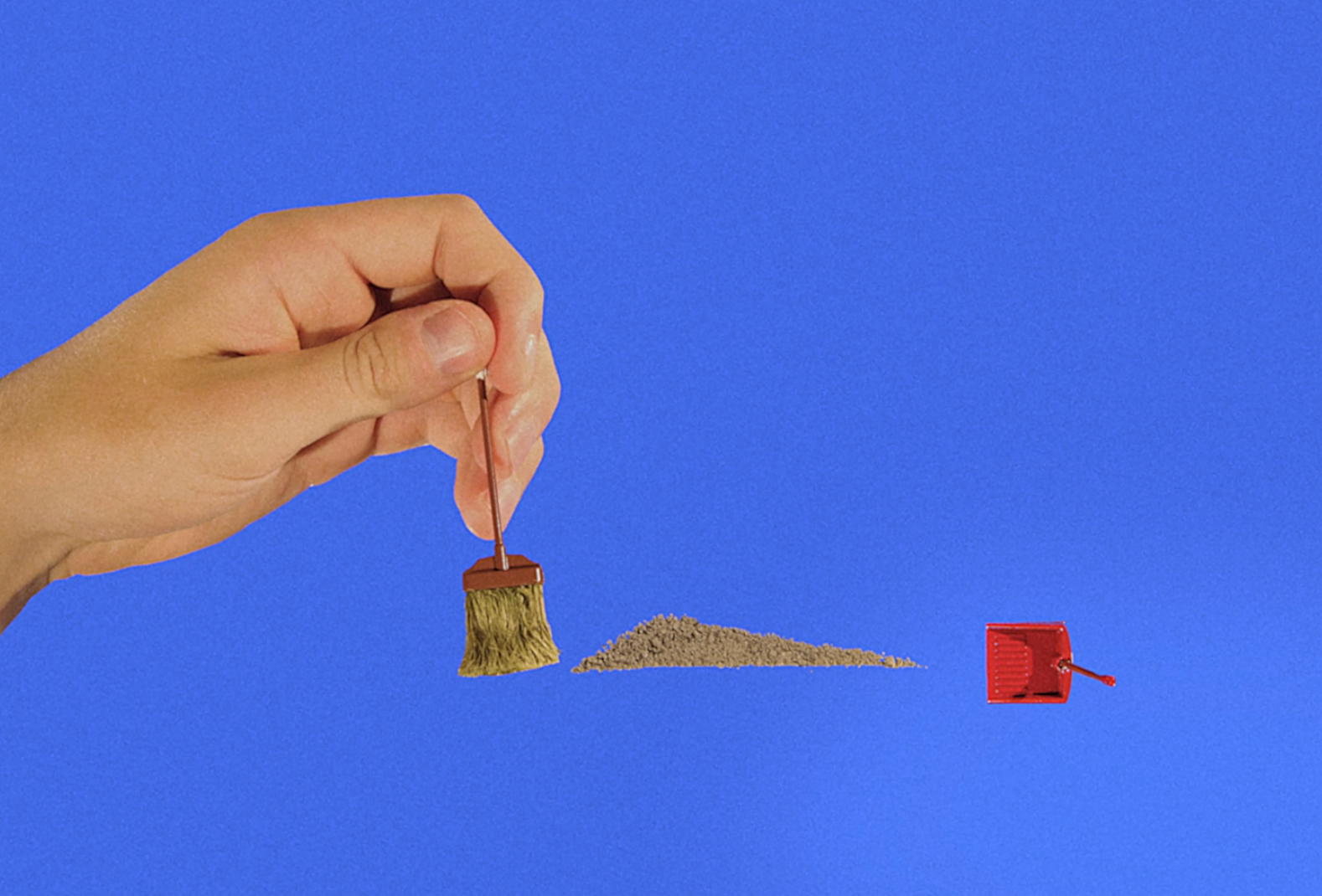
CS: The film itself was one large technical challenge. If I’m to pick a particular sequence that was challenging however, I’d have to go with the cremation scene. There was a lot of hand animation to do in that sequence. Plus Marta and I had to film the coffin burning, which was stressful enough. Then we animated the ash with the tiny dustpan and brush. I remember my arm aching from having to lean over the multiplane for ages while Marta directed me. I think we spent two days filming that.
DC: For me, it was not necessarily a sequence but more the logistics of labelling and then transporting the thousands of paper elements from my desk in Trim to the studio that the guys had set up in Marta’s house in the Dublin mountains. There were a few instances when one of Sam’s eyelids or a stupid corner of a set got lost in my carpet or in the car and that delayed us for a few days each time. I think it would have been a lot easier if we had access to a proper studio rather than working from home. I’m still finding bits of paper limbs and props all over the place.
How did your creative partnership function in practice?
CS: Delphine and I had never worked together before ReRooted so finding out how we both work took some getting used to. It didn’t take long for us to be singing from the same sheet as it were. Open communication was key. It was hard sometimes especially when we were shooting where I’d have to make decisions in the moment and we’d be missing frames 272-305 or a character’s jumper and Delphine would be at work. Not her fault at all, it was just one of the challenges we encountered.
DC: There was definitely some adjustment at the start of the project, when we had to shift from friendship to work relationship. Particularly in the way we communicated with each other, which often had to be by email, as I worked on it remotely. We found out that Zoom calls or face-to-face meetings were better after a while. My time was limited too as I have another job four days a week, that also took me away for weeks on end during the production. Thankfully, we have very similar tastes, political leanings and the same sense of humour, so coming up with ideas and solutions that worked for both of us was relatively easy.
As a first animated short for Delphine and a second for Christian, how did you approach the project?
CS: I always approach any visual project by drawing. I never write scripts, I’m not a very good writer. But, I can sketch till the cows come home so I would just draw and draw and then we’d come back and refine it and see what we liked. A lot of the facial expressions or weird character faces that Sam makes came directly from those boards that Sean and I did. I prefer analogue working that way. So my approach initially was very similar to Small Hours. Until we got to the parts that were all new and the only way I know to tackle that is just weaponise my naivety and not think about it too much and just go for it.
DC: I very much relied on Christian’s and Marta’s experience in terms of the technique and animating the film. This was very much their area. The paper-making and cutting and in some part, assembling was a lot of experimentation, trial and error in my sitting room. The lack of time was definitely not on our side. In terms of the story itself and the initial script drafts, I fill pages in small notebooks. I only move to the PC to tidy things up, but I love the process of hand-writing.
ReRooted has been nominated for the 2026 Irish Film & Television Academy Awards. Excited?!
CS: It’s absolutely mad. I of course believed our film would do well but I also never expected this. Awards don’t matter, but getting recognition for hard work is a huge pat on the back for everyone who made ReRooted happen and we’re deeply proud of that.
DC: Absolutely! Very surprised too, as the other three films are absolutely smashing, so I’m pretty sure we won’t win, but I feel honoured that ReRooted was included.
Delphine, working closely with the animation sector through Animation Ireland and Animation Skillnet, has directing your own changed how you view the industry? How does it feel in this different role?
DC: I wouldn’t say it changed it, but it certainly put certain sides of the industry into sharper focus. I always loved watching animated shorts as a punter, but making ReRooted made me realise how important short films are for the industry, for the individual artists involved, for a studio and also for a country. They are a business card, a portfolio, a showreel, an ambassador, a testing ground for innovation and experimentation and recruitment. I think they are essential culturally and for skills development. I wish they would receive more funding and more broadcast time. I remember feature films were often preceded by shorts in the cinema. I would love it if that tradition came back to our big screens.
Tell me about the musical elements!
DC: Because we had no dialogue, music was hugely important to the film. We both wanted the score to be influenced by jazz, to match the UPA style we had chosen for the visuals, but also because it’s a musical style that can convey all emotions, from melancholy to joy to chaos with humour and interesting beats. We were so lucky to have Patrick Hatchett on board as our composer, who completely understood and delivered that brief. He even won an award for best original score at the Kerry International Film Festival (KIFF) for ReRooted!
CS: Patrick knocked it out of the park. I was taught in college that 50% of animation is the sound. So getting a good composer on board was a must. Delphine and I were blown away by his work and thankfully he answered our call and produced a wonderfully energetic, chaotic and layered work of art. I’m still blown away when I hear it! Our sound team for the final mix, Simon from Folding Waves, did a wonderful job tying everything together. Even adding a rainstick he had since he was eight for the burial scene.
If Sam represents the desire to leave something lasting behind, what do you hope this film leaves behind?
CS: I hope it encourages people to do what they can, whether that’s pursuing art, standing up for Palestine and trans people or planting a tree out the back garden.
DC: A desire to do better for the environment, to stop buying shite from online retailers that ship cheap crap in containers from thousands of miles away.
Has making this film changed how either of you think about your own legacy?
CS: The guy who took the original Loch Ness monster hoax photo was also called Christian Spurling. I’ll always have that to compete with.
DC: Not changed, but maybe reaffirmed it. It certainly did.
Congratulations to you both, and very best of luck!
Hosted for a second year by comedian, actor and broadcaster Kevin McGahern, the Irish Film and Television Academy Awards will be broadcast tonight on RTÉ One on Saturday, 21st February at 10.50pm.
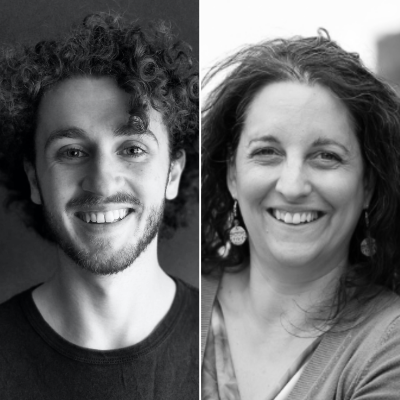
Delphine Coudray
Delphine is a passionate storyteller with a background of over 25 years in writing and directing for Theatre, as well as coaching and film-editing. After studying Animation in her thirties, she entered the industry as Courses and Events Coordinator for Animation Skillnet, providing training solutions to the animation, games, and VFX sectors. She now works part-time as Head of Operations for Animation Ireland, the representative organisation for the country’s leading animation studios, and continues writing and directing her own projects. ReRooted is her first animated short.
Christian Spurling
Christian is a newer voice in the Irish animation sphere. Since graduating from IADT in 2021, he has worked in the animation industry for a variety of studios in an equally varied amount of roles. From backgrounds design, animation, storyboarding and prop painting for stop-motion. He is grateful to have been given the chance to experiment with a plethora of mediums in animation and film styles. His first short ‘Small Hours’ a mosaic-screen animation which was co-directed with Marta Sniezek was a huge success premiering at Annecy International in 2022. ReRooted is his second animated short and his first stop motion and papercraft animated film.
Cardel Entertainment is an Irish production company based in Portarlington in the Midlands of Ireland, developing and producing distinctive film and television projects with international reach. Rooted in the region and outward-looking in ambition, Cardel is committed to growing creative opportunity in the Midlands while building projects designed for global audiences. Working across live action and animation, the company champions bold, character-driven storytelling that combines artistic vision with commercial strategy. Through sustainable international co-production partnerships, Cardel delivers culturally resonant work with strong export potential.