

An undeniable phenomenon, The Clancy Brothers and Tommy Makem hit the chic folk scene of 1960s New York with a bang that resonated worldwide. The songs that they shared with the world have since become a staple of the Irish cultural image internationally, but is this a positive or a negative thing? This is what divides people about the Clancy Brothers.
To some, they are troubadours of traditional Irish folk music, but to others they represent a tiresome stereotype and a culturally damagingly cliche. After over 50 years in the business, the only surviving member of the band, Liam Clancy, has joined forces with filmmaker Alan Gilsenan to make The Yellow Bittern, a deep and dark look at the life and times of a musical icon. Charlene Lydon sat down with Liam and Alan to gain insight into the process behind making the documentary.
Having spoken with innumerable journalists that day, the pair are still full of life and eager to talk about what is clearly a very personal project for both of them. When asked about the origins of the project, Alan explains that it seems so long ago now that it’s difficult to remember but perhaps it started with an in-depth interview with Carrie Crowley on the RTÉ Radio 1 programme Snapshots. Liam recalls: ‘She saw a different side to that which the public would see in an entertainer and that’s what intrigued her.’ This new perspective inspired Alan to develop the notion of the darker side of Liam Clancy. ‘I felt I knew the music. I felt I knew it emotionally and I suppose it struck me how little we here in Ireland know about the story and how many misconceptions that there were here that aren’t shared with the rest of the world. I suppose that was the starting point. It’s nearly 5 years now, since we started. Distant history at this stage.’
The documentary contains some wonderful old footage of The Clancy Brothers, some professional, some intimately personal. We discussed the process of getting this footage together. Liam explains: ‘I had a lot of it myself in my attic in old rusty cans. I had no idea what was in them. Mostly spiders, I thought. Anna, the producer came down and was doing research. I said: “look, just take everything. I have no way of looking at this stuff.” And they found all these archival treasures. In fact, when we were looking at the film the last time I was talking about going out to the Aran Islands and they had film of the Aran Islands way back when the women made all their own clothes and they had homespun breeches and rawhide shoes and the Aran cris [a multi-coloured woven belt]. And I asked him where did he get all that footage and who shot it? And he said “you did!”’
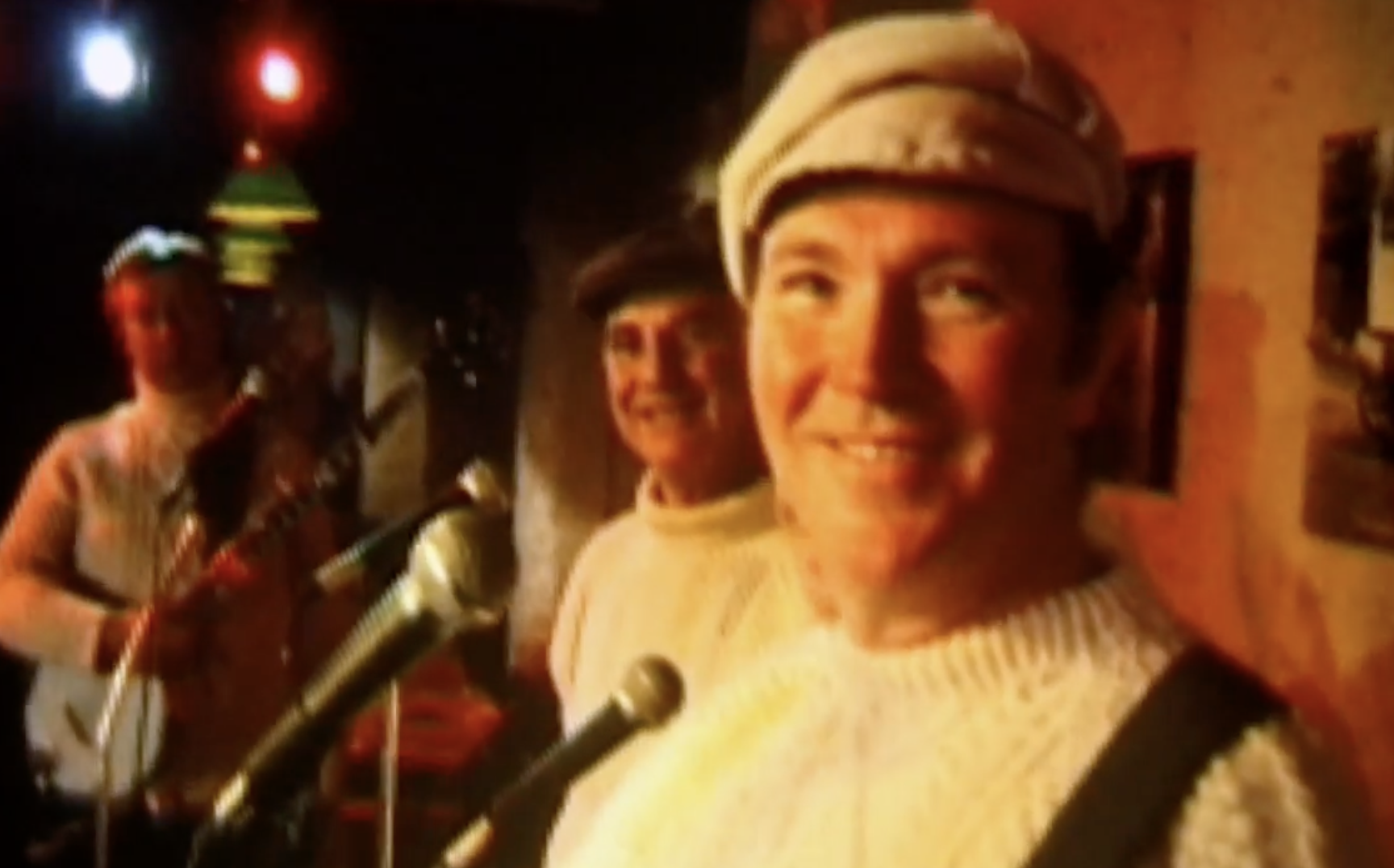
Alan: ‘The good thing about making this over such a long period of time is that you have time to cast the net wide. As a filmmaker, there’s nothing better than finding a rusty old can covered in dust. So we uncovered a lot of footage that nobody had ever seen before. Home movies and weddings that even Liam and Kim [wife of Liam] hadn’t seen. But also other stuff that became outtakes. Trims of old 16 mm films that we’re putting back together again. What I loved was that you got part of the story that wasn’t… I mean, there have been a multitude of interviews and concerts but this was stuff that wasn’t shot for public consumption. So I often feel it’s the little moments, you get a little personal glimpse. There’s a lovely shot of Kim playing the banjo at the wedding. She’s had a few drinks, I’d say, and she’s the picture of beauty and fun and I think that’s a really intimate glimpse and every time you see that you kind of fall in love with her.’
The documentary not only delves into the Clancy Brothers’ past, but also places their rise to fame within a political and social context. The background of the political landscape in 1960s America is a huge part of the documentary. I asked Alan how important it was for the documentary to place the band within that context: ‘Liam and the lads’ story didn’t exist in isolation. Here, we sort of imagine they disappeared into some Irish-American ghetto and came back as stars. But to me, it was Liam’s interaction with that extraordinary history and how The Clancy Brothers affected that musical history and how the social history affected the music. And I think that’s fascinating. As Liam began to tell that story I thought how it all makes sense now. I understand how the music was brought from here on the early trips with Diane Hamilton. They were brought to America from Mammy Clancy and Tommy Makem’s mother and sort of drawn on and reinvigorated, reinvented by their interaction with black music and American folk music and then brought back to us. I kind of understood it. It all made sense to me. Before it didn’t. I mean, I understood it emotionally but I never quite understood where it had come from. And, you know, all that ‘68, black power, Bob Dylan stuff, we kind of romanticise it.’
Liam: ‘When it’s happening it’s a very different thing. It’s unfolding in front of your eyes. It’s like the songs on that Columbia album. Hearing them after 45 years. They published a concert we did in Carnegie hall just after we did a concert for Kennedy and before he was shot. That was never on the original record. There was only 38 minutes because on an LP that was all you could fit. But now they’ve put out a double CD with all the banter in between. You see the songs we now take for granted. They’ve become old hat. It’s what’s being said between the songs and the historical context that makes it into a social document. It was while I was listening to the sings I was thinking that at the time nobody had heard these songs. New lamps for old, and fresh bread coming out in the morning before they were hackneyed in pubs and channel-dragged, before they were forced to jump like sick old lions at a circus through burning hoops night after night. That’s the feeling I got from it.’
Liam went on to discuss with me at length his thoughts on Irish music today. I asked if he felt that the songs were surviving, to which he replied: ‘It’s become technical. And even in songs. People are more interested in having a party piece. I heard one country and western singer being asked about the words of a song she sang and she said “God, I don’t know. I never listen to the words”. To me the only reason to sing a song is that you’re so excited by the words and melody coming together and what it means to you, how it resonates with you. That’s the only reason to do it. And to try and make the listener as excited as you are about it.’ I asked if he thought that our current economic slump might bring out some passion and sense of rebellion in musicians and potentially a new wave of Irish music. ‘Well it’s certainly going to bring an element of real life. I mean they’re bringing in new laws every day and it isn’t the case that every time they create a new law they strike an old one off the book. We’ve become a nanny state. And the nanny ain’t that good. Ah Jesus, it’s ridiculous. It’s so sad down the country. All the songs that we used to get, all the fun we had was all done down the side of the pub. You could shoot a cannon through it now. They’re closing at the new time.’
I asked both Alan and Liam if it is their intention in making this film to bring about a renewed interest in and appreciation of The Clancy Brothers and Tommy Makem and, indeed, Irish folk songs in general. Liam: ‘You would hope. Making a film is very much like writing a book. You do your job, it’s your baby and you put it out there. But you have no control over your baby once it’s left you. You can hope that it will do this and do that once it’s left you but if you’re realistic you’d better be prepared for disappointment.’
Alan: ‘Musically, there’s an awful lot of drivel. But there’s always renewal. And I think the wonderful thing about the songs that Liam and his brothers recorded is that they will last. They’ll be there. And I think those songs and the interpretations of the songs, I mean, there’s no better man to sing a song than the man beside you now. I think that will continue to be an influence. I think things go in circles. I know from talking to musicians about the film, about Liam, that they’re coming up – young people who are reinventing traditions. Even if you look at pure traditional musicians. Look at Caoimhín Ó’Raghallaigh who is very contemporary but absolutely drawing on the traditions and reimagining them. And other singer-songwriters – they know a class act when they see one. And I think that will carry on. There’s always cycles. The wonderful thing about folk music is that it’s endlessly changing and rekindling a tradition that’s passed on. Liam has said this before. You inhabit these songs in the moment of performance then you pass it on. Mammy Clancy, Sarah Makem, they passed them on.’


