
In this article, award-winning Ukrainian journalist Yuliia Riabova, now based in Kerry, turns her focus to Shelter, a short film by Leah Egan. The French/Ukrainian-language film - supported by Bow Street Academy and Screen Ireland - was shot in Athlone but is set in a Ukrainian war bunker. Riabova speaks with Egan about the origins of the story, the filmmaking process, and the challenges of balancing multiple creative roles within a single project.
Since Russia’s full-scale invasion of Ukraine in 2022, questions have emerged within the film industry about how, and whether, this war should be approached through narrative cinema. Is the wound too open? However, nearly four years into the war, as the international community grows fatigued by headlines, it is human stories that continue to resonate.
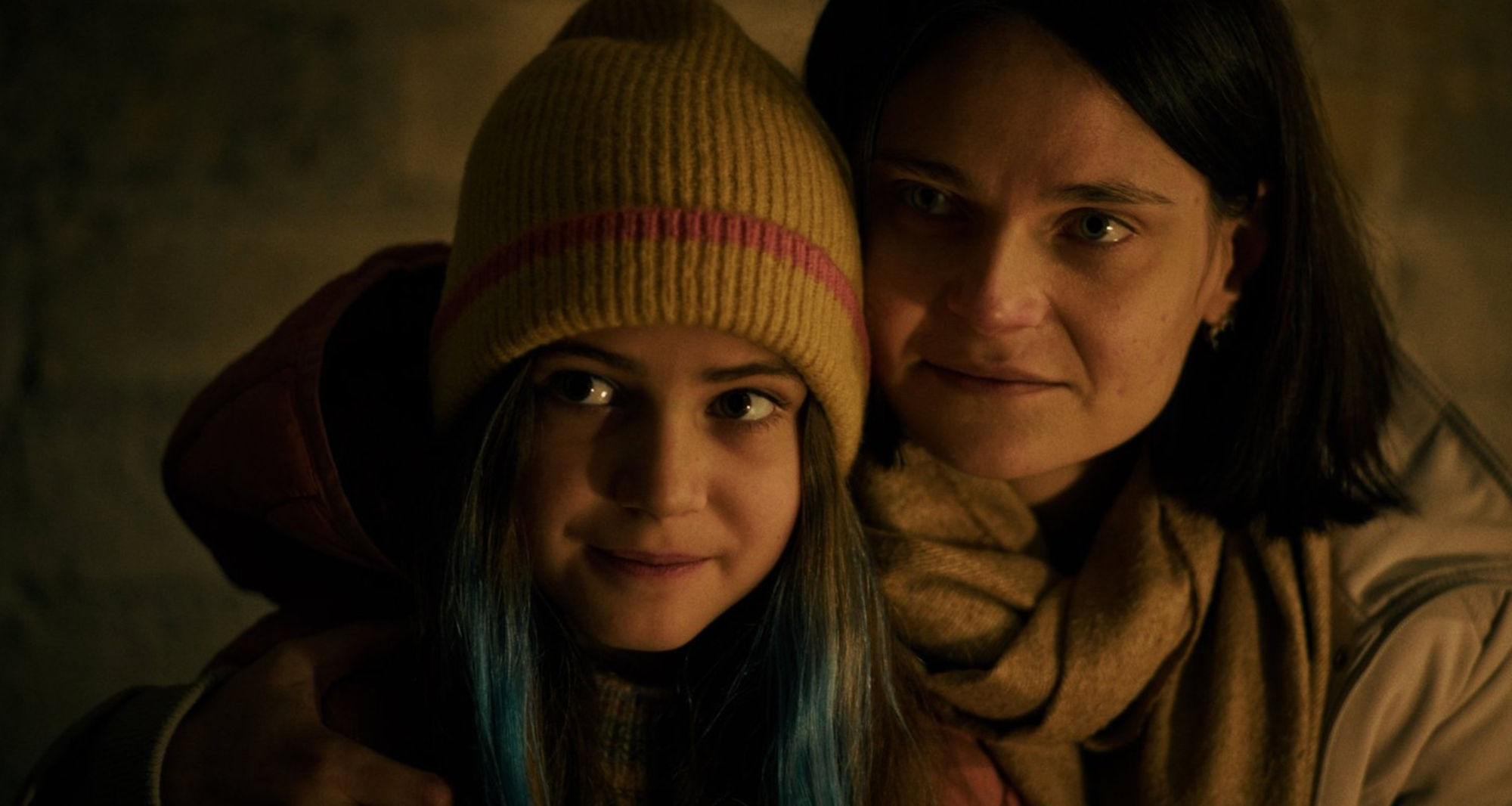
Where empathy meets storytelling, Shelter finds its voice. The short film was written and directed by Irish actress Leah Egan (Ros na Rún, Life Begins Now) as part of the Actor as Creator scheme, funded by Screen Ireland and Bow Street Academy. Shelter tells the story of a French photographer, played by Leah herself, who is stuck in Ukraine during a Russian attack. Without knowing the language, she shares a moment of extreme vulnerability and fear with complete strangers, with whom she forms a fragile, unexpected bond.
So, Leah, how did the story of Shelter come about, and what drew you to this particular topic?
LE: The idea for Shelter was born of special encounters with incredible humans, not least several Ukrainian souls who now live in my hometown of Athlone. I am fascinated by languages, by what it is that connects us as humans, versus that which we falsely believe sets us apart.
It seems we have somehow become desensitised to the faces and images that flood our news articles and social media feeds in recent times. Shelter is about re-humanising those faces, about centring the hearts hidden within the headlines. Though the story is set in Ukraine, the message is universal. Language and geographical borders are something we are born into. Why then must it be that there are people in this world justifying persecution based on these ‘dividers’?
Shelter is about re-humanising those faces, about centring the hearts hidden within the headlines.
I can imagine that working on the script for Shelter wasn’t easy, given how sensitive the subject is for many people. You had not one, but two language consultants, for French and Ukrainian. Was the multilingual nature of the script challenging?
LE: As a storyteller, my intention is to uplift the stories of others in a way that rings true. Truthfully, I cringe at how many times my name appears in the credits of Shelter. Not because I’m insecure. But because it’s deceptive. I was fortunate to have had incredible souls willing to feedback and support the making of our end result.
Outside of linguistic translation, there were cultural considerations to take into account. Cultural correspondents consulted on initial drafts. Interviews and consistent check-ins informed the way the script progressed. The translation work was imperative. Direct word substitution is not translation. It is a poetry and craft all of its own. I’m fortunate to have had the team we did. Without the textured linguistic development we had, I firmly believe the end result would not have landed as it did.
You developed Shelter through the Actor as Creator scheme. What inspired you to take on new roles, and how did you find this experience?
LE: Actor as Creator offers an incubatory space for an actor to actualise an idea, often an exciting one, with complete executive control. That’s invaluable. And rare. Producing work as an actor empowers your ability to do your job. It takes the sting out of rejection, if you carry it. It adds a thicker layer of skin to your craft. And it’ll definitely make you kinder to the producers in your life [laughs – ed.].
The Actor as Creator scheme is a next-level initiative for character-driven content. Actors are into people. I mean into people. If you want compelling character-driven narratives, get an actor's imagination on the case and watch what unfolds.
I’m fascinated by people. I’m incessantly curious about why you’re you and how you ‘you’ your way through your life. That translates into my professional life. I meet people, they share things. My imagination grasps something and I’m away. My sister jokes that the macabre lights me up. In my mind though, it’s not macabre. It’s what draws me. I look directly at it if it rings important internally and set about finding the kernel of love in the thick of it. What makes us different? What makes us the same? These are the things I sit with.
Speaking of the sting of rejection, what was it like being on the other side of the casting process?
LE: In casting, you learn how largely impersonal decisions are. There are many, many creative variables at play and it’s rarely a question of talent, which might be difficult to fathom from the outside. I trust adults to understand the nuances of that. Kids, however, are different. They’re pure. That’s what makes them so magical, and fun. I’d never cast a child actor before and that made me apprehensive. I believe as an adult you have a responsibility to the creative expression of a young person. To nurture it, to ensure no creative injuries come their way. Myself and Louise, co-producer Louise Richardson, were incredibly intentional about that going into the audition process. What that meant in practice was that any young actor who was shortlisted as Sofia played a role in the film.
Shelter had a mostly Irish crew and a mostly Ukrainian cast. How did that dynamic affect the set and the overall shooting process?
LE: Anyone who’s worked on a set knows that often the experience of making the thing can reflect the themes of the work itself. This was true of Shelter, to an uncanny extent. Myself and Louise were conscious going into our shoot that a significant number of our cast members were people with real, lived experience of the world events in the script. That’s not something to be taken lightly. We ensured mental health supports were available. We ensured we addressed explicitly our intentions to our cast and crew. I have to give a special mention to my 1st AD Rachel McNulty for that, and Anna Matushkina, our on-set translator. They were both magnificent.
The result come shoot day was a glorious moment of connection and community. At one point, I counted four different languages being spoken. As the person who wrote a project born of a desire to bridge linguistic divides, that was a magical moment. People were teaching each other how to say phrases. Everyone was trying, and learning, and admittedly having fun. When people needed breaks, they got them. When people got upset, which they did, we minded them. Communication was to the fore. As with any other shoot, we had pages to shoot but we also had people to mind. That’s a founding tenet for me. Not just what I’m creating, but how. I’m interested in cultivating an on-set culture where people are seen and heard, in and of themselves, independent of the work or job we do on the day.
You also play one of the main roles in the film. How did you balance your approach as an actor with your responsibilities as a director? What was it like collaborating with on-set director Sara Ryan?
LE: I knew I needed an on-set director to fully inhabit my responsibilities as an actor. As director, I needed someone I could wholeheartedly trust. Sara was that person. Having worked together before, I knew our working styles were similar. Sara was my mentor on my first TV director opportunity at Ros na Rún. Outside of being her biggest personal fan, professionally I greatly admire her work ethos and vision. Having Sara on set made such a difference. She’s a consummate pro. Trustworthy, gifted, steady. I don’t believe you can do both roles at once, director and actor, and so having Sara with us was important and integral.
You filmed in Athlone in just two days. Did such a short timeframe add a lot of pressure?
LE: Initially we’d hoped for a longer shoot. However, due to budget constraints and other logistical considerations, we whittled it down to one location over two days. I’m so grateful we did. My previous short film had eight locations in three days, so being in the same location for two full days felt luxurious. Choosing well in our casting process meant we didn’t need to rely on rehearsals. Having a producer like Louise too changes the game and amplifies what a project is capable of. Together we worked closely ahead of time. We had one prep day for HODs and then we hit the ground running. Being in one space then gave us the freedom to discover the unexpected, ride some unanticipated hiccups, and curiously added to the contained nature of the script. I’m so grateful logistically we shot as we did.
Post-production must have been interesting. Editing a film in a language you don’t speak?
LE: Luke Garnham, editor, has edited both of my writer-director credits. He jokes that I like to add that extra layer in the mix, one that tends to require subtitles. My first short film, I See a Voice, was predominantly Irish Sign Language. Shelter is French and Ukrainian.
Unexpectedly, for Shelter I found not speaking the language was useful. The film is centred on one character not understanding the other. Life imitates art in a joyful way then, when your editor can’t understand what is being said either [laughs].
How did you feel seeing the final result for the first time? And what has the audience reaction been like?
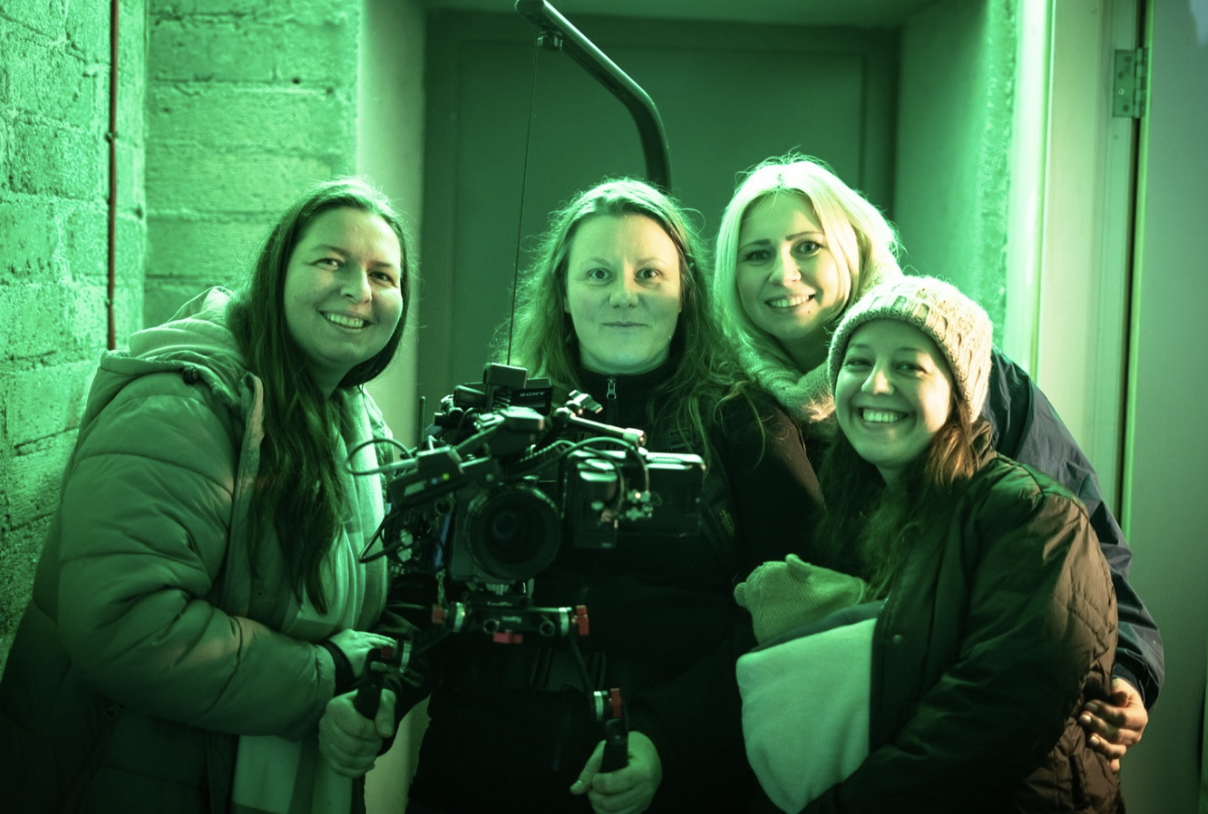
LE: I joke that a filmmaker sees their film 4,765 times. The end result rarely feels like a reveal and more like a sculpting, a chipping away until finally you land on something that you call ‘done’. Sending my end result to my cinematographer is always the most daunting aspect of filmmaking for me. Jaro Waldeck's response was supremely kind and precise. That was the most meaningful moment for me. That was the moment I considered us done.
The reception has surpassed all expectations. It’s one thing to create a film, but it’s another thing to share it with the world. The response has been warm, heartfelt and meaningful. Specifically, I have been humbled by conversations with those who have direct experience of displacement, collaborators and audience members alike.
So, having now made two short films, acting or directing? What does your soul lean towards most?
LE: Being a director makes me a better actor and vice versa. In doing one, I’m indirectly working on the other. That being said, I’ve learned in my own creative life that a balance is required. I’m an introvert and can only extrovert for so long, and in those moments I write again. It’s a cycle, really. Each aspect complements the other in an internally co-dependent way.
Ultimately, the fulcrum that holds me is the stories. In Ireland, storytelling is an ancient, sacred artform. It’s how our ancestors passed information, how we made sense of the world. Seeing the work I do through this lens widens my periphery. It lightens any egoic pursuits my brain might pursue. Ultimately then, it’s not about me, really, which is a relief. It’s much, much bigger. I’m freed up to see what I see and set about sharing it. Sometimes I do that as a director, often as an actor, other times as a writer. Often though, it’s just me in my everyday life, perceiving something through a story and sharing what I see.
In Ireland, storytelling is an ancient, sacred artform. It’s how our ancestors passed information, how we made sense of the world.
That was certainly noticed, as you received the Women in Film and Television Award for Best Writing (I See a Voice). And Shelter was picked up for Best Cinematography. Having celebrated the dual win, what are your plans for the future?
LE: My plan is to continue to follow the stories and see where they lead. I’m several projects in development and I’m returning to actor work in the industry after an intentional break. It’s an exciting time for Irish filmmakers. You only have to get yourself to any Irish film festival to see that to be true, which I highly recommend.
As Ukrainian poet and fallen defender Maksym Kryvtsov wrote: “When they ask me, ‘What is war?’ I will answer without a second thought, ‘the names.’”
Yuliia Riabova is an IMRO-winning newcomer to Irish radio, a podcaster and radio documentary producer. Originally from Odesa, Ukraine, where she worked as a news reporter and editor covering events such as the International Film Festival, she moved to Co. Kerry, Ireland, in 2023. There, she completed the Journalism, Podcasting and Radio course run by Radio Kerry and Kerry College. With a strong interest in cinema, Yuliia has worked at local events such as KIFF and aims to continue building her career in film journalism.
Shelter premiered at the Galway Film Fleadh in 2025 and has recently won Best Cinematography at the Women in Film and TV Ireland Showcase.


