

Film historian and writer Aubrey Malone casts an eye on the life, love and career triumphs of beloved Ballymena actor Liam Neeson.
Maybe we should not be surprised that Liam Neeson returned to comedy for the Naked Gun reboot. His U-turn to becoming an action star with global hit Taken was something of a surprise too. In fact, he is a man who continues to reinvent himself. And with 2025 coming to a close, people are still questioning his supposed romance with co-star Pamela Anderson, but with good intent. Everyone just wants to see Liam happy, and in love again. That's how much we care about him.
Having turned seventy recently, maybe it is time for Liam to stop jumping off trains and lean into being goofy like Leslie Nielsen, who also reinvented himself with this franchise. Reiterating the old saw, he says acting is the “shy man's revenge” for him.
An Early Obsession
Liam was a loner as a child. Growing up in the primarily Protestant Ballymena (home of that quintessential Protestant, Ian Paisley) made him feel something of an outsider. “People keep asking you which foot you kick with,” he said, which was a roundabout way of asking what religion you were.
The son of a cook and a primary school caretaker, Liam had three sisters. Although christened William, that was too hard to get their tongues around, so this was soon shortened to Liam.
In his younger years, he gorged himself on films; Liam would sometimes watch up to a dozen a week. He did not go pubbing or clubbing when he got into his teens. Asked once how he spent the sixties, he said, “The decade passed me by. All that free love, forget it. I was locked away in my bedroom reading Hamlet.”
Not all of the time, though. He did join a boxing club during those years. Even then he seemed to have an intuition that his future lay in the public eye. He admitted to spending a lot of his time back-pedalling in the ring.
Finding Motivation
Although not the type to sing rebel songs before, Liam became deeply politicised after the violent attack of Bloody Sunday in 1972.
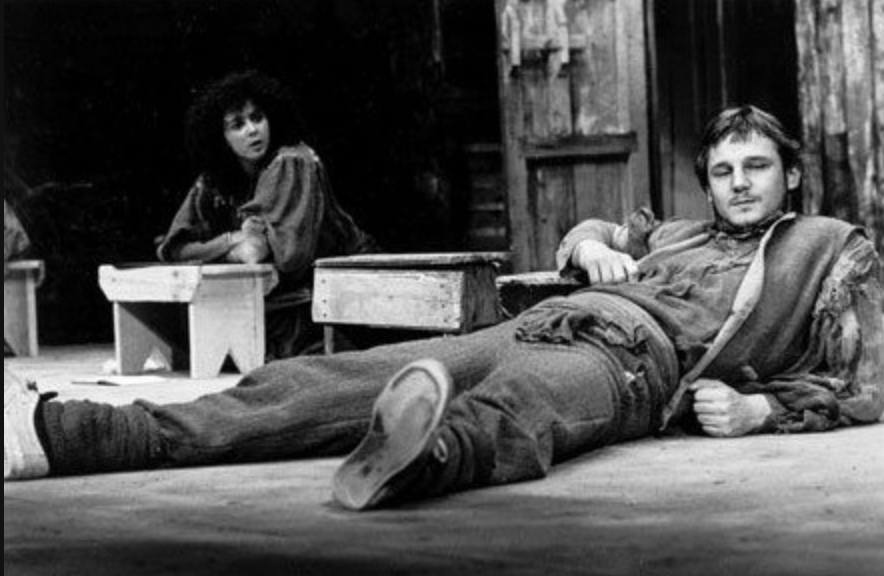
At the time he was studying Physics in Queen's University. After he graduated he drove a forklift for some months before joining the Lyric Players in Belfast. His height of six foot two, made him the ideal choice to play “big” Jim Larkin in The Risen.
Then, moving to Dublin, he performed in Ron Hutchinson's play about the Troubles, Says He, Says I, which was staged in the Project Theatre on Essex Street. That was the first and only time I saw him live. I was in the front row. He was close enough to touch. I was blown away by his energy.
You felt you could almost taste his spit as he roared at his co-stars.
From there, his next role was in the Abbey. His first film break came in 1978 when he was cast as Jesus in the film Pilgrim's Progress, and two years after that he was offered a part in Excalibur by John Boorman. This was where he met Helen Mirren, his co-star. She was considerably older than him but they clicked and ended up together for half a decade.
When their relationship ended, he dated two Hollywood A-listers, Julia Roberts and Barbra Streisand. Everyone, it seemed, fell in love with that Northern twang of his. Listening to it was like falling into a pool of honey.
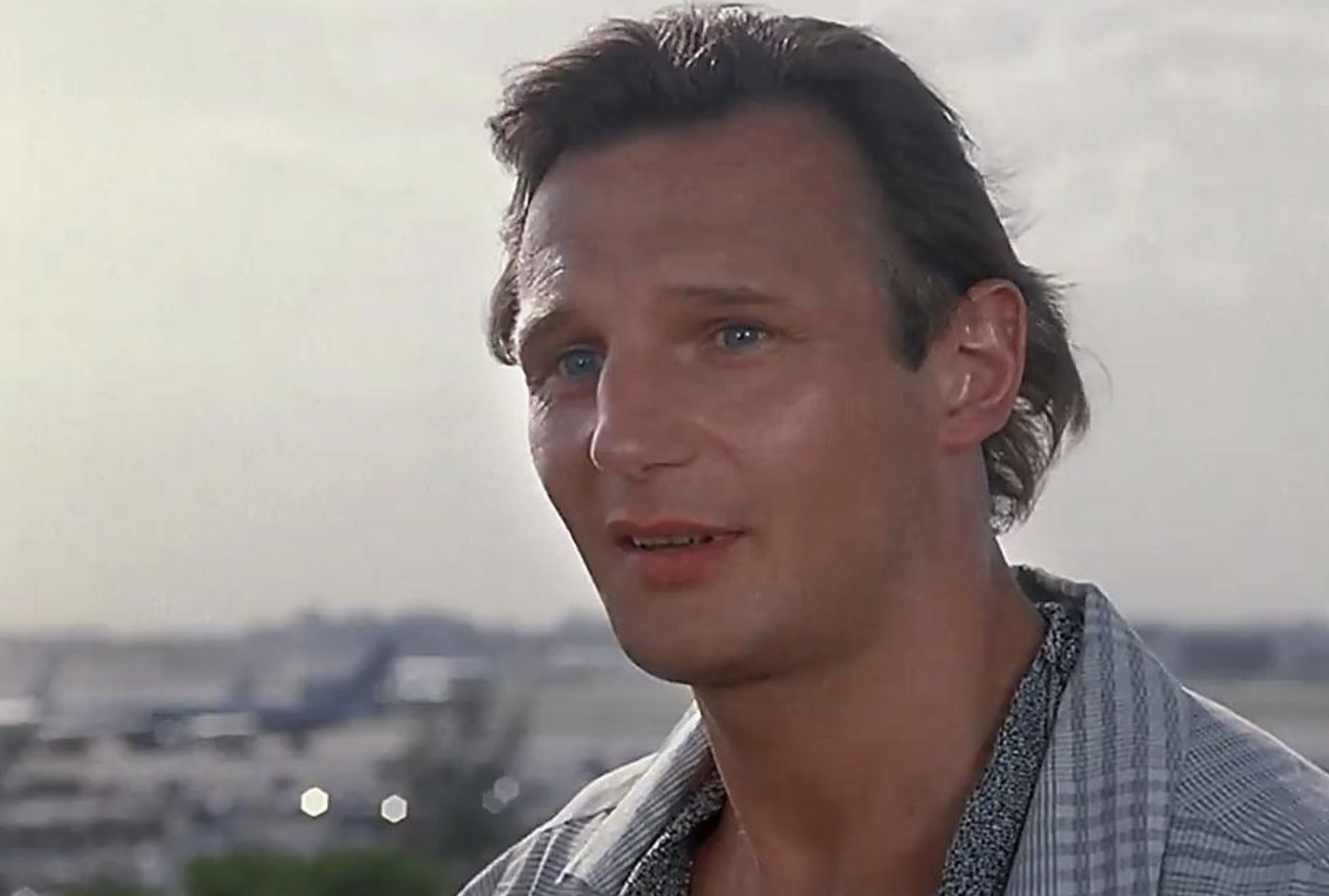
In 1986 he appeared in an episode of the third series of Miami Vice on TV. He was so tall, nobody could find a suit long enough for his legs, which meant his scenes on the show were shot from the waist up... in polka dot underpants.
By now he was firmly on the Hollywood ladder, appearing in films like The Bounty with Anthony Hopkins. When asked by Hopkins how he was faring, Liam replied, “I have not been found out yet, boyo.” An appearance opposite Hollywood's especial Method actor Robert De Niro followed in The Mission.
Love Behind the Scenes
This journey all led to his meeting Natasha Richardson, the woman who would become his wife; they were playing opposite one another in Anna Christie on Broadway in 1992. They co-starred in Nell with Jodie Foster the following year and Foster watched them falling in love on the set.
Now Liam's career was about to hit the stratosphere. He was Oscar-nominated for playing the “good” Nazi, Oskar Schindler, in Steven Spielberg's Schindler's List. He took his failure to win the award philosophically. “It is not a cure for cancer, is it?”
Other biographical roles followed like Rob Roy in 1995. He played Michael Collins in the film of that name the following year.
In 1998 he was awarded £50,000 in a libel action he brought against a publication that suggested his marriage to Richardson was in trouble. He donated it to the victims of the Omagh bombing, which happened that year.
The role of Jedi Knight Qui-Gon Jinn in Star Wars: The Phantom Menace (1999) proved highly lucrative and also advanced his profile no end. Another instalment of the franchise followed in 2000.
Neeson was offered the Freedom of the Town of Ballymena that year by the Town Council. The Unionist Party objected because of his comments about feeling like a second class citizen growing up. He ended up declining the award.
In 2002 Liam appeared opposite another Method guru, Daniel Day-Lewis, in Gangs of New York, then came Richard Curtis’ feelgood caper Love Actually, before Liam starred in yet another biographical role, Alfred Kinsey in Kinsey.
Grief in the Spotlight
His career took a different turn with the French heist caper Taken in 2008. It was an outstanding financial success. But tragedy was about to strike. Neeson’s wife died in 2009 after a brain injury sustained in a terrible accident while she was skiing in Montana. She was only 45.
For a time he could not think of anything but her. He dragged himself on to do humanitarian work, and in 2011 he became a Goodwill Ambassador for Unicef. Burying himself in dense shooting schedules became an escape of sorts too. He appeared in Taken 2 in 2012 and Taken 3 in 2014. He also shared a brief romance with British publicist Freya St Johnston.
Causing Controversy
By now Liam had become a spokesman on many issues. One of them was gun control. He advocated for tighter gun restrictions in the US in the wake of the Charlie Hebdo killings in Paris. These sentiments were fine but his Taken films featured firearms extensively. Gun manufacturer, Para USA, who provided the prop guns for the series promptly and publicly withdrew them.
Neeson was guilty of the first infamous “foot in mouth” incident in 2018 when he branded the #MeToo movement “a bit of a witch hunt”. Then he made an even worse gaffe the following year when he shared an insensitive anecdote in an interview. He had been asked how he got his inspiration to play a vengeful character in his forthcoming film Cold Pursuit. He said it came from the hatred he felt forty years before when a woman friend of his told him she was raped by a black man. He shared how he had walked the streets with a weapon, how he wanted to kill him - and used many expletives.
The world was enraged. He was pilloried for racism and "toxic masculinity”. All of a sudden it seemed as if he had committed career suicide. Nobody knew if he would ever act again. A red carpet event for Cold Pursuit was cancelled, as was the subsequent release.
Humbled, Liam apologised profusely for the "hurtful and divisive" comments that "do not reflect, in any way, my true feelings nor me". In time he was finally forgiven. The film did eventually reach the big screen.
Seventy and Still Sprinting
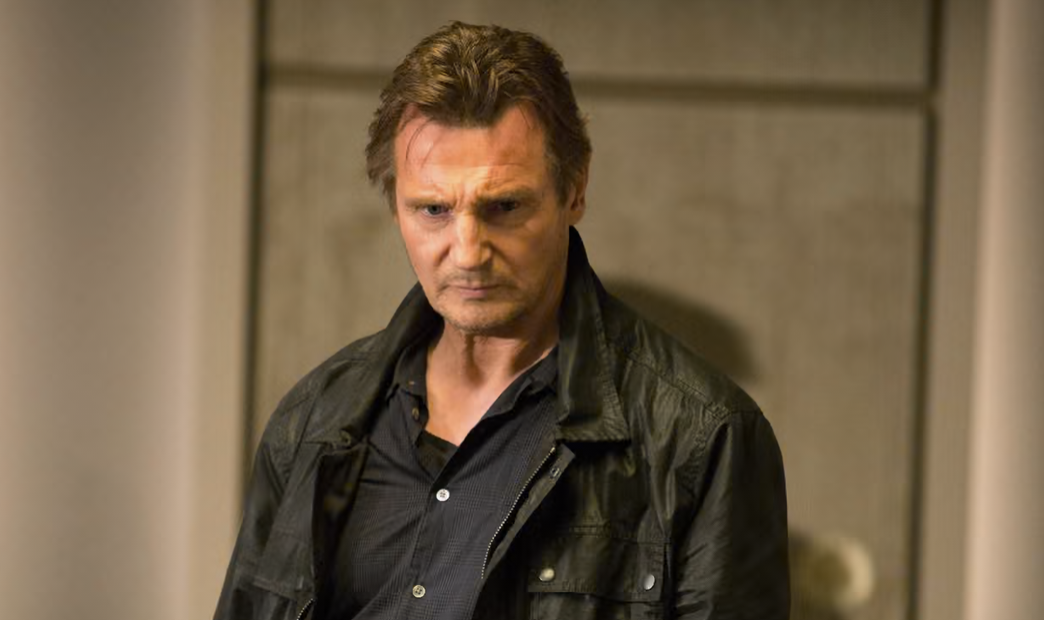
Today Neeson is once again at the top of the Hollywood tree. He has been the recipient of many awards both for his acting and his humanitarian work for Amnesty and other organisations. And yet, he still has not become carried away with his success. There are mornings, he says, in which he wakes up and thinks, “Gee, I look handsome.” Other days he thinks, “What am I doing in the movies? I should be back home in Ballymena driving a forklift.”
He abjures the way gossip rules today in every aspect of the film business. In his view it has been “Kardashianized”. He does not want it on his tombstone, he assures us, that he once dated Julia Roberts and Barbra Streisand.
Liam is a man who keeps on changing. “My psychological baggage,” he says, “is half packed.” It is hard to hit a moving target. In interviews, he continues to play down his success, saying things like, “If you have got a ponytail, a nice Armani suit and the gift of the gab, you can make it in Hollywood.”
Will we see him rescuing members of his family in Taken 16 in 2027? Who else can be “taken” after all the sequels thus far? His granny? His step-cousin's gardener? Not quite yet. His latest project is with Catherine Corless, the woman who exposed the horror of the Tuam babies. He is set to make a film about it produced by Element Pictures.
But there is always one backup plan: “If things ever get bad,” Liam admits, “I like to think I could go back to the Abbey, where I got my start, and learn to become a real actor again.”
The Naked Gun (2025) is available to stream online now.
Aubrey Malone has an MA in English and was a primary school teacher before he then went into journalism, freelancing for publications including the Evening Press, The Cork Examiner and the Sunday Independent. He was the movie critic for Image magazine and for Modern Woman, a supplement to the Meath Chronicle. His books are available to buy online now, including Hollywood Wit, MYSTICAL CROONER: The Lives of Leonard Cohen, and Michael Collins: [a Neil Jordan film].


