
Emerging Irish filmmaker Lucille Carolan turns her lens on a familiar rite of passage in Anatomy of an Irish Disco, a tender and observant documentary exploring girlhood, friendship and the awkward first steps towards adulthood. Ahead of the film's screening at Docs Ireland, she speaks with Lynn Larkin about memory, performance and finding cinematic meaning in the teenage disco.
What was it about the rural teenage disco that made you think, "There's a film in this"?
I think for me there was always a film in this topic as this world is so rich in contradictions, childhood taking baby steps into adulthood and what it looks like to perform being an adult for the first time, to engage in essentially a simulation of an adult nightclub. What drew me the most was how delicate the emotional experience was of it all in my memory and I wanted to convey that, the nerves, talking to your friends about who’s going to be there, what we’re wearing, literally just tanning for the first time and being worried it’ll look crap and uneven. It’s all new territory. As a tradition/coming-of-age staple it has proved pretty immovable, it really does feel like a rite of passage. And as a simple night out it fits into a much larger picture of Irish culture.
I loved your comment about remembering that age as both incredibly exciting and a little underwhelming at the same time. How did you capture both those feelings on screen without leaning too heavily in either direction?
I think this was definitely a balance we had to find in the edit. My amazingly talented editor, Amy McFarland, was brilliant in helping construct this. There could always have been a version of this that was all about the hype, the loud music, the glittering lights of the disco and of course we did want that to a certain extent. A disco is exciting, but what is equally true is that it ultimately is children on a night out, very much overseen by parents whether directly present or not and, in the girls’ own words, the best part was always the getting ready anyway. What comes after is just following through on the fact you got ready.
One of the themes that really stayed with me was the idea of identity as performance. As teenagers we're often trying on different versions of ourselves. Was that something you consciously wanted to explore from the beginning?
Yes, very much so, that’s a theme I’m drawn to in every project. I think that is the crux of what makes teen disco culture so interesting because it’s a performance of adulthood. However, I was also very conscious from the beginning about not ridiculing that. I think it makes perfect sense teens do this, we all did.
The setting feels like a character in itself. You've got this working farm full of newborn animals sitting alongside teenagers taking their first steps into what feels like adulthood…
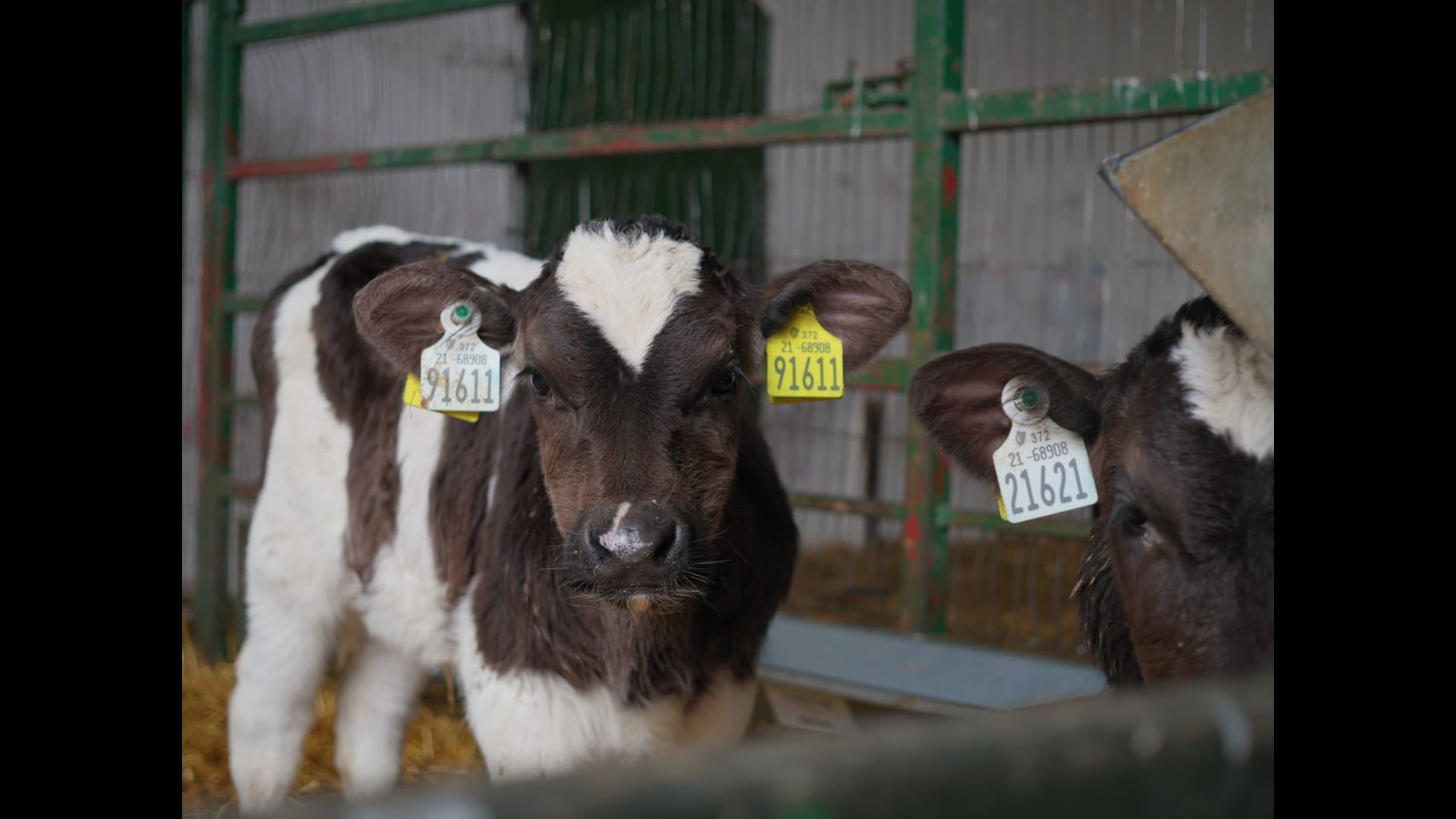
As soon as we had our first location visit for pre-vis, Causey Farm (the disco venue) is an actual working farm, so when I saw all the baby animals of spring I fell in love and they felt like a perfect parallel to teens in a disco environment. When I was shown the barn that is used for discos, I started spotting in various corners of the barn a discarded lip gloss, mascara or lip liner. That was a really evocative detail for me. I knew immediately I wanted to include it. I loved these small tokens of girls coming of age dotted around the physical space.
The film is centred on teenage girls and treats their experiences with real respect. Why was it important for you to revisit this period?
Yes definitely, I had played around with the idea in development of including the parents’ experience more and allowing them to weigh in and understand how the night unfolds for them, but the more I thought about it, the more it felt right to narrow the point of view to just the girls’ experience. When disco culture is discussed in Irish media it never is through the perspective of those actually attending, so that became very important to me. Framing was intentionally quite intimate, close and framed (we used prime lenses rather than a much more practical zoom for this reason). I wanted it to feel like we are in this world with them rather than distanced, disconnected and giving equal weight to the parental experience.
You describe the film as an empathetic follow-up to something that's often ridiculed. I think many women can relate to that feeling of looking back and realising that experiences people laughed at were actually incredibly important. Do you think girlhood is still underestimated in the stories we tell on screen?
Girlhood is so underestimated, typically anything women love is ridiculed early and often. Fangirl culture is such a perfect example, it's completely derided but the thing teenage girls do best is truly loving what they love. Emotions are all we have at that age as our life experiences are still quite narrow, but the feelings are just as big (if not more) than any other stage of life. The stakes feel high, the process of growing up is very real, even if from the outside it seems kind of small. So yes, with this I wanted to bring the same kind of seriousness and curiosity we might bring to more traditionally respected coming-of-age stories.
Something I found myself thinking about was how different teenage girls behave depending on who's watching. Did you notice moments where the girls were performing for each other, for boys or even for the camera?
What struck me most was actually how little I found myself thinking about the boys! This topic is often interpreted through the lens of attraction or dating, but what interested me most was the social world the girls were creating with and for one another.
I was very lucky that my crew was made up largely of close female friends. Our cinematographer, Lavinia, and sound recordist, Tess, are two of my closest friends, as well as living with Lavinia at the time, so in many ways it felt like a group of young women documenting another group of young women. I think that created comfort and trust while shooting.
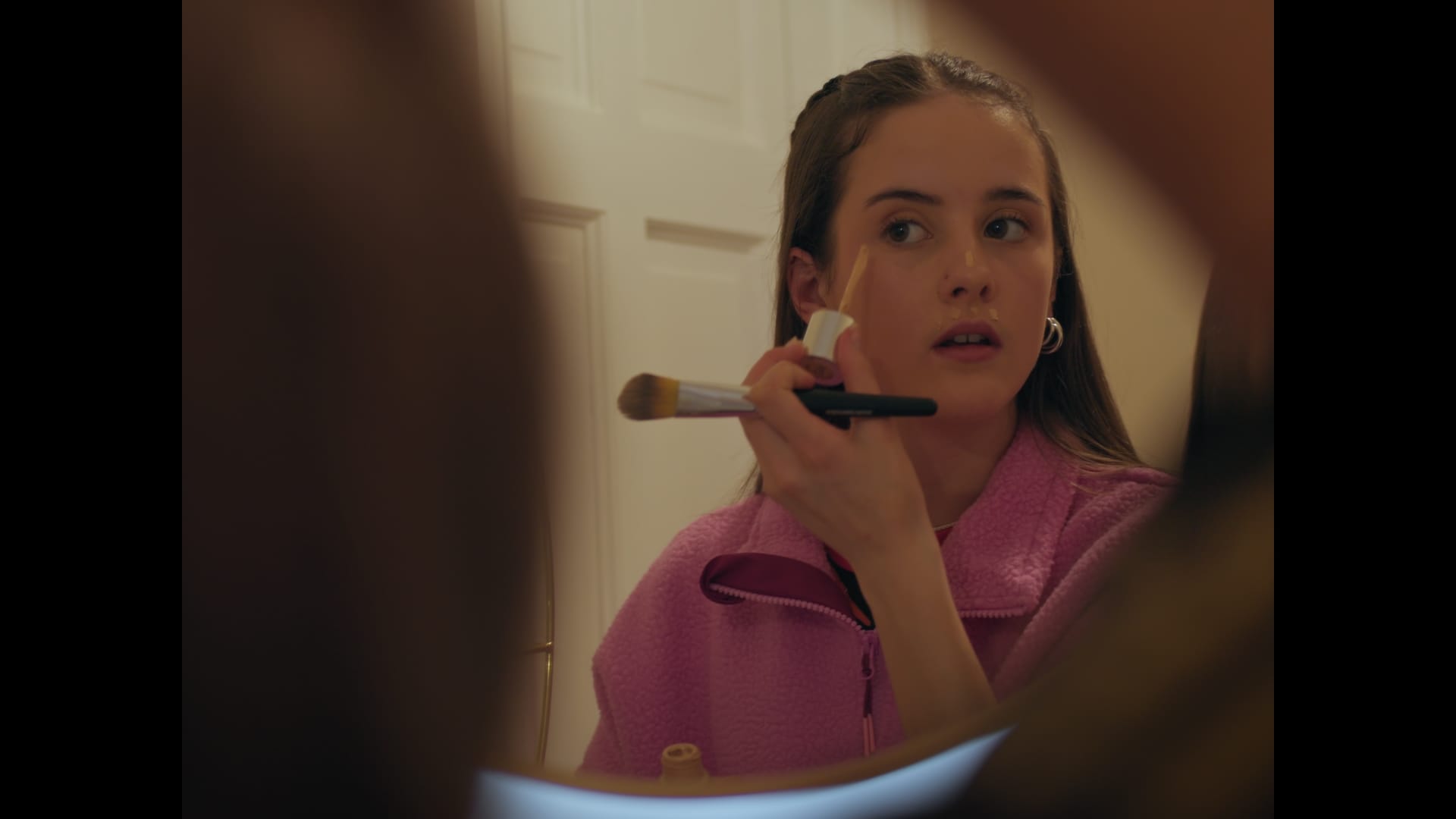
What I did notice was a shift once the make-up was on and the final touches were being made. The girls began speaking to one another in a way that felt very familiar to me and to many women regardless of age. Conversations turned to whether a dress looked right, whether their foundation matched, whether a photo should be taken again. There was a lot of reassurance and encouragement.
Of course, the camera changes any situation, but I was struck by how much of what the girls were doing felt recognisable rather than performative. They definitely reminded me of my own teenage years.
There's a lovely tension in the film between memory and observation. How conscious were you of not romanticising your own memories and instead allowing the girls' experiences to speak for themselves?
I think it's hard to completely separate memory and observation in a film like this. My own memories of teenage discos are what allowed me to make this in the first place and gave me a sense of what emotions I wanted to explore. At the same time, I definitely did choose to play down some of the more glamorous, exciting aspects of my memories.
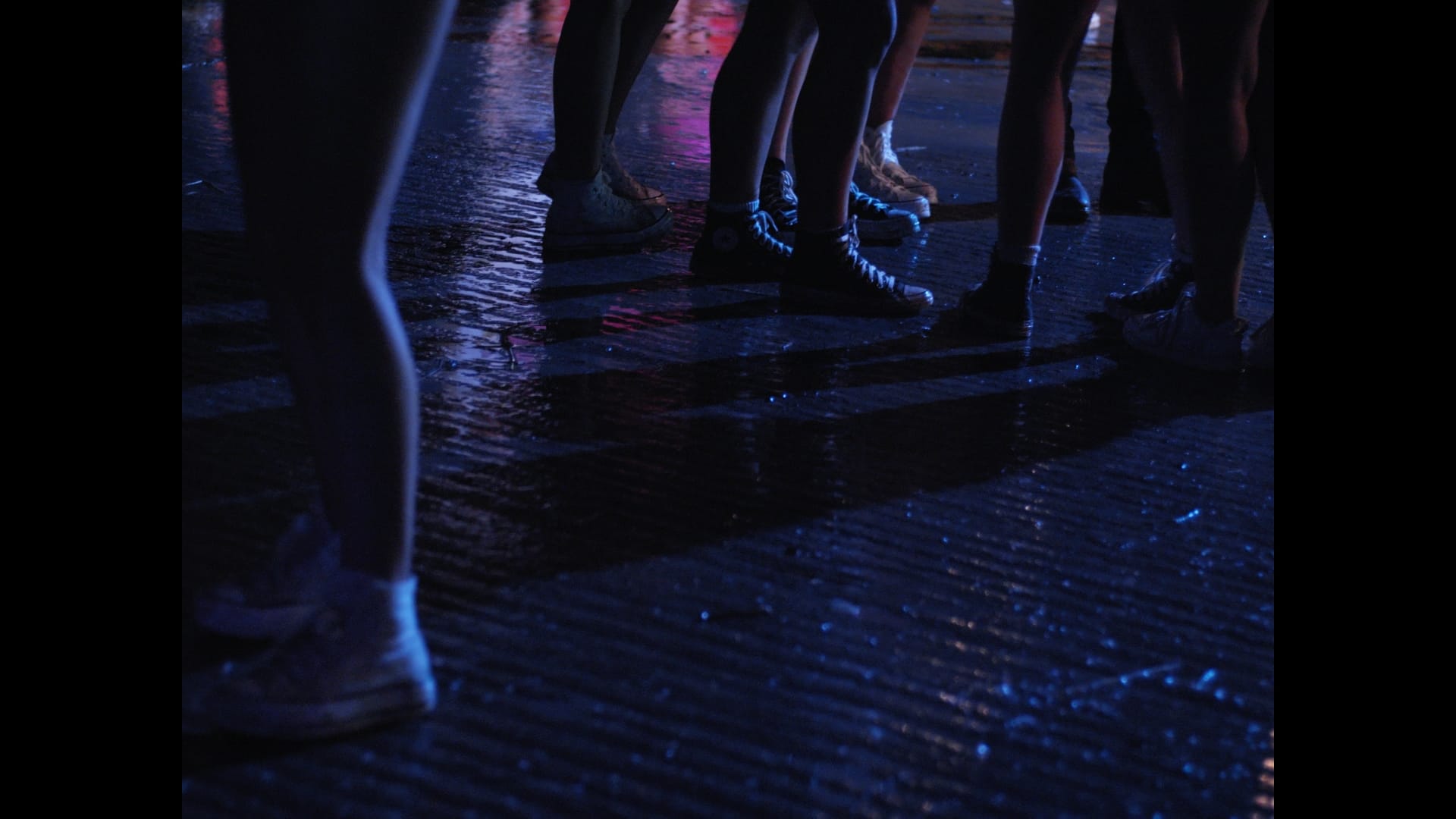
In developing the film, I spent a lot of time talking to the girls about what discos look like today for them. What was funny was how little had actually changed. It's amazing actually how little it has changed, down to the bodycon dress and Converse outfit combo. And vapes. That's new in fairness.
I think due to how little it's changed as a cultural rite of passage it can't help but be nostalgic for viewers of my generation. But rather than imposing my memories onto the girls, I found myself recognising aspects of my own experience in theirs. The film became less about looking backwards and more about observing how certain rituals of Irish adolescence are passed from one generation to the next.
Rural Ireland is often portrayed in quite specific ways in Irish cinema. Did you feel you were pushing against any of those familiar representations or offering a perspective we don't often get to see?
Yes, definitely. One of the things that struck me while making the film was how few Irish coming-of-age stories focus on girls at this particular age. We definitely see teenagers on the cusp of adulthood, but there's something so fascinating about this earlier moment where people are just beginning to experiment with who they are.
I was also interested in showing a side of rural Ireland that we don't always see on screen. Rural Ireland is often portrayed through the lens of decline, hardships of men, and tradition etc., whereas I wanted to focus on this unique social ritual. The girls in the film are navigating friendship, identity, confidence and belonging in ways that feel both deeply specific to rural Ireland and completely universal.
Watching the film, I was struck by how many unwritten rules seem to exist within these spaces, what you wear, who you talk to, where you stand. It's almost like a social ecosystem. Were there any rituals or behaviours that surprised you when revisiting that world?
For the most part no, I was mostly encountering the rituals I remembered and being reminded of certain social rules I’d forgotten, the idea of making sure to get pictures with everyone you know there for your Snapchat story and Instagram. One thing that had changed was that TikTok played a role in the documentation of getting ready. Once they’re all dressed up they make TikToks.
Documentary filmmaking often comes down to trust. How did you build relationships with the young people in the film and create an environment where they felt comfortable being themselves?
I think the main thing for me around building trust was being very transparent about what I was trying to make in my first conversations with the girls and their mothers. I knew on its surface, a documentary on the topic of teen discos could make any parent apprehensive due to its previous style of coverage in Irish media, so I wanted to be really clear I’m not trying to make an exposé on how awful they are, I’m interested in coming of age, girlhood, friendship and how that all fits into this cultural event. I think that transparency helped ease a lot of nerves about the process.
The film balances humour, awkwardness and tenderness so beautifully. Was that something you found in the edit or was it part of the vision from the start?
Thank you! That was always the tone I had in mind, I think I knew there would be a certain level of humour based on the farm-as-disco thing alone. But overall I think the girls and that age group in general just perfectly move between those kinds of modes. It was also a case of a balance in the edit, there were so many beautiful details to linger on and after a certain point we had to kill some darlings or at least abbreviate them. Whenever the girls left a space, i.e. their bedroom, there was a temptation to return to it as an empty, liminal space and look at what they left behind, but we ultimately had to save this approach for the very end when we returned to the disco venue, because sometimes you just gotta be practical and keep the story moving forward! That was definitely an opportunity to lean into nostalgia a bit too much that was dodged.
You work across both documentary and narrative filmmaking which is something I always find fascinating. Do those two disciplines feed into one another for you?
Big time! Before I got into documentary I absolutely saw myself as more of a writer, it’s something I really studied and worked on a lot so when I came to documentary I think I naturally start thinking in themes and structure. I try to be really rigorous in my fiction work regarding what I’m interrogating, what is the question I’m asking or thing I’m interested in and with this it was the same, childhood to adulthood, girlhood to womanhood, friendship, so I’m looking around the room for visual representations of that contradiction or those themes, i.e. a teddy lying amongst stacks of make-up products, magnets on Freya’s radiator with friendship mottos, Freya’s very conscious choice to patiently wait for her friend putting on her pyjamas before going downstairs.
And now that I’m developing several fiction projects at the moment I have noticed my visual taste has changed. I like coverage now that doesn’t feel like coverage and instead feels more observed like a documentary, for example, Nathan Fielder’s The Curse and the distanced approach for some of The Office’s more emotionally weighty moments haha. Documentary has also definitely increased my love of messy, naturalistic dialogue.
You're now splitting your time between Ireland and New York. Did having a bit of distance from Ireland change the way you viewed this very specific Irish rite of passage?
Absolutely. Moving to New York made me much more interested in the specificity of Irish culture.
When you're living somewhere, certain traditions can feel completely ordinary because they're all you've ever known. It was only after leaving that I realised how uniquely Irish the teenage disco is and how rich it was as a subject.
Distance also gave me a little more perspective emotionally. I wasn't making a film simply because I was nostalgic for my own teenage years. I was more interested in understanding why those experiences stay with us and what they reveal about how we learn to belong.
The further away I moved geographically, the more curious I became about the details of home.
What has been the most surprising reaction from audiences so far?
The most surprising reaction has probably been how emotional people get talking about their own experiences afterwards. I think because teen discos are often remembered as something funny or embarrassing, people don't necessarily expect to revisit that period with much seriousness. But after screenings I've had people reach out to me and tell me how much it reminded them of their teen years and appreciating the approach I took to discos as a topic, which was so lovely to hear.
What has struck me most is how many people remember the preparation more clearly than the event itself, that seems to be the case for all the girls. The conversations with friends, choosing an outfit, doing your make-up, worrying about who would be there. That's something the girls in the film spoke about as well, that getting ready was always the best part.
Docs Ireland feels like a wonderful home for the film. Where would you love to see the film travel next?
Screening there means a huge amount to me. Documentary can often be quite a long process, but Anatomy of an Irish Disco was made very independently and with a small team of people I trust enormously, so to have it screened at Docs Ireland feels incredibly rewarding. It's a festival I've admired for a long time and one that very much champions ambitious Irish documentary work, so it's really exciting to be included in this year's programme!
As for where I'd love it to travel next, I'd love for the film to continue finding audiences both at home and hopefully internationally. While the setting is definitely particular to rural Ireland, the emotional core feels universal to me. I’d love to see what kind of conversations it sparks for audiences outside of Ireland.
What kinds of stories are exciting you at the moment and what can we look forward to next?
I’ve realised recently that the work I’m most excited about is fiction. I learned a lot from making documentary shorts, and there’s a lot from those projects that I think will carry into how I approach narrative filmmaking.
My writing tends to live in a much messier place. I’m obsessed with characters who contradict themselves, who aren’t terribly likeable, and who accelerate their own downfalls in pursuit of connection. I love finding the balance between comedy and discomfort, and rooting for the kind of character you’d find difficult to be friends with in real life.
At the moment I’m developing a slate of fiction projects and after years of writing scripts, I’m excited to finally be directing more of that work myself.
This film will be screened at Docs Ireland on Saturday, 20th June, in Queen’s Film Theatre, Belfast. The programme will be announced on 21st May.