

Chloé, your approach to directing is known to be fluid, taking cues from actors, nature and dreams. How did you approach Hamnet, which is based on an incredibly immersive novel, one that seemed almost impossible to adapt into a film?
CZ: I had Maggie [Farrell, author of Hamnet], who co-wrote it with me, and she took my hand and let me into her world. I also have this group of incredible actors, and I have my department heads. That's it (laughs). What you need to do the impossible is to have a village.
Jessie, there's such a wonderful physicality in how you play Agnes, in the way she moves through the woods. What kinds of conversations did you have about this woman and how she inhabits her environment?
JB: Something that was important for both of us was that this woman was so in her body that, for other people at that time, it was terrifying. She was like a tree in herself. How she gave birth, how she moved around the forest, how she loved, how she grieved, it had to be somatically engaged.
CZ: I'm pretty hands-off. We don't talk about how grief should be expressed. My job is to create a container so my actors can feel free to be safe, to be present in these moments, and whatever comes through them naturally is the truth I’m waiting for.
Chloé, I wanted to ask about your thoughts on art as escapism. A trap creatives can often fall into is to escape the pain and trauma of the real world, they delve into an imaginary world. This can come at the cost of relationships and real life. This was explored beautifully through Will's journey in the film.
CZ: That's a great question. A big chunk of storytellers, past, present and future, probably didn't have the easiest upbringing. That's why we escape into a fantasy. Everything that happens has two sides, something positive and something negative.
The positive side ends up giving us jobs and passion and community, all great things. However, the negative side keeps us from intimacy with life. This does catch up with you. You might end up having some kind of loss or have a traumatic event happen to you. Or things might just fall apart. That's when you have to do inner work, all while still being a storyteller. But you can find some balance.
You can go into spirit, but you can also come back to matter. You need both. We’ve all seen what happened to artists who just kept going and couldn’t come down. I would say surviving and caring about my own well-being as an artist is first and foremost, and that spreads out into the environment I work with.
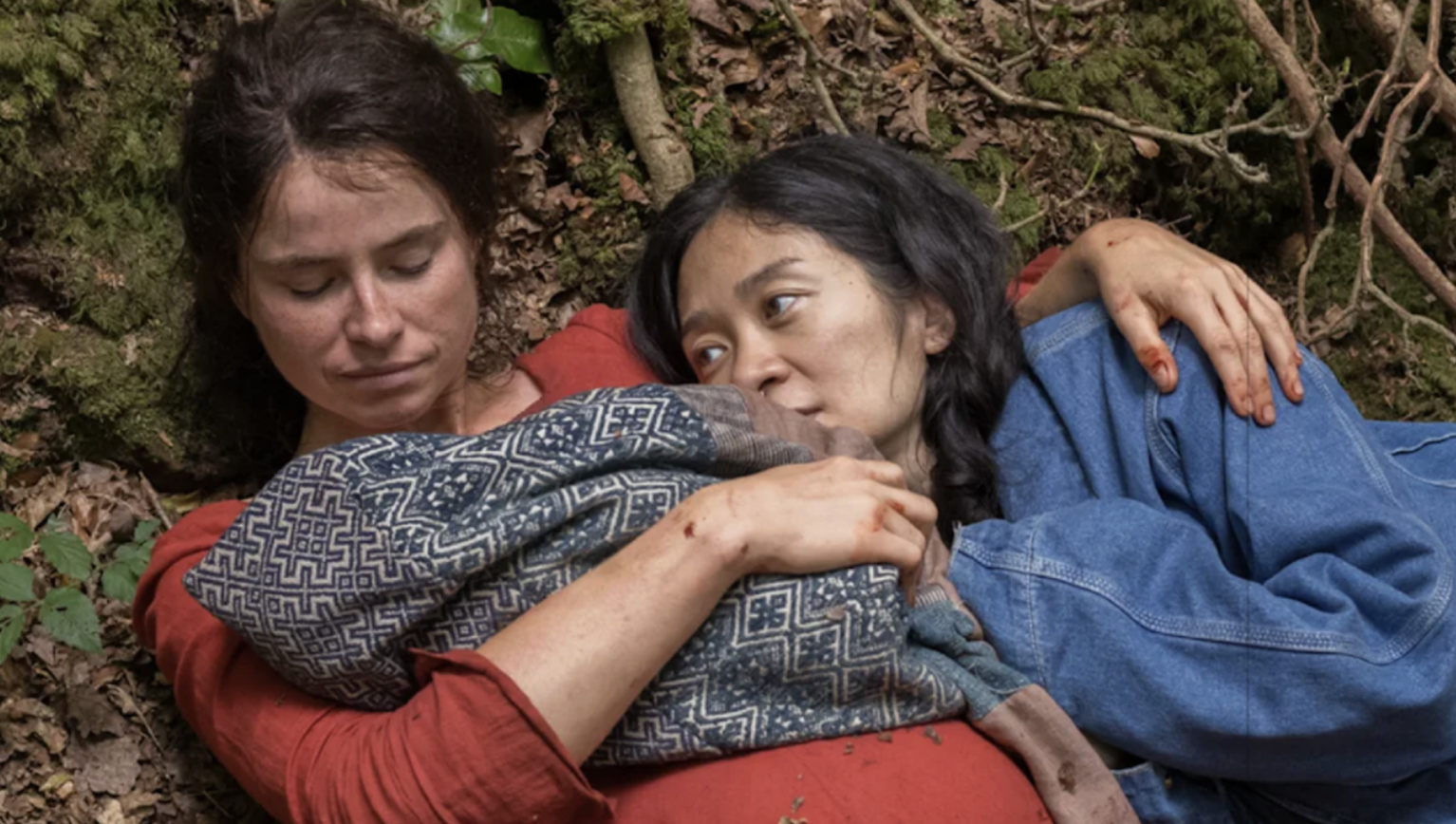
In terms of the healing power of art, how important is it to shape shift or transcend feelings through artistic mediums?
CZ: It’s vital. There is a long history of suppression of our emotions and restriction of our bodies. This extends to our expressions and relates to what is culturally acceptable in society, and what is not. That suppression has been going on for a long time, and that has taken us away from what is natural. It is natural for our body to learn how to give birth, how to process grief, how to make love, how to die.
The isolation, the lack of communal experience, of coming together to process some of these things ritualistically, is also a great loss. This includes our abandonment of a lot of indigenous cultures and our grandmothers’ wisdoms, and the lack of focus on elders in the community. It’s really important to remind ourselves that we have that ability, every one of us, through rituals, through communal experiences, to have the alchemical power of dealing with the ups and downs of being a human. And we're designed that way. We're supposed to know how to deal with it.
JB: For me, art, storytelling, the community of artists I've met, and the characters I've been able to live through, have been my great educators. They've unravelled things that have been repressive - or shadows - and allow them to see light. I always want to go on a journey through the work that I make, the art that I make and the books I read, to understand something. That might be something that is trying to come to the surface in me, or also in culture. I think we've forgotten how significant, enlightening and revelatory art can be, especially when it has an emotional impact like this does.
I was listening to this poet called David Whyte. He was talking about how grief is a great revelatory of our times. To get to the point where you let go and you let grief - or any feeling - come through you. We try so hard not to feel (laughs). Especially nowadays, we do everything we can to distract ourselves, to fill ourselves up with objects, to not actually be affected. I think our art has sustained us. It has been important forever, from Neanderthal times when they drew pictures on the cave [so as] to remind us of ourselves, of where we've come from, of what it is to be in relation to something in front of us. But also something in the past. We are meant to be vessels as artists, to translate and help people feel again.
CZ: We build an economy out of helping people not to feel.
JB: Yes, that’s capitalism!
We are meant to be vessels as artists, to translate and help people feel again.
Chloé, I heard a lot about the meditative rituals that you led on Hamnet. What purpose did they serve creatively?
CZ: Whether you go to ceremonies, religious or spiritual gatherings, concerts, clubs, football games, we all understand that when you're chanting together for your favourite team, something happens. Suddenly, you become almost fearless. You feel you're one with the world you're in, even for a brief moment. This illusion of separation is dissolved. That's what happens when you go to a Max Richter concert anyway (laughs).
That’s also what happens when you have a group of people get together and they start vibrating at the same frequency. That’s what Max [Richter] has always said. Music is vibration. It can help people to vibrate the particles in their body. Suddenly, you feel transcendent because you're one with a leaf, you're one with a drop of water, which is also made of the same thing as you.
To have Max Richter's music playing, to ask people to breathe together...what we're doing is trying to create something. This is not just for our actors, but to ensure the entire cast and crew share that feeling of oneness, the feeling of no separation. So then, when Jessie and Paul are performing, they are also channelling not just the past and future, but everyone around them and the world around them.
Thankfully, science has now proven a lot of the things our spiritual leaders used to understand, such as how energies affect other energies. It's interesting to explore a different way of working than what I was taught in school. That would have all come from the head, since the body wisdom has been missing in our culture for a long time. We're bringing a little bit back in this experience.
JB: Sometimes working on set can become such a separate and individual experience. As an actor, you have to make these massive leaps of vulnerability and open your heart. However, when you've just been in your little trailer by yourself, staring at your own mind, that process can be really hard (laughs).
What Chloé did was quell us all down to that vibration and energy. It actually takes you so out of your own head that your own consciousness is able to be full. The potential becomes massive. Making cinema, telling stories, is a communal ritual. Magic only really happens when all of these artists collide together. If you get half a millisecond of magic on screen, it's because something has happened unconsciously between all of us for something new to come through. That’s when stories change.
The first time I experienced this alchemical, mysterious thing was with my mother. She used to sing in church and unconsciously would affect people so much; old men would come up with tears in their eyes. I wouldn't understand what had happened, but I knew that they'd shared something mysterious, and were affecting each other. What’s been so radical - and why [Chloé] is the coolest - is that she's waking this part of us up. Even going around to festivals and asking people to do three breaths before we open the film. I mean, first of all, I think people are scared.
CZ: My eyes are closed, so it's great that you're all watching!
JB: But by the third breath, there are people in the audience who are already crying..before the film's even started, just because they've been given permission. They've been given permission to get out of their heads and into their body and feel safe, to let whatever is meant to come through, come through.
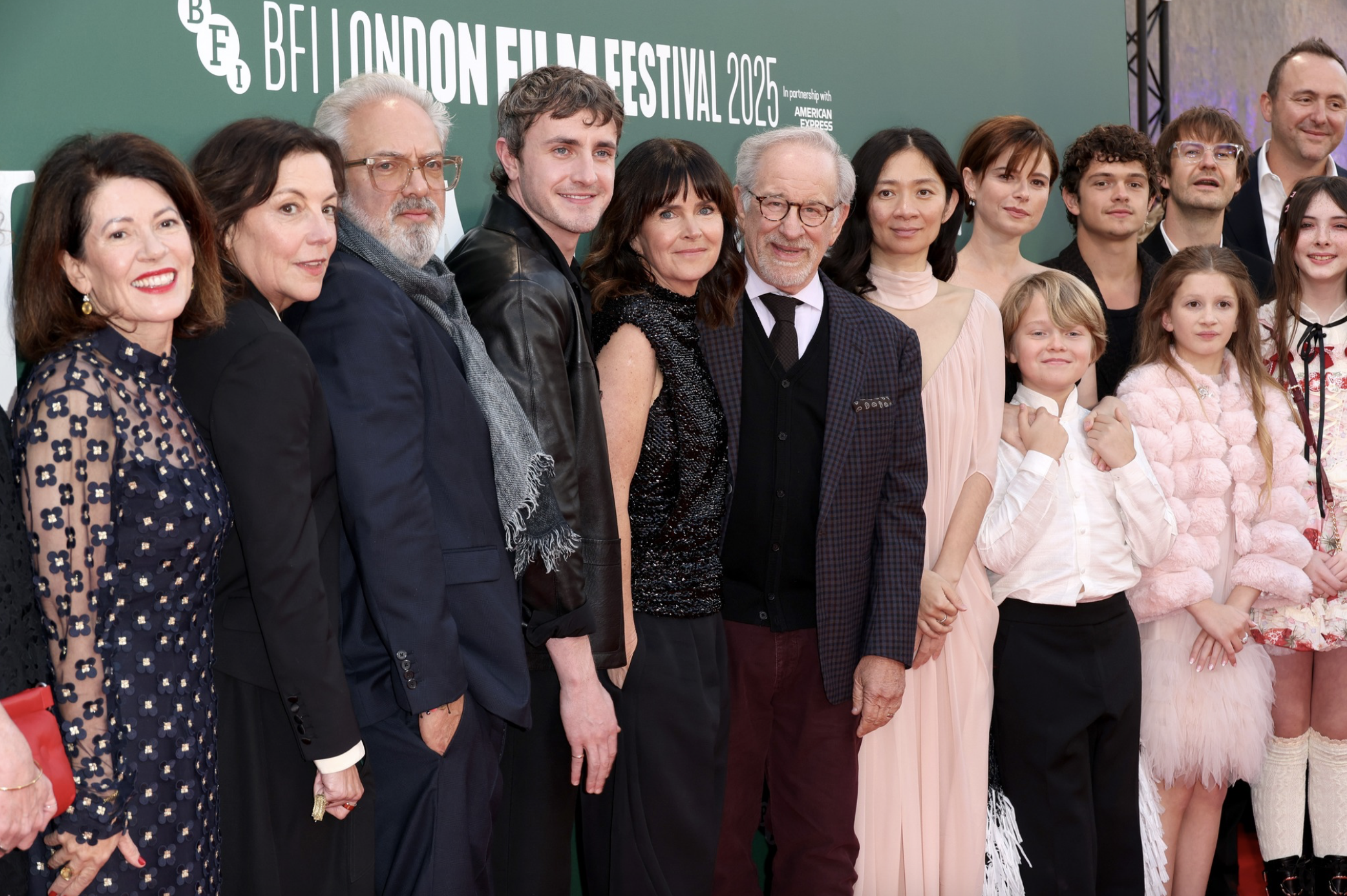
I read that you used the creative process of dreamwork on set. Can you tell us a little bit more about this? How does it affect the way you approach performance?
JB: I can't talk about this (laughs), not because I don't want to. It's too personal an experience for me, so I'm going to defer to Chloé!
CZ: I'm in charge of talking about this (laughs). This work comes from the lineage of Carl Jung. Our teacher, Kim Gillingham, is a student of Marion Woodman, who is a student of Carl Jung. Another word for this work is active imagination. But we do it a bit differently, because we use dreams.
The dream speaks the language of the psyche. When you hold a container strong enough, the material will come through from the unconscious. It's a way of working that’s trying to work on the unknown. With dream work, you don't get the immediate result, but you're stirring the pot underneath, and it eventually pops up. It's a long, linear way of working. Linking back to what Jessie beautifully said earlier, I don't encourage method acting, and I don't know if I could work with actors who do method acting. It's just too stressful for me. But I understand why they need to do method acting, because if you go from your trailer and you’re brought on set and you’re immediately asked to plunge into another character in another reality with all those emotions, you're asking the actors to do impossible things, so they end up having to bring that stuff home.
Method acting isn’t healthy to me. There’s something missing, because then you, the actor, don't give me yourself. I don't just want the character. I also want Jessie. I also want Paul. I want to see the chemistry between you and your character. Method acting kills that for me because I don't get to witness that chemistry.
But it is our job while filming, along with the producers, to provide money and time and to provide containers for actors to have some prep time, even on set. Whether that’s giving actors time for themselves or bringing whoever they need to work with on to the set. We need to help actors to shift into that space and also to make sure the space around them has a matching energy.
Another thing I'll say about that is that we're designed for purpose. There’s nothing about the way we're designed that is not for something. That's how God - or whatever - works. So the fact that we spend half of our lives dreaming is not for nothing. It's not just a glitch. There's a deep, deep juice in there that we, as a modern society, have forgotten to explore.
Hamnet marks continued success for Jessie Buckley, who won Best Actress at last week’s Critics Choice Awards and Female Actor in a Leading Role at the Actors Awards, formerly known as the Screen Actors Guild Awards.
In cinemas from 9th January 2026.


