

In Ireland, endometriosis diagnosis takes an average of nine years. Writer/actor Niamh Mahony turned that wait - and the ancient Irish myth of Macha - into a short film. With Macha having just screened at the Galway Film Fleadh, photographer and journalist Ana Pau Zazueta catches up with Niamh to discuss the project, balancing her roles, and her hopes for real change.
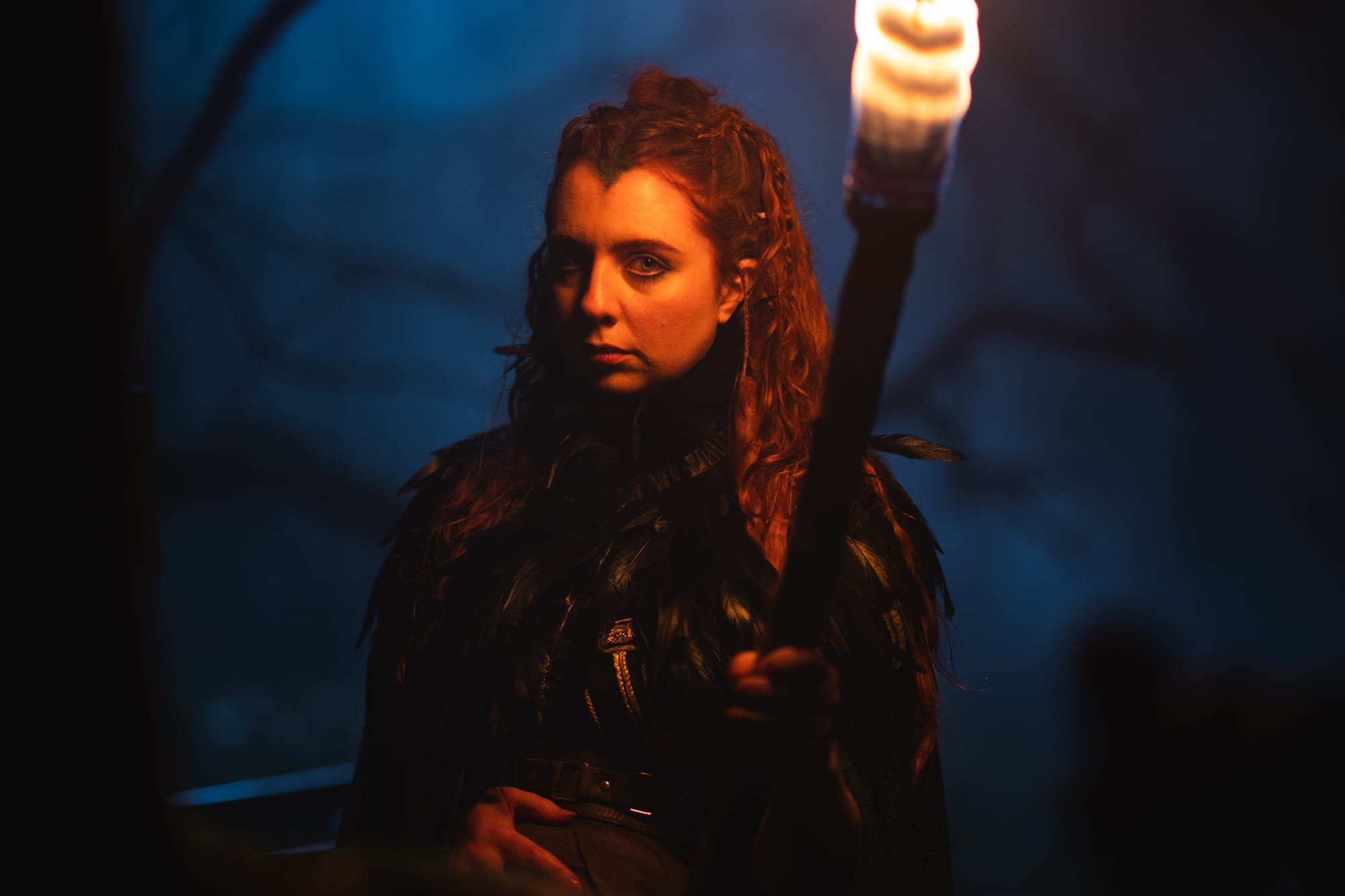
The film follows Ana, who has just come out of surgery for endometriosis, but she's still in pain and no real explanation follows. Her pain once again isn't the priority for the medical team. Running through Ana's fight is the presence of Macha, the Irish goddess forced to race the king's horses while heavily pregnant, her pleas for mercy ignored by the men who claimed power over her. In the film, Macha asks the same question in a different age: 'Can't you see me? Let me give birth. I will return, and I will prove myself.'
Since you were playing a role of your own reality, how did the production adjust around your needs during filming? I read you had an intimacy coordinator on set throughout!
I'm incredibly grateful that Shane Robinson (director) and Croía McDermott (producer) took this into consideration very early in pre-production. We had open discussions about what can trigger a bad flare-up for me and the support that would be needed. I was nervous for a few different reasons - I knew it would not only be physically demanding but also, as the story reflects my own daily experiences with the condition, being in those scenes and emotional spaces would be challenging mentally.
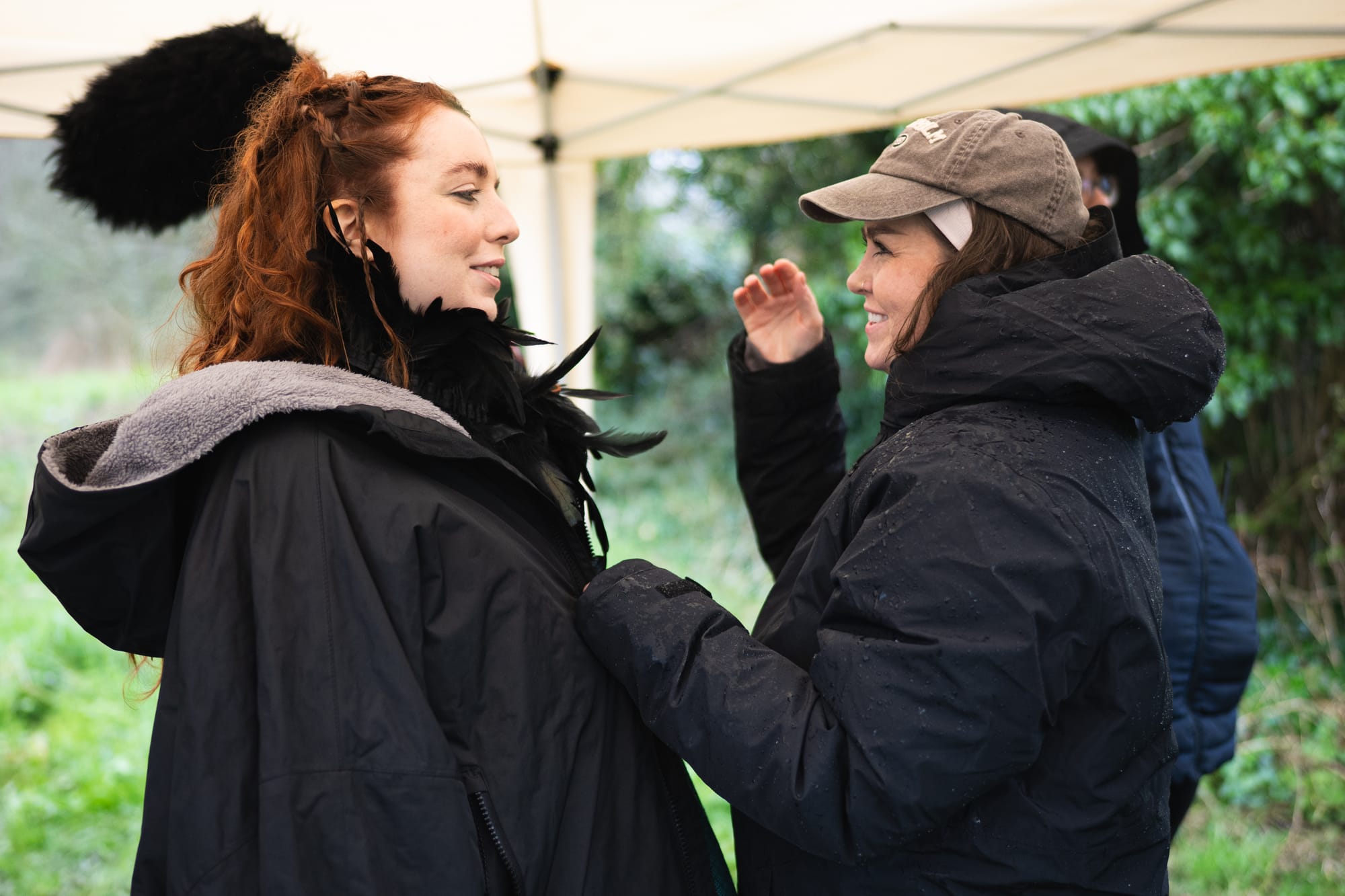
Jessie Morris-Toolen, our intimacy coordinator, was such a huge asset on set - she approached the film, its actors and crew alike with so much care. By writing and acting in the film, I am sharing parts of my experience with endometriosis that I don't usually let people see, and Jessie was so aware of this. She took the time to have a discussion with me privately about my comfort levels and became a mediator between myself, Shane and DOP James Collins on the day, blocking movement in private rehearsals. The set was a closed one, and the crew adapted and allowed more time that morning to ensure I felt safe and supported.
On shoot day three we filmed Macha's world - we were mainly outside, and typical to Irish filmmaking, it was very wet and cold. The weather in combination with the physical strain of the shoot, I ended up experiencing a severe pain flare-up. Everyone responded quickly to make sure I had some time to rest and they worked around my pain. The energy on set was very respectful - I felt so supported, and they relieved any anxiety of feeling like a burden that often comes following flare-ups.
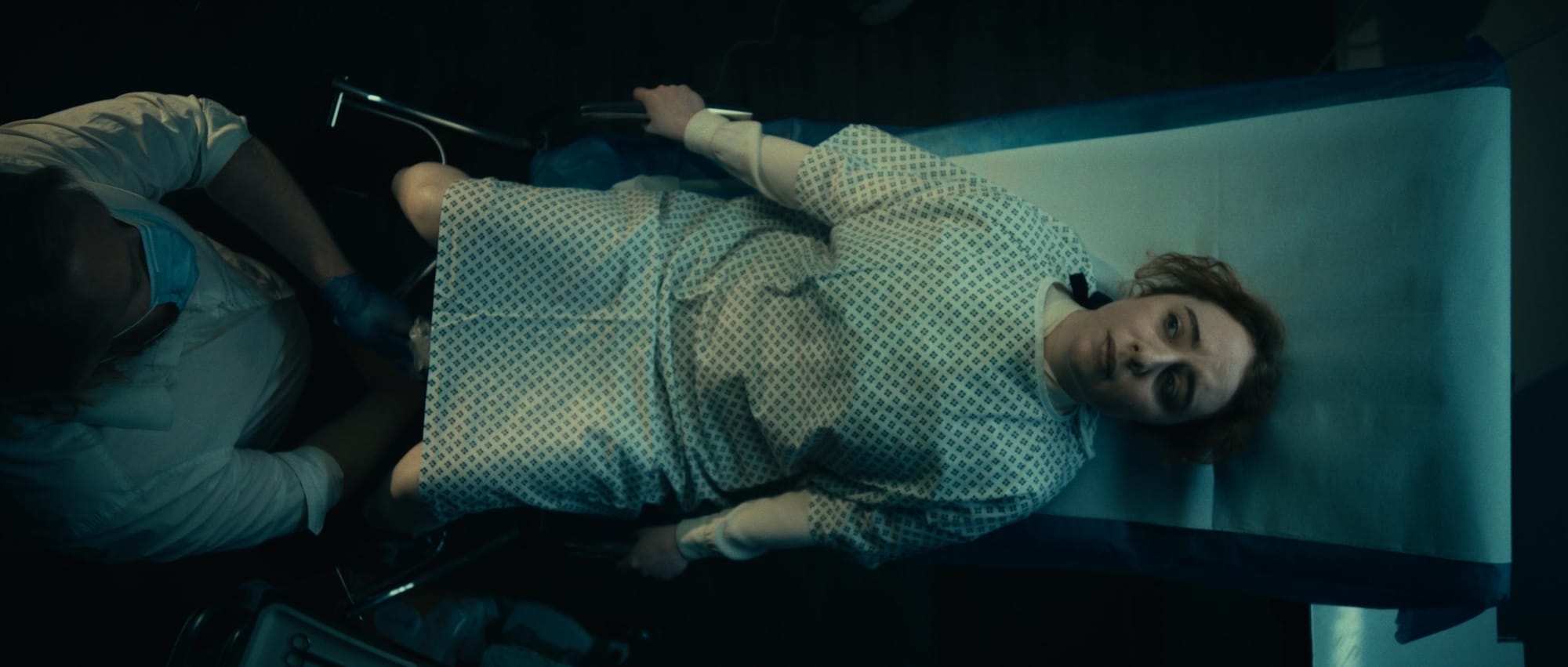
Ana walks into that hospital understanding her own condition better than the doctor. How much of that came from your own experience?
It absolutely comes from my own experience. I really wanted to capture how overwhelming and isolating it can feel walking into a consultant's appointment, especially after having investigative surgery when you're hoping to finally get the answers you've been searching for. The heartbreak of being told they found no endometriosis is incredibly difficult. It sounds strange to say that you hope to be diagnosed with a condition, but that diagnosis validates everything you've been experiencing. It tells you that your pain is real, there is a reason for the pain, and you aren't imagining it. I wanted that emotional complexity to be reflected in Ana's journey.
When you're repeatedly told that nothing is wrong, or you leave appointments feeling unheard, there comes a point where you feel compelled to gain some autonomy over your own body. Living with debilitating symptoms when you are dismissed or nobody can explain them is frightening, and researching can become a way of regaining a little control.
Endometriosis is such a complex disease. It has been found on every organ of the body, yet many in the medical world still view it as purely a reproductive health issue. Every person's experience is different, and the symptoms can vary hugely depending on where the disease is located. Because of this, many patients find themselves being referred to specialists who may not have the expertise to recognise or treat endometriosis outside their own area. Some are dismissed altogether because their symptoms don't fit the traditional understanding of the disease, and they aren't even given the chance to have it properly investigated.
For me personally, my periods are actually the least of my worries. My bowel and bladder symptoms have had the biggest impact on my life, so it's been important to educate myself and come to appointments with questions prepared. The reality is that you often wait months, sometimes years, for a consultation, and then only have a short amount of time with your surgeon. I want to make the most of that time by asking informed questions and advocating for myself, but I don't think that responsibility should fall on patients in the first place. We shouldn't have to become experts in our own condition just to feel heard or receive appropriate care.
Macha was forced to run that race while she was in agony because the men in power just didn't care. When did you first make that connection between an ancient woman begging to be believed and a patient today waiting years for a diagnosis?
I've always had a huge passion for Irish folklore and mythology. I find the stories so empowering yet harrowing, and I was drawn to how many of them explore resilience, sacrifice, and endurance.
Within the endometriosis community, you often hear the term 'Endo Warrior', and I loved the idea of using Irish mythology to reflect what it can feel like to battle your symptoms every single day, while also highlighting the strength it takes to keep going.
The story of Macha, in particular, resonated with me. She has already given so much of herself to the land and to her partner. She is also an expectant mother, carrying the physical demands of pregnancy, yet when she is at her most vulnerable and begs for mercy, she is denied it. That felt deeply symbolic of the experience many people with endometriosis describe: not only battling debilitating physical symptoms, but also battling the systems that create barriers to diagnosis, treatment, and care.
For me, the king in Macha's story represents what it can feel like to stand before someone in a position of authority and plead to be heard. So many people with endometriosis know what it's like to leave an appointment feeling dismissed or disbelieved.
It feels like the film is calling out an almost historic debt that Ireland owes women when it comes to believing their pain. Is that something you were consciously drawing on?
I was so drawn to Macha because, despite being an ancient myth, it still resonates in many ways. At its core is a woman whose suffering is overlooked regardless of her pleas for mercy. The experience of not being believed, and feeling compelled to endure, regardless of the circumstances, remains a reality for many people living with endometriosis today.
I was also aware that this story is set within an Irish context. Ireland has a history of controlling women's bodies through various systems of authority, including the influence of the Catholic Church on healthcare, education, and perceptions of women's health and sexuality. While significant progress has been made in recent years, some echoes of this history can still be observed in how women's pain is sometimes minimised or misunderstood.
For me, Macha is not about wanting to blame a particular gender, institution, or period. It questions why so many individuals continue to struggle to have their pain recognised. Macha's story is set in ancient Ireland, but the ongoing struggle for respect, understanding, and autonomy remains relevant today.
At the same time, I really hope Macha offers a sense of hope. I wanted people to see that belief can be impactful. While we cannot always get rid of someone's pain,
we can choose to listen, to believe, and to respond with compassion.
If Macha encourages further discussion about how we support those in our lives living with endometriosis, then I believe it has fulfilled its purpose.
That shower scene is particularly powerful. Could you explain your choices there - leaning into anger instead of just sadness?
That scene was incredibly important to me because I didn't want Macha to portray people living with endometriosis as passive sufferers. There is grief and sadness, but there is also anger due to losing years to a disease that is so often misunderstood. I also wanted to challenge the idea that people living with chronic pain should always respond with quiet resilience.
The parallels between Ana's world and Macha's world in that sequence were also very intentional. They communicate the intensity of Ana's pain. The pain of trying to relieve your bowel and then simply pulling yourself up to stand and make it to the shower is somewhere I have been far too many times. The pain can be piercing, and movement takes everything you have.
Macha's race mirrors that experience - it's a physical representation of what Ana is going through in that moment. I wanted the audience to feel the urgency, the strain, and the complete loss of control that can come with a severe pain flare. By intercutting those two worlds, I hoped to give people who have never experienced endometriosis a glimpse into how physically overwhelming it can be.
You give so much weight to Fionn's side. Why was it important to you to show the carer's perspective?
Something that was really important to me when telling this story was not to make it about statistics. While awareness and research are so important, I think what is often overlooked is the impact endometriosis has on every aspect of a person's life: their work, social life, relationships, and the people around them.
I've seen how it affects my own loved ones. When they ask, 'How can I help?', I often don't have an answer. Their helplessness becomes another layer to carry, and it's heartbreaking to witness alongside the daily weight of my symptoms. It's a part of living with endometriosis that I feel is overlooked.
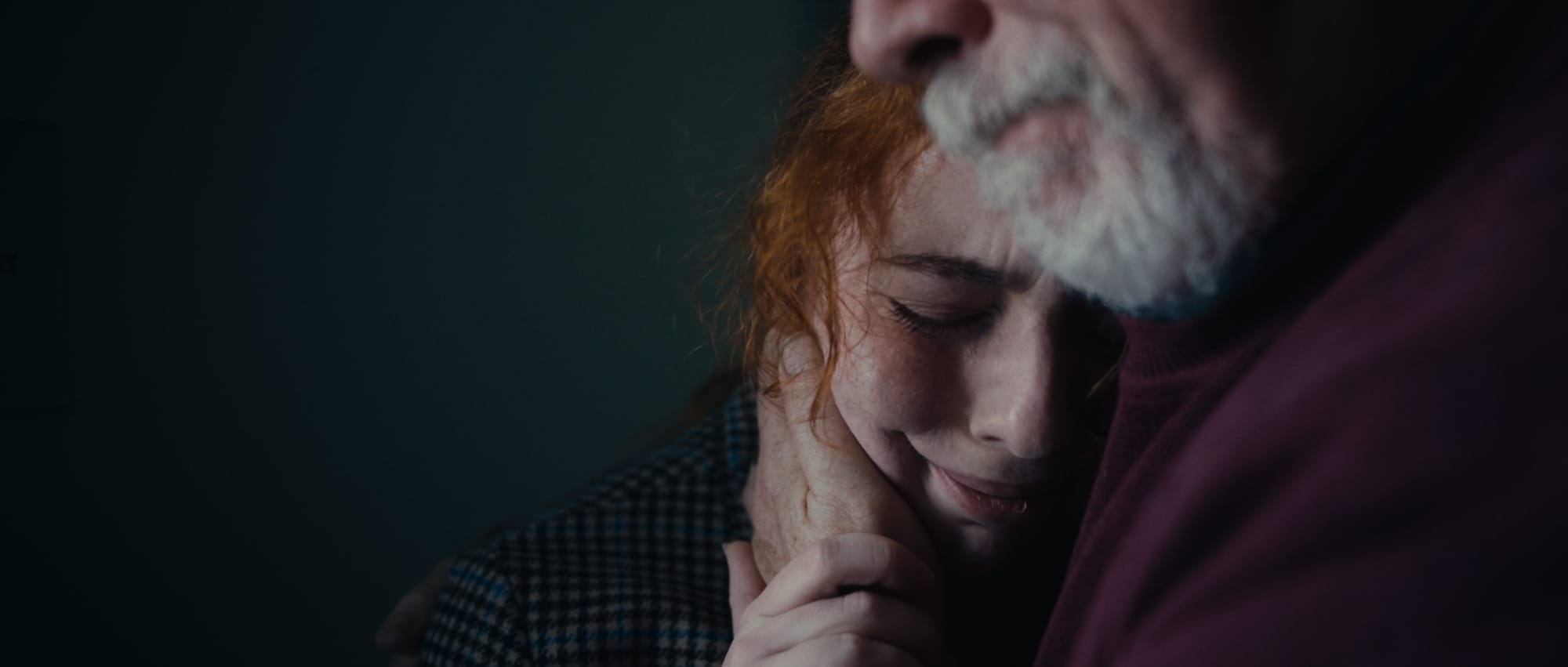
Fionn is a father who can't take his daughter's pain away. He watches her endure symptoms that completely overtake her, and he can't fix it. What he doesn't realise is that he doesn't need to have all the answers. Simply believing her, listening to her, and standing beside her is enough.
I wanted the people supporting someone with endometriosis to feel seen too. It's incredibly difficult to watch someone you love suffer and feel powerless to change it. I hope the film reminds them that even when they can't fix the pain, their love, support, and simply just believing them is enough.
One of the most striking lines in the film is when Fionn corrects other men by saying, 'It's a full body condition. It's nothing to do with her periods.'
Personally, the main reason I wanted Fionn to be the person who educates the audience on endometriosis in that moment is because of the huge misconception that it is just a condition that causes bad period pain. Endometriosis is a common chronic inflammatory condition where tissue, similar to but not the same as the endometrium, grows elsewhere in the body. Often thought of as only impacting reproductive organs, it is in fact a whole-body disease that has been found in every organ in the body. It can occur without a uterus present, and despite misinformation, there is currently no cure.
Right now, the only way to definitively diagnose endometriosis is through laparoscopic surgery and biopsy, but diagnosis depends heavily on the experience of the surgeon and pathologist involved. Endometriosis can appear on any organ in the body, and it can easily be missed by those without specialist training. Excision surgery is considered the gold standard for treating endometriosis, but it requires highly specialised training and experience. In Ireland, there is a serious shortage of surgeons with the expertise needed to perform these complex procedures, leaving many patients on extremely long waiting lists — leading to increased pain, disease progression, and a negative impact on their relationships, social life, careers, and mental health.
I'm hoping that by challenging the misconception that endometriosis is 'just a bad period,' Macha will encourage the conversations needed to help shift how the condition is understood and treated. Endometriosis is far more than a pelvic condition, and I hope the film contributes to a future where people living with it are listened to, believed, and given the care they deserve.
When Ana turns around and apologises to her father near the end, it's clear the patient is the one who ends up carrying that guilt...
It's hard not to feel like a burden when you're repeatedly being told that nothing is wrong. You're constantly fighting to be heard in a healthcare system that is still catching up with the complexity of endometriosis.
I've been so lucky to have met kind and compassionate surgeons who, despite wanting to help, recognised that my case was beyond their expertise and referred me to someone else. I've also experienced the opposite. I was once told by a surgeon that 'endometriosis patients make this condition their whole identity.' Comments like that can make you feel like a burden for simply asking for more help or searching for answers.
Something that is often overlooked is the impact endometriosis can have on your career and finances. If you're unable to work full-time because of your symptoms, yet you're still being told that nothing is wrong, it can leave you feeling incredibly isolated. For some people, the financial responsibility at times falls on the loved ones around them. I know not everyone has that support, and I recognise that it's a privilege, but needing that help can still bring a huge sense of guilt and shame.
I am so lucky to have such a strong support system, especially my parents and my wonderful partner. There are times when I do feel like a burden, because they put so much into caring for me and making sure I feel safe and supported. I know they do it out of love and would never see it as a burden themselves, but it's something I wish they never had to carry.
It also affects your social life in ways people don't always see. There's the anxiety of going on holiday or meeting friends and worrying that everyone will have to slow down for you, change their plans, choose different activities, or stay in because you're in too much pain to leave the house. Those moments can make you feel like you're holding everyone back, even when the people who love you would never see it that way.
Endometriosis can be such an isolating disease, but out of that an incredible community of women has formed, looking out for each other. How did that shape the making of Macha?
I have always had so much admiration for the endometriosis advocates who work tirelessly to create awareness. Kathleen King and Orla O'Connor have been incredibly supportive throughout my own journey to diagnosis. They are constantly challenging misinformation, advocating for better care, creating spaces for support, and ensuring the endometriosis community has a voice. They were so generous with their time while I was writing Macha, and their encouragement from the very beginning gave me the confidence to tell this story.
MISE (Menstrual Information Specialising in Endometriosis), founded by Kathleen King and Cate O'Connor, is a groundbreaking educational programme that raises awareness of menstruation and endometriosis in Irish schools. Their advocacy is truly inspiring, and I'm constantly in awe of their dedication to improving education and awareness around the disease.
I've also met so many incredible people through endometriosis support groups, and I wanted to find a way to give something back to the community. This film has always been for the endometriosis community. Their stories, strength, and support have been the driving force behind Macha, and I hope they feel seen in it.
Shane has also been an incredible collaborator throughout this journey. He took the time to educate himself about endometriosis, engage with advocates, and create a space where I felt comfortable sharing the most vulnerable parts of my life. We've had countless conversations over the years about my experiences, and he always made sure the community's voice remained at the heart of the film. I genuinely couldn't have made Macha without him, and I know his work on this film will help so many people living with endometriosis feel seen and understood.
The Ardán Collective's support made this film possible. Their commitment to raising awareness of endometriosis motivated us even further to make Macha the very best it could be. From giving us the opportunity to film at Bellinter House to supporting us throughout production, they believed in the project from the beginning, and we're so thankful for everything they did to help bring it to life.
At the end of the day, Macha does something facts and data alone can't. It puts an authentic truth right in front of people and reflects the pain, fear, and neglect that goes hand in hand with the condition.
By treating endometriosis as the full-body condition it really is and not just a bad period, the film pushes back on old assumptions that have left thousands of women stuck on years-long waiting lists. It's a direct challenge to a system still treating a complex disease with routine check-ups and hormonal quick fixes, when what's actually needed is real specialised care.
To every woman surviving an Irish gynaecology list right now, this short film acts as vindication and cinematic evidence that their pain is real, and that they were telling the truth all along. And a reminder that even now, we are not fighting this alone.
Thank you, Niamh, for making Macha, and for giving us a voice we have been waiting years to have heard.


