
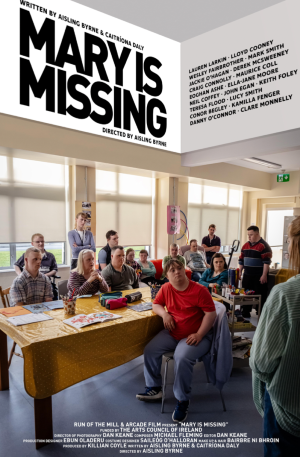
Mick Jordan talks to Aisling Byrne about her new film, which won the Oscar Qualifying Grand Prix Best Irish Short at the Cork International Film Festival.
Mary is Missing is the new film from Run of the Mill, the Kildare based film and theatre collective that works with artists who have intellectual disabilities. The film is directed by Aisling Byrne, Artistic Director of Run of the Mill and was co-produced with Arcade Film. Like its predecessor Headspace the film won the Oscar Qualifying Grand Prix Best Irish Short at the Cork International Film Festival. Shortly after this win I got to talk to Aisling about the new film and how it came to be…
MICK JORDAN: Hi Aisling, first off I’d like to say huge congratulations on winning the Grand Prix at Cork!
AISLING: Thank you so much. We were thrilled with the Cork win. It's just amazing and it being such a collaborative project makes it very special.
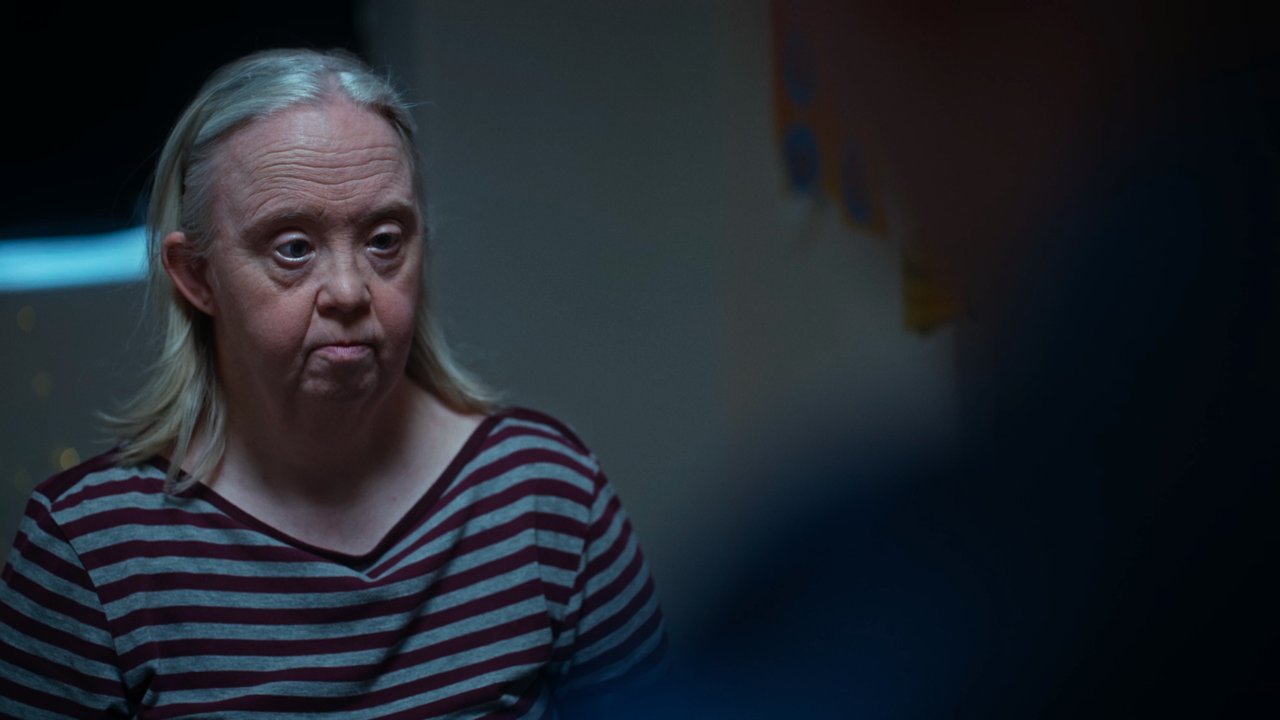
Well it’s a great film, so it’s well-deserved. I just remember being really gripped by it and not really thinking about it as a film about people with an intellectual disability. You’re just watching a mystery story that happens to have these characters featured in it. How did the project all get started?
It’s one of those things where if we could break the award into 13 pieces we’d be doing it right now because there are so many fingerprints on this film! Film is always collaborative and when you come from a theatre background you are used to that idea because you would be working with improvisation and devising and our artists in Run Of The Mill are no strangers to devising but the collaborative authoring of a screenplay was quite new. We’re lucky enough to have this core ensemble of 13 actors at Run Of The Mill who we work with every Friday and we have built a collaborative practice with this cohort for years. We were doing a workshop series called ‘The Engine Room’. One of these workshops was with a company called Arcade Film who we’ve collaborated with regularly. They did a block which was called ‘Acting for camera’ and what we did was we set up a big monitor in the room, we brought in the cameras, we put some marks down on the floor and we talked about first position and blocking and subtleties of screen acting.
I set up a couple of improvs we could do. We were just pulling things out of the sky and one was like an interrogation set-up. There’s a key worker, Mary, who brings our artists down from the day service to attend our workshops, and we thought we’d pretend she’d gone missing and nobody knew where she was. So we set up a mid-shot with one of our artists, Conor Begley, being interviewed by a guard who is saying “You were the last one to see Mary, what was she wearing?” And I will never forget Conor, his worried face in the frame, seeing it on the monitor it was like “Oh my God he is so compelling!” and the performance he gave in that improvisation just sort of struck something in my mind. I felt like I could watch this all day! He was giving such an authentic truthful performance as if Mary really was missing.
And so we got the other actors to respond to this concept and see where it went. And I thought, imagine a film that was just all intercut with interrogations. You could have a single frame that cuts seamlessly between all the actors, and they’re responding to being interrogated about a missing person. And that was just the seed, we hadn’t thought beyond that. Killian Coyle, our producer, suggested we should pitch this to the Arts Council. That this could be a project of a writers room for our performers to come up with ideas for a script. And we decided to bring in a co-writer as well, so we asked Catríona Daly who writes a lot for recurring drama. Our artists are great fans of things like that, programmes like Fair City and Eastenders and so on.
So she was external, she wasn’t part of Run Of The Mill?
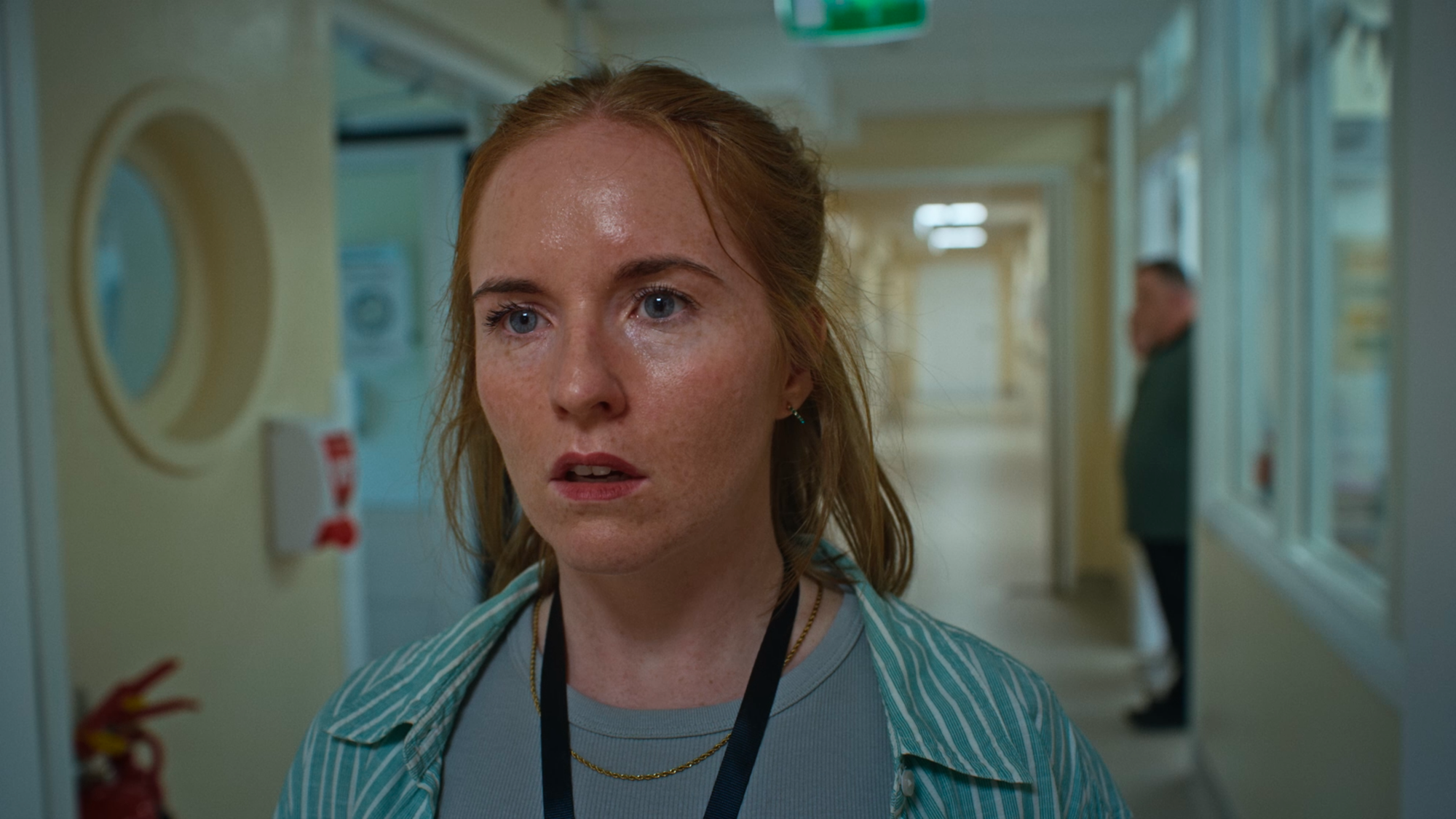
Not as such, but Catríona has done workshops with us before so we have an existing relationship. The writers room really was improvisations so all we had was the idea that we wanted to create a thriller set in a disability services provider because it’s important that we follow the thread of what the guys want to make the work about. And I definitely wanted to make something that was set in such a location because I’d previously made Headspace which I felt amplified the world of a community house. You don’t really see the world of a day service on screen so we thought it’d be great if it’s set there and a KeyWorker has gone missing and these individuals are going to be asked about when they saw her.
So we brought everyone into the room including the other actors that are in the final film, Laura Larkin, Craig Connolly and Lloyd Cooney and we improvised for three weeks and Catríona and I sat in and wrote notes and watched the improvisations unfold. And what kept happening was, the guys kept giving really fantastical responses to questions about where Mary was. She was in Nashville, she was wearing a lilac coat etc. and Mark Smith always wants to be the villain and he was saying “I’m selling her drugs. I was having an affair with her.” And so Catríona and I had a challenge at the end of it – how do we make all of the jigsaw pieces fit and honour the contributions of the ensemble, who were a gift to the film.
I thought those responses to the interrogations were priceless because they are so deadpan when they say it. I mean of course she’s in Nashville, why would you doubt it? And they even have social media posts from Nashville. They’ve gone the extra mile to prove their point. Did that come from the performers themselves?
100% and Catríona and I regarded everything the guys said to us as a prompt that we had to include and it was the most enjoyable exercise as a writer. Some of it was mind boggling and we were often thinking how are we going to have this make sense. The guys created the characters and the things they wanted to say. Like Ella-Jane Moore, who gives this amazing vérité, truthful performance as Leah because that’s exactly what she wanted Leah to be. She wanted her to be adamant that they’re not lying. Similarly Wesley Fairbrother plays Tom who assists in the Garda station and he wanted to be the one that tells them that something is going on. Everybody took their creative characters and took them in the directions they wanted to go.
Everything within it came from something in improvisation. I have a shorthand with the actors and so I was able to direct them to really truthful performances. And while I felt the same with Headspace I think Mary took it one step further because the guys created the characters and the things they wanted to say. I think that there’s a reductive assumption that actors of intellectual disability can’t achieve that level of truthful performance and it’s not true. It’s just you need to know what supports to put in place and how to support someone to really be in the role and once you get there that’s what’s so compelling about it. The performances is where the film started from, that camera on Conor going Ï don’t know where Mary is and I believed every word he said.
What are the plans for the film next? You’re now in the running for an Oscar aren’t you?
The plan is world domination if you were to ask our actors! With the win at Cork we now qualify to be considered for the best live action short in the round for the 2027 awards. That puts you into the screening room for the Academy to vote on. So you’re talking about a list of maybe 140 short films, 15 get shortlisted then 5 get nominated for an Oscar. The only thing that will get Academy eyes on your film is for you to run a bit of a campaign and to canvas. We’ve been on the Oscar long list before with Headspace and I just enjoyed the madness of doing the Oscar campaign, which meant interviews and trying to get support behind the film. With Mary we are really going to try and hit it, I mean we have an ensemble behind us who will kick us into tomorrow if we don’t do everything that we possibly can to get there! So we may not make the Oscars but we’re going to have fun trying.
And would you say the experience of having been in the academy listings before this has helped because now you have contacts?
It’s all through PR companies. When you Oscar qualify there are companies that specialise in promoting to the awards, who will reach out to you. They may want to see the film and then they’ll offer to represent you. With Headspace we got in with London Flair PR and they sent us out doing interviews all over the place but it is kind of costly. If you have a Screen Ireland funded film and you qualify for the Oscars they will give you additional funding to engage PR. But some films spend something like €50,000 on a campaign.
Now we couldn’t have anything close to that but we were thinking we could do some fun stuff like have a black tie night or a fundraiser. Doing this campaign will be great for the community and they will really enjoy it so I think we’ll try our best. We have the experience from before so we know who we can go to and ask. It doesn’t mean that they’ll want to represent the film but in terms of the networks, the interviews, the publicity train you wouldn’t secure that without a publicist so we will have to engage a publicist or a PR firm.
Well the best of luck with the campaign and with the film itself and thank you very much for talking to me today.
My pleasure. Lovely to chat to you.
Mary is Missing will be making its U.S. premiere at the Santa Barbara International Film Festival (SBIFF), which runs from 4th February 14th February 2026.
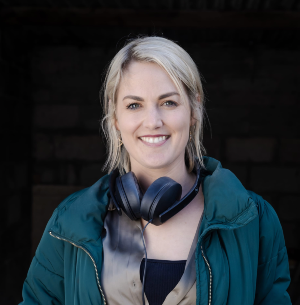
Aisling Byrne
Aisling Byrne is an award-winning writer and director working in film, television and theatre. Her short film work—including Headspace, Misread, Turnaround and Mary Is Missing—has earned multiple Oscar®-qualifying honours, including two Academy-Qualifying Grand Prix awards at Cork International Film Festival, the Tiernan McBride Award at the Galway Film Fleadh and the Light in Motion Award at Foyle Film Festival. Her films have screened at multiple international festivals, with further recognition including IFTA and DIFF Discovery Award nominations.
She is currently developing her debut feature through Screen Ireland’s Perspectives initiative, collaborates regularly with Arcade Film, and has a TV comedy-drama in development with MK1 Productions. She is represented by Curtis Brown. With a background in socially engaged arts, she is the Founder and Artistic Director of Run of the Mill a leading organisation championing intellectually disabled artists and talent.
