

The much-anticipated biopic of ‘The King of Pop’ Michael, has finally landed in cinemas across the globe. Since its release, this film has divided audiences as it offers no appeasement to detractors and those looking for less than salubrious details of Michael’s life to be laid bare. It is a celebration of one of the greatest entertainers, showmen, musicians and best-selling artists of all time, a fitting tribute charting the rise from the most humble beginnings to the attainment of legendary status. To quote in part from Shakespeare (and musician Stormzy), ‘Heavy is the head that wears the crown…’ In this case, the head is that of ‘The King of Pop’, a title acquired when Elizabeth Taylor referred to him as “...the true king of pop, rock and soul”, at the 1989 Soul Train Awards.
Michael is written by John Logan, directed by Antoine Fuqua, produced by Graham King (Bohemian Rhapsody, Training Day), and spans half of the forty years of Michael’s career (late 1960s to late 1980s). Biopic it is, with a run time of two hours, but this time is fleeting and does not even scratch the surface of the megastar’s life story.
Jaafar Jackson, who is the real-life son of Michael's brother Jermaine, stars in his debut role as Michael. He renders a captivating performance as he takes on the persona of his uncle, evoking moments of nostalgia for older fans and creating magic for younger ones. The costumes, hairstyles and attire speak for themselves, an intrinsic part of the ‘show’.
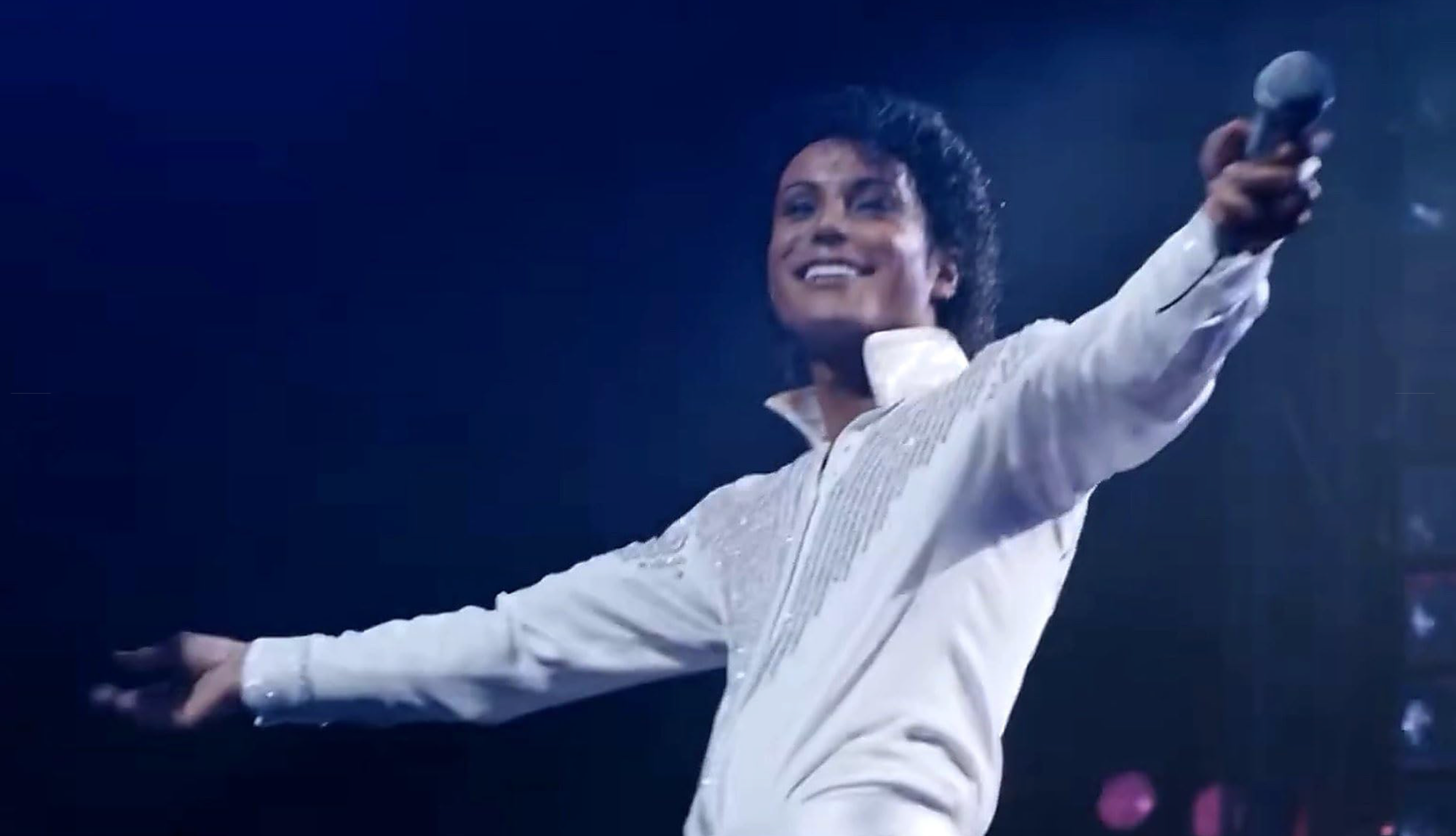
From the outset, father Joseph/Joe Jackson (Coleman Domingo) stamps his mark as the enigmatic, authoritarian taskmaster, manager and agent of the ‘band of brothers’, The Jackson Five. From their hometown in Gary, Indiana, he instils in them the values of hard work and success, marking the distinction between the ‘winners or losers’ in life. The siblings spend long hours rehearsing, while in the background, the quiet strength of matriarch Katherine (Nia Long) lovingly guides and encourages her brood, particularly Michael, who is singled out for extra physical chastisement by Joe. Neither Katherine nor the other brothers are able to intervene when Michael is whipped time after time with a belt.
As the brothers' creative genius grows, Joe establishes influential contacts and negotiates contracts, until they are signed with Motown Records founder Berry Gordy, who is instrumental in propelling them to acclaim.
From there, the band move to Epic Records, at which point younger brother Randy joins the fold, now re-named ‘The Jacksons’. Jermaine remains to pursue a solo career. The Motown hits of the Jackson 5 set a distinct pace, heralding their unique talent and impact as they ascend to unprecedented heights. Performances of familiar and well-loved tunes such as ‘I Want You Back’, ‘I’ll Be There’, ‘Rockin’ Robin’, ‘Got to Be There’ and ‘Ben’ continue to be rolled out, cementing their place in the charts.
There are terse moments as Michael contemplates separating his career from his brothers, much to Joe’s chagrin. Joe accuses Michael of seeing himself as better than all his family members, but relents and grants Michael permission to leave as long as it does not interfere with the group. To the contrary, Michael relishes time with his mother and is close to his brothers and sisters (La Toya features in the film). The only ties he wishes to break are with his father. He longs to be free from Joe’s tyrannical hold, a situation that eases up as Michael grows older.
Michael focuses on his solo journey, having been taken under the wing of producer Quincy Jones, with the 1982 album ‘Off the Wall’ becoming the biggest-selling album in history. Amongst the songs on the album, ‘Thriller’ is a standout success, showcasing Michael’s use of the falsetto voice for the first time. He also experiments with using vocal tics, whoops and what is described as ‘hiccups’, inimitable aspects that come to bear his hallmark and for which he becomes so well known.
Michael revolutionises music. He invents the ‘moonwalk’, his signature dance from there on, breaking records and barriers in his wake and exceeding all expectations. From the same album comes ‘Billie Jean’, ‘Smooth Criminal’ and ‘Beat It’, all heralding interactive performances for his followers and fans. He explains that ‘Don’t Stop Til You Get Enough’ is about ‘...never quitting, regardless of what your dream is…’
Joe Jackson cherishes his desire to have the brothers re-unite and perform together, to which Michael acquiesces, and a partnership with PepsiCo ensues. While filming for a promotional video, Michael’s hair catches fire, causing second-degree burns to his scalp. Soon after, the Jacksons embark on the Victory Tour, setting yet another record for the highest-grossing tour. Michael announces this will be their last performance together and states, “And I think this is our farewell tour.”
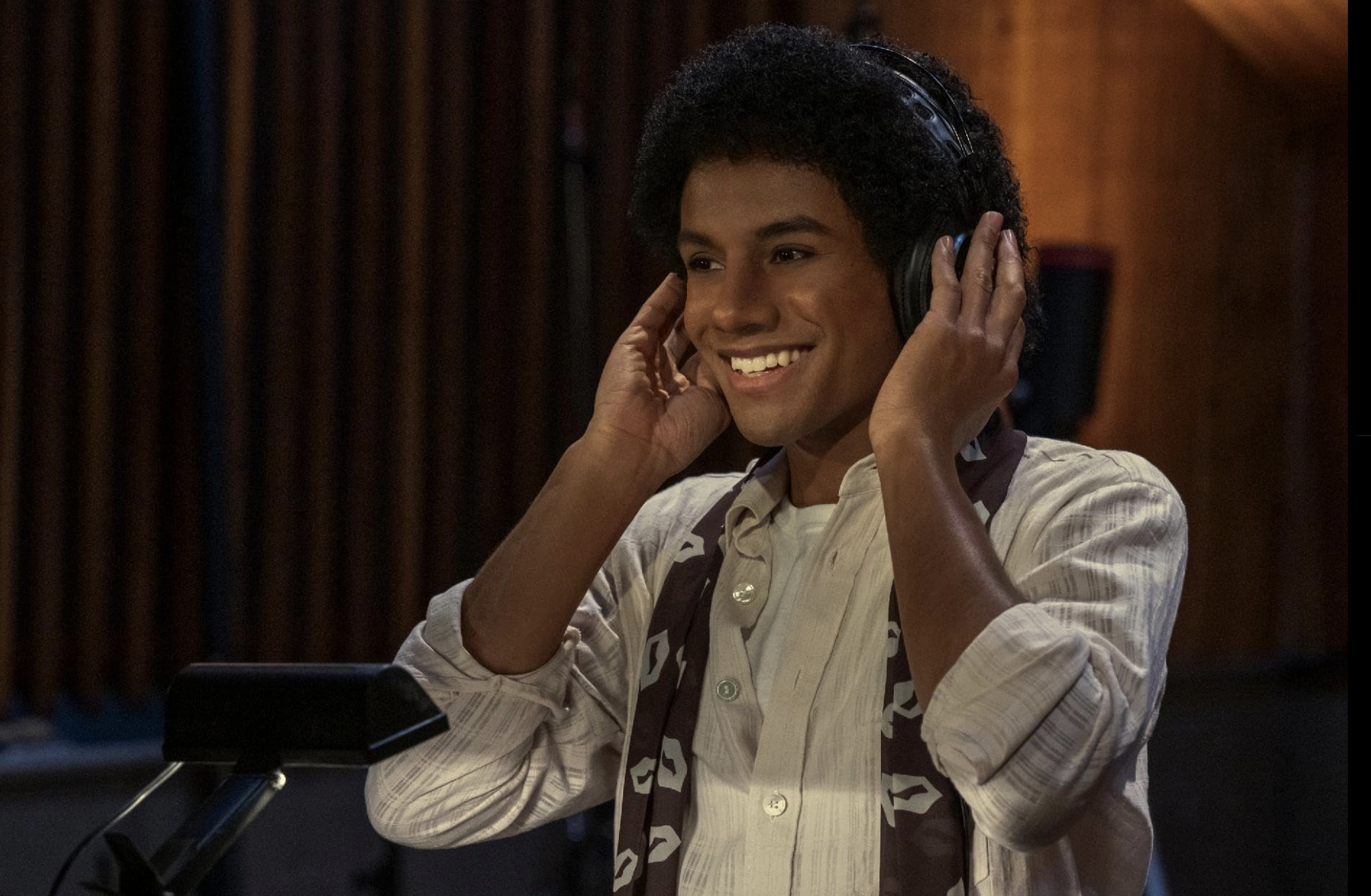
Aspects of Michael's personal struggles are touched upon, his transition from child prodigy to adult performer who has largely remained a child at heart, living with his parents well into adulthood. Michael is enamoured by and draws inspiration from Peter Pan and Never Never Land, of which there are plentiful inferences throughout the film. Snippets depicting body dysmorphic aspects and insecurities, health concerns with the skin condition vitiligo, paint an outline of the daily challenges faced by Michael. He explains to his father the plastic surgery on his nose is due to an injury.
When he moves to his new home in Santa Barbara, California, Michael envisages living the fantasy of Peter Pan and names it Neverland. He sets up a petting zoo and builds an amusement park on the land, with his love of animals such that he adopts several exotic species, amongst them a llama, giraffes, tigers, birds, and favourite of all, Bubbles the chimpanzee, who is given due prominence in the film.
Viewers see how, interspersed in his hectic work schedule, Michael undertakes humanitarian work in the community, with disadvantaged youths and numerous less privileged groups in society. He donates large sums of money to fund projects in education, health and welfare. Michael visits sick children in hospitals, arranging specialist care for them as needed.
Michael lends his name to peace initiatives when he learns from a news report of violence flaring up in Los Angeles. In the ‘Beat It’ music video, members of rival street gangs, the Crips and the Bloods, are brought together under the supervision of the Police Department, with Michael’s intention being ‘...to get them there to like each other and hang out with each other for two days doing the video.’
Entertainment lawyer John Branca (Miles Teller) is engaged by Michael, with a view to having him replace Joe Jackson as manager. In the film, Branca is instructed by Michael to fire Joe, which he does dramatically via fax message. Needless to say, Joe does not take kindly to this communication method and later tackles Michael over it.
An obvious and palpable rapport exists between Michael and his bodyguard of many years, Bill Bray (KeiLyn Durrel Jones). He is by Michael’s side from the early days, hired by Joe to protect a young Michael. In addition to security matters, Bill takes responsibility for his wellbeing, is a friend, mentor and constant companion. He is a pillar in Michael’s life and bridges the gap left unfilled by Joe and other family members.
As the film draws to a close, the questions abound. What about family members left out? Did they not wish to have their say? Why were allegations not addressed? Food for thought, and indications there may well be a sequel tracing the next stages in the life of the ‘King of Pop.’
Michael is in cinemas 22nd April 2026.


