

In this article, June Butler shines a light on Brazilian filmmaker Leonardo Oliveira, tracing his journey from Ceará to Ireland and exploring how resilience, migration, and community have shaped his voice as a storyteller. From intimate documentaries to experimental reflections on belonging and the housing crisis, June examines the lived experiences that inform Oliveira’s work and the determination that continues to drive his filmmaking career.
Brazilian native, Leonardo Oliveira, has always had a passion for film – from childhood, he has been mesmerised with the magical qualities of storytelling through moving depictions; a medium through which feelings are expressed across a kaleidoscope of visual images. As a youngster, Oliveira was amazed to consider that he could sit in the comfort of his home yet be transported to another universe by the apparently simple mechanism of watching movies. He tells a story of a local man who possessed a VHS player when no-one else in the area had such an amazing device. The neighbour rented The Matrix and invited everyone to watch it in his tiny living room. It was at that moment Leonardo realised this was a world he wanted to fully engage with and decided to become a filmmaker. When it comes to storytelling, watching a film surrounded by people is a point of first contact. There is a sense of belonging, bringing people together, creating a welcoming community where everyone feels they have something to offer and bring to the fore. Sharing a visual experience, the highs and lows, tense moments within the narrative, sadness and joy, is both empowering and inclusive.
When Oliveira’s sister purchased a camera, he borrowed it and began to study the medium of video and photography, going on to make short films with family and friends. Eventually Leonardo decided to transform a room in his home and use it as a small studio. He even went so far as to paint the walls of the workshop chroma key green, which is a shade utilised in video and film to create a ‘green screen’ effect.
Shortly after, Oliveira soon had to make some difficult decisions – he placed his cinematic calling on hold and at the age of 16 was compelled to prioritise working full-time to support his family, while also attending high school in the evenings. At the age of 18, Leonardo moved from his home-state Ceará to Rio de Janeiro, where for five years, he paid for an English exchange programme with the intention of moving to Ireland and studying abroad.
In 2018, Leonardo Oliveira moved from Brazil to Ireland. He did not speak English and had to pick up the language from scratch while working part-time as a cleaner and kitchen-porter among other métiers. After studying English for two years, Oliveira realised there was a scholarship available whereby he could pay the same fees as a European student despite hailing from Brazil, a country evidently not on the continent of Europe. Oliveira enrolled in Dublin Business School, completing a Bachelor of Arts in Film and Creative Media - he was awarded a first-class honour for the course, and chosen as Student of the Year. He gained an impressive array of hands-on experience, including a four-week cinematography course at the MetFilm School in Berlin and basic cinematography at Raindance Film School.
By 2024, Oliveira had set his sights on a master’s degree, also in Film and Creative Media. He graduated in October 2025, with a first-class honour grade.
In more recent times, Leonardo has worked as an assistant producer on an international project based in Amsterdam. Oliveira says that the experience was eye-opening. He maintains that being involved with such knowledgeable filmmakers was empowering and motivating. Leonardo returned to Ireland with renewed determination to make his mark in the world of film – he resolved to continue exploring the richness and diversity in the field of cinema and delve into a deeper understanding of life with its spectrum of multiculturalism.
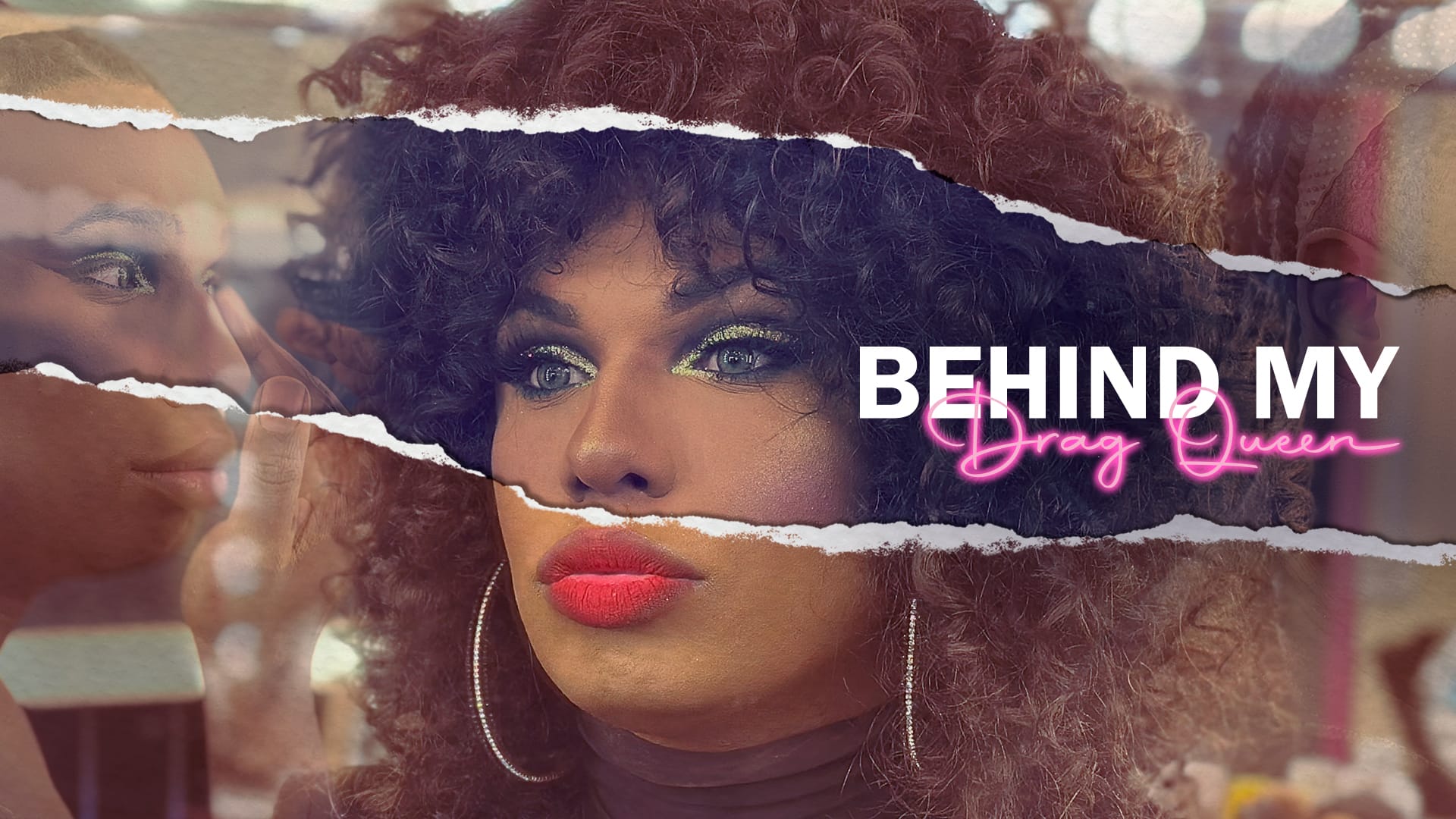
As part of his Bachelor of Arts final project, Oliveira made a short film titled Behind My Drag Queen – narrating the story of Enisio Alves, otherwise known as Chantelle Perez. Leonardo shot the entire film using a smartphone. Perez is a Brazilian national who has discovered a way of expressing herself through the art of drag. The film touches on finding a niche in a strange country – a place where safety is assured and she is accepted for who she is. Oliveira took inspiration from the 1990 documentary Paris is Burning by Jennie Livingstone. Paris is Burning had heart and soul, everyone was welcome to attend the drag balls in New York City; African American, Latino, gay and transgender – they flocked to the weekly displays of finery held in the city ballrooms, where outfits were fashioned on a dime. Money was always an issue but finding how to look their best with the tiniest of budgets, was both empowering and exhilarating. An amazing ensemble could be refined with the most miniscule of resources. So too with Behind My Drag Queen – Perez lip-syncs in The George bar on South Great Georges Street Dublin shaking her thing. There are no half-measures in her performance. Chantelle faces her challenges with the same grit and determination she displays when on stage. Leonardo has incorporated the sense of Paris is Burning, turning it into his own personal journey to the nucleus of community that is the Dublin drag scene. The film formed part of the lineup for GAZE International LGBTQ+ Film Festival 2023, among others.
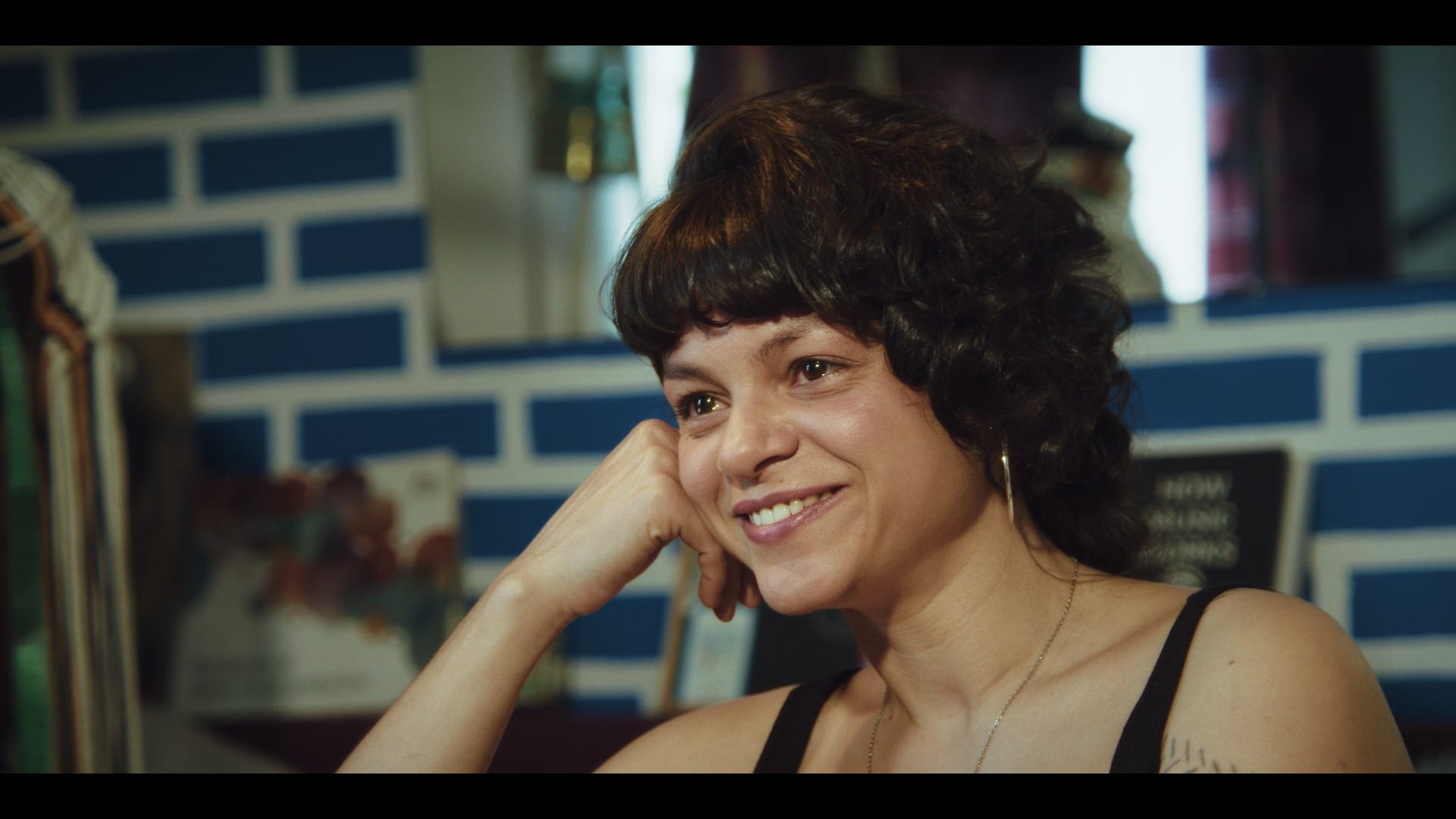
Sunflower, tells the story of Maylla Amazona, an international student living in Ireland. Like Oliveira, Maylla arrived in Ireland unable to speak the language. As she became more proficient, Amazona started to combine study and work, making new friends and forming relationships. Life was good. Then Maylla discovered a lump in her breast and was told she had cancer. Amazona went through round after round of gruelling treatment. She had a partial mastectomy. The tumour was removed. Then the cancer returned. At this stage, Maylla was nearing the time-limit of her work-visa for Ireland. She had two choices; either stay in Ireland, hoping she would not be deported while undergoing clinical care, or return to Brazil while she was still in reasonable health and resume treatment in her home country. Amazona selected to go back where she now lives in her grandmother’s house next to a beach. The cancer diagnosis is a thing of the past and Maylla remains happy and healthy. She has set up an Instagram page where her story is shared, and every day is lived to the full. In each image and video, Maylla is smiling and laughing – she is a testament to standing tall and proud in the face of adversity. The film was screened as part of the Catalyst Film Festival 2025 where the movie won the Jury Special Mention award.
From the early noughties to 2007, the Irish economy was booming – property prices soared to unheard of heights and kept increasing. In the background, economists warned of a financial crash, but their entreaties went unheeded. There was a rush to purchase, but such was the heady excitement of buying a ‘forever home’, caution was thrown to the wind and there were citizens who borrowed well beyond their means, thus placing them in extreme jeopardy should the bubble burst. Several decades earlier, from the mid ‘70s, the numbers of government-built social housing had been steadily declining. In the summer of 2007, house prices declined by 3%. UCD Professor Morgan Kelly lamented this was merely the tip of the iceberg and far worse was to follow. His statements were met with hostility by the public and politicians. Then Taoiseach, Bertie Ahern, suggested that those “cribbing and moaning” about the economy, should commit suicide. Reckless words indeed. By 2008, there was a global economic slowdown and a tightening of credit control – a bit like carefully making sure the gate is shut after the horse has bolted. In 2009, economies across Europe and the USA had all but collapsed. The Celtic Tiger was no more and house buyers by 2011 saw the value on their homes recede to, in some cases, 60% less than the original price they paid for the property. Many thousands were left paying a mortgage on a property that was now firmly ensconced in negative equity territory.
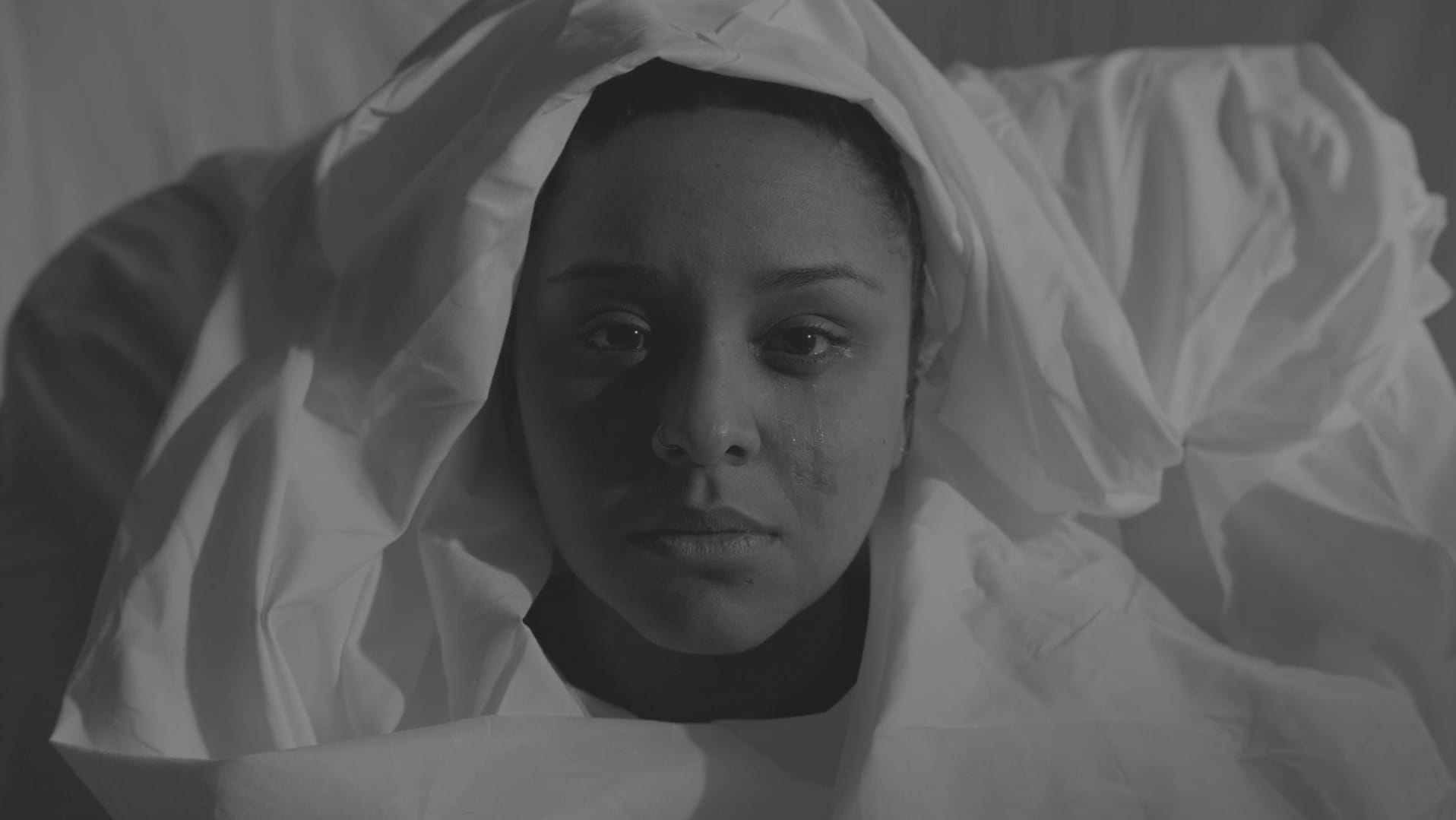
Since then, despite a plethora of construction cranes dotted around Dublin city, the situation has become manifestly worse. The dream of owning not just a house, but a home, is increasingly harder to realise in recent years. Leonardo addresses the housing crisis in his short film My Castle. Drawing on personal experience, Oliveira has made an experimental film showing the isolation and loneliness that can manifest on a dark night; in a house that is cold, where you cannot afford to turn on the heat and sun-kissed beaches and cloudless skies in Brazil are beyond reach. It is agonising to try and forge a haven when every odd is stacked against the renter – monthly leases are outside the financial capacity of many immigrants. It is significant that Oliveira has given his film this title – a castle recalls an enclosed and fortified domicile, drawbridge, moat and ramparts. Stone walls a meter thick, turrets and cannons lining the battlements. Dotted along the walls of the castle are cross-shaped or slitted windows – the French call them Meurtrières – in English they are named Murderesses. At times of war, bowmen would stand inside and use a ledge to balance on while wielding a bow and arrow. It was easy for bowmen to shoot out, but very difficult for an arrow to enter the tiny aperture set into the walls. Even under attack, within the castle, livestock and grain was kept so the inhabitants could survive an extended siege. Oliveira chose wisely when picking the name of his film - this is what every citizen of Ireland wants, safety, the salvific enclosure of warmth, food, and personal space. The impact on a person’s wellbeing is shaped by their surroundings. The sense of truly belonging is rooted in financial acumen. Immigrants should be paid a fair salary, enough that they can live on, not simply hand to mouth. They should have access to a dwelling where they feel protected, secure, and not be at the mercy of accepting substandard accommodation because they cannot afford any better. Whatever about their physical health living in damp/cold conditions, many immigrants are living in flats at the whim of landlords who can evict them at any time. For the people who come from abroad to work in Ireland and support this economy, without their expertise and hard graft, there would be no coffee shops or not as many. Restaurants would close; bars would too. The tiny shops with niche products, the wonderful richness of eating food from another country, all those experiences which sum-up to make Ireland continue to be the land of a thousand welcomes, would dissipate like a puff of smoke. It is simply not right for this nation to accept the good from having a multicultural diaspora doing the tough jobs behind the scenes, keeping this country going, and with the other hand treat them with such disdain. Everything is interrelated – where tenants live and how they exist within that model is solely represented by their level of income and how much can be afforded. There are quotidian elements most people take for granted – a comfortable bed, a warm house, hot water, the feeling of safety.
Challenges have been faced up to with courage and determination. It has been a journey of tenacity, self-belief, coupled with the staunchest of refusals to ever give up.
In his own words, Oliveira states he feels proud, grateful and excited for what comes next. Leonardo goes on to say the investment and hard work has been worth it and on looking back, he would not change one thing about his journey to this point.
I have faced ‘no’ many times, in education, opportunities, and even more in the field I’m graduating in. For those of us living at the intersections of minority and marginalised identities, ‘no’ is an everyday reality. But ‘no’ has never stopped us, it has shaped us, strengthened our resolve, and pushed us to keep going until we create our own ‘yes’.
Leonardo Oliveira


