

For Rouzbeh Rashidi, filmmaking begins with not knowing. Across more than two decades, his practice has been shaped by radical autonomy, experimentation, and a refusal to treat the image as something that can be fully understood or controlled.
From the Tehran-founded Experimental Film Society to its later transplantation to Dublin, Rashidi has developed a body of work that moves between cinema, mysticism, memory, and material process.
Ahead of Rouzbeh Rashidi: A Decade of Cinema – a three-hour film essay and Q&A taking place in Light House Cinema this weekend– he catches up with Neil Cadieux.
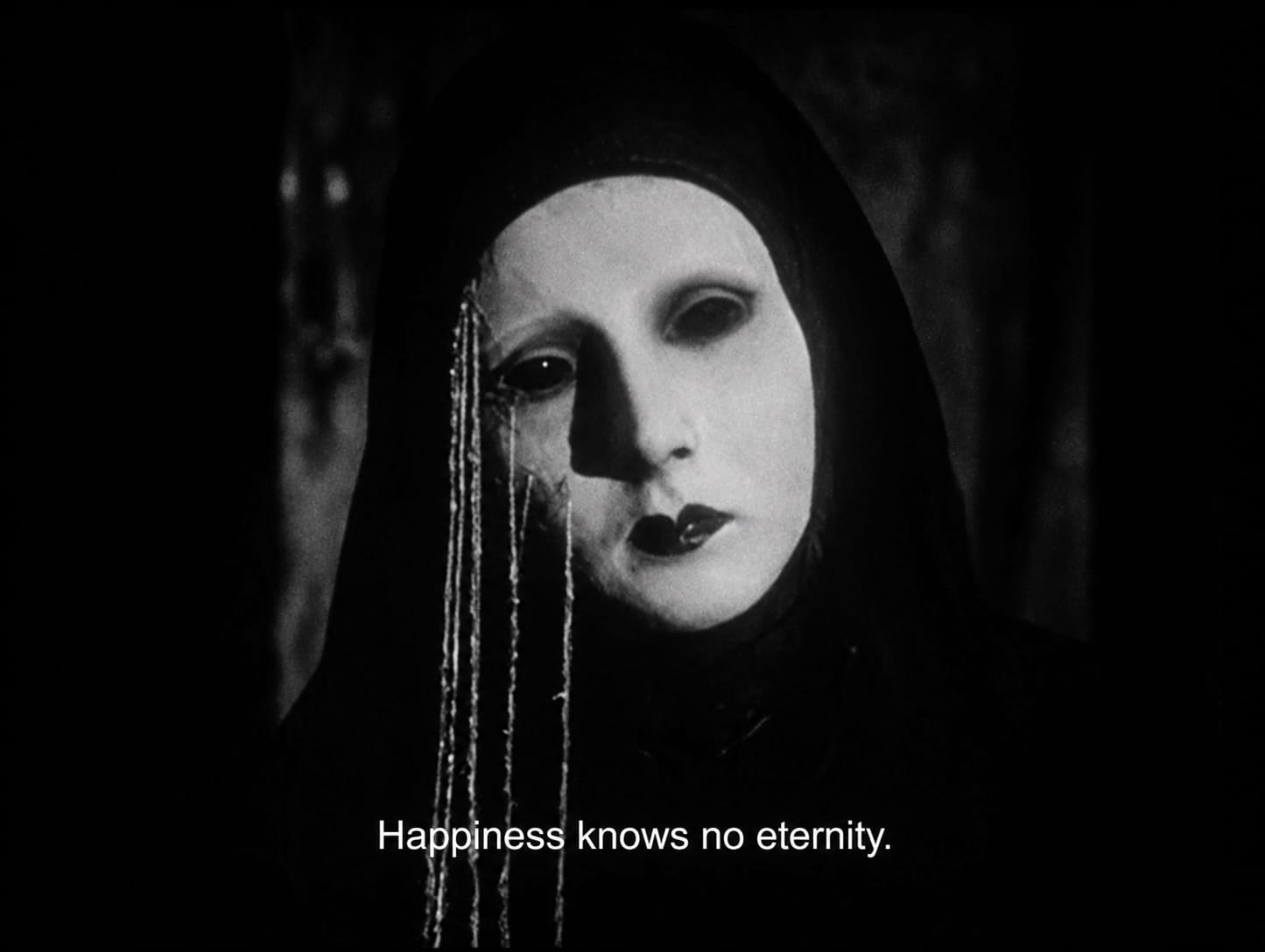
Four years after founding the organisation, you expanded the Tehran-based Experimental Film Society into Dublin. Has this had an impact on your creative process?
Let me begin by correcting the word, gently, because the correction is the answer. Nothing expanded. Expansion is what institutions do, and Experimental Film Society was never an institution – I never wanted to build a church. It began in Tehran in 2000 as a decision made alone: if the culture you need does not exist, you build it yourself, from scratch. It is not a one-man job, but it was a one-man beginning, and others arrived the way people arrive at a fire – because it was burning, not because they were invited to a meeting. What happened in 2004 was therefore not expansion but transplantation, and a transplantation, I have learned, is never completed. What I left did not stay where I left it. Departure goes on inside the one who departs, repeating itself in every leaving that follows, and each new departure wakes all the earlier ones. I am made of departures – shaped by everyone who has left me and by everything I have left.
So when you ask what the passage of time has altered, I find I distrust the verb. Perhaps time does not pass at all. Perhaps it stands still and we move through it – and what I have been calling my process for twenty-six years is only the shape of that movement. What the years have actually done is strip the process of everything that was not the process. For two decades I worked without scripts, in single takes, letting each film discover itself in the act of being made – not from doctrine, but because I did not know what the film was, and I had the discipline not to pretend otherwise. Then, after eleven features, the practice turned once: with Elpis and Dreaming Is Not Sleeping I began to write. I have called those texts poetic screenplays, and I am aware that this is a contradiction from a man who spent twenty years saying the screenplay has nothing to do with the craft of filmmaking. I decline to repair the contradiction. The text exists so that the film can betray it. I write in order to give the work something to leave – leaving, by then, being the only structure I trusted.
And there is something else, which I resisted saying for years because it sounds mystical and is merely accurate: my ideas do not develop, they return. A thought from 2003 comes back in 2015, and again in 2024, altered, insisting – not because it failed to evolve, but because it is not finished with me. The films are not separate works. They are organs of one body that has been growing since 2000, and the body has its own intentions. Has time influenced my process? Say rather that the process has been my instrument for finding out what time is. The experiment is still running. The reagent – this is the part nobody warns you about – is the experimenter.
In your video essay, you reflect on a lack of understanding of imagery. You state that you 'look' at images, and that this looking hasn't granted knowledge. How has this type of labelling influenced your approach to creating experimental cinema?
I meant it literally, and I would go further now than I went in the essay. The non-understanding is not my private condition. It is the human condition, and cinema exists because of it. The eye is itself a camera of limitations, and its footage is the only world we are ever shown. Perception arrives already edited: something in us splices memory into sensation and cuts before we know there was a take. Montage is not a technique cinema invented. It is the form of unconscious thought – which is why the machine, when it finally arrived, was not an invention but a recognition. When I say my looking has never turned into knowledge, I am not confessing a personal failure. I am describing the terms of the medium, and I am inside my own description: decades of looking, and the images have not begun to explain themselves to me. I no longer expect them to. The expectation was the error.
What this does to a practice is everything, because it reverses the direction of service. If you understand the image, you use it – you make it carry messages, like a servant. If you do not understand it, you must serve it instead: build situations in which it can behave, and watch what it does. My method is a set of defences erected around my own ignorance, to keep experience from hardening into competence. The take I refuse to repeat, because a second attempt arrives already knowing what it will find. The written line handed to a performer in place of dialogue, filmed at once, while it is still a state and not yet a performance. The obsolete camcorders, the surveillance camera, the telescope, the lenses ground in the nineteenth century for eyes that are all dead now – instruments I cannot fully predict, which see in ways I cannot pre-imagine. Imagination is only memory rearranged; the camera is the one tool I own that can catch what I cannot imagine. If you know why you are making art, it is time to retire from making art. I have organised my entire life around not finding out.
And the strange consequence – the one the essay does not say – is that the not-knowing is shared, and the sharing is the art form. A filmmaker can realise at most half of a film; the viewer arrives carrying the missing reel, and completes the work in the dark, alone, with no equipment but a nervous system. I do not solve the image and hand down the solution. I fail in front of the image, in public, in the dark, and the audience joins the failing. That is the honest name for what is marketed as ambiguity. The looking has not become knowledge. It has become my life, and I can no longer tell the two apart – which is, I suspect, the only understanding I will ever be granted.
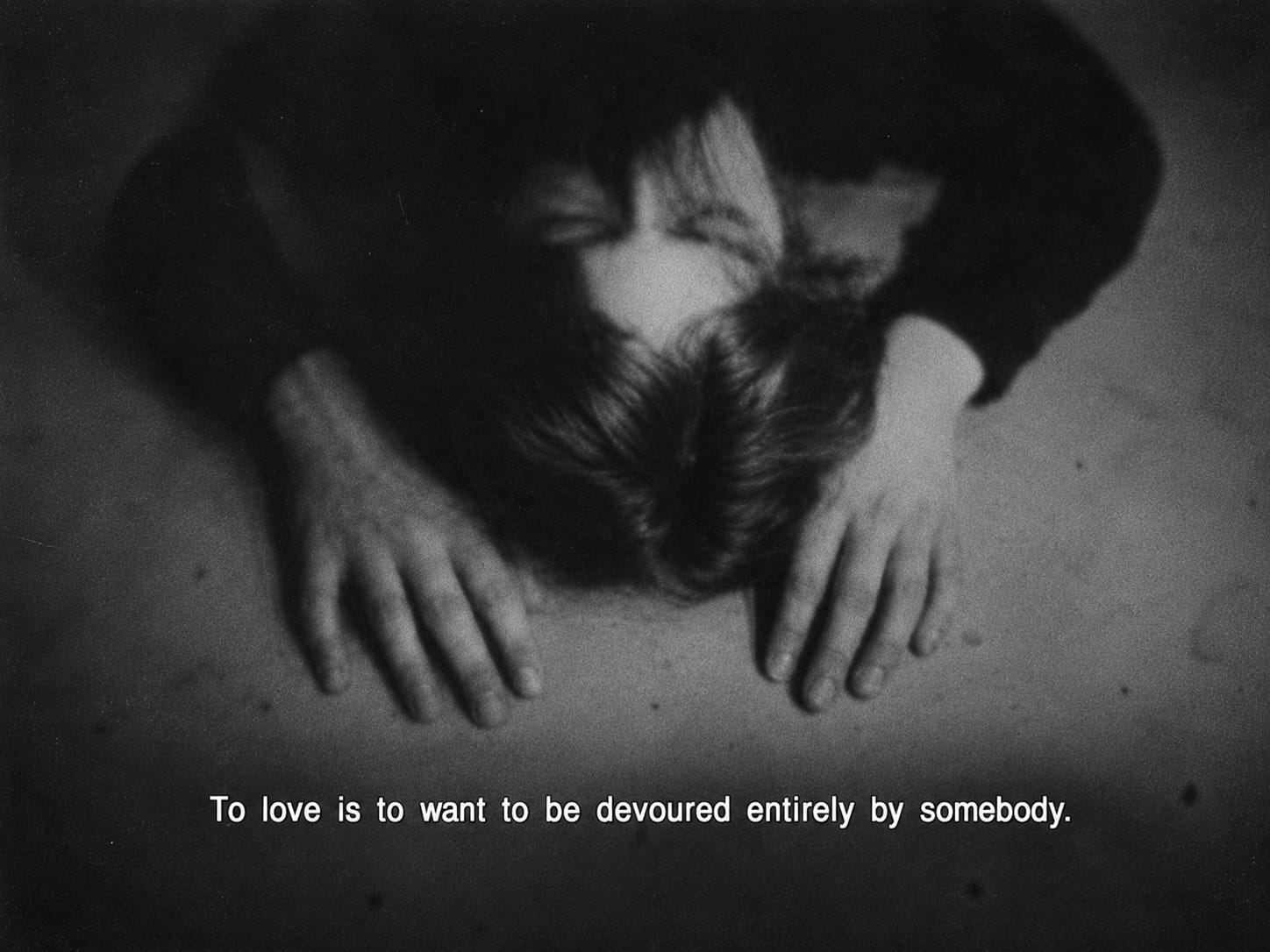
Does this specified lack of understanding change depending on the image's form? What difference, if any, would you define in applying this non-understanding to looking at, and interpreting still images?
It changes at the root, because the still image and the moving image have different relationships to death – and non-understanding is always, finally, a way of standing before the dead. A still image has finished failing. The moment it holds is gone, and the photograph does not pretend otherwise: it is the grave of an instant, and looking at one is standing at a grave. This is why the still permits a consolation the film refuses. You can stare at a photograph until the looking exhausts itself into the illusion of possession. It holds still for your understanding, the way the dead hold still for our accounts of them. They cannot contradict us. The stillness is the permission.
The moving image gives no such permission, because it is not a grave – it is a haunting. What the camera keeps is a trace of the world that goes on behaving as if it were alive, though the moment it holds is dead. And duration, which is cinema's entire substance, takes the image away at exactly the speed it gives it. You cannot stop and complete your looking; the film leaves as it arrives. There is also this, which I find harder to say: the projector is dark half of the time. The shutter closes on every frame, and in that flicker of night a second film runs – unrecorded, unwatchable, the film between the frames. Cinema is the one art that carries its own missing half with it everywhere. A photograph withholds too – every frame is a border, and what it excludes goes on existing just past the edge – but a photograph withholds space, and only cinema withholds time. I will not rank the two deaths. I keep both in the house. Before a still, I am mourning something that agreed to be over. Before a film, I am being visited by something that has not.
I built one film on exactly this fault-line. Bipedality runs on two kinds of time that never reconcile: the human passages shot fast, in a matter of days, in the heat of the encounter – and around them still images of light, objects, and landscape, gathered slowly across a whole year. Fast mortal time, held inside a slow geological time that has no interest in us. The stills were not illustrations. They were the world's indifference, given its own tempo. Since then I have thought of it this way: an archive of stills is time in storage; a film is time escaping. One is what the dead look like. The other is what they do afterward.
Would you define your singular approach to experimental film-creation, and curation, as being rooted in auteurism?
Auteurism is the wrong word for a true observation, and I want to take the word apart rather than accept it politely. What the term reaches for is real: one sensibility, uncompromised, sustained for decades, answerable to nothing outside itself. I will not disown that out of false modesty. But the auteur, as criticism built him, is a proprietor – he owns the image, commands its meanings, signs the work the way a monarch signs a decree. I have never once had that experience of filmmaking. I did not make my films; they made me. I am the creature my films envision, not the other way around. When I sign a film, I sign it the way one signs for a delivery: proof of receipt, not proof of authorship. Something arrived through me. The signature only confirms that I was at the address.
What I do hold – completely, jealously, without apology – is not sovereignty but autonomy, and the two are nearly opposites. The industrial auteur is a licensed brand; his singularity is underwritten by financiers, and he pays for it in permissions. My autonomy consists in keeping the whole chain of the image in my own hands, from the camera to the screen it is finally watched on – no committee near a cut, no approval sought from anyone, ever. Retaining the means of production is not an economic arrangement that sits beside the work. It is the work's first formal decision, the one all the others descend from. And curation, distribution, teaching – this may sound strange, but I run them with the same pleasure and the same hand as the films, because they are not activities around cinema. Programming a season is editing with other people's films. I have taught nothing in my life except juxtaposition.
As for authorship itself: I have stopped defending it, because it cannot be lost. It can only migrate. Over the years I have watched my own voice pass into other bodies and return altered – into the coldest pronoun in the language, when the most personal film I had made needed a mask to be possible at all; into a performed figure in Ten Years In The Sun; into a woman's voice in Elpis, carrying text I wrote and could never have spoken; into the synthetic narrator of Dreaming Is Not Sleeping, a machine entrusted with my most intimate sentences precisely because it is not me; into the film school itself, which has become a kind of institutional double – a voice adjacent to mine but not identical with my daylight self. A mask does not conceal the self. It lets the self migrate. Authorship, in my practice, is not abolished; it is dispersed – and the dispersal is the signature.
Furthermore, has twenty years of collaboration with the Experimental Film Society influenced, or changed your distinctive style in any way?
The influence of twenty-six years is total, and it is not stylistic. There is no EFS style and there was never meant to be one – no church, no doctrine, no manifesto anyone had to sign. What there is is harder to name: a way of working so close it approaches telepathy, between filmmakers whose films do not resemble one another. One organism, made of solitaries. The Society exists so that each of us can be more alone, together. What the collaboration changed in me is not my style but my survival – cinema practised this way is a long emergency, and nobody withstands it privately. If you want to call the result auteurism, I will not argue. But it is auteurism without the throne.
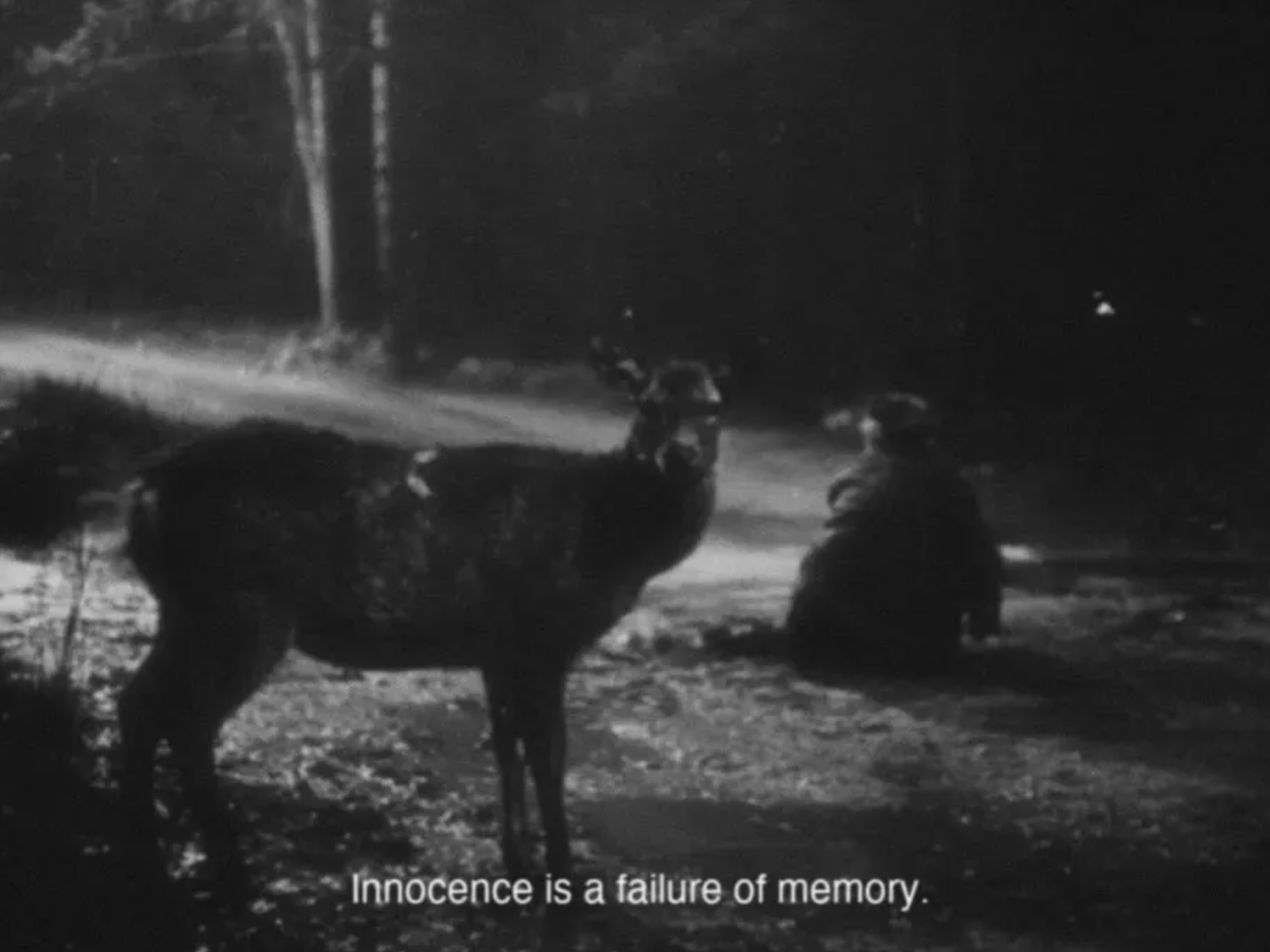
Your cinematic style is self-defined as one of radical autonomy, which retains the means of production as part of the work's philosophical and material form. How would you describe the relationship between your filmography's status as catalysts for philosophical observations, and their existence as material works?
There is no relationship, because there is no distance. The material is the philosophy. A film that merely contains ideas has failed – not because ideas are beneath cinema, but because a contained idea is a message, and a message is spent the moment it is received. A film should not mean. It should be. My own recent writing does not contradict this, whatever it looks like from outside: the texts exist to be betrayed, and the film is the betrayal. So I do not put thought into the films. I construct material situations – durations, exposures, degradations – and thought is what they give off, the way a burned thing gives off heat.
The plainest example I have: at the exact moment clean high definition became available to anyone who wanted it, I shot a feature on a dead consumer format. The smeared, bleeding signal is not a style through which the film expresses an idea about memory. It is the idea. Memory arrives ruined – late, degraded, more absence than presence – and an image that arrives ruined is not depicting remembrance; it is performing it. The same is true of the poverty. These films were made with nothing – no industry, no permission, for years no money – and the poverty is not a circumstance the philosophy transcends. It is in the grain, and the grain says one thing only: this was made anyway. With nothing. Against disappearance.
But your word catalyst deserves a more honest answer, because it is nearly right and its failure is instructive. A catalyst enables a reaction and comes out unchanged. Nothing about these films is unchanged by the thinking that passes through them – the films are consumed by it, and so is their maker. What a finished film actually is, I have come to believe, is the residue of a collision. Every film of mine began as something feasible – a plotted, possible thing, its intention clear. What reaches the screen is what survived the collision between that intention and everything else: the poverty, the accidents, the dead lenses, the weather, the ghosts. An artefact stranger than its plan, wearing shreds of its original fiction – and this forgery, I want to insist, is precisely where imagination lives. And beyond the finished films stand the others: the films I know I can never make, which I tremendously enjoy picturing, and which no collision will ever be permitted to improve. I once put the whole arithmetic in one sentence and I stand by it: I am the films I will never make, and the films I already made are my mistakes.
So the true relationship is not catalyst and observation. It is collision and residue. The film is the wreckage – you can hold it, buy it, project it, bury it. The observations are the heat still coming off the wreck. You cannot hold heat. You can only stand where it reaches you – and that, perhaps, is the exact definition of an audience.
How would you define the role that esoterica and mysticism play in your work?
Occult means hidden. That is all it means, and that is everything. The foundation of my cinema is a lesson that arrived before I had language for it, in a childhood arranged by a war I have never filmed and never will: the decisive forces do not show themselves. They work from underneath. What matters is never directly in the frame; it is the pressure that deforms the frame. A person formed this way does not come to the esoteric for atmosphere. He comes to it because it is the one tradition that describes the world as he has actually found it – a surface arranged by forces that decline to appear. The occult is not my decoration. It is my realism.
As for mysticism: I hold no doctrine, and I distrust every system that has ever consoled anyone. What I practise is a method, and it is the method the mystics of the negative way discovered centuries before the camera: approach by removal. Not this, not this, not this. Across ten years of features I removed plot, then speech, then character, then the clean image, then the human being from the centre of the frame – and the removal, carried past every point where it should have arrived at nothing, did not arrive at nothing. It arrived at a void that shines. I am wary of saying more, because the temptation at exactly this point is to give the void a name, a face, an intention. I never wanted to build a church – not even out of emptiness. Perhaps I have mistaken emptiness for God. Perhaps the mistake runs the other way. I refuse to resolve it, and the refusal is the closest thing I have to a faith. My ambition is not to fill the emptiness. It is to score it, the way certain music organises absence until absence becomes plenitude.
The practical face of all this is the séance. When I try to trap images it is like holding a séance, and nothing in that sentence is a comparison. Photography is a technology for keeping traces of the dead in motion; every frame is a small death that goes on behaving; the filmmaker sits at the table, keeps the vigil, and does not fully control what comes through. I have arranged my whole practice so that I never will. The Homo Sapiens Project – the laboratory that runs beneath everything I make – has spent twenty years opening the genres that know the most about existence: horror, science fiction, the occult, and the post-apocalyptic. Not to quote them. To interrogate them, and to find out what they knew before we did – which is what the mystics knew, and what the war taught me before either: that this world does not fully show itself. The unconscious was already a cinema – nightly projections, an audience of one, no exit – long before 1895. The machine did not invent that condition. It recognised it.
So the role of mysticism in my work is exact. Whether another world exists is a question I have arranged my life never to answer. What I film is the pressure this one is under from something that never appears. Mysticism, in my cinema, is not the assertion that the beyond exists. It is fidelity to the fact that the here refuses to be fully seen.
On Saturday 22nd August at 14:00, Light House Cinema hosts Rouzbeh Rashidi: A Decade of Cinema – a three-hour film essay and Q&A tracing the first decade of his feature work, eleven films made in Ireland between 2009 and 2019.


