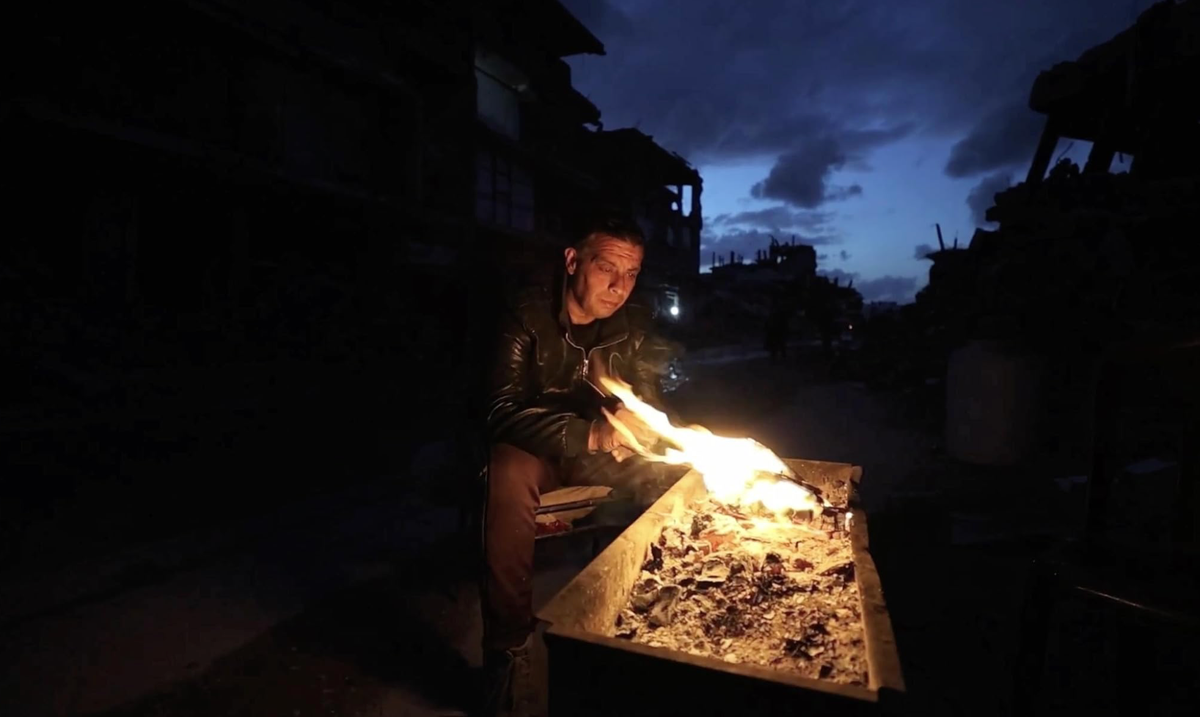

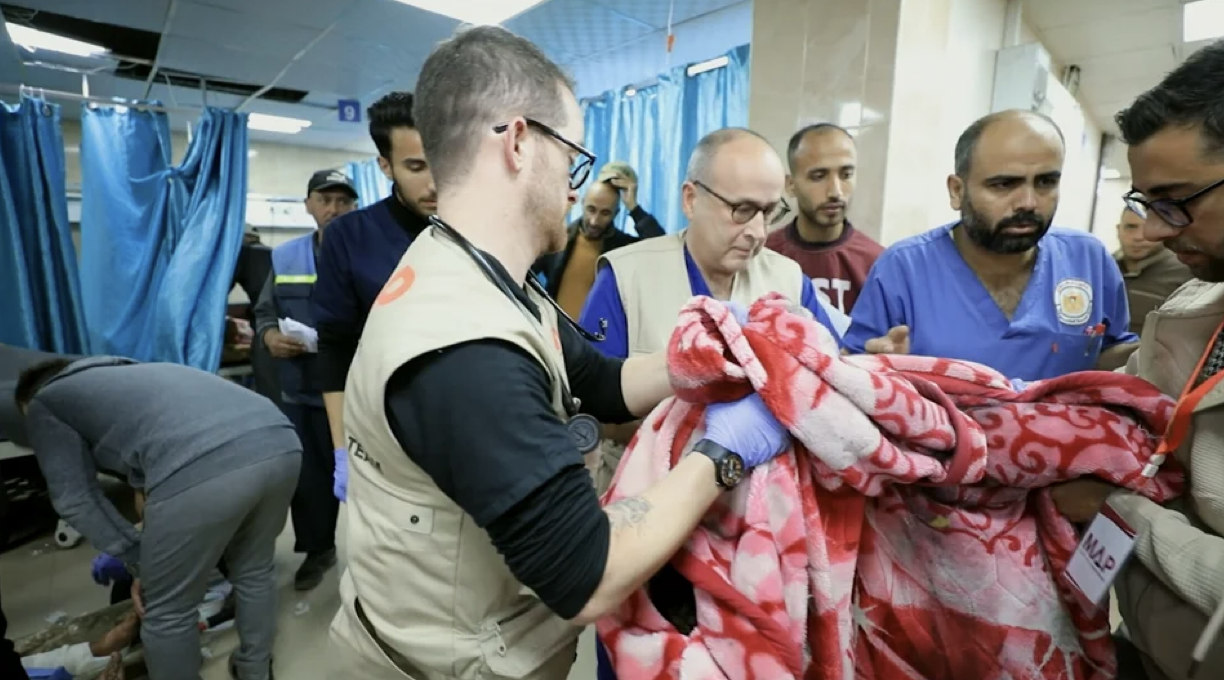
What does it mean to bear witness to a genocide, and what responsibility do filmmakers have to ensure those stories are heard? In Life Support, filmmaker Daniele Rugo brings together the testimonies of doctors who have worked in Gaza, documenting the destruction they witnessed and the Palestinian lives behind the headlines.
In the first part of this two-part conversation, Rugo speaks with filmmaker and writer Rachel Walshe about his earlier work documenting the legacy of the Lebanese Civil War and how those experiences shaped his approach to Life Support. He reflects on the process of bringing the film together, the role of doctors as first-hand witnesses, and the choices behind a documentary that traces the escalating destruction of Gaza through their testimonies and experiences.
I wanted to let you know right up top that I was really affected by the documentary. It was a difficult watch, but it was something that was very necessary. I know your previous work, About A War and The Soil and The Sea, both centre around the Lebanese Civil War. Where did that interest come from?
Daniele: I’m grateful, first of all, that you took the time to watch the film. My connection was initially rather fortuitous. I was approached by a Lebanese sociologist (at the time, I lived in the UK) who was working on the legacy of the civil war, and in particular the legacy of the civil war on the urban environment. I had just made a film about London and its preparation for the Olympic Games, so I had worked a lot on urban landscapes and how big-scale events change urban landscapes, basically. And so she contacted me and said, “I’m interested in this [the legacy of the Lebanese Civil War]. It’s a very visual work. Would you be interested in working with me?”
This was now fifteen years ago, so a long time ago. I said yes tentatively. Let’s see, let’s put together a project and see if we can get it financed and go from there. And we did get it financed, and so over the next three years, I worked alongside my wife, Dr Abi Weaver. We worked on About A War. We spent long periods of time in Lebanon. We basically moved there for a bit. And the film that was meant to be about how the civil war changed the urban environment became something else, became much more about trauma and how people, combatants in particular, in the context of Lebanon, which is a context of amnesia and an amnesty, had not been able publicly to voice their experiences. There were no forums for that. Even legally, neither faced any consequences, nor were they able to go through a transitional justice process where they could deal with that very difficult past. And so that began my connection with the region.
As with other places, once you experience it, once you engage with it, and once you develop personal relationships, it’s very difficult to leave it behind. So after that, the film came out in 2018, and almost immediately after, we got financing for a second film (this is The Soil and The Sea), again dealing with the civil war. But when we were screening About A War in Lebanon, people were approaching me, saying, “OK, you’ve made a film about combatants, perpetrators. But what about some of the victims that remain unaccounted for?” And this is how the project on the disappeared began. The Soil and The Sea is a work about mass graves and forced disappearances. There are 17,000 people in Lebanon who disappeared during the war and never came back, and it’s likely that some of these, many of these, are in mass graves all around the country that have never been exhumed, never been documented. The film became a kind of record of some of these places where we know mass graves exist, but if you look at the landscape today, there’s nothing to tell you that this is a mass grave that has been completely reabsorbed into the rural/urban fabric of the place.
The film is a landscape film, and this came really from my engagement with the tradition of landscape filmmaking: James Benning and the Fūkeiron Japanese filmmakers. I had long wanted to make a film of that, just of landscapes, and it’s a film where the absence of traces in the landscape is juxtaposed with the testimonies of relatives, eyewitnesses who know there are human remains there and that these places really should be exhumed and excavated. And of course, both films touch deeply on the Palestinian experience, as you do when you work in Lebanon, because you know Lebanese history is intimately intertwined with Palestinian history. First of all, because in Ottoman times there wasn’t really a border there. Lebanon and Palestine were not really two different things. But also because, of course, during the Nakba, many Palestinians, in particular from the North of historic Palestine, had to flee when the Zionist militias started the ethnic cleansing and fled into Lebanon. And so a lot of refugee camps were created in 1949 to accommodate some of the people who were forcibly expelled from Palestine by Zionist militia and then by the State of Israel.
There is a very substantial presence of Palestinians all around Lebanon, and Palestinians were part of the Lebanese Civil War. There are conflicting positions on the presence of Palestinians in Lebanon, but the culture, the history, and various forms of resistance are very important to the Lebanese landscape from a political point of view and a cultural point of view. So we worked in Shatila, one of the bigger refugee camps in Lebanon, famous for the 1982 massacre. We worked with a former combatant who used to be a member of the PFLP [Popular Front for the Liberation of Palestine]. I then worked with survivors of the Sabra/Shatila massacre who had members of their families disappeared, so they were never found, even in the mass grave that existed at the entrance of the camp.
I knew quite well what the Palestinian experience was, and historically I’ve been drawn to the Palestinian cause and supportive of the Palestinian cause even when I was very young, as a teenager. It’s not something I came to in adulthood. This was part of my political education. I grew up in a left-leaning, politicised family. So that connection was there before this film, and the previous film was also the reason I met the producer of the film, William Perry, who came to a screening of The Soil and The Sea in a cinema in Oxford and liked the film and said we should try and find a way to work together. This was February 2024. It was the beginning of the genocide, so it was very obvious for both of us that if we wanted to do something together, it had to be about Gaza. He [William] had long done advocacy around Palestine, so he had been very active within that space, in particular using the arts and creative practices. So this is how my connection with the region connects to Life Support.
I did see a little bit of The Soil and The Sea, and it is very striking, the lack of…
Daniele: Faces.
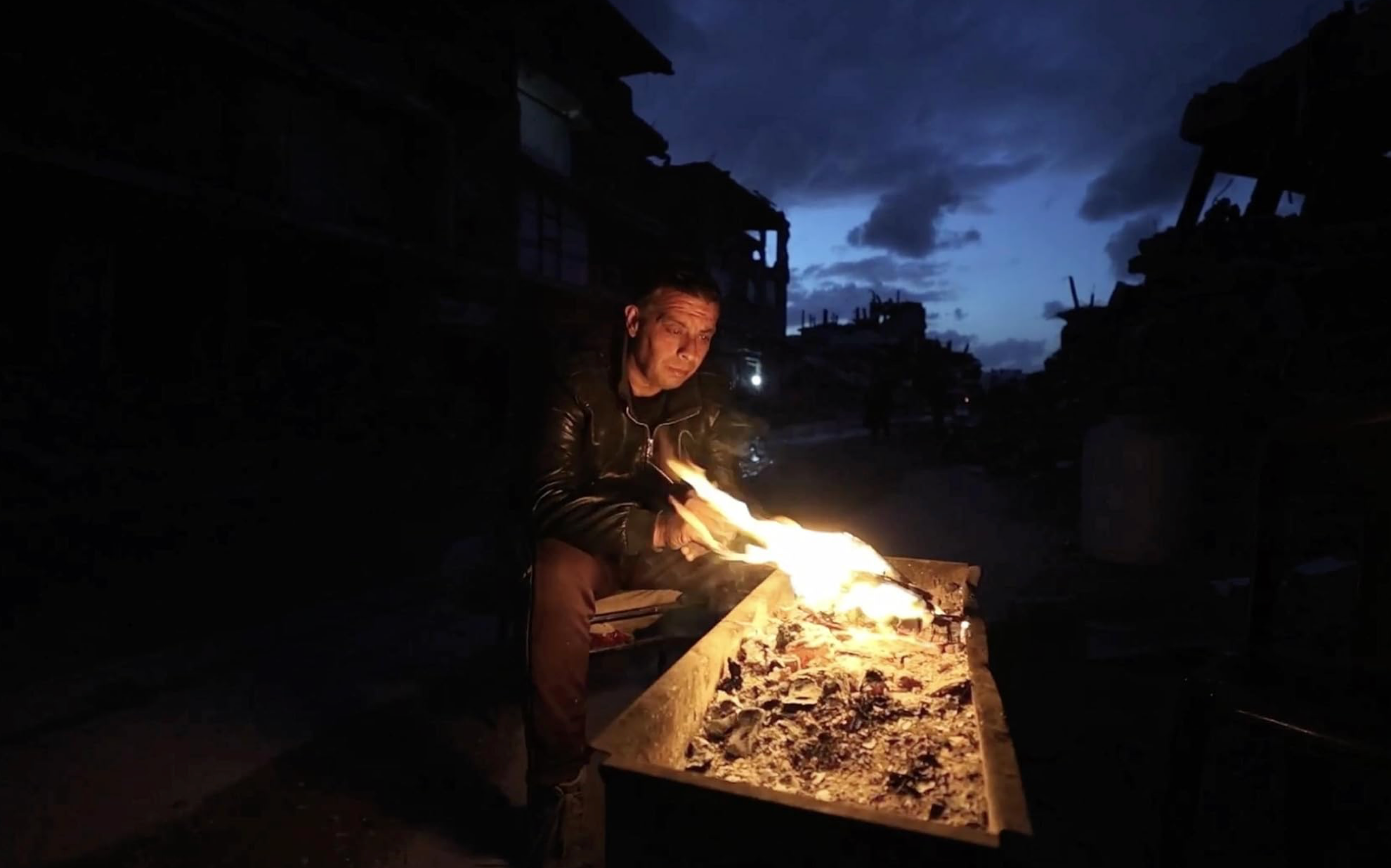
Faces, yes! Just to put it bluntly. But in recording something about the destruction of Gaza, you’re talking about the destruction of an infrastructure, of a place. One of the shots that most affected me was the archival footage of Gaza in 2022. It felt like Life Support was a preservation of how Gaza had been and not letting the audience forget. While I wasn’t prepared for all of the footage that was coming, I absolutely wasn’t prepared to see the life and the colour and the joy that had been there. Was that footage captured by Mahmoud Abou Hamda and Suleiman Hejjy, and was that their contribution to the film?
Daniele: Yes. Not only, but yes. The filming of Gaza before is mostly by Mahmoud, and Suleiman also shot some bits himself. All the material that you see, the montage, the composed elements that are not shot by telephone, comes from them. They are extremely talented cinematographers, and they give so much to the film in terms of getting you to look at Gaza beyond the headlines that we have become accustomed to. The idea of putting Gaza before was crucial for us from the very beginning because I think, for us, we have a tendency (and I’m saying this about the West in particular) to look at a place like Gaza or the West Bank, or Lebanon, as places that are designated for violence. It’s almost as if they were marked for that. And the only way we can consume images about these places is if they are the subject of violence.
Usually, we create these stereotypes. The visual stereotyping of these places is something we really shouldn’t underestimate: a collective imagining of places, of a people, that we carry into political discourse, political action. We tend to only visualise these places as places that have rubble, destruction, maimed bodies, marked, structurally marked by violence through and through. And this is definitely not the case. When you spend time and live in the region, it’s so obvious how much life actually there is, often as a resistance to that or, in any case, in spite of that, or side by side with that.
We should never really ever normalise that these places are destroyed.
These places are destroyed by someone, most of the time by one state actor with the support of other state actors for very specific reasons: for erasure, for conquest, for colonial endeavours. But the people who live in these places constantly resist and reinvent more life amidst the rubble. So we should not forget that these places exist independently of the violence that we inflict upon them.
There is a whole geography or grammar, if you want, of life in these places that we almost think doesn’t exist. We constantly deny that, also by never showing images of these places with life just going on. And then the second reason is I don’t feel we can take stock of how much of Gaza has been reduced to rubble unless we know what was there before. Because over the last three years, people have been following social media. We’ve only really been able to see the rubble because the policy has been one of absolute, complete devastation. A re-engineering of the space. So even in our minds, there is only that, and so it was surprising for me too when we started looking at the archive and trying to compare the two things: the shock that that produced reawakened in me the sense that even I had accepted that this is a place of grey rubble and total destruction.
I know it was William who had a connection to MAP (Medical Aid for Palestinians), and this was where some of the doctors first came onto the project. Would you mind talking me through that process? Was Dr Nick Maynard the first doctor you got in touch with?
Daniele: William attended an evening in Oxford, where he used to be based (he’s now based in Doha), where a number of doctors, chiefly Dr Nick Maynard, were discussing what they had seen on the first medical mission that was allowed into Gaza in December 2023. They were showing some footage, sharing pictures and accounts. And William realised, this was about five or six months into the genocide, that nobody in the UK, or in Europe for that matter, or the US, was having access to these kinds of accounts.
There had been so much gaslighting and obfuscation on the part of the media and parts of the medical, cultural, and educational institutions. These stories, these testimonies, were finding absolutely no space.
And he contacted me and said this is a really incredible angle. First of all, they are the only ones allowed in.
Israel had barred access to all international reporters and targeted all eyewitnesses, particularly healthcare workers and Palestinian journalists. So here we have voices that are unique and, by being Western, have, unfortunately, given anti-Palestinian racism, in the midst of which we live, a status that is much more difficult to bypass. Nick Maynard is one of the top UK cancer surgeons. It’s very difficult to say, “Nick Maynard is biased, don’t listen to this mouthpiece.” Very difficult to take someone who has that status within your national healthcare system, where on a daily basis people entrust their lives to him, and say, “Well, this guy’s just lying, he’s fabricating, he’s an antisemite.”
There is a value in that kind of testimony because of the political resonance that it can have and the weight that it carries.
Nick was the first one we approached, yes. We met at his hospital, where he works in Oxford, and we had a one-hour, one-hour-and-a-half conversation and kind of pitched the film to him, essentially. I kind of quickly wrote a one-pager to imagine what this could become. And he said yes instantly. He was extremely enthusiastic about it. He came on board and said, “I’ll help you and make sure that other doctors come on board and will help you.” And in the meantime, William used to work for MAP, which is one of the most important NGOs that provides medical support in Gaza and the West Bank.
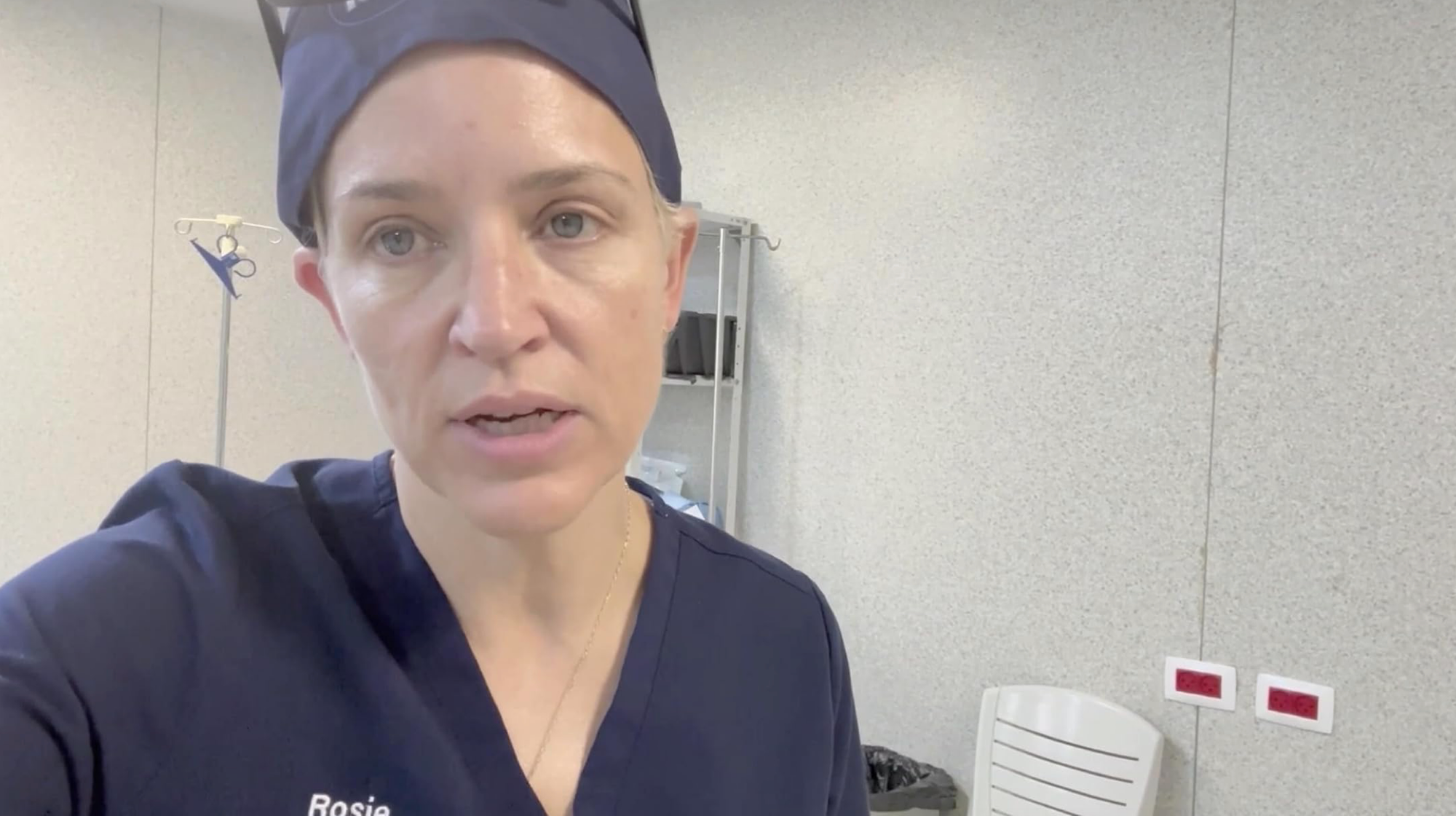
So we had access to all of the footage the doctors had already recorded, and kept having access as the doctors kept going in, to the material they were recording on their mobile phones. So that access element, which is so important at the beginning of a documentary – do you have access to the people you want to speak to, do you have footage, is there a visual repository that you can use? – was frankly very easy compared with many other projects because we had contributors who were very willing to share their stories and material, and in a way, that group of people came together very quickly. And now the repercussions of having that access early on and building trust very early on are that the doctors come with us to do the Q&As. Rosie (Dr Victoria Rose) and Nick are at the screening in Galway. They’ve very much embraced the film and want to use the film to get their voices out.
Dr Nick, Dr Rosie (Victoria Rose), and Dr Tanya Haj Hassan featured quite prominently. Was there a reason why they ended up centring in the narrative? I know myself I was already familiar, at least with Dr Rose and Dr Haj Hassan, specifically from her UN speech.
Daniele: It wasn’t to do with the familiarity necessarily. I’m also not on social media. I only use it to get information, but I don’t really use it to follow people in particular, and I was using mostly Telegram to get stories at the time. So it wasn’t the familiarity, but the editor and I – and I want to pay tribute to the editor because he deserves as much credit as I do, if I do, about the filmmaking itself – my editor is Masahiro Hirakubo. He used to be Danny Boyle’s editor, made Trainspotting and so many other movies.
His CV is insane.
Daniele: Oh, he is an actual legend of filmmaking. This is the third time we’ve worked together. I’m extremely privileged. But it was very clear to us when we reviewed the material that structurally the film needed to have two or three characters that were central, and then a chorus around them, and so this is how we approached the film. And it was also very clear that these three people had the longest exposure to Gaza, so that motivated us. From a narrative point of view, they were the ones who could speak about Gaza before and during the genocide. They needed to be able to testify to these two phases, and they were the ones who could do it the most. Nick has been going since 2009, Victoria since 2018, and I think Tanya’s something similar.
They had been there many, many times. They were very embedded there, with very personal relationships. So from an emotional point of view, in terms of how you build a film, these people were able not only to speak on the level of, “OK, this is the situation, this is the medical situation, this is the situation in hospitals,” but also to show that we have an attachment to people. We know this is personal, as well as being a question of human rights, medical solidarity, or humanitarian work. This is personal for them. They have known people here for a long time. So this was the choice initially, and then they had made several trips. Tanya had been there three times in the film, Victoria three times, and Nick three times. And so, in terms of structuring, the film is quite chronological. It’s quite simple from that point of view (because there was so much, we decided to keep a fairly simple structure). You need people who can come back at different times and provide an accumulation, which is what the film tries to do.
It keeps getting worse even when you think you’ve seen everything.
So you needed someone who had been there at different phases, who could tell you of the transformation, the progression of this. And then the third consideration is that it was easier to place them in situ because they had a lot of [video] diaries. Victoria, in particular, had documented absolutely everything she was doing, so it was easier for her to be placed. Most of the observational elements are from Victoria’s point of view because she gave us hours and hours of material. So it was a filmmaking choice rather than one that had to do with external factors. It served the purpose of the narrative, the storytelling, and the format of the film.
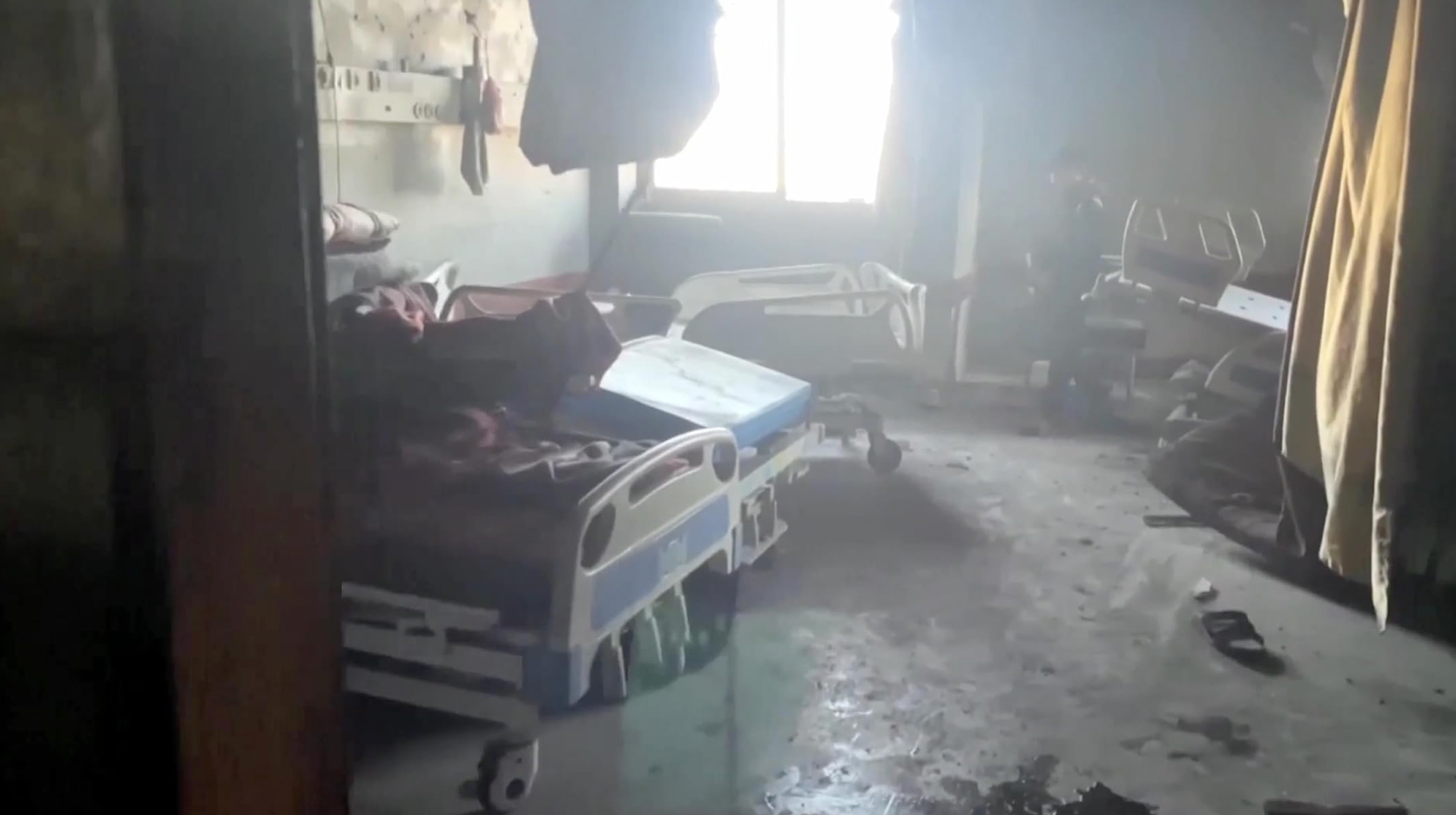
The format is very simple, but I found it incredibly affecting. It was like an archiving practice, as you said. It was a reminder of all these things that you thought would be red lines – the babies in incubators, the mass graves, the bombing of Al-Shifa Hospital – that this became normalised. And that was just a simple narrative choice to fit the sheer amount of material in?
Daniele: I think it evolved. When we started, we had this idea. Masahiro was asking me, “What do you want from this film?” and I said, “Well, I want people to be able to watch it and to have to conclude that this is a genocide”, because this is where the conversation is stuck at. There was no doubt, there is no doubt in my mind, but actually there was a lot of doubt in people’s minds, in particular decision-makers, in coming to that conclusion or using the word. I wanted to get the audience to the point where they see these ten doctors, all concluding exactly the same thing, and doing so from a first-hand point of view. They are talking about what they’ve seen [saying], “So, on the basis of what we’ve seen, this is a genocide.” This is where I wanted us to get to. And when we thought about it, we started trying to map what the doctors say against definitions of genocide. All the different things that are listed in the convention have been the object of various reports by the UN and the special rapporteurs, Francesca Albanese and so on.
Then we started with this idea that we need to cover as many of these things as possible, both the intent to destroy a group and then the actual execution of that intent in all the different capacities: the prevention of safe births, malnutrition, the destruction of life in all its forms, the destruction of infrastructure. So we kind of matched what the doctors were saying with this definition. And the narrative structure came kind of later on, when we realised we needed to guide the audience a little bit more in order for this to be effective, and we needed to get the audience to stay with us as much as possible through this journey. That was kind of a turning moment, when we realised and accepted that, because the film became, in a way, formally leaner, and we could do a lot more because we had found that the structure was holding things together.
The progression was there. You know, you destroy a people’s ability to feed themselves, you destroy people’s ability to heal, and then, once they can’t heal or feed themselves, you can starve them quite easily. Because there is no more farming area, there is nothing for hospitals to give patients. The accumulation was quite naturally there. And then the other element was this allowed us to tackle the second problem, which was always clear for us: this was not a journalistic work.
We’re not journalists. It’s a film, and films need emotions, and these doctors were displaying all sorts of emotions.
So whilst you had this narrative structure of the events that were going on and how the doctors were present for these events, you also needed a second narrative structure, which was how the doctors were emotionally navigating what was going on. Because ultimately, the audience will always really tune into that a lot more than they will tune into just a list of facts and figures.
It was never the intention to have a forensic film, but you needed to be able to get on board an emotional journey as well. Also to show that, for these people, it was very affecting and impacting, and in a way, you identify with the moral outrage a lot more if you follow an emotional journey. So the chronological structure allowed us all of these things without having to announce it to the audience or to make it explicit that this is what we’re going to do: “Now we’re going to talk about emotions. Now we talk about people being destroyed, now we’re talking about emotions.” It’s all there at once.
Life Support screened at Dublin’s Light House Cinema on 6th and 8th August 2026, and at Galway’s Town Hall Theatre on 8th October 2026. The film is available to stream online now.
Continue reading next week in Part 2 of our conversation with Daniele Rugo.
See upcoming Q&As here and donate to MAP here.
 Film Ireland Editor