
Hayley Jorja speaks with director Nathan Fagan about Inside, The Valley Sings, an Oscar®-qualifying animated documentary that explores the realities of solitary confinement through the experiences of three survivors, and discusses how animation became a powerful tool for bringing their inner worlds to life.
How long could you sit in a blank room with nothing to do? A few minutes? A few hours? Could you last days, months, or years? What would become of your mind with no external stimulation? Where would it go?
These are the questions that inspired Oscar®-qualifying short animated documentary Inside, The Valley Sings. The film is an unflinching look at solitary confinement in the US prison system through the stories of its survivors. A 2023 report estimated that 122,000 prisoners were held in some form of solitary confinement in the US every day. Inside, The Valley Sings explores that reality through the accounts of three people who lived through it. I sat down with director Nathan Fagan to discuss the film, its creative process and the real issues at its heart.
While this is not Fagan’s first foray into documentary, it is his first animated project. The change in medium is an obvious choice when you see how effectively it’s used. This is apparent in the opening of the film. The first images we see are basking in colour, but that is quickly stripped away as we are introduced to Kiana Calloway, 16, who is on his way to Louisiana State Penitentiary to serve 34 years' imprisonment.
“So much of the film is about what happens in the inner lives of the three subjects,” Fagan said. “I felt I had a couple of options. One would have been to take a slightly impressionistic approach to recreations, which I've done in some previous live-action projects.
"I realised that animation affords these very unique opportunities. I felt it was the only real way to capture what I wanted to capture.”
What the film depicts is not only the absolute horror of solitary confinement, but also the enduring human spirit of those who experience it. It painstakingly paints the reality of solitary confinement so it can show you the beauty people’s minds conjure up to endure it. The animation is central to presenting that.
“With this project I chose to work with this incredible animator, Natasza Cetner, who has made incredible work up to now,” Fagan said, when speaking on developing the look and feel of the film. “The style [of the film] emerged out of conversations with [her]. A lot of conversations just around intention. Like, what were we trying to communicate with the film? One thing we both felt really strongly about, or I felt quite strongly about, was that we wanted to find a way to capture the stark reality of solitary confinement first. So that it was always in the audience’s mind.”
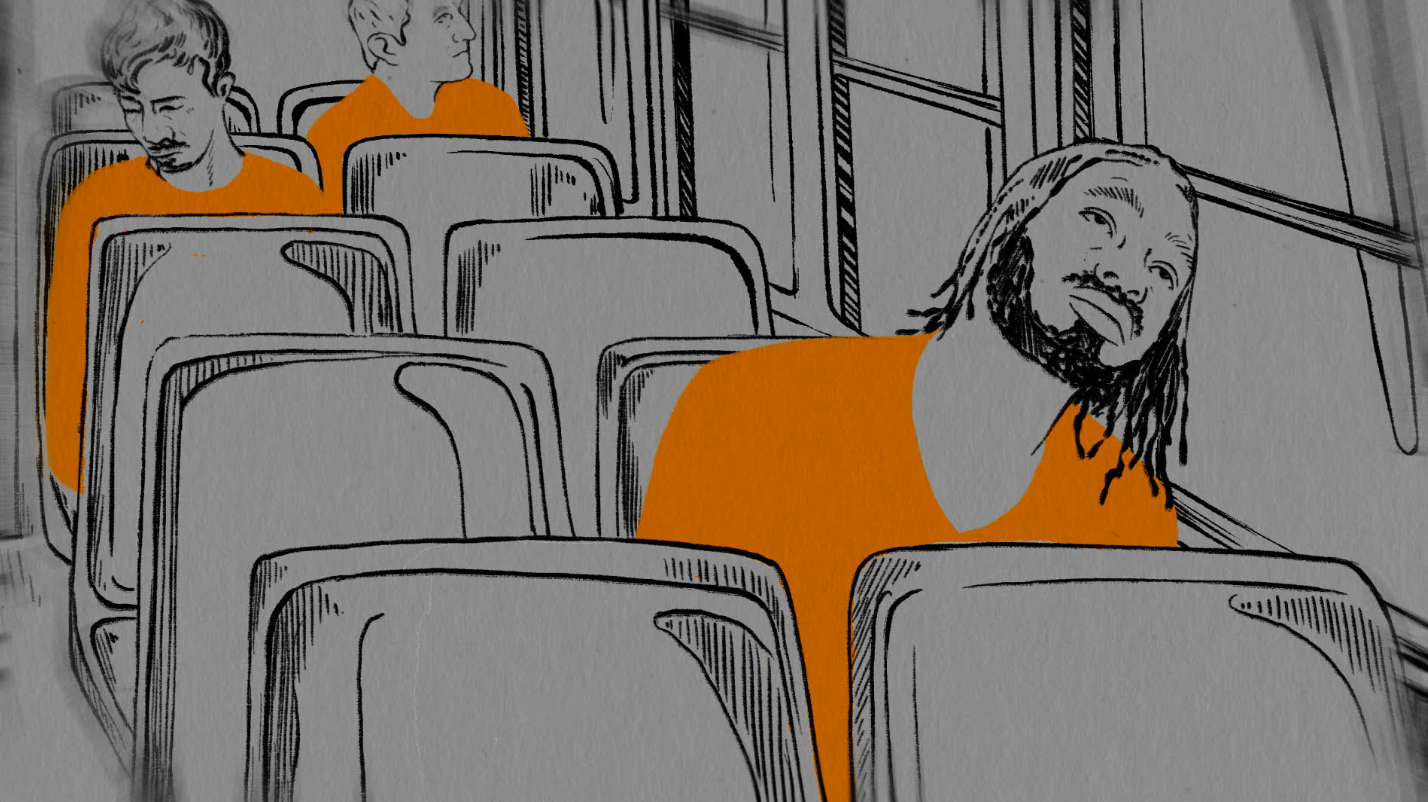
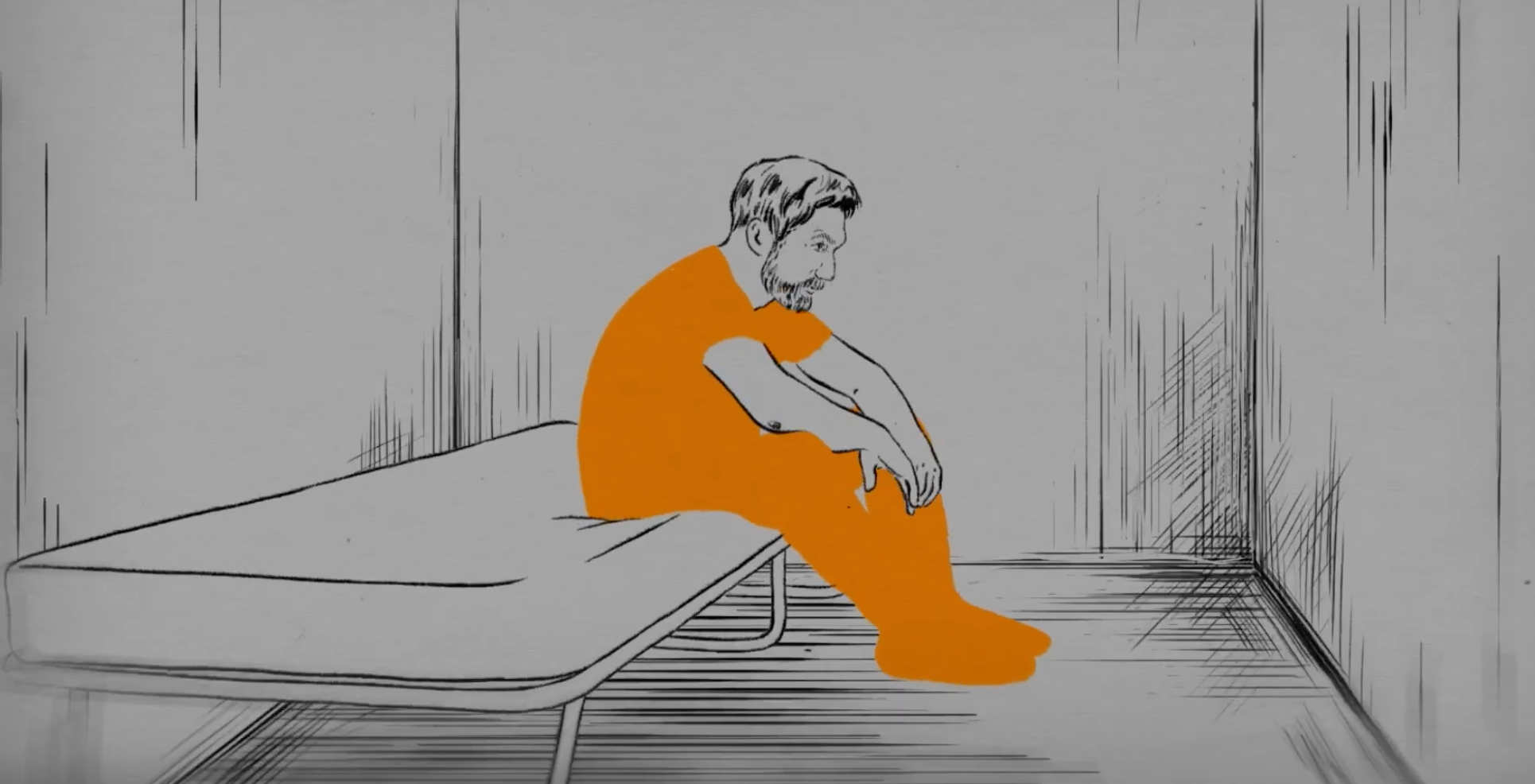
The three subjects of the documentary, Kiana Calloway, Sunny Jacobs and Frank De Palma, all talk about their experience with solitary confinement. Their bleak descriptions of their lives match the minimalist art style of the animation their narration overlays: simple black line work on a paper-white background. The only pop of colour comes from the bright orange of the prison jumpsuits the subjects wear (an innovation of Cetner’s, Fagan points out).
Colour returns to the film as the interviewees begin to dive into where their minds went during that time. While their physical reality was reduced to the four white walls around them, their inner lives expanded to fill the void. The screen fills with vibrant colours and textures as Sunny Jacobs describes imagining lying in the grass with her children. Autumnal yellows, oranges and browns dominate these images, bringing a sense of forlorn warmth.
“There’s actually different styles for each character, which is really interesting,” Fagan noted when talking about the shifting styles of animation throughout the film. “[That] just evolved through a lot of different conversations. Natasza would go off and do some sample art, and we’d work together like that. It was kind of motivated by what was in the actual audio interview. What each story was depicting.”
Each of the subjects' personalities is captured beautifully in how they paint their inner world and in how the animation represents it. It’s a stunningly humanising representation of a shockingly dehumanised population.
The change in medium was not without its challenges, Fagan admits. “I was definitely kind of naive coming into animation. I didn't really know a huge amount about how it's actually made. So it was a bit of a huge learning curve.”
Even as a first-time animation project, the award-winning writer/director’s keen sense for filmmaking shines through. Not just in the visuals of the film, but in the interviews themselves. Fagan spoke to dozens of people with experiences of solitary confinement over a period of two years, but ultimately settled on telling the story with the three people heard in the film.
“It’s funny. [Before working on this film] I’d actually spoken to Sunny Jacobs a couple of times over the years. She would have been the first person I spoke to,” Fagan said when talking about the process of finding his subjects. “We had quite a few phone calls and chats over the years. I'd always been fascinated by her story, which has been explored before. In a lot of different ways.”
Sunny Jacobs, who had been wrongly convicted of the murder of two prison officers in 1976, was a world-famous advocate against the death penalty. As Fagan said, her story has been told in a variety of different ways, including books, plays and a 2005 made-for-TV movie. She spent the latter portion of her life living in Ireland, before her death last year at the age of 77.
The heart of the film really is its three central characters. All three have done work to spread awareness of the systemic injustices in the US prison system. It’s not only a very important issue for all of them, it’s their lived experience. The sincerity of emotion expressed in their telling of the story really helps land the most devastating moments of the documentary.
Particularly with Frank De Palma, who authored a book on his 43 years in prison after he was released in 2018. His accounts are especially raw. It’s impossible not to see the tangible effect solitary confinement has had on him, even years after his release. The sensitivity of the topic at hand wasn’t lost on Fagan as he made the film.
“With this film in particular, I just felt it was really important that [the subjects] understood that they had ownership over the film and the stories being told,” Fagan said. “So I altered the [filmmaking] process. It was more of a collaboration. I would share various cuts of the audio before we animated anything. Then, when we started to animate it, I would share works in progress.”
This is incredibly atypical for a documentary production, but Fagan was aware of that. “It just felt right. As I say, they’re extremely difficult experiences that they went through. All three of them, Sunny, Kiana and Frank, they really just want to share their stories. But also, they’re essentially the voice of all the people who are still in solitary confinement who don’t get an opportunity to tell their stories.”
That is perhaps the most emotionally resonant part of the film. The fact it works on both the macro and the micro. It’s a painfully effective exploration of an important injustice, but it’s also a beautiful look at these three individuals as people. Not just prisoners, criminals, survivors or victims, but as people. It’s a truly beautiful act of defiance against a system that does its best to dehumanise people.
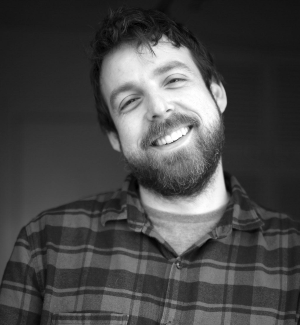
Named a Rising Star by Screen International in 2025, Nathan Fagan is an award-winning writer and director. A three-time IFTA nominee, his films have screened widely at leading film festivals worldwide, including Palm Springs ShortFest, Sheffield Doc/Fest, Aesthetica, Cork International, Dublin International, and many more.
His award-winning short film, Flicker, which he co-directed with Luke Daly, picked up the Grand Prix Award at the Cork International Film Festival. It was subsequently longlisted for an Oscar and nominated for an Irish Film & Television Award (IFTA). His short film, Mud Queen, starring Clare Dunne, won the Audience Award at the 2023 Dublin International Film Festival. It was shortlisted for an Iris Prize and received a Special Mention from the jury.
His short film, Skin to Skin, premiered on Nowness, won Best Short Film at the Emerging Director Awards (EDA) and was nominated for a Cannes YDA. His latest film, Inside, The Valley Sings, was the recipient of the Film Project Award from the Arts Council of Ireland. It has won six awards to date, was longlisted for an Oscar and nominated for an IFTA. His work has featured on: Vimeo Staff Picks, Short of the Week, Nowness, and The Irish Times, amongst other publications.
Alongside his film work, he has also directed commercial work for An Post, SuperValu, Cadbury’s, Teelings, the Department of Foreign Affairs and directed music videos for artists such as Walking on Cars, JyellowL and Gavin James. His commercial work has been recognised with multiple Kinsale Shark and ICAD awards. He is currently developing multiple feature-length screenplays. His feature film, Let Your Body Speak, is in development with Keeper Pictures and Screen Ireland. His feature film, Spindrift, was selected for the renowned Less is More (LIM) European feature film development lab, in partnership with Le Groupe Ouest and is in development with Screen Ireland.


