

From Silent Grace to Beyond the Fire, filmmaker Maeve Murphy has build a career confronting difficult truths. Her latest work, The Geography of Violence - a trilogy comprising of Siobhan, St. Pancras Sunrise and The Wolf - is no exception. It examines violence against women across a range of social and cultural contexts through Maeve's distinct and powerful authorial voice. Following the project's premiere in Hungary at the La Femme Film Festival earlier this month, Sarah Shojaei reflects on the trilogy's impact.
"On Pleading for Just One More, Please, Just One More Lotus Flower in Bloom."
Hope has understandably become somewhat of a foreign concept.
Its place long seized by a ceaseless sense of impending doom.
It is almost unsettling then, to witness hope dawning on a random day in June. And yet.
Maeve Murphy’s trilogy of shorts, The Geography of Violence, had its European premiere at the La Femme Film Festival on 6th June. It comprises two previously released shorts by Murphy, Siobhan (2017), St. Pancras Sunrise (2024) and a new addition, The Wolf, which first screened in April at the Beeston Film Festival. The tale of Murphy’s career is one dictated by consistently politically charged cinema, as documented by Gemma Creagh in this 2025 profile, with her latest work reinforcing her position as a filmmaker who does not shy away, but rather zeroes in. Her voice is distinct, and unfaltering. She keeps her finger on the pulse, asking the audience to bear witness, one more time, in the hopes that it will soon turn into the last time.
Each short is unflinching in its demands for attention to the violence of it all, even when the violent act itself is not shown.
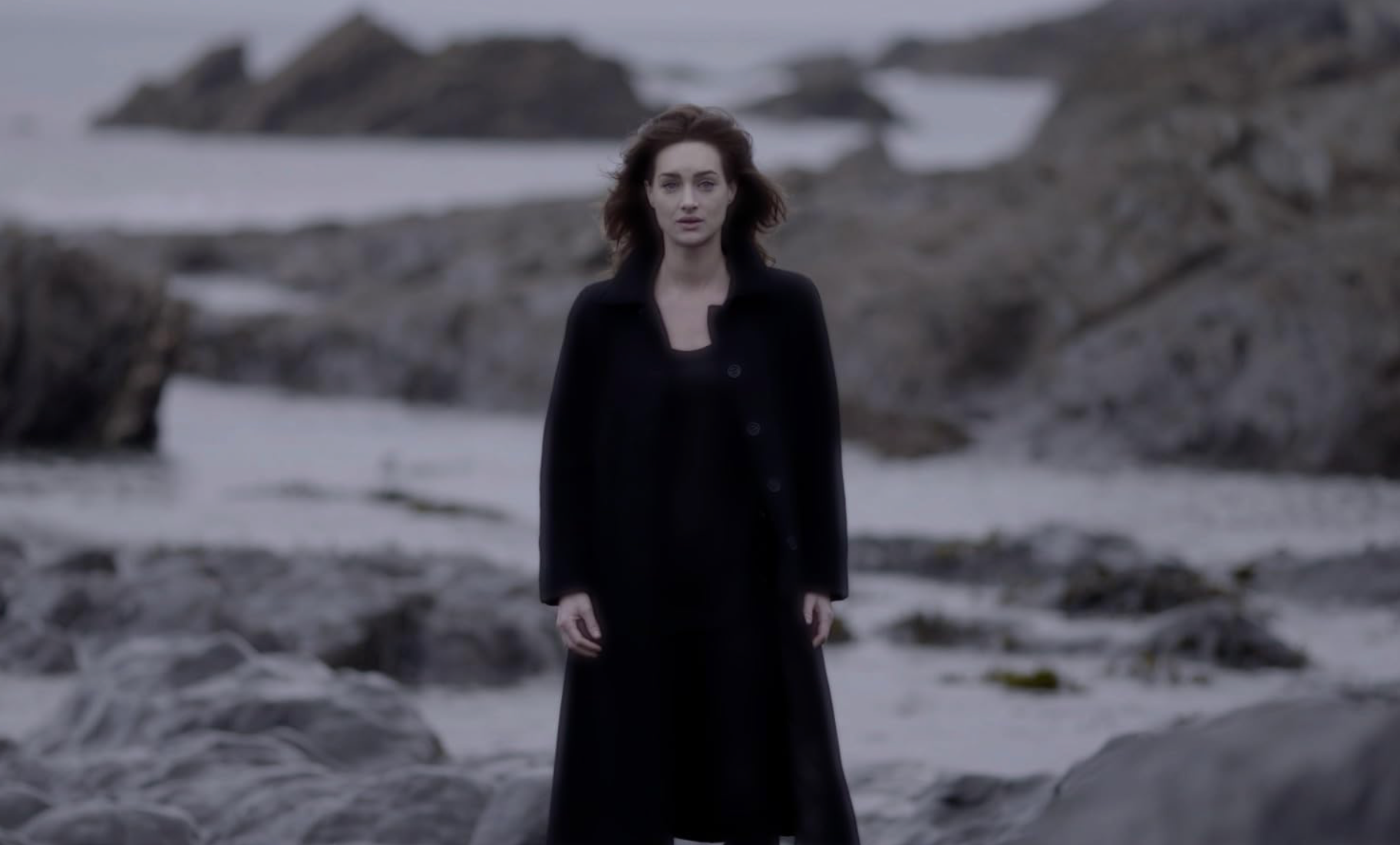
Siobhan opens with the rape of Siobhan. An establishing shot of the sea scored by her screams and an over-the-shoulder shot, a flash of the POV of Siobhan’s rapist. The scene ends soon after it starts, there is no time to cope, no space to breathe, no way to escape it.
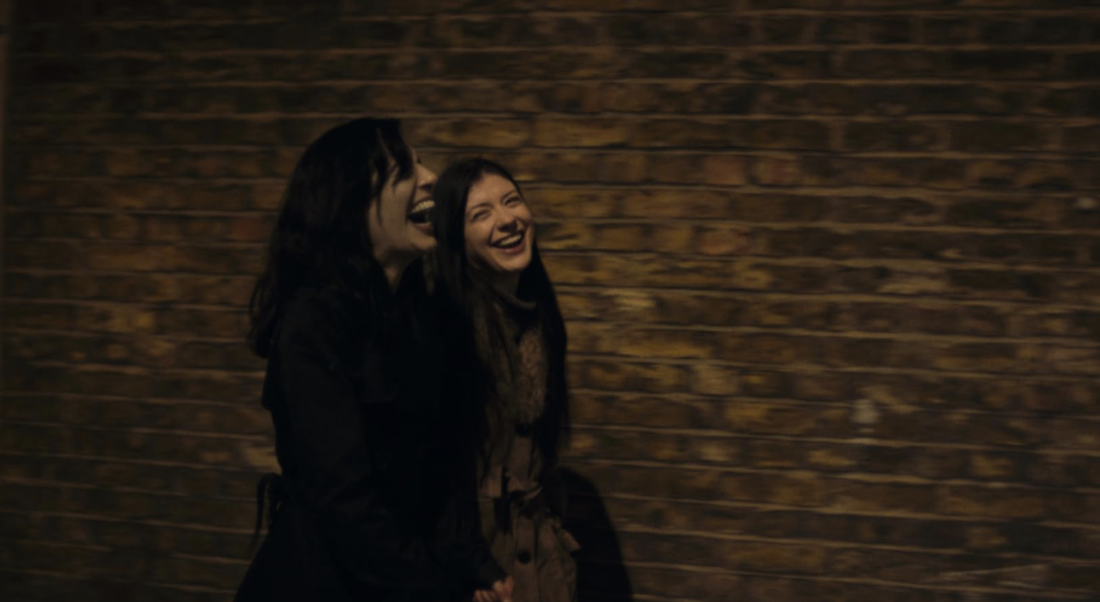
In St. Pancras Sunrise, Murphy has Emma Eliza Regan's character almost immediately chased by a man. The same street is shown time and again, as she bonds with a sex worker who works there and defends her when the man reappears. The feeling of claustrophobia is exacerbated by the realisation of how inevitable the following act seems. It becomes a waiting game. One we have never asked to play, that we have seen unfold countless times before, and always know how it ends.
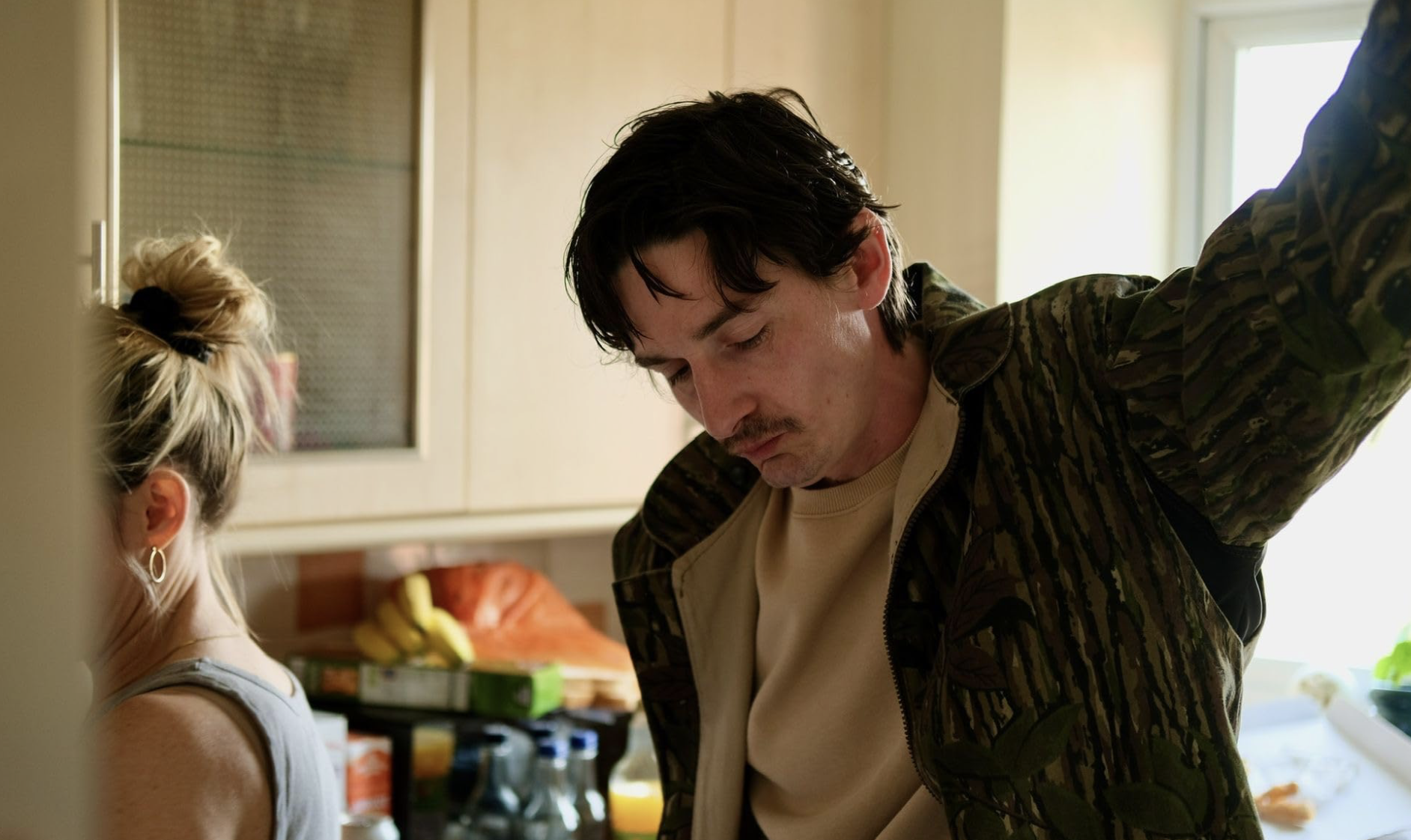
In The Wolf, Leah’s partner arrives home and pushes his hand through the letterbox, drunkenly calling her name. His invasion sounds the alarms in our head. We are counting down the seconds until he is crowding her, belittling her, accusing her of cheating and finally hitting her. Murphy composes a shot-reverse-shot sequence of the fight, focusing on uncomfortable close-ups. Some things are then noticeable. The way Leah tries to deflect. How she tries to diffuse the situation. An old-but-not-too-old purple bruise on her arm. This is not the first time.
It is disarming, how ordinary it all feels. And enraging, how it does not stop us in our tracks any longer. It is an aspect women have grown accustomed to. How ordinary this all is. Men in Ireland, and all across the world really, discard it, repress it, push it down hard enough that when they let it bubble up they have given it an entirely new shape. They weaponise our pain, validating it only when the victim is deemed as worthy of being avenged, i.e. in death too, we have to be faultless. They shout with their annoyingly loud voices, create a narrative that suits them, only joining the fight when the perpetrator fits the profile of someone who is convenient for them to villainise in the story they want to tell themselves, a story where their best friend, who despite cracking misogynistic jokes every five minutes, would never do something like that, or if he did, he did not mean it you see, he was drunk, or if he was not drunk it is because he was instigated, because she had it coming, because she is a crazy bitch, have you talked to her ex-boyfriend, he says the same.
The title of the trilogy lets us think for a desperate second that we will maybe get a map, one we can consult to see where all the violence happens, but really, Murphy shows us it is everywhere. It is by the sea on Summer Solstice day, in the streets after ice skating in the afternoon, in your home while trying to put together some kind of meal for your kid. And even when it leaves, even when it all comes to an end, it haunts the walls, and the people who visit them. They’re left to pick up the pieces, whatever the pieces may be.
In Siobhan, her husband finds her rapist and murderer and avenges her.
St. Pancras Sunrise is based on the murder of Patsy Malone in 1981, a sex worker killed by a retired police officer. He was not found guilty of murder. He served 5 years for preventing the burial by dismembering her body and dumping it in the woods. The sentence spurred a protest by the English Collective of Prostitutes who occupied Holy Cross Church in Kings Cross. Since then, local police have been more closely monitored, though as the murder of Sarah Everard proved, way more needs to be done.
In The Wolf, Leah decides to leave when her son’s life is threatened. Crucially, she has somewhere to go.
There lies the difference. Community.
Murphy said, when talking about St. Pancras Sunrise: ‘Out of the muddy swamp, the lotus flower blooms. Some of us did, some of us didn’t’. And that simply cannot be any longer. Determinism cannot win nor can our destinies be left at the mercy of the dealer’s table, they need to be taken into our hands. We need to rally for each other because rallying for ourselves often appears to us as an otherworldly choice, only available to those faultless non-existent non-human beings, those who have not been made to feel like we’re nothing worth saving.
And if that all seems too difficult, we now may have a better chance of not ending up in a swamp in the first place.
On 9th June 2026 we were gifted a shred of hope, in the form of Jennie’s Law.
Just a few more bureaucratic steps, and Ireland will have a register of every person convicted of domestic violence against a partner or former partner.
This is by no means a solution, but it provides an out, the opportunity to choose yourself before choosing yourself feels like abandoning someone else, or like the world might just end tomorrow. This legislation has the name of Jennifer Poole, a 24-year-old woman who was murdered by her former partner Gavin Murphy in 2021. It is with a heavy heart that we must acknowledge that the toll requested to pave the road to Jennie’s Law was paid in the lives of too many loved ones, whilst also recognising that these laws make it through because of the communities we leave behind, the community we choose to create and the ones we choose to join. It is because of family, friends and artists like Maeve Murphy who never let up and never allow us to take our eye off the ball for even a second.
One lotus flower after the other, we just might make it out of the swamp.
The Geography of Violence (a 30-minute feminist triptych by director Maeve Murphy) premiered and screened at the La Femme International Film Festival Europe in Budapest, Hungary on 6th June 2026.
