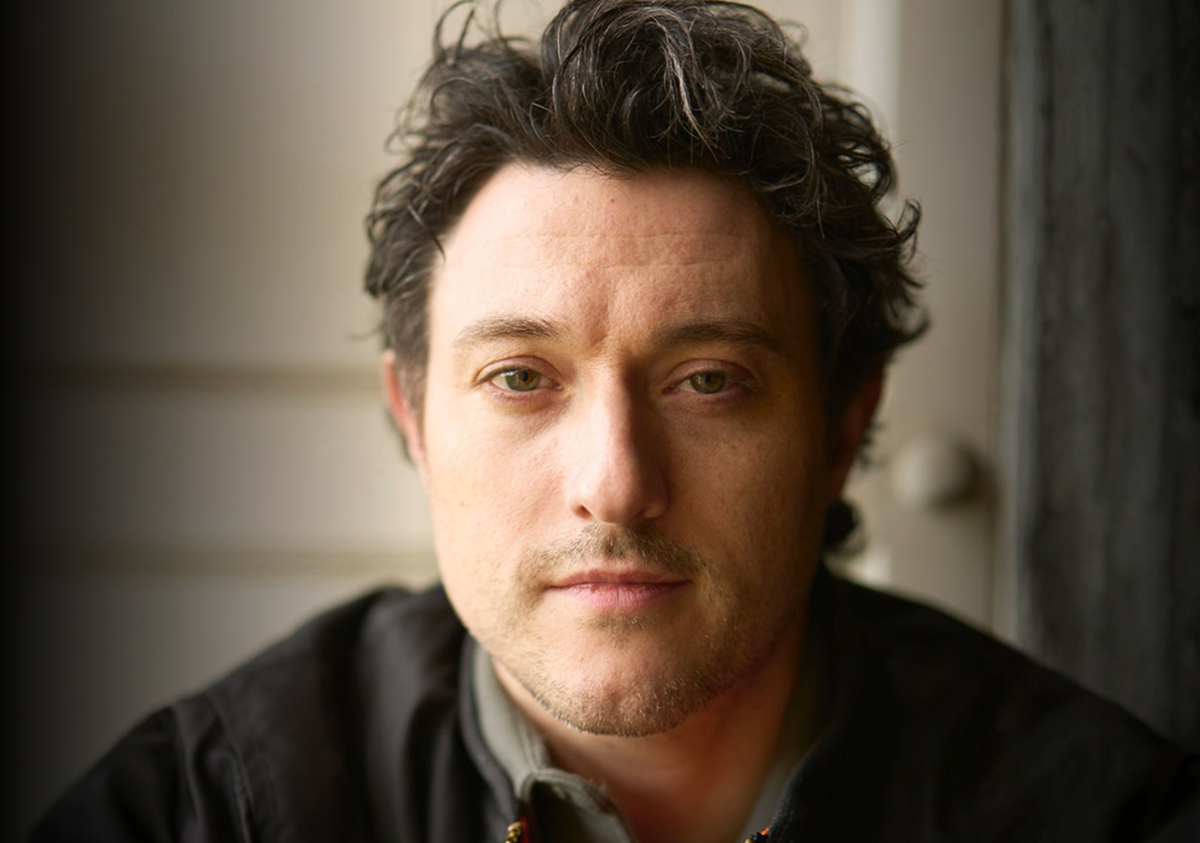

In A Knock at Your Door, director Alan Hopkins explores the growing influence of online misinformation, far-right rhetoric, and the ways in which fear can reshape our perception of the people around us. Set against the backdrop of Ireland’s increasingly charged social and political landscape, the short places these wider tensions inside a domestic setting, asking difficult questions about prejudice, empathy, and the choices we make when confronted with someone else’s fear.
Following its premiere at the Galway Film Fleadh, Hopkins and actor Michael Mullen discuss the making of the film with Shannon Cotter the research behind its unsettling depiction of social media, and the challenges of recreating a riot on screen.
So first of all, how are you guys after the Fleadh?
Alan Hopkins: Awfully depressing, isn't it? (Laughs) No, it was great. It was one of those weird ones because that was our second Focus short to premiere at the Fleadh, and I think it feels like the end of a five-year project, really. We started with our self-financed film Jungle, and then that led into getting the funding for Ogham and then for this one. It’s kind of like the door closing on a chapter. We're moving into development on a feature now that Screen Ireland are supporting. It's kind of like your first day going into secondary school or something, and you don't know where to go or what to do with your hands. It’s a nice feeling, but it’s one of those situations where you kind of go like, "Oh my god, I have to start all over again now", but it’s a positive position to be in.
It's a really nice way to end that chapter. How did the screening go at Galway?
Michael Mullen: It was really great. It was fantastic to see with an audience for the first time. I've seen a couple of different cuts over the edit process, but to really feel and see the reactions in the room with an audience was why we do this in the first place. There was such a variety in that Focus Shorts programme of films, so when Alan's film came on as the final one, you could feel the tension in the room. Because of the nature of the piece, people latched onto those small comedic moments because, you know, they needed them. The feeling was palpable.
Alan Hopkins: It was an interesting one. We were saying that because there’d been a couple of comedies in the build-up, the audience was primed for it to be funny. We were getting laughs that we’d never got in any of our test screenings, so we thought, “God, they’re in for something now because they actually think they're watching a different movie.” I think it really worked in its favour because it’s a bit of a rug pull when everything starts going wrong.
It's great because it’s one of those things where every screening reaction is always going to be different. It’s not like it wasn't unintentional. I kind of wanted the film to operate in a way as a bit of a Rorschach test. We discussed that audiences would have different opinions towards the characters and the choices they make in the film depending on where they are coming from politically or experientially. We're all on different algorithms now, so it's like, what type of information are you receiving?
It’s frightening that you can be walking into a situation now with a different shared reality than everybody else. We don't all have the monoculture or The Simpsons quotes to fall back on.
The social media aspect of the short is quite harrowing. What type of research did you undergo to create such a realistic depiction?
Michael Mullen: We did a lot of research. Alan had sent me a lot of material as a starting off point. With that, I ended up in some deep and worrying rabbit holes, to say the least. It was terrifying. My algorithm is still awful at the moment.
It is my job to try and understand why people do these things and why John [Michael’s character] was doing these things. I was researching people that John was similar to and trying to deduce who they were. I found that most of these people or groups have had their finger in all these conspiracy pies throughout the years. It's not just someone who started this because they feel so strongly about the immigration issue. On the surface, it seems like they're full of concern and social justice, but they're gaining from all of this, whether it’s monetary, online clout, or something ultimately more personal, a form of control in their own life. You can really see the manipulation happening in real time.
I have a young son, and he’s far away from any of that online world at the moment, but it still terrifies me how accessible it is and how it's not really policed in any way. How do you avoid that? And how do you find the truth behind this misinformation? It was a difficult task, this research.
Alan Hopkins: What we encountered and worked into the character of John is that a lot of these people have that cult of personality about them, and their actions are quite questionable. Some would post a video claiming, “I’m just sharing the news, man. I'm just getting it out there.” But then they’d say they’d post part two later. And you’re like, “Well, why don't you put it all up now?”
When you know influencer culture and you understand the way they do marketing with make-up videos or something similar – it’s all the same hooks. They’ll say they’re getting voice messages from everywhere and they’ll share it later, but when it’s a dead end, they drop it. There’s never any follow-up to say, “Oh, sorry, guys, I was wrong here.”
The language we use has changed entirely now. There was a recent attack in Ireland, and I remember the comments saying that if the comment section was open, that the perpetrator must be white. So now, if the comment section is turned off, people will fill in the gaps and/or make assumptions. A lot of data we've seen in the research indicates the accounts are bots or from outside the state, which means you have an influencer class who are on the grift, telling people to “follow along” or “send them a coffee” while their comments being pushed up in the algorithm by bot engagement.
It's all getting supercharged and manipulated, and that's the frightening bit of it. People will say Dublin is a lost city, when in reality there’s always been crime. It’s all just being videoed now, which creates this atmosphere of fear so you can manipulate people.
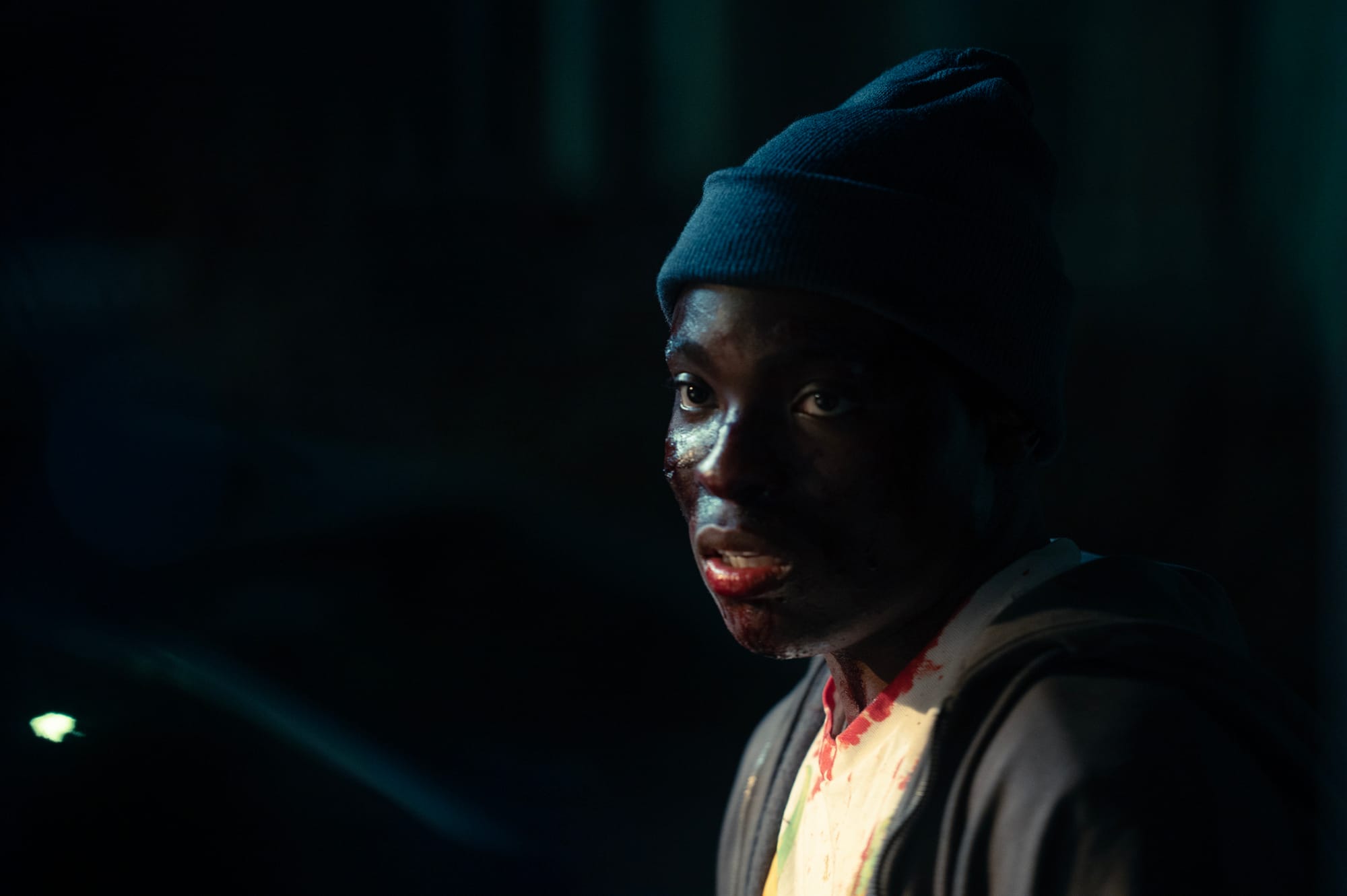
The reach social media has feels like it’s growing more and more pervasive all the time, but I’m curious, Alan, how did the nexus of this idea form for you?
Ideas can land fully formed while out for a run, or appear from a single image, but more often than not it comes from a social issue that I’m exercised by. For Ogham [Hopkins’ previous short], there was this picture of a man in a cave up a mountainside, and I began to ask, “Who is he? And what’s his story?” and built out from there.
Jungle, our previous film to Ogham, was set in Calais during the height of the refugee crisis, which is such a huge issue to grasp. There were obviously limitations of what I, as an Irish independent filmmaker, had access to in terms of how can we film it in a way that does the issue justice and then questioning what's the story I can tell? Instead of me trying to tell somebody else's story. I was trying to find an answer as to how someone could be annoyed by seeing the crisis instead of being compassionate. I landed on an Irish truck driver who's driving through all this human misery. He’s a trucker whose job is being affected negatively by stowaways. It felt like this was a manageable microcosm of everything that’s going on, and one that we could actually make practically. I always ask, is it my story to tell, and if it isn't directly, how can I still talk about this issue that is bothering me, because that's what gets us out of bed in the morning?
With A Knock at Your Door, again, we had the Dublin Riots and the growing rise of far-right violence. I was trying to figure out how to distil all of the current chaos down, which is how I landed on a domestic incident. In this instance, the phone call is coming from inside the house. We're all being told to worry about the other, but what about the person sitting beside us in our home? I remember Dr. Mary Cassidy [Former State Pathologist] said that women are worried about the man under their bed but should be worried about the man in their bed, seeing as so many cases of female violence involve someone close to them.
We started to create the lived environment of the story. I had this image of a couple, you had the woman watching cat videos and a foot away from her, her partner is watching Andrew Tate videos, it makes you question, “What environment are they living in? What shared reality?” And the only way to test that reality is to put it under pressure, by sending someone into the house. It’s the age-old question – if you see someone being attacked, would you intervene? And if you do intervene, what’s the cost? In Florence's case [played by Yemisi Oyinloye], her whole life is about helping people as a nurse. I don't feel like she has to even make that big moral choice.
With Diarmuid [Noyes], it was about not villainising him and understanding where his character James came from. I think one of the tropes we hear in these cases is that it’s about keeping women safe, but I think when you interrogate it or look at the people spreading these messages, it's like they don't feel safe. The fear of the other is a really deep emotional thing that you can try to intellectualise your way out of, but it does happen to people. I think they’re afraid, and they try to cover their own fears with, “I’m worried about my sister”, but it’s more so they don't want to say, “I feel fearful about the change I’m seeing and I don’t understand it and I don’t like it and I’m lashing out against it.”
Between the two characters of John and James, I feel it’s interesting because James seems to represent that devolution of slowly falling into that side of the internet while John’s a more blunt representation. Michael, what drew you to the role and how did you develop John’s background?
Michael Mullen: I’d known Alan a few years as a friend, and I knew he was a great storyteller on and off the screen. I knew that he wrote these socially rich and charged pieces. I also had the honour of being a lovely dead sergeant in his last film Ogham. As soon as he’d sent this script to me, I knew I wanted to be part of it in some way. We really wanted to do the story justice because this is a real problem right now and it's terrifying. I see it everywhere. I see it on my doorstep. I see it in my family. Sometimes my aunties send me these videos without questioning where they come from and the misinformation they are exposed to. It all just feels very timely.
With John, we wanted to capture that sort of everyday man that we see all the time who could be your neighbour, who you trust. There was a lot of research into how they endear themselves. It's just so easy how they do it. I wanted to find the people behind the headlines and the truth there. As an actor, playing a villain can be freeing, but the truth behind this was worrying. Seeing what these people do for their followers, many who are young men – the rhetoric they teach them gives them the ability to be right all the time. No matter what someone says or responds with, they have the ability to be right. Like with John meeting Flo in the film. If she agrees and says, “Come on in,” he's won. If she responds badly, he gets fodder for his site. And that's the most dangerous thing. There's no need for conversations, no need for debate or dialogue to try to figure these things out, because they're going to be right. They're going to stick with all the people in their corner and they're all going to be ‘right’ together.
As an actor, approaching it with that frame of mind is, again, freeing. It’s just an ability to just be right, and you can see why so many people would fall for that. It’s a superpower being used for evil.
I find Florence to be such an interesting character in terms of her framing and position in the film because she’s a target of that animosity these groups project. She's a woman of colour and she's an immigrant, but for some reason James views her differently to Alex.
Alan Hopkins: Yes, it was intentional. We wanted to have these characters that ended up being these little ciphers for wider statements. With Flo, it’s like she’s seen as the “good immigrant” or it’s like “oh, she works in healthcare so she’s okay.” It’s the idea that your position here is conditional on whether you're doing something for us or not. Husni, our producer, was born here in Sligo, but he can feel that his position here could be conditional and it could change with a different government or arrival of a new demagogue, which is an awful thing to have hanging over your head.
James doesn't view himself as the bad guy. No one sees themselves as a villain. He’s the type of guy to insist, “but well, I'm not a racist.” This idea Flo is those things – she’s an immigrant. She’s English – she just adds into his inability to not see what's a blind spot for himself. We talked about different ways with Diarmuid playing at that. He might descend into a bad guy in our story, but he has to feel like he’s still protecting his girlfriend. Someone else could watch the movie and say, “look, this guy was just watching TV. He was minding his own business.” I find it interesting that people can have bad opinions, but then also good parts of themselves. I remember in the Louis Theroux documentary about the Westboro Baptist Church, there’s a scene where a guy says the most hate-filled thing while protesting someone's funeral and then he just stops and he goes, “You okay for a lift, Louis?” And suddenly he’s the nicest person that would offer you a cup of tea or that would take you in to give you dinner. This idea that nobody is all bad and nobody’s all good – even the people peddling this rhetoric on social media, they’ll have ten of the most horrible hate-filled videos and then one where they're rescuing a dog or returning a stolen bike, something like that, it’s bizarre.
The conflict between the two, James and Florence, is the foundation of the film. With Flo’s lived experiences, she grew up mixed-race in the UK, so she has had exposure to different things. James’ character likely wouldn’t have come across a story like Emmett Till, whereas Flo would be aware of how an accusation against a young black boy could turn into something really awful. She wasn’t making a judgment call on his innocence, but she knew there was a due process that had to take place. We can’t be judge, jury, and executioner. You have to have a base level of rule of law or we're going to go with mob rule. And that's when you get miscarriages of justice as well as injustice. I like the idea of how everybody makes a decision because you’re the sum total of everything you've encountered in your life, of everything you've ingested over time.
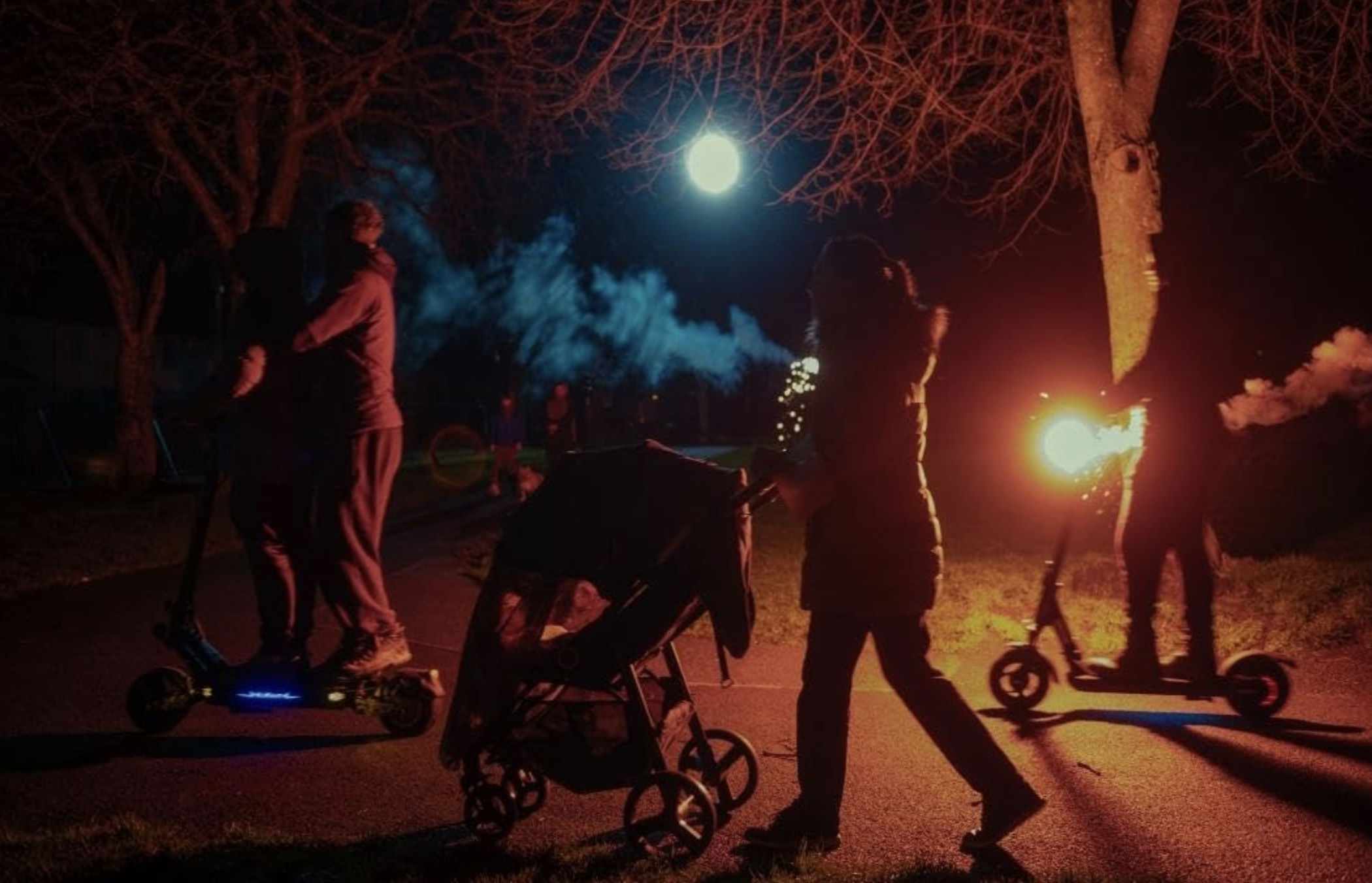
The crowd scenes of the film were done really well. How was the shooting process for you?
Alan Hopkins: We did all the exteriors on the last day. That was the last day of shooting because we were worried that we might get shut down, recreating a riot at such a tense time. We were certainly sensitive to the fact that we could have to pull the plug if things started to go wrong or unsafe in any way, with the potential for unsavoury elements turning up to the location. We figured we would have as much of the film shot as possible so if the last day didn’t work, the whole movie would just be inside (Laughs). The scene with the scooter was actually envisioned as a much bigger shot. We laid eighty feet of track across the park so we could film him going across the road, and then we were going to pull up with a crane, a whole sort of Gone With the Wind idea with the Irish flag. It was a very technically ambitious shoot, but things will always go wrong. We had a cherry picker that broke down, things like that, that you just can’t plan for.
Most of it worked out well, though. I’m very proud of what we were able to get. I also have to give massive props to Michael for the whole speech he gave. He had shot the scene at the front door a couple of days previously, and it went so well. It's a real standout. I was like, I need to get him in the movie more. On the day of the crowd exteriors, I asked him if he would be interested in doing a speech to the crowd that would get them riled up. He came up with the whole thing on the day. It was so impressive.
Michael Mullen: We were shooting the crowd mute at one point, trying to keep sound down for the sake of the neighbours. I still had to give the speech to the crowd at one stage while not actually saying anything, which was the hardest challenge. (Laughs) The shoot was great. I didn't see any of these issues Alan mentioned. I’d done a day and a half of filming, and it all felt so smooth.
Alan Hopkins: Do you know the meme of George Bush where he's sitting in the kids' school and someone comes over and is like, 'A second plane hit the tower.' On set, that happens to me a couple of times a day. (Laughs) Whenever anything breaks down, I just have to let nobody know it's gone to shit.
Michael Mullen: I think you do so much prep, though, Alan. If anything does go wrong, the work has been done prior, so everyone's ready to tackle whatever it is. You would just say, “Okay, go. See what happens.” You've done so much work that it does kind of feed into it. We’d such a great team on this set, and with these socially charged stories, you need to have a bit of trust there. And we did.
Alan Hopkins: Knowing that you're going to be there, things will go wrong and you have to adapt quickly, so you just have to try to get these things where the schedule allows for it, though the AD is probably pulling their hair out. (Laughs) It’s like we're all here, so let's try and get as much as we can without going insane.
Actually, when we went back into the edit and we found we’d more stuff. I had a Google Drive of all the mobile phone footage. Trying to scrape that led to us finding all of these little nuggets of mixed media, which was amazing. I had my friend Michael Carolin, who’s a filmmaker, also shooting in the crowd, so it wasn’t just like random footage. I had planted people in the crowd so I could get good shots. (Laughs)
Also, massive congrats to yourselves and Piers McGrail for the win for Best Cinematography. It was great to see that at the awards ceremony.
Alan Hopkins: I didn't really speak properly at the award ceremony. I had no voice. I was up all night. (Laughs) When I first came out of film school, I was a DP and did cinematography on a couple of movies. The first two films I had screen at the Fleadh, I was there as a DP. Even getting Piers to work with me was a dream come true because I'm so interested in the visual aspect of filmmaking and to win that particular award… it just blew me away. I was probably going to cry if I was able to talk that day. It was just very emotional. That was just the speech I should’ve said. (Laughs) I started my career in Galway as a DP, so to get that award was great, it really meant a lot. I just wanted to thank the whole cast crew for all their amazing work and to the team at Screen Ireland that were so brave in supporting this film.
This story feels particularly timely, especially in wake of the Belfast Riots. Where do you want to see it go next?
In terms of the life after... what I'd like people to take away without looking at all the external stuff – Have a little talk within your own family or just challenge what's a loose word here or there. If you see a friend slipping into these things, ask, “where did you get that from?” If somebody shares something with you, just question or ask them if they are questioning it before they throw fuel on the fire by sharing. Even with people watching it, I want it to be one of those movies where you come walking out of the cinema and you're questioning, “Did he do the right thing? I don't know. Should he have done that?” To ask yourself what would you do in that scenario.
We’ll be doing the festival circuit as it’s a Screen Ireland Focus Short and they’re supporting us in helping us to get it out there. In an ideal world, I think the best thing to happen would be Claire Byrne or someone introducing it at nine thirty on a Tuesday on RTÉ. It feels so prescient. I love the festivals, but they’re a captive audience. I don't think you're changing anybody's mind. However, I teach teenagers in St. Andrews on Pearse Street as part of an access course for filmmaking, and when I screened the short for them, it sparked furious debate. I remember at the time being nervous about the edit, but THEN seeing people talking it felt like, “Oh maybe you have something here.” The worst reaction you can get is if people don’t react at all. I'd love to be able to do some kind of school roadshow. Eamon Keane, a producer I know, did an excellent short called Where the Old Man Lives about an isolated farmer being burgled. They roadshowed it and brought it around to communities and fundraised, which I think is a really interesting and different route. The long-term goal is just getting it out there for people to see it.
Michael Mullen: I agree you want to take it away from the curated audiences a little bit and show it to the people that aren't examining the cinematography and lighting, etc. Alan hit a lot of the points, but it's about thinking about the people behind the headlines, and looking at misinformation and the effect it has after. The story shows the human side of these stories and the terror they experience on a very basic human level. Even in the screening that day, there’s a line Alex [Jonathan Heed] says where he just wants to talk to his mom. And the gasp that came from the audience, myself included – it really hit home that aspect of basic human decency that's lacking. You want people to see that and look at themselves and recognise that this is what happens when prejudice replaces empathy. We all need to see that.
A Knock at Your Door screened on Saturday, 11th July in the Town Hall Cinema at 11.30 am as part of Fís Éireann/Screen Ireland World Premiere Shorts.
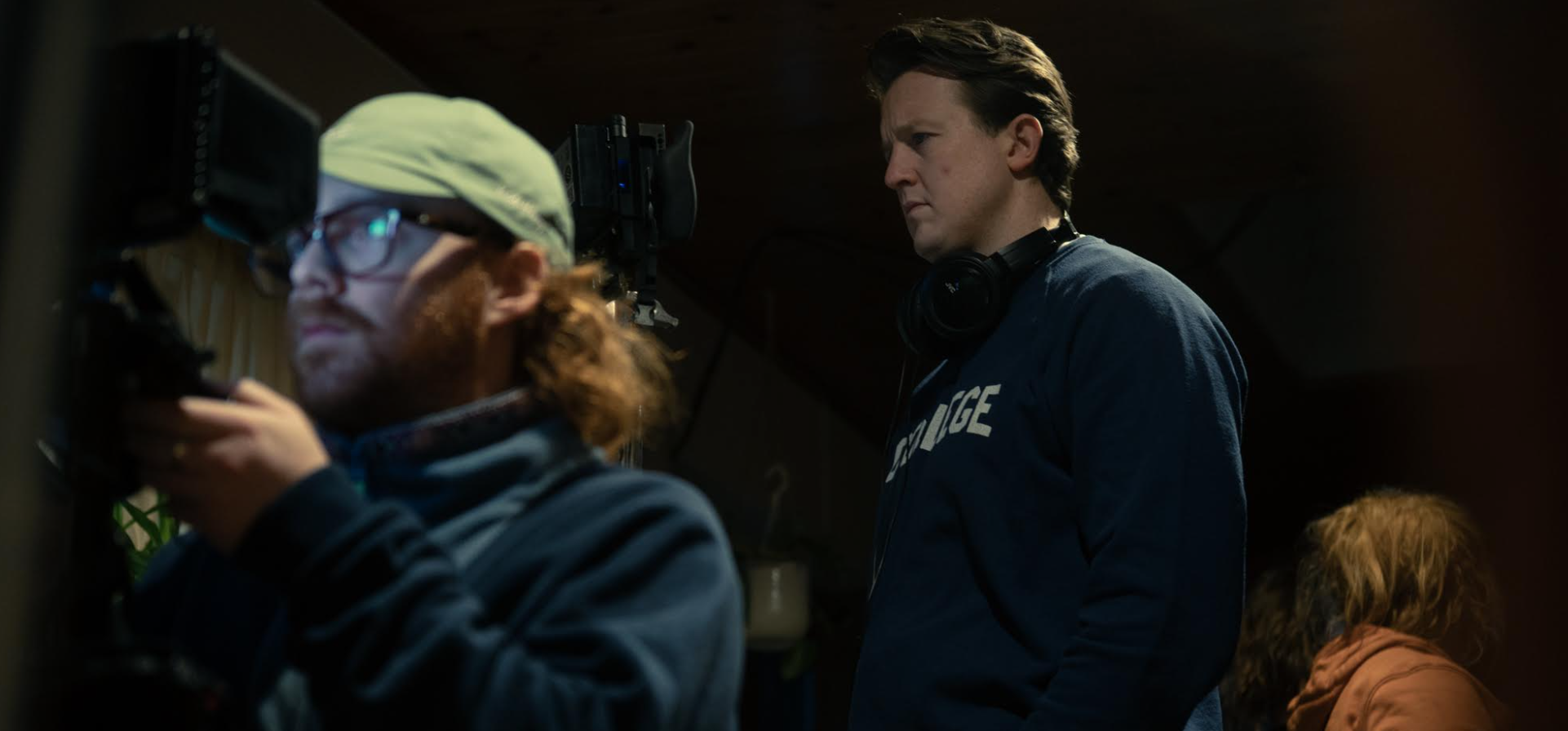
Alan Hopkins
Alan Hopkins is a Dublin-based writer, director and co-founder of HAL Pictures. A graduate of the National Film School at IADT, he holds both a BA in Film & Television Production and a Master’s Degree in Screenwriting. His work has screened at festivals across Ireland and internationally, as well as on RTÉ. In 2024, his Screen Ireland Focus Short Ogham premiered at the Galway Film Fleadh before continuing its international festival run, receiving awards for cinematography and original score. His previous short film, Jungle, a drama set against the backdrop of the European refugee crisis, screened at festivals worldwide and was later released on RTÉ Player. In 2025, Alan was selected for Screen Ireland’s Mentorship Programme, where he shadowed acclaimed writer-director Frank Berry, and was also selected for the Storyhouse Writers Lab. In 2026, his second Screen Ireland Focus Short, A Knock at Your Door, premiered at the recent Galway Film Fleadh, where the film won the prestigious Donal Gilligna award for Best Cinematography. He recently started development on his debut feature film, Sp(k)ink, with the support of Screen Ireland.
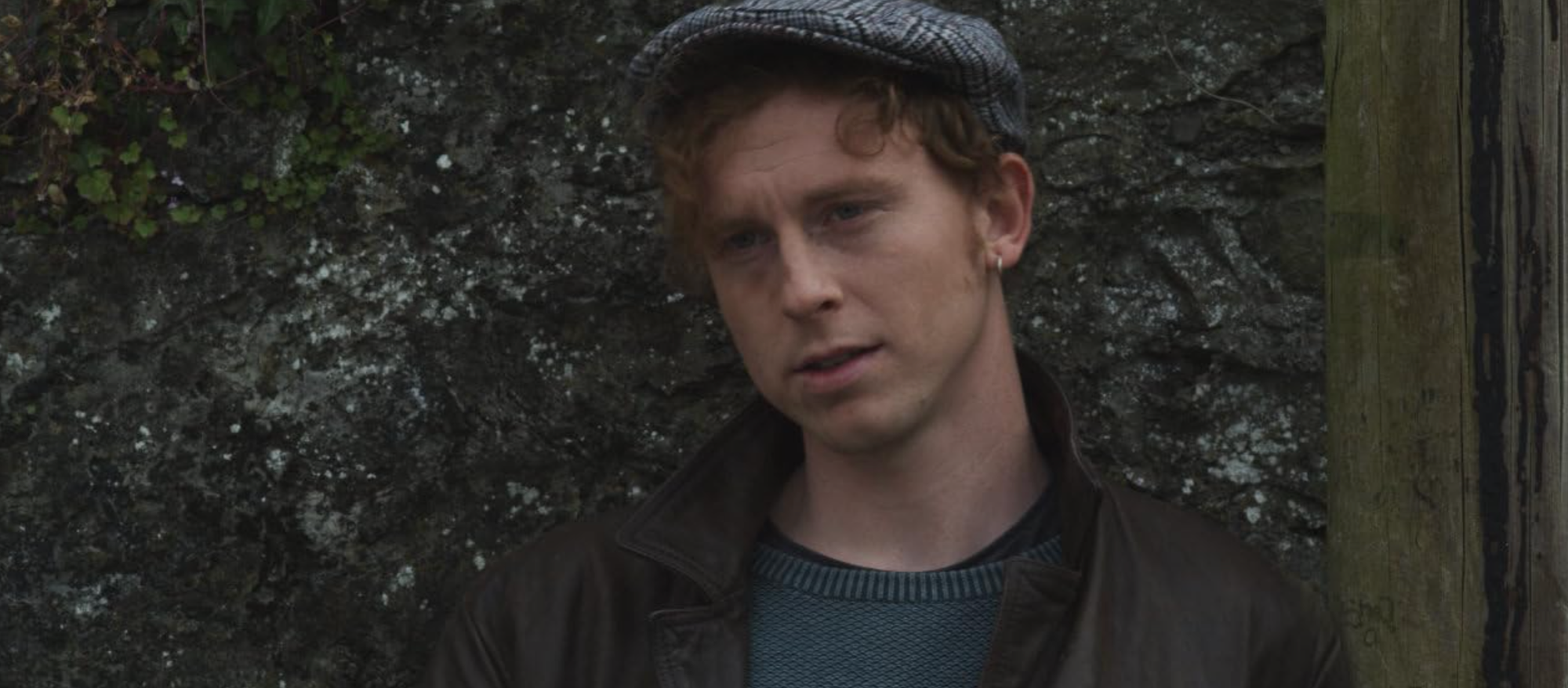
Michael Mullen
Born and raised in Dublin, Michael Mullen has been immersed in drama and performance from an early age. A graduate of Dublin’s vibrant theatre scene, his most recent stage credits include his role as James Nutt in The Devil Himself with AboutFACE Theatre company at the historic Smock Alley, and Orson Welles’s A Christmas Carol, where he reprised his role as beloved Hollywood actor Joseph Cotten. For Dublin’s Culture Night 2025, Michael took on the role of Jean in Miss Julieby August Strindberg, produced by the award winning Three Hot Whiskeys. Michael’s screen career began with the independent feature Blue Dawn, followed by a supporting role as Father Brennan in the comedy The Problem with People, directed by award-winning filmmaker Chris Cottam and starring Sheila Flitton, Colm Meaney, and Paul Reiser. Most recently, he completed work on the lead role in The Ginger Jesus, an upcoming feature set to be released in 2026
 Film Ireland Editor
 Film Ireland Editor