
This year, Bloomsday Film Festival will present a special screening of Ulysses, New York - an ambitious 24-part adaptation of Ulysses introduced by director, Caveh Zahedi and hosted by Irish filmmaker Dean Kavanagh.
Caveh is an American autobiographical filmmaker celebrated for his experimental, self-reflexive and adventurous work across film, web series, and podcasting. In this podcast, we catch up with Caveh to chat about his art, craft, and plans for the festival.
Listen now on SoundCloud, Apple, Spotify, Acast and Amazon, or subscribe to Film Ireland wherever you get your podcasts.
Watch the original recording here.
This screening and talk will be taken place on 12th June 2026 7pm to 8:30pm in Belvedere College. Get your tickets here.
The Bloomsday Festival runs from 11th–16th June, with screenings hosted at the historic James Joyce Centre and the Irish Film Institute (IFI).
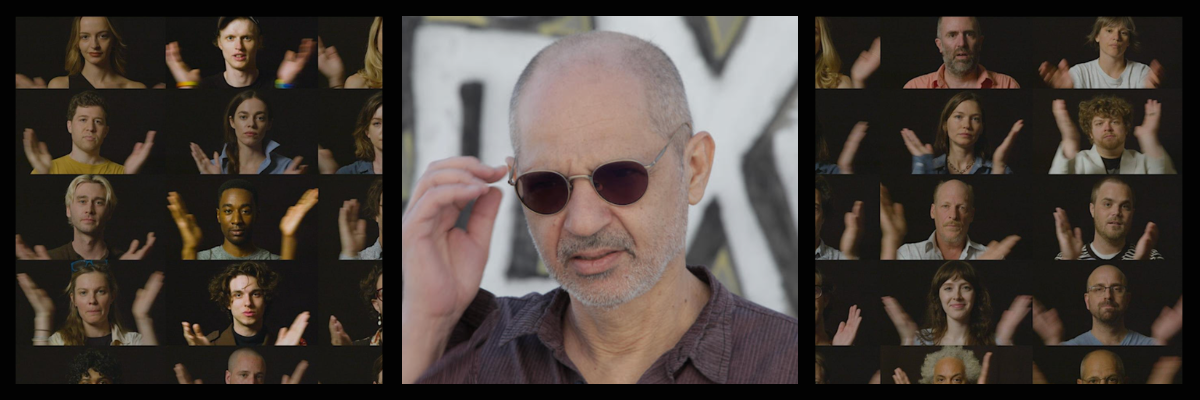
About Ulysses, New York
An Introduction with Director Caveh Zahedi
Ulysses, New York is an ambitious 24-part adaptation of James Joyce’s Ulysses by Caveh Zahedi, an American autobiographical filmmaker known for his self-reflexive and formally adventurous approach to cinema. His feature films include Autobiographical Filmmaker Seeks Camera-Friendly Companion (2025), The Sheik and I (2012), I Am a Sex Addict (2005), In the Bathtub of the World (2001), I Don’t Hate Las Vegas Anymore (1994), and A Little Stiff (1991). He is also the creator of the web series The Show About the Show and the writer/host of the podcast 365 Stories I Want To Tell You Before We Both Die.
With Ulysses, New York, Zahedi attempts to do to Joyce’s Ulysses what Joyce did to Homer’s The Odyssey: transpose a canonical work into a new time, place and form. The events of 16 June 1904 in Dublin are reimagined as taking place on 16 June 2022 in New York City, on the centenary of the novel’s publication. Following eight actors performing in a Bloomsday stage production of Ulysses, the film moves between Joyce’s chapters onstage and the corresponding hours of the actors’ real day. This special presentation features a work-in-progress version of the introductory episode, followed by a discussion with Zahedi on the challenges of adapting Joyce.
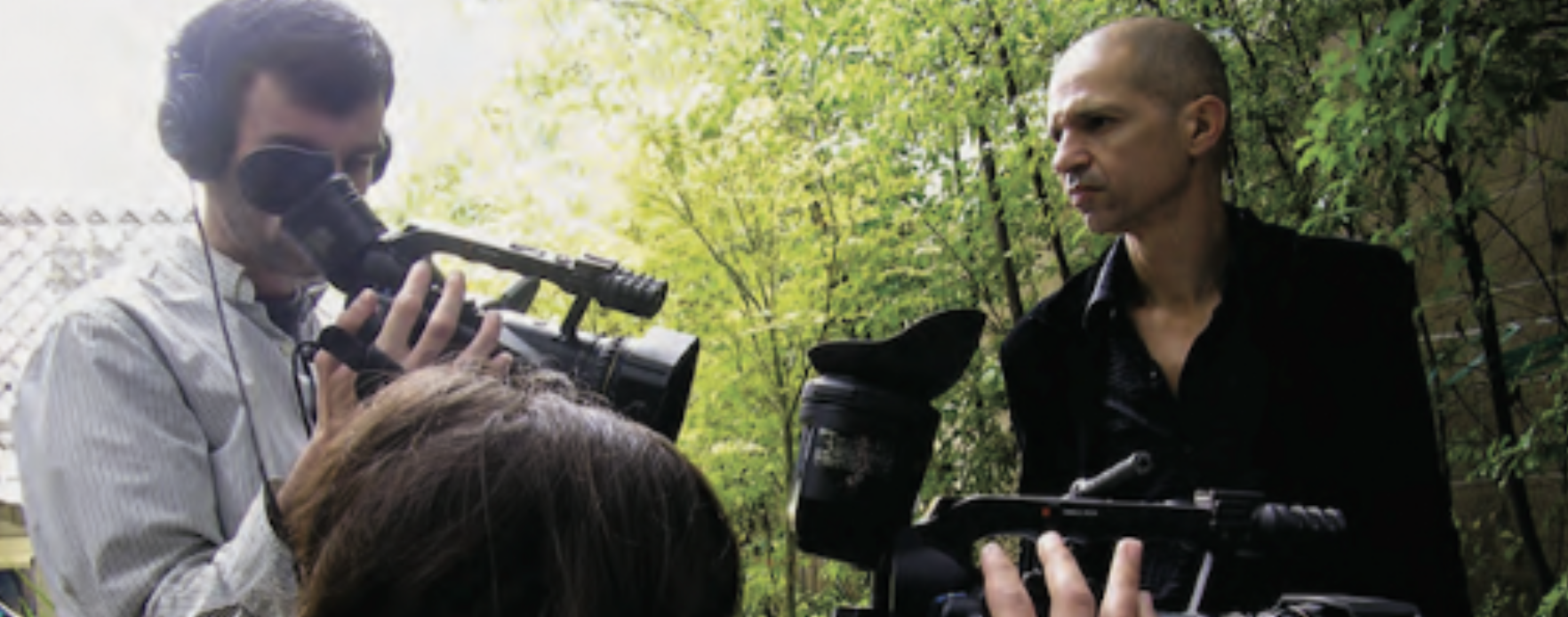
Caveh Zahedi - A Detailed History
Caveh began making films while studying philosophy at Yale University. After graduation, Caveh moved to Paris to try to raise money for a film about the French poet Arthur Rimbaud, but failed to raise even one centime. He tried to interest French television in a film about the turn-of-the-century photographer Eadweard Muybridge, but again failed. He devoted himself to an experimental music video of a Talking Heads song, which took him two years to complete and was subsequently rejected by David Byrne.
Discouraged but undeterred, he applied for and received a modest grant from the French government for a film adaptation of an obscure prose poem by the French poet Stephane Mallarme. The film took him another two years to complete and, when he screened the final cut to the committee, they voted to discontinue funding the film. Abandoning his dream of being embraced by the French film community, he applied to UCLA film school and moved to Los Angeles.
Together with co-director Greg Watkins, he directed A Little Stiff (1991), an experimental narrative in which he re-enacted his unrequited love for a UCLA art student, using the real-life participants. The film premiered in competition at the Sundance Film Festival, received modest critical acclaim, and aired on both German television and the Sundance Channel.
Caveh’s next film, I Don’t Hate Las Vegas Anymore (1995), was an attempt to prove the existence of God by means of a road trip to Las Vegas with his Iranian-born father and teenage half-brother. His premise is that if God exists, God will provide whatever events are needed to make the film compelling. But when the film doesn’t seem to be going his way, Caveh resorts to plan B, which involves persuading his father and half-brother to take Ecstasy with him on film. Although virulently panned by most American critics and a box office disaster, the film won the Critics’ Award at the Rotterdam Film Festival and went on to develop a small cult following.
Caveh spent the next five years trying and failing to raise one million dollars to make I Am A Sex Addict (2006). After five years of hitting his head against a wall, he decided to make a film that would cost nothing to make and allow him to practice his craft by shooting something everyday. The result was In the Bathtub of the World (2001), a one-year video diary in which he recorded one minute each day and edited the footage down to ninety minutes. The film aired on the Independent Film Channel and was released on DVD by World Artists (who subsequently went bankrupt).
I Am A Sex Addict (2006) chronicles Caveh’s ten-year struggle to overcome his addiction to prostitutes. The film uses re-enactments, documentary footage and home movies to tell the story of how his addiction began, the havoc it wrecked on his relationships, and how he was finally able to stop. It won the Gotham Award for Best Film Not Playing at a Theater Near You and was released theatrically by IFC Films.
The Sheik & I (2012), began as an invitation by a Middle Eastern Biennial to make a film on the theme of “art as a subversive act.” Told that he can do whatever he wants except make fun of the Sheik (who rules the country and finances the Biennial), Zahedi decides to do just that, turning his camera on the Biennial itself. But his court jester antics fail to amuse. the film is banned for blasphemy and he is threatened with arrest and a fatwa. The film premiered at SXSW in 2012, was named by Film Comment the best film at SXSW that year, and was picked up for theatrical distribution by Factory 25.
The Show About the Show (2015-2019) is a self-reflexive TV show about its own making in which each episode tells the story of the making of the previous episode.
Ireland’s most literary film festival was established as a celebration of cinema, literature, and artistic innovation, inspired by the far-reaching influence of Ireland’s father of modernism, James Joyce. The festival is presented in partnership with the Bloomsday Festival and the James Joyce Centre, and runs from 11–16 June, with screenings hosted at the historic James Joyce Centre and the Irish Film Institute (IFI). Continuing its annual traditions, the festival marks the birthday of W.B. Yeats on 13 June with a curated programme of poetry and literature-inspired short films. On 14 June, in keeping with Joyce’s radical and experimental spirit, the programme showcases a selection of innovative experimental films. The following day, 15 June, celebrates the anniversary of the publication of Dubliners with screenings of Joycean short films and adaptations of Dublin-based stories.
Alongside its cinematic programme, the Bloomsday Film Festival presents a diverse range of events, including director Q&As, workshops, musical performances, and poetry readings. At its core, the festival is committed to fostering artistic innovation - championing filmmakers who forge their own paths and create work that pushes the boundaries of the medium, in the same pioneering spirit that defined Joyce’s literary legacy.
Check out the programme & get tickets at www.bloomsdayfestival.ie.

