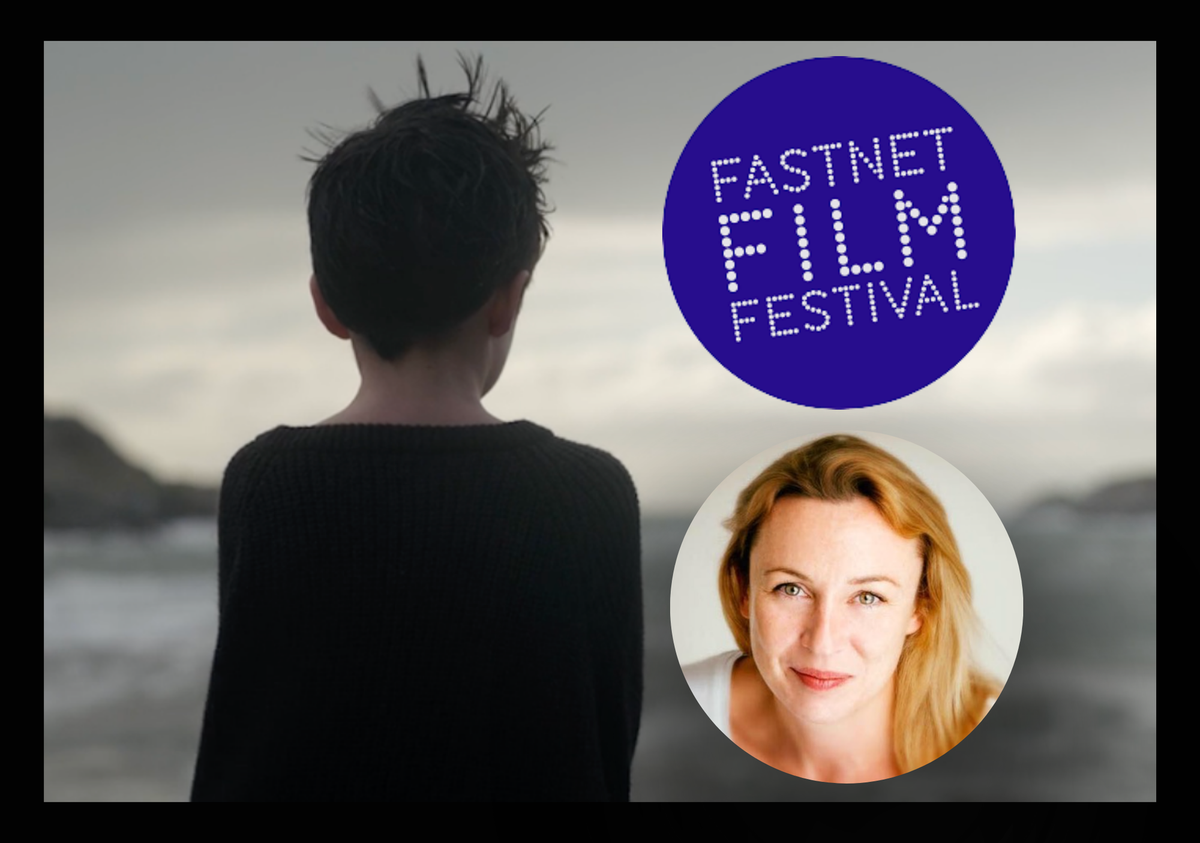

Holly Buckley lends an ear to Róisín Kearney’s anticipated short Éist.
There is a moment early in Éist when teenage protagonist Tommy (Louis Kirwan) is more focused on his phone than the people around him. He is reminded by his father (Aaron Monaghan) to acknowledge his grandfather. This is a small and yet familiar interaction that quietly establishes the rich emotional terrain of Róisín Kearney’s latest short film.
Following a competitive round of public pitching at the Fastnet Film Festival last year, Róisín won the David Puttnam Award, receiving €20,000 to shoot this film. Previously titled Forget Me Not, the script is partly in Irish and partly in English, and stars internationally acclaimed actor Stephen Rea (The Crying Game, Interview with the Vampire) in a leading role as Dinny. The film is produced by Róisín’s long-time creative collaborator Caroline Grace-Cassidy, working with Kevin Cassidy for Document Films. This observational drama follows three generations in turmoil as they navigate a grandfather’s wish to return home.
In the confined surroundings of his nursing home, Dinny bristles with discomfort; Kearney’s use of close framing captures the profound impact of his restriction. His adult son Stephen (Monaghan) is also strained, navigating the demands of caring for his parent while raising two children of his own. This is a situation many families will recognise, and one the film approaches with deft empathy. As the grandfather, Stephen Rea brings remarkable stillness, allowing decades of unresolved pain to sit beneath the surface as Dinny’s memory fades.
Ultimately, it’s his young grandson, Tommy, who provides the film’s emotional core. In the face of his father’s growing frustration, Tommy begins covertly researching, hatching a plan and making sure to document key moments. What lingers with me most after watching Éist is the film’s understanding of how cinema as a form of preservation, a means of holding onto moments, memories and legacies before they disappear.
As grandfather and grandson embark on their journey, the film's visual language expands with them. Award-winning director of photography Eleanor Bowman opens the frame to the coastline of Oileán Chléire in West Cork. It’s here the rugged Atlantic landscape and choppy seas become a character themselves. Dinny’s island exists simultaneously as a real place and as a repository of memory, carrying the weight of language, communities, and a history that underpins the film’s most powerful moments.
Without overstating its themes, Éist reflects on how the weight of grief can imprint across generations. In contemporary Ireland, families are often separated by migration, work, or, as in this instance, the realities of care; in these moments, these ideas, told through subtext, feel particularly resonant. As an auteur, Kearney trusts us as an audience to find these connections ourselves, lending the storytelling a boldness, a sense of authority even, that never feels didactic.
A beautifully observed short that explores intergenerational trauma and healing, Éist is anchored by performances. There's an authenticity to how, even in such a short space of time, these relationships are realised on screen, particularly in the quiet moments these characters choose to share with one another. As the title suggests, this is a film dedicated to listening: to family, to history, and to the echoes of loss that remain on our shores long after the tide has gone out.
The world premiere of Éist took place on 10th July at the Galway Film Fleadh.
 Film Ireland Editor