
Matthew Briody talks to the writer/director of Grace about the essential subject matter of her film.
Since 2009, RTÉ Storyland has been a springboard for talented writers/directors and actors in the Irish Film Industry. Of the four short films that aired in the latest round, I had the pleasure of seeing Grace. The film tells the story of Grace, a young woman with Down Syndrome who finds her independence and life choices called into question by those around her.
The film is reflective of Ireland’s Assisted Decision-Making (Capacity) Act 2015. This was enacted in 2023 and asserts that every adult is entitled to make their own choices in their lives. In telling Grace’s story, the film holds up a mirror image to society today. There needs to be conversations had like the ones we hear in Grace.
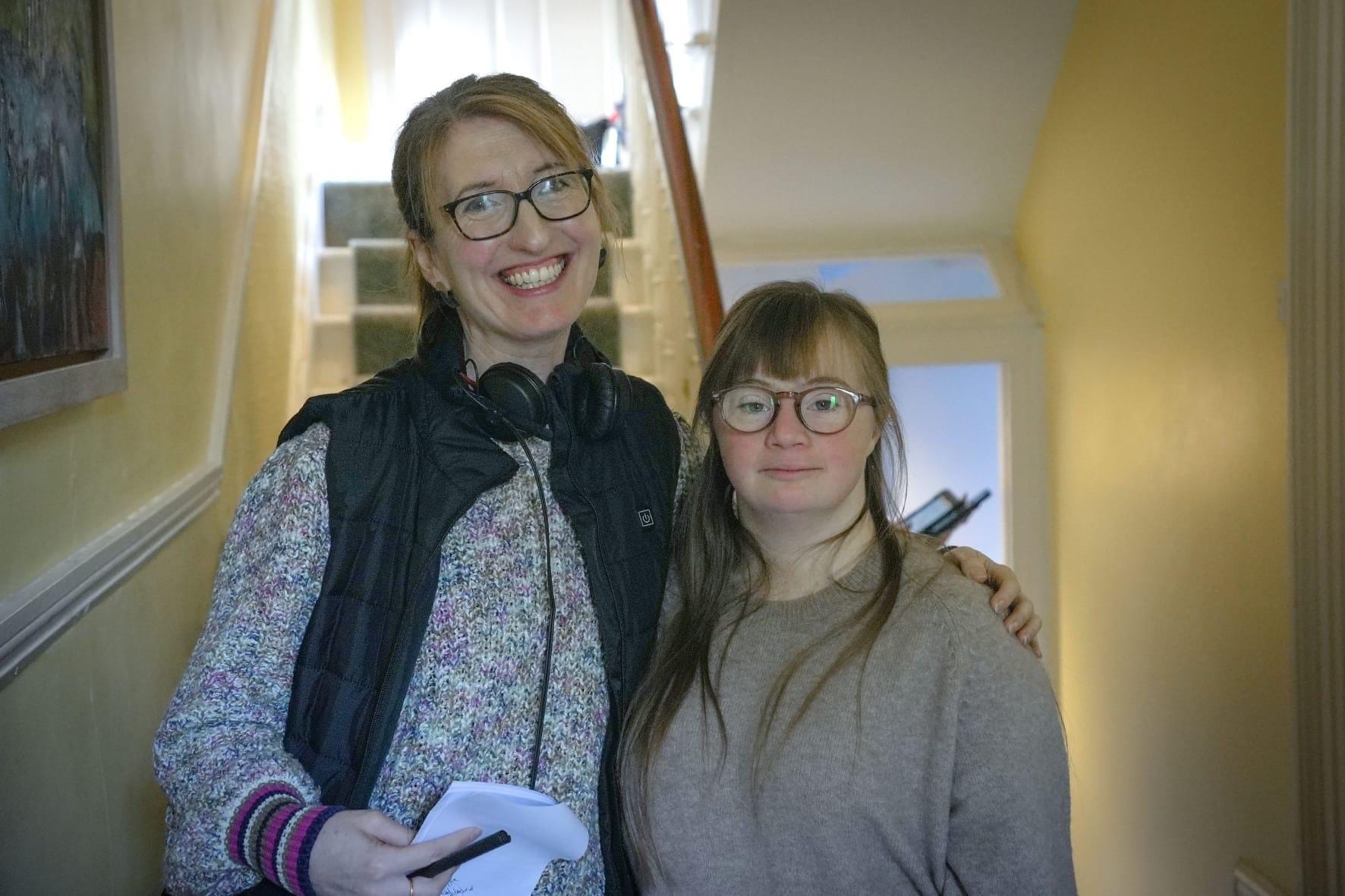
Grace is making its International Premiere at the 50th Cleveland International Film Festival. How did that come about?
AR: We feel really privileged to get to premiere our film ‘Grace’ at Cleveland. It’s their 50th year so it’s a prestigious event. It is incredibly difficult to get into festivals these days with an explosion of entries, especially short films. We’ve been told by some festivals that over 7000 applied so when you do get accepted into one it feels like you’ve won the lottery! We applied to Cleveland the same way as everyone else through Film Freeway and had no connections there, so it proves that they do indeed watch the films and sometimes you get lucky.
Your film is grounded in the context of Ireland’s Assisted Decision-Making (Capacity) Act 2015, which was enacted in 2023. Was this act the driving force that inspired you to come up with this story?
AR: I’ve always been interested in capacity and decision making because of my work in documentaries where we are often working with people who are vulnerable either temporarily or permanently, and where their ability to make an informed decision might be questioned. You need to have a very strong ethical backbone to make films about difficult or sensitive issues.
I am also a panel member for the Mental Health Commission for the past 10 years, so that has given me a greater interest in the law around capacity and decision making. I was interested in telling this story because although laws change, it takes much longer for society to catch up. I thought it would be interesting to explore what might happen if someone pushed the boundaries of their right to make a decision especially in the area of relationships and sexuality.
Your documentary Somebody to Love explored sex, love and relationships for people with disabilities. When did you first develop an interest in this subject and where did it stem from?
AR: We made Somebody to Love back in 2014. Prior to that we’d made a lot of documentaries and films about LGBTQ+ lives, and I came across this law which prevented people with intellectual disabilities from having a sexual relationship. Of course it was in place to protect vulnerable people, but the impact of the law was that people with intellectual disabilities often weren’t being facilitated to have relationships, to date or experience a romantic life. We made the documentary to capture people’s relationships, feelings and desires, and decided to extend it to people with physical disabilities as well as we realised that there was a lot of crossover in terms of how they were treated.
Did you know your documentary would have such a big impact when you were making it?
AR: The documentary made quite an impact at the time and was discussed in the Oireachtas because Senator Katherine Zappone saw it and was shocked that that law was in place. I don’t think we realised at the time it would cause as much of a stir. The disability community responded so well to it which was the main concern for us. We had made a really big effort to take all their feedback on board before beginning to shoot to try not repeat mistakes of the past. We made simple adjustments which shifted the narrative. For example, no parent or carer ever spoke before a person themselves.
A person with a disability (Kieran Coppinger) introduced the documentary. People got to share their true experiences of love, dating, and parenting unmediated by any so called experts but it still wasn’t enough in my opinion. I could have filled a whole series with the people we met around the country. We won an Inclusion Ireland Media award and an IFTA for Somebody to Love but it always bothered me that there were stories we couldn’t tell. That’s why I wrote Grace.
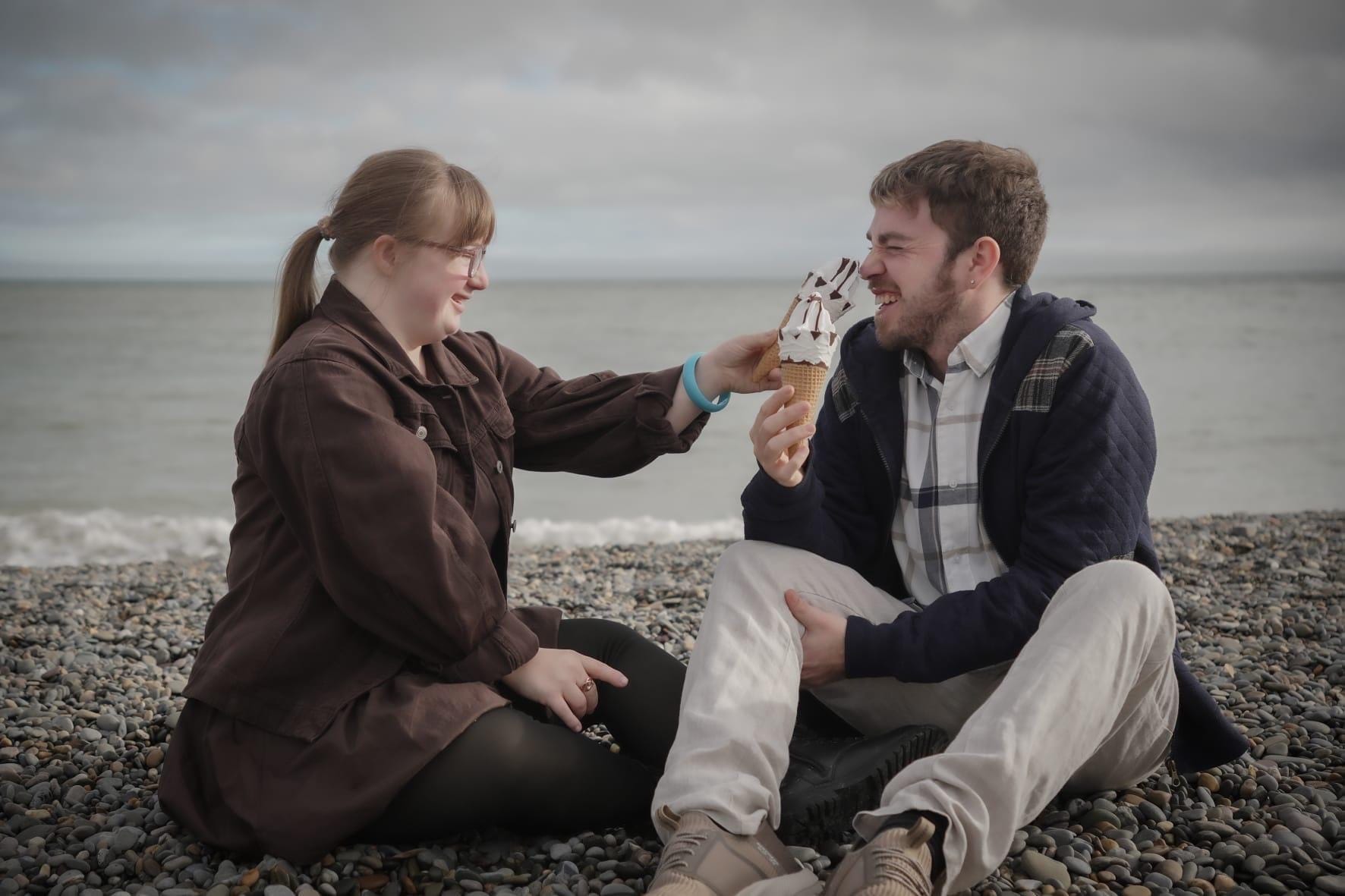
Unbelievably, Fiadhnait Canning makes her screen debut here. How did you end up finding such a talented performer?
AR: Casting the role of Grace was nerve wrecking. I knew that whoever played her would have to be in every scene, there were a lot of lines to learn and the rehearsal time was very limited. I worked with Maureen Hughes as we’d made a documentary together in the past (John Connors’ Acting Academy) so I knew how she worked. Her assistants Laura and Alison did an extensive call out. Fiadhnait had never acted before but we did a few auditions and she really stood out. As Maureen says, there are some things you can’t teach. Fiadhnait was a very lucky find, and so was Luca, her co-star who was also acting in a film for the first time. I feel immensely proud of them both.
What was the experience like working with emerging performers on set?
AR: I found Luca through searching Facebook for a now defunct theatre group called Blue Diamond. I reached out to him online but he didn’t respond. We laugh now that Luca was playing hard to get because Maureen and her team had to convince him to audition and to come for the call back. We thought he was wonderful and played really well alongside Fiadhnait. His mother is also in the arts, and Luca is used to performing as he plays in her band as a very accomplished drummer.
It was good working with emerging performers because I was also new to drama. I felt like we were figuring it out together. All of the supporting cast were really great to work with too and made my job very easy. We had great support from Maria Doyle Kennedy and Niamh Dillon from Gembag in Bow Street, and from Petal Pilley from Blue Teapot who really gave me the confidence to pull this off.
What sort of differences did you find between working on a documentary and working on a drama?
AR: I’ve always felt that documentary makers could make strong drama makers with the right support, because in documentaries you are always trying to capture life as a truthful performance. Helping real people to tell their stories, and forget the camera is present is quite a similar process in some ways, especially if you are used to making hybrid or stylised documentary work. However, making your first drama is a huge learning curve. In a documentary you only have to communicate with a team of 3 or 4 people. Arriving on set to be greeted by 30 people is quite overwhelming at first, but you soon learn the importance of everyone’s role. One advantage documentary gave me was the ability to stay flexible and adapt quickly, whereas drama often requires far more structure and coordination. I wanted to keep that same ethic of responding to the light, weather, the space and people’s reactions in the moment. Having my regular documentary collaborator, cinematographer Eleanor Bowman, alongside me was incredibly reassuring and she was my wingwoman.
Continuity was an area I hadn’t fully appreciated before, and working closely with Jennifer Burke was invaluable in helping me understand story days and how they affect every department. I also became very aware of how much preparation and detail goes into each role; for example, our costume designer Sarah Yeoman dedicated enormous time to getting everything right. The biggest practical difference is pace: everything takes longer in drama, and we shoot far less each day. Clear communication is essential, because with so many departments involved, things can easily slip through the cracks so I’d definitely work closer with some heads of department in preparation next time. I loved working in drama and I’d really like to direct a feature or television drama, but I don’t think I’ll ever stop making documentaries. Documentary filmmaking has been a huge part of my life since I made my first series for RTE as a fourth year student in DIT at age 20.
I really love how there’s no real rules in documentary storytelling and I find that exciting. I think what tiny crews achieve in documentaries is incredible and underrated.
Your producer Nuala Carr has a number of impressive recent credits including The Unreal for RTÉ and Glitch for EBU. How did you and Nuala end up working together?
AR: My producer Nuala Carr did a fantastic job. We didn’t know each other beforehand, but she came highly recommended by our mutual friend, director Bonnie Dempsey, so I knew I was in good hands. She had an enormous amount to achieve in a short time and somehow made everything happen — despite constant location moves and even taking over a train and a bus (I suspect she would have drawn the line at a plane!).
As a documentary maker, I’m used to being hands-on with production, but early on she kindly removed me from the production WhatsApp group so I wouldn’t get lost in the minutiae. It was a generous and smart decision, allowing me to focus fully on directing while she, Oda O’Carroll and Jodie Fearon handled the countless behind-the-scenes details that kept everything running.
As an accomplished documentary filmmaker do you have a favourite documentary or documentarian?
AR: There are so many documentaries I love that it’s hard to choose, but Sarah Polley’s Stories We Tell stands out for me. It explores truth, family and storytelling in a way that plays with the audience’s expectations. I’m also drawn to other films that push the boundaries of the genre, such as The Arbor, Casting JonBenet and Kate Plays Christine. I’ve always been interested in hybrid filmmaking - work that brings together my love of drama and my ongoing curiosity about and questioning of the documentary form. At the same time, sometimes very strong stories are told in a traditional way with archives and interviews. Every film is different and has to be told in its own way. The recent film Born this Way about the disability community of Camphill which was directed by Éamon Little and produced by Adrian Mc Cathy has a quiet simple beauty and proves things don’t always need to be complicated.
You cast Carrie Crowley in your film after a chance encounter at the Dublin Theatre Festival last year. Have you ever cast any other actors in unconventional ways?
AR: It’s true – I cast the wonderful actress Carrie Crowley by approaching her as she left a theatre show. It was one of those right time, right place moments and I just had to ask her. I’ve often cast people through social media or indeed on the street. I’ve directed ads working with real people and we often find cast members at public events or in parks. You can’t be shy if you are a documentary maker – you have to walk up to people and sell your idea to them on the spot so I suppose you need to be brave or certainly a people person.
The Cleveland International Film Festival is an Oscar-qualifying festival. Do you have Oscar hopes for Grace to be entered in the short film category?
AR: I don’t think that’s on the cards for us, but we are hopeful that the film will continue to travel and open people’s minds on the topic of disability, sexuality, love and decision making. We’ve entered a lot of festivals and hope it will get picked up for a few more events after Cleveland. Already a University in Belgium has asked to screen it, and we’ve been invited to screen it in Brussels. We’ve a lovely screening coming up at Fastnet in Cork in May which is always a gorgeous festival. In terms of awards we just have to wait and see….
Down Syndrome Ireland welcomed the release of your film. How important was the support from that organisation?
AR: We were so delighted Down Syndrome Ireland came on board to support the film and its message. I was nervous putting the film out into the world, because it is a sensitive or controversial story but it shouldn’t be. We need to talk about these things more openly. The CEO Aidan Stacey made a very generous public statement about the film and promoted it to their families. It was really important to me that parents out there didn’t feel hurt by the film because of course I am not a parent of an adult with an intellectual disability and as such I can’t possibly understand the road they are on.
My good friend has a little girl with Down Syndrome, and I really cared what he and his wife would feel watching the story. That’s why I loved Carrie for the role of the mother. She was able to bring such nuance and balance to the most emotional scene in the film when Grace stands up for herself and her Mum realises the young woman she has become. It’s complex and the film doesn’t offer any solutions.
Grace is a beautiful name for the central character. Was there a specific reason why you chose this name for your lead?
AR: It just came to me, and felt right. Later I remembered that there was a huge disability case in Ireland where a woman was badly neglected and her rights not upheld. It is a very different story with no connection to ours, but I wonder if maybe her name seeped into my subconscious somehow. It’s a beautiful name. I always think names just come to you.
You currently have your debut feature drama in development with Storyhouse Lab Ireland. Can you tell us anything about that project?
AR: It’s too early to say but I think my drama work is always going to be informed by real things in the world around me and have a bit of a social conscience.
Grace is available to stream now on RTÉ Player.


