

What happens when a journalist, teacher, film critic and lifelong observer of people gets to meet some of Ireland's most fascinating personalities? In Encounters, Aubrey Malone offers a collection of interactions that go beyond the public image to reveal the individuals behind the headlines, performances and achievements.
As the old saying warns, "Don't meet your heroes." Encounters demonstrates that sometimes the meeting can be every bit as rewarding as the reputation.
Actor Donal McCann (1943-1999) lived a life characterised by intense performances and a personality that often seemed to be at odds with the world. Below is an excerpt of when Aubrey met Donal.
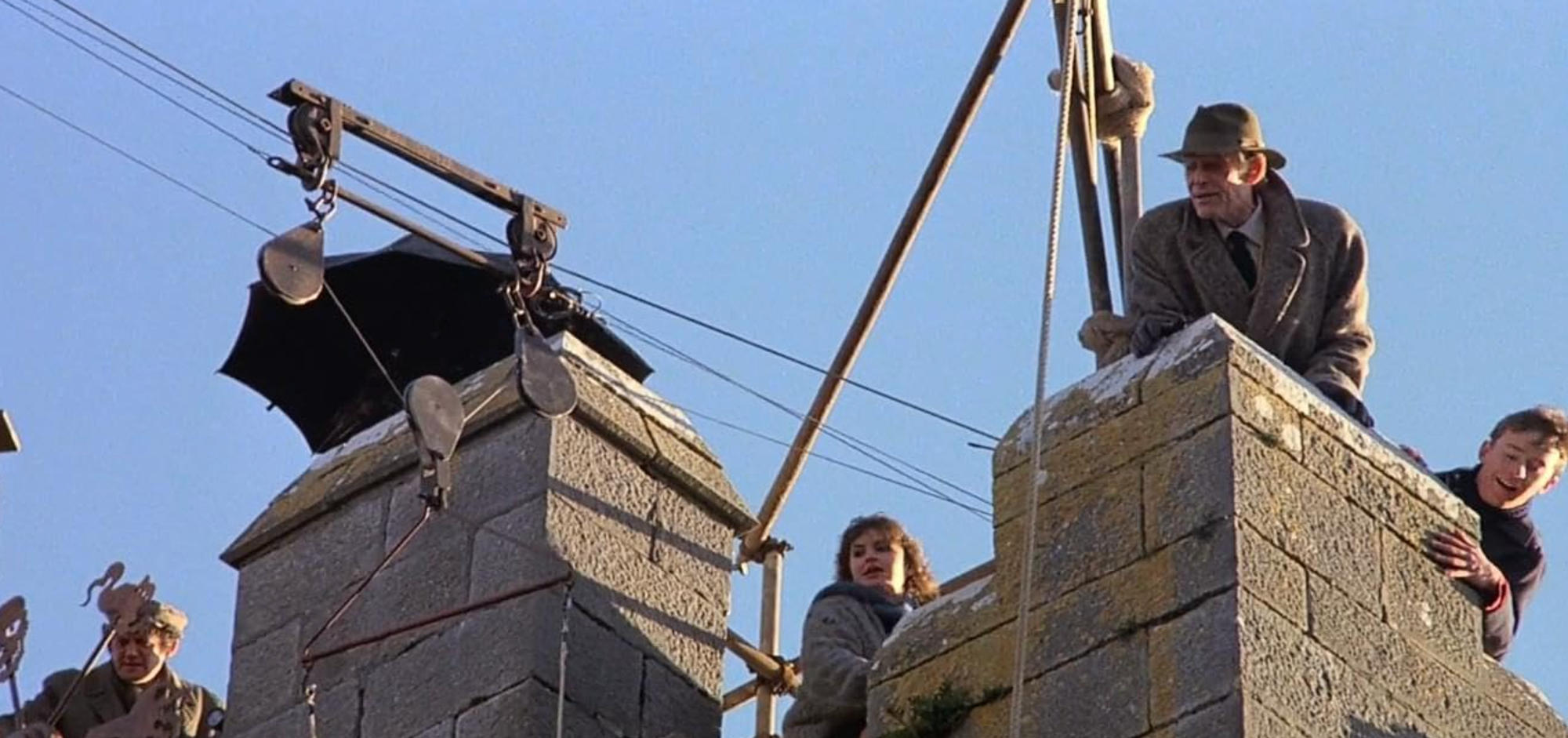
He had a drink problem for many years, which he eventually managed to modify, largely due to the help of Alcoholics Anonymous. Whether drinking or not, however, he guarded his privacy fiercely, cutting a lonely figure as he strode like a Colossus across the acting cosmos, the forlornness of the characters he played seeming at times to spill over into his personal life, and vice versa.
Like many actors who spilled their hearts out onto the stage, he retired into a shell when the curtain came down. The ends of his performances segued into the depression of the unemployed strolling player. There was a time when drink soaked up that depression, intensifying and soothing it by turns. On the wagon his eyes only seemed to light up when he made one of his famous forays into a bookie’s office, his second home from home after the stage.
He lost a brother in an accident after the two of them were playing together in childhood. Such a tragedy preyed heavily on his mind in those moments when he looked as if he had the weight of the world on his shoulders. In interviews he spoke in oblique epigrams, preserving the sweetmeats of his trade for audiences who bowed in homage as he sucked the juice out of another-equally disturbed persona.
All the way from The Plough and the Stars to Philadelphia, Here I Come, McCann steered a combative path to whatever dubious epiphany he reached as a result of his moody pensiveness. That fathoms-deep voice, those eyes that stared suspiciously at nothing in particular, the slow, calculated rise of a cigarette to the lips...all these were orchestrated stage directions that became part of his life, and being.
He admitted he got little shafts of happiness from knowing he’d done his work well. Outside it he had a Beckettian sense of dismay at the universe and his place in it, emphasising the importance of snatching at the moment in the absence of anything more permanent.
McCann was a cerebral man. Often this quality manifested itself as aggressiveness, the Hard Man syndrome. The first time I met him he was slow to talk to me, reluctant about the prospect of being interviewed. It was in the Gravedigger’s pub in Glasnevin. He’d just made The Dead. He looked much more than his 44 years.
My first words to him were, ‘You’re Donal McCann, aren’t you?’ He looked me up and down as if I’d just insulted his mother. ‘I used to be,’ he replied.
'Who are you?’ he said then. ‘Nobody in particular,’ I said.
When I told him I admired his work, he replied with a four-lettered word.
It was obvious to me that he wasn’t interested in being complimented. He knew he was good at what he did and didn’t need reminding of the fact.
Such a desultory tone formed the germ of his conversations with me the next few times I met him. A casual quip here, a telling innuendo there, it all added up to a man either very morose about his profession or, alternatively, someone who believed life was so absurd that the only way to live it was by scoffing at it.
He was in company that first night. I was made feel in little doubt that I was an infringer. He used me as the butt for some of his sardonic asides when I approached him. It was The Actor versus The Journalist scenario, the prima donna versus the hurler on the ditch.
After a while I told him I was a journalist. ‘Oh,’ he said, ‘One of them.’ He turned to look at the people who were with him. They laughed as if it was some kind of ‘in’ joke. I knew he’d been a subbie for the ‘Evening Press’ in a past life.
As the night went on, our chat turned into a ‘sort of’ interview. I told him more about myself. That seemed to relax him. As well as being a journalist at this time I was also a teacher. ‘Teachers get bad pay,’ he said. He looked as if he was going to elaborate but he didn’t. It was the way he was with most subjects. I got to be content with his oneliners.
He talked about an early flirtation with architecture. ‘Robert Ballagh was in my class,’ he said. I didn’t know how to react to this. He said it as if he was expecting a reaction. All I could say was, ‘Was he?’ He grunted. Many of his statements sounded like accusations. Did he like Ballagh or dislike him? Did I dare ask?
He talked about acting. I asked him if he had a philosophy of it. ‘Philosophy?’ he said, ‘What’s that? You just do it.’
He made fun of me if I used a big word. It was as if I were trying to put something over on him. He hated people who felt they had the answers to life. Donal liked what was inexplicable – or, as he put it, ‘unexplainable.’ He preferred the word unexplainable to inexplicable.
Like Richard Harris, another rumbustious Irishman, he liked feeding off the unknown. He told me his most enjoyable performances were ones where he didn’t know what a character was about. ‘You don’t discover the character,’ he said, ‘The character discovers you.’ I said that was a good insight. ‘Write it down if you want,’ he said. I felt he was making fun of me.
Towards closing time, the people he was with left the pub. I wondered if he’d go with them. He seemed about to but then he fell back in his chair.
I was suddenly alone with him. He was swaying from side to side. He started a few sentences but didn’t seem able to finish them. ‘You think I’m a disaster as a human being, don’t you?’ he said. I said it was the opposite. ‘Good answer,’ he said. He had his hand in a fist as if he was going to hit me. Then he loosened it and started laughing.
He asked for another drink but the barman told him he’d had enough. ‘Go home, Donal,’ he said. I got the impression it wouldn’t have been the first time these words would have been said to him.
His eyes got groggy. I wondered if he was going to fall asleep. He struggled to think of words and got annoyed with himself when they wouldn’t come out. ‘If I was in better form, I could make you laugh,’ he said to me at one stage, the actor’s urge to entertain coming out in him between all the bile.
He spoke of writing as the thing he would really like to have done most in life
‘What am I doing being an actor when I could be like you?’ he said.
He wanted to write a play. The idea was to appear in it himself. I asked him if there was a writer trying to get out of most actors. He said, ‘In Ireland there’s a writer trying to get out of most bloody things.’ He grinned as he said this, pleased with himself.
Afterwards the hardness came back into his features again. He looked me up and down like a tailor measuring someone for a suit. ‘What do you want from me?’ he said.
I told him I wanted nothing from him, that I’d come into the bar for a drink and just found him there.
The way he looked at me brought to my mind a memory of my favourite McCann performance, that of the James Larkin supporter Willie Mulhall in the TV adaptation of Strumpet City.
‘When you played Mulhall,’ I said, ‘you gave me the impression you wanted to kill everyone you looked at.’ His eyes grew glazed at this. It was as if I’d touched some kind of nerve. He bit his finger the way he did in the film Cal, where he played a depressed old father burned out of his home. Such details about his performances had etched themselves into my mind.
‘Maybe it was myself I wanted to kill,’ he said. I waited for a follow-up comment but it didn’t come. The granite features appeared again. He eyed me with a kind of suspicion. I was made to feel as if I was getting too close for comfort.
Without warning he said then, ‘I’m off.’ It was the closest to a goodbye I felt I’d get.
He lurched towards the exit, bumping into a table on the way out.
‘Will he be back?’ I asked the barman. He shook his head smilingly, as if to say ‘You’ll be lucky.’
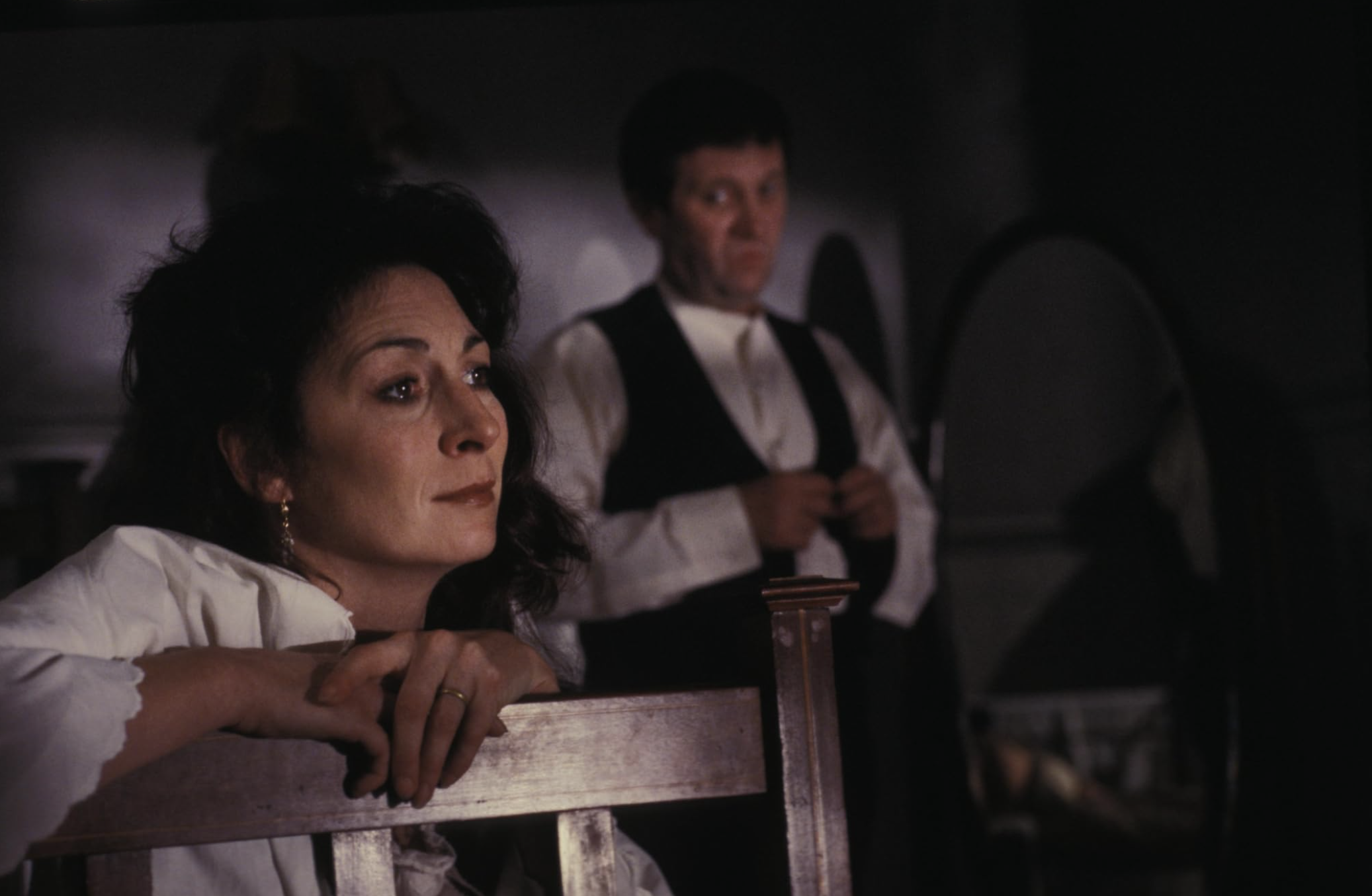
The bar seemed drained of atmosphere in his absence, making me wonder what it was that made him so charismatic.
I called up to his house a few times in the following weeks. It was near where I lived in Glasnevin. On some of the occasions he was talkative, on more of them not so. Often he was the worse for wear with drink. On one morning that I called he had scars all over his face. It turned out they were as a result of him falling into the hearth of his living room the night before. I imagined he was lucky not to have killed himself. ‘You need someone to look after you,’ I said. He gave a dry laugh. I knew he had a partner, that they had a volatile relationship. It was another area I was careful not to go into. People told me he hit her sometimes. I could imagine him doing that with drink but not without it.
Sometimes when I knocked on his door he opened it and then closed it again. ‘Bad time,’ he said once.
I never minded his bad humour. He was more real than most people I knew. It was a small price to pay. I didn’t envy him living inside that had of his. He suffered much more than the people he was rude to.
The better I got to know him, the more I asked him about his life. When he was in his cups one night he talked about the childhood death of his brother, about how much it devastated him.
He talked about the fact that his father, the playwright-cum-Lord Mayor John McCann, had a fatal heart attack one night when the two of them were at the dogs.
His life afterwards was like that of an orphan, an orphan who found a temporary home on the stage but one who always-seemed to be looking over his shoulder at some other stage, or another life beyond one.
John Huston died shortly before one of my visits to him. He took the news badly, as I felt he would. He’d loved making The Dead. It had been a lifetime ambition for Huston to film James Joyce’s greatest story and he made it into a masterpiece. McCann’s performance in it was also haunting.
I asked him how he felt about acting opposite Anjelica Huston while her father directed him. ‘What kind of a question is that?’ he said. ‘Are you asking me if I was intimidated?’ I couldn’t imagine anyone less likely to be. In most of his relationships I imagined it was Donal who was doing the intimidating.
I asked him how he felt about Huston’s passing. That was safer territory. ‘Shocked but not surprised,’ he said, ‘He directed a lot of the film wearing an oxygen mask’.
He proceeded to quote the great passage towards the end of the film where his character Gabriel Conroy speaks the lines about the snow ‘falling faintly, faintly falling’ all over Ireland and over Michael Furey’s grave. Listening to him made me feel I was at the film all over again.
Over the next few months I saw him off and on. He’d usually be darting in and out of pubs and bookie’s offices. He seemed to spend as much time in the latter as the former, perhaps seeking the windfall that would enable him to get out of acting for keeps.
Then he got pancreatic cancer and died. It was on the cusp of the new century. He didn’t get to see the Celtic Tiger or avail of any of its blandishments.
He attained a form of peace in his last months, even becoming religious, which was the last thing most people expected from him, but the memory he’ll leave in people’s minds, apart from all those astounding performances, is that of an iconoclastic man who specialised in demythologising people, including himself.
Out of his pain he minted the stuff of art. That’s why his performances are so memorable. They’re mainly an extension of his own restless anger. What a pity he only divested himself of that anger when his health collapsed. By then it was too late for him to enjoy his twilight years.
After finishing The Steward of Christendom, probably his greatest stage portrayal, he said he was giving up treading the boards. It was as if the play wrenched too much out of him.
He was proud to have kicked his drink problem when the cancer struck him. This seemed to be the story of his life, lurching from one crisis to another, rage alternating with gloom in a quixotic spiral that culminated with his premature burial in the Wexford soil he sprang from.
Ireland has many world-class actors in its history. The pity with Donal McCann is that future generations will have only a limited record of his talent, that of celluloid rather than the stage. A paid-on-Friday, broke-on-Monday maverick, he often backed the wrong horse both in his art and his life. The one called Posterity owes him a bigger debt than it will perhaps honour.
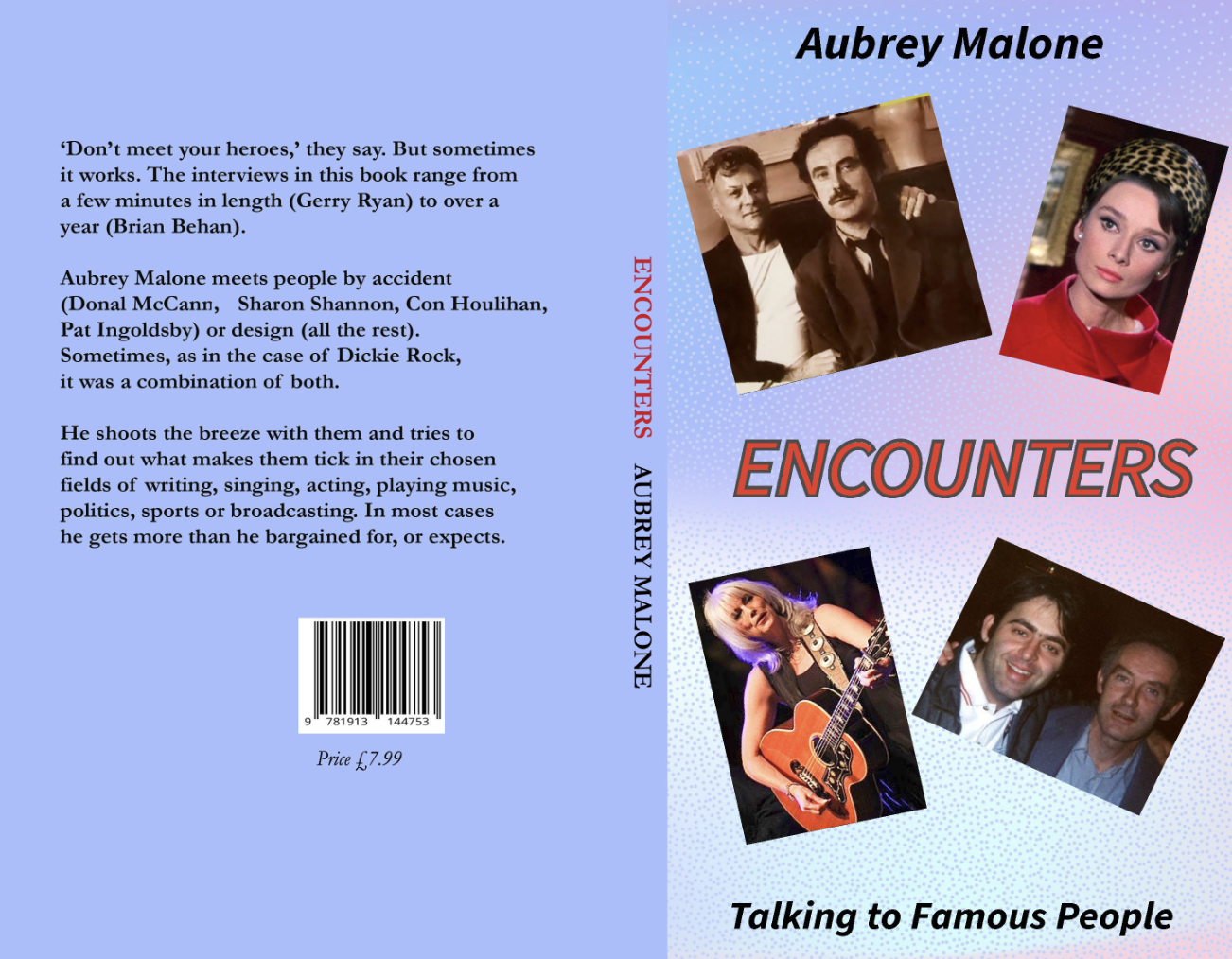
Encounters is available to purchase now.
'Don't meet your heroes,' they say. But sometimes it works. The interviews in this book range from a few minutes in length (Gerry Ryan) to over a year (Brian Behan).
Aubrey Malone meets people by accident (Donal McCann, Sharon Shannon, Con Houlihan, Pat Ingoldsby) or design (all the rest). Sometimes, as in the case of Dickie Rock, it was a combination of both.
He shoots the breeze with them and tries to find out what makes them tick in their chosen fields of writing, singing, acting, playing music, politics, sports or broadcasting. In most cases he gets more than he bargained for, or expects.
Encounters is available to purchase now.
Aubrey Malone
Aubrey Malone has an MA in English and was a primary school teacher before he then went into journalism, freelancing for publications including the Evening Press, The Cork Examiner and the Sunday Independent. He was the movie critic for Image magazine and for Modern Woman, a supplement to the Meath Chronicle. His books are available to buy online now, including Hollywood Wit, MYSTICAL CROONER: The Lives of Leonard Cohen, and Michael Collins : [a Neil Jordan film].


