

Almost thirty-five years after the initial release of Fried Green Tomatoes, Rachel Walshe reflects on this beloved classic for Pride.
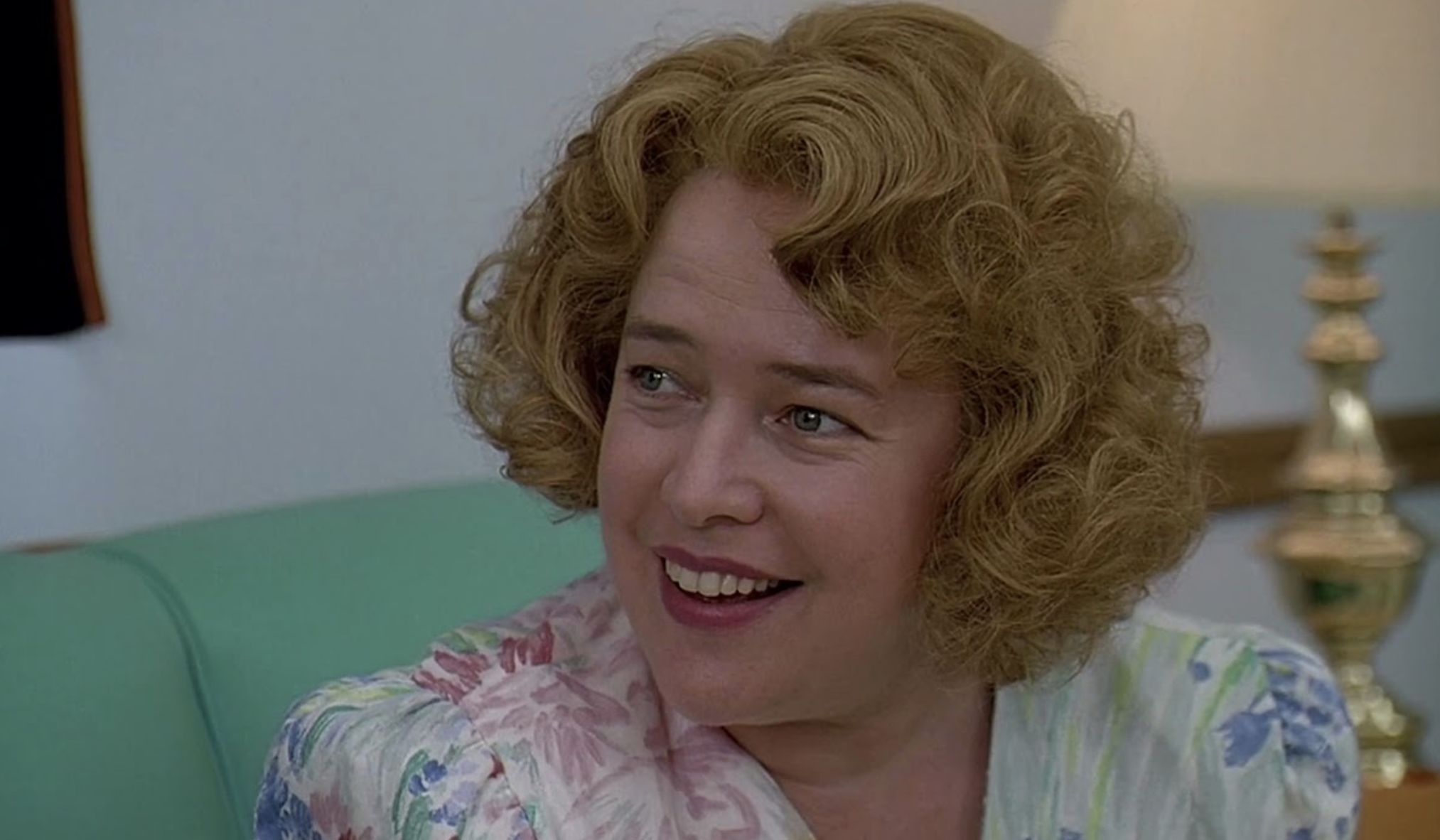
Fried Green Tomatoes is a story of "friendship". At least I'd have called it friendship when I first saw it. Recently, a rare night alone meant I could watch whatever I wanted, which led me to bring out this comfort watch from when I was thirteen. Set in Birmingham, Alabama, and switching between the 1930s and 1980s, the film follows Evelyn Couch (Kathy Bates), a mousy housewife trying everything to save her marriage to a clueless Ed (Gailard Lee Sartain). On a visit to Ed's cantankerous aunt, who lives in a nursing home, Evelyn strikes up a conversation with Ninny Threadgoode (Jessica Tandy).
Ninny is a woman with a tale to tell: the story of Idgie Threadgoode (Mary Stuart Masterson), Ruth Jamison (Mary-Louise Parker) and the Whistle Stop Café. Idgie and Ruth's tale is one of loss and love, but like... love love. Although I admit, at the time I thought, "Of course you raise your best friend and business partner's baby. That's what friends are for." Through learning about these forgotten women, Evelyn learns that, rather than chasing Ed's love, she should focus instead on loving herself. If it sounds a little trite, it's because it is, but oh my God did I watch the bejesus out of this film as a teenager. It just took years for me to figure out why.
There were not a lot of queer spaces in the village where I grew up. Not that I'd have known how to find them if there were. The spaces my best friend (also queer) and I made were in each other's living rooms. There we would swap films back and forth, like artistic hunter-gatherers. We would share these found examples of art, some with new aspects for both of us to consider, stories of people on the margins. Queer narratives.
These films, like Fried Green Tomatoes, were the spaces we went to see ourselves, even if we didn't fully get that that's why we were visiting. For some, and for me initially, the "friendship" between Idgie and Ruth could be just that. Nothing more, although also everything. An intense, symbiotic bond that was the most significant relationship of both of their lives. All friends swim in their slips at midnight, drinking and playing poker, and kissing suggestively on the cheek.
For those of us who didn't have the language to describe ourselves (even to ourselves at times), the media that we consumed became a way of self-navigating. The stories that we were drawn to so fiercely held something that was almost at a subconscious level. If you'd asked me at thirteen why I loved this movie so much, I would have said the history, the acting. Maybe it was Kathy Bates' amazing retort to "Face it, lady, we're younger and faster", "Face it, girls, I'm older and I have more insurance."
I would not have said that, on some level, I needed these two women to be in love. That it was important for me to know that there was a version of me who could run a café and raise a baby with my very Christian girlfriend. The day my best friend showed me the HBO version of Tony Kushner's Angels in America (potentially a cliché because it's still so damn good), it was revelatory. There was such pain, such joy, such defiance, all wrapped up into a neat six-hour runtime; together we sat on my parents' couch, shoulders touching, eyes staring straight ahead. Film gave us the space to be ourselves, even when we didn't know it ourselves. (It also featured Mary-Louise Parker. I have a type.)
As an introverted bisexual (the millennial default), film is where I go to connect with parts of myself that don't fit into everyday living. Where physical spaces may be hard to navigate, film will always provide community and togetherness. It didn't matter if they were viewed in the quiet of the cinema or alone on your couch. Even now, I find that the media I'm most drawn to will have aspects of queerness in them, finding me almost by accident, a kindly Samaritan clocking a wayward soul.
A month ago, I fell in love with a plucky redhead and an older blonde with a pathological need for a perfect punchline. Hacks. I watched HBO's Hacks. The show finished its final season in May this year, and at a press conference with the cast and crew present to say farewell to this modern classic, actor Hannah Einbinder described the show as "a safe and warm and joyous place for queer people at a time when our community is experiencing so much violence... it's this beautifully queer show". The show is undeniably queer. Einbinder's Ava Daniels is a bisexual woman with an on-again, off-again queer relationship. But that comment struck me because I didn't come to the show because of this and yet it had very much been that safe space, as she described.
When I was watching Fried Green Tomatoes, my identity was subtext even to me. Film was a part of that awakening as much as any interaction or missed heartbeat. It's flawed. I'm not going to say it's not. But it was like visiting an old friend, an old version of me. A version of me that, when it came to the midnight poker/cheek-kissing scene, finally turned to me in rapturous, dumbfounded awe and went, "Oh... I get it now!"


