

In rural Ireland, a determined father fights to save his crumbling home and protect his family amid a neglected housing crisis.
Galar is the latest film from the award-winning Irish filmmaker, Niall Duffy. The film explores Ireland’s defective block housing crisis, carrying on Niall’s focus on character-driven and grounded stories. Following numerous wins on the festival circuit, Saskia Steinberg speaks to Niall about the film’s journey.
To kick things off, I’d like to say huge congratulations on all the success of Galar. It’s received remarkable recognition, including Best Irish Short at the Dublin International Short Film & Music Festival. What does it mean to you to get this kind of award?
Niall: Thank you, I really appreciate that. When you are making a short film, particularly one dealing with real social issues, you are not thinking about awards while you are in it. You are just trying to do the story justice, stay respectful to the people behind it, and get the film finished to the standard you believe it deserves. So when recognition like that comes along, it’s a nice acknowledgment that the film is connecting with people in the way we hoped. It felt particularly special to have it recognised in front of Irish audiences, especially in a part of Ireland where many were previously unaware of the crisis but became informed through the film, making the story feel like it had come full circle. It also felt important on behalf of the communities the film represents. The crisis has gone on for years, and many families still feel unheard. So any spotlight the film gets, I see that as a positive because it keeps the conversation going beyond the screen.
Galar is a powerful and deeply moving portrayal of the Defective Block Crisis in Donegal, a story that is both politically urgent and emotionally intimate. How did you first come across this issue?
I grew up in Donegal, so the crisis was always around me rather than something I discovered later. Over the years you would hear bits on the news, but the real understanding came from seeing it firsthand. You would visit someone’s house and notice cracks running through the walls, or mould creeping across ceilings. People were living in homes they had spent their lives building, but they were no longer safe. That reality hit differently when it was people you knew personally. That human side of the crisis is what stuck with me long after the conversations ended.
At what point did you realise this was something you needed to tell through film?
It wasn’t a single moment, more a gradual realisation. I kept hearing the same stories, the same frustrations, and I started noticing how little attention it was getting outside Donegal. There was this sense that it was being normalised locally but overlooked nationally. That bothered me. As a filmmaker from the area, I started thinking about what I could contribute creatively. Film allows you to step inside someone’s life for a period of time. It makes things personal rather than statistical. I felt if audiences could emotionally connect with a character like Michael, they would leave with a deeper understanding of what thousands of families are going through.
The film feels grounded and authentic. As a writer/director, what did the development and writing process look like?
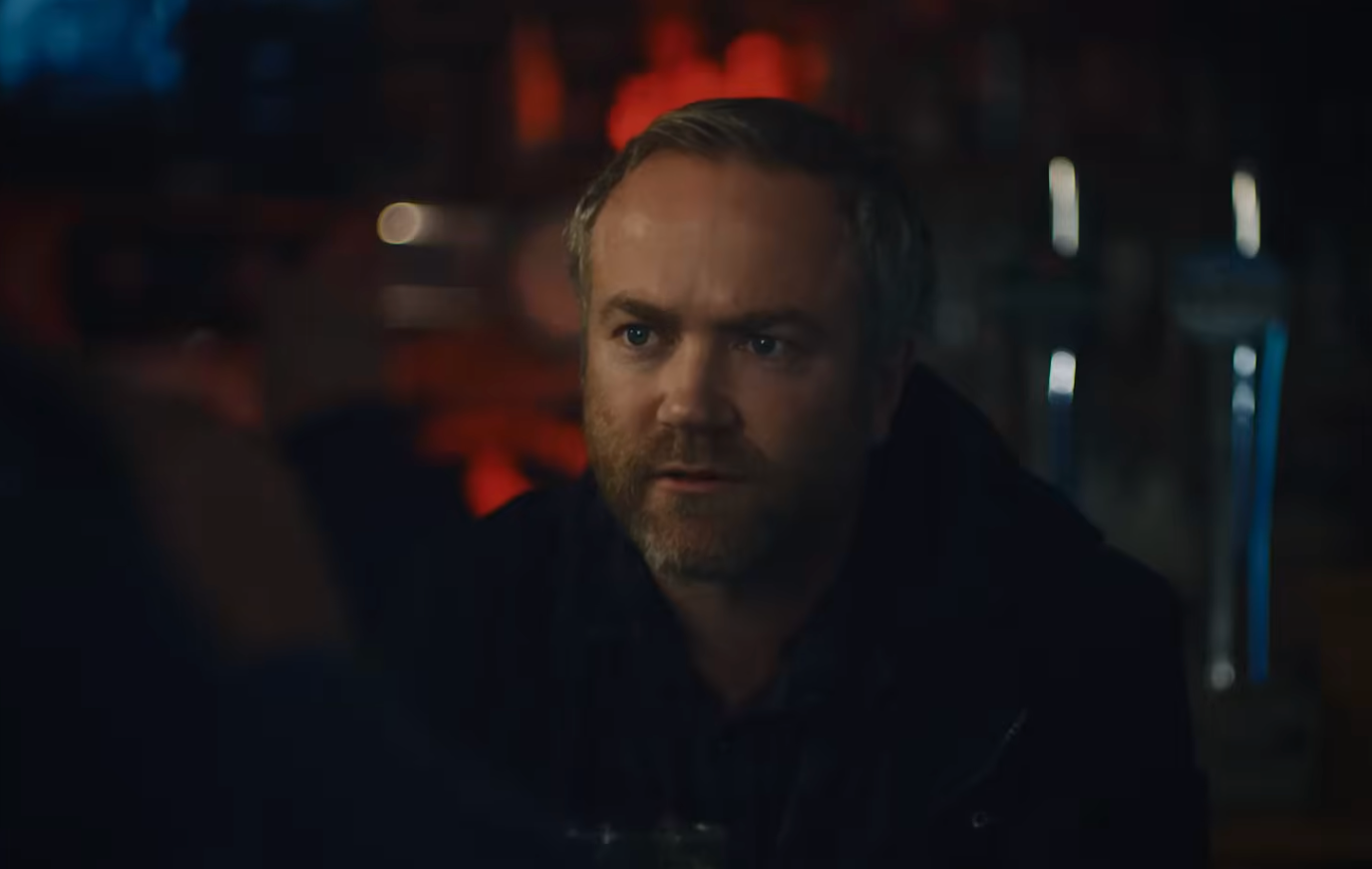
Research and listening were the foundation of everything. I spent time speaking with homeowners, hearing their experiences in detail. Not just the housing issues but the knock-on effects on health, finances, relationships, mental wellbeing. Michael became a composite character built from many voices. His illness storyline came from wanting to mirror the deterioration of the home. The idea that both the body and the house were breaking down simultaneously felt like a strong thematic thread.
There’s a real sensitivity in how the crisis is portrayed. How did you balance telling a truthful story while honouring the lived experiences of those affected?
That balance was always at the front of my mind. I never wanted the film to feel like it was using the crisis for drama. One of the most important production decisions was filming at a real defective block house that was due for demolition. The owners were incredibly supportive of us documenting it before it was gone. Being inside that space added an emotional authenticity that would’ve been difficult to replicate artificially. Their trust came with responsibility. It made us more conscious of the tone. We wanted people affected by the crisis to feel seen, not misrepresented.
The title Galar translates to “illness” or “disease”. Can you talk about the symbolism behind that choice?
The title felt right quite early in development. On the surface it refers to Michael’s illness, which runs quietly but persistently throughout the film. But the more I thought about it, the more layers it held. The house itself is sick. The blocks are defective, the structure is decaying, mould is spreading. It behaves almost like a physical disease. Then there is the wider societal layer. The handling of the crisis, the bureaucracy, the delays. That too can be seen as a kind of systemic illness. So Galar became a word that tied together the personal, the physical, and the political aspects of the story in one simple title.
There’s a quiet tension running throughout the film. How did you approach the film’s visual language and tone?
I wanted the film to feel restrained rather than heightened. Real life tension often sits quietly rather than exploding outward, and that was important to reflect. Visually, we approached the house almost like another presence in the story. We focused on the physical details, the cracks, the mould, the sense that the structure was slowly failing. It was also important to show that the strain was always on Michael’s mind. That became a recurring motif through the tinnitus he experiences. It was a way to audibly portray his illness, but also his stress levels and the toll everything was taking on him, keeping the audience inside his headspace without over explaining it.
The atmosphere and performances are so striking. How did you ensemble the team you had? And what did the casting process look like?
We put out a casting call for a range of roles, and what really stood out was the response from locals across Donegal. That community engagement carried through the whole production, especially in the protest sequence where we had over 200 extras, many of them homeowners affected by the crisis, which added a real authenticity. Having Mark Loughran come on board as Michael made a big difference. He’s a very experienced actor, but beyond that he brought a level of professionalism and respect to the set. He came in prepared, knew the material inside out, and was generous with the people around him. Claire Rafferty was equally vital. She brought a real warmth to Marie, and her dynamic with Mark clicked very quickly. Ashana Cummings was taking on her first screen role as Aoibh, but she had such a natural presence that she fit seamlessly into the family dynamic.
What conversations do you hope Galar sparks, both within Ireland and beyond?
Awareness is the starting point. A lot of people still do not fully understand the scale or severity of the crisis. I hope the film encourages conversations about accountability and how long communities should have to fight for basic security in their own homes. But I also hope it highlights resilience. Despite everything, there is a strong sense of unity among affected families. That community spirit is something I wanted the film to honour as well.
And finally, this is your second short film. I’d love to know: what’s next for you?
Right now the focus is continuing Galar’s festival journey and expanding its reach as much as possible. Beyond that, we’re currently developing Galar as a feature film with Screen Ireland, which is exciting. The short was always conceived as a window into a larger story. There is so much more to explore within that story world and within the crisis itself. Alongside that, I’m continuing to develop new projects and scripts rooted in Irish storytelling, and writing almost every day.
Thank you Niall!
About Niall Duffy
Niall is an award-winning Irish filmmaker from Donegal and founder of Keltik Elk. His films have screened internationally, earning over forty awards. His previous work includes The Rock in the Sea, a medieval drama shot in Donegal. His latest film, Galar, explores Ireland’s defective block housing crisis. Niall’s work is character-driven and grounded, focusing on themes of identity, resilience, and social impact.
