
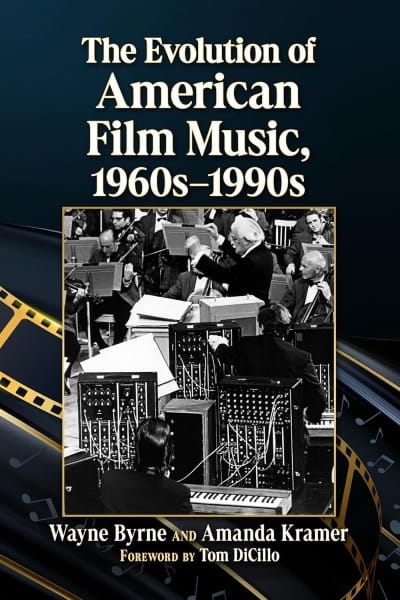
It seems like it doesn’t go a few months without a new literary release by Naas man Wayne Byrne. Within the last eight months he has published two critically acclaimed works, including the autobiography Roy H. Wagner: A Cinematographer’s Life Beyond the Shadows, and the definitive cultural study of the legendary Halloween franchise, You Can’t Kill the Boogeyman. Releasing this month is Wayne’s ninth book, a collaboration with American musician Amanda Kramer (keyboardist of post-punk icons The Psychedelic Furs) which follows their 2024 joint release, Hired Guns: Portraits of Women in Alternative Music. Their latest work is a study of the development of American soundtracks entitled The Evolution of American Film Music, 1960s to 1990s. The three-decade arc of the narrative was a period of great change in cinema and society.
Kramer brings the experience of both a musician who worked with the technology that is documented in the latter half of the book, and as someone who came of age within the timeframe, observing and overhearing the crucial changes in film, music, and culture that occurred across the 60s, 70s, and 80s. Byrne knew this would marry well with his own interest in this revolutionary epoch of Cinema, as Kramer recalls him raising the idea: “Wayne and I had had many conversations about film scores before he approached me with the idea for a book on the topic. I was intrigued and we decided on which period to cover. We felt it was important to document this specific time because there were so many technological advancements that were made during those decades - the change from traditional orchestral scores to the birth of the synthesizer through to the impact of MTV and how it worked alongside the film and music industries. So, we chose the time period from the 1960s to the 1990s for two reasons - I had experienced them in real time, which gave me a more historic perspective of the films, and Wayne had a particular fondness for and familiarity with the films across that period.”
Byrne says, “We were talking one night about this stuff, and a lightbulb went off. I said, “we should be putting this down on paper! Let’s do a book about it!” So, then I set about getting a publishing deal, and I got us one. Then we got to work. But as Amanda is away on tour with The Psychedelic Furs for much of the year it means we only have certain windows of time to get things done; so, once we sign the contract we don’t have time for procrastination. And I like that because I do not like dragging out any project; I hate transcribing interviews and I don’t enjoy when the writing goes on for too long. For me those are intense and psychically draining processes. I much prefer the editorial period, when you have all the raw material on the page and then you can start shaping the narrative, finding the rhythm of the prose, and bringing a bit of literary artistry to the construction of the piece. So, we worked hard in the time that we had, and I’m incredibly proud of the results.”
Byrne and Kramer brought in a variety of people from the film music world and from crucial moments in American Cinema. Amongst many others, some those who lend their voice of experience to the book include those who were on the frontlines of the New Hollywood movement (composer and former Bob Dylan guitarist David Mansfield) and the independent No Wave scene (actor and lead Lounge Lizard, John Lurie), as well as blockbuster composers such as Steve Dorff, a Songwriter Hall of Famer and composer who worked extensively on Burt Reynolds and Clint Eastwood productions, and Mark Isham, who went from working with independent legends such as Robert Altman and Alan Rudolph to scoring muscular epics such as Point Break, Nowhere to Run, and The Getaway. Also providing unique insights are a selection of pop musicians-turned-film composers such as Anton Sanko, who was part of Suzanne Vega’s successful work in the late-80s and would go on to collaborate with auteur filmmakers such as Jonathan Demme and Tom DiCillo; Thomas Dolby, whose quirky new wave synthpop translated well to the subversive cinematic realm of Ken Russell on Gothic and the absurdist comic book world of Howard the Duck; and Devo man Mark Mothersbaugh, who moved from modest B-movies of the 80s to indie great of the 90s and studio superhero hits of recent times.
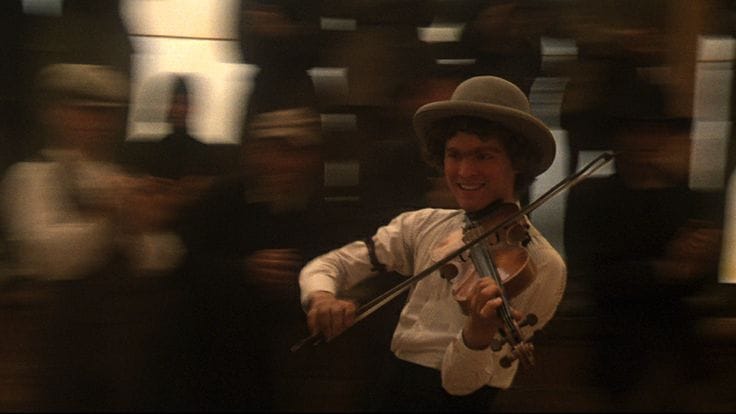
“The interviews with people like Mark Isham and Mark Mothersbaugh were fascinating,” Kramer affirms, “as they described their beginnings in the industry and the many technological changes that have happened since.” Byrne agrees: “We brought in people who were important because they were there at crucial moments within our narrative timeframe. David Mansfield, for example, was literally there as the New Hollywood imploded as he was both an actor in and composer for Heaven’s Gate, which was a masterful film but its production was under siege of unchecked ego and auteur privilege run rampant. Its excesses brought the film industry to its knees. So, if you are going to be documenting the demise of this great American New Wave from a musical perspective, then you’ve got to have David Mansfield in there. He had a front row seat to the downfall of the movement in working closely with Michael Cimino on that film.”
Aside from composers, the authors also spoke to some important people from the executive side, including Dorren Ringer-Ross (“The Godmother of Film Music”, as she is known in the industry) and Tarquin Gotch, the latter being particularly important and influential in the success of the needle-drop compilation soundtrack throughout the 1980s.
“Music supervisors played a huge role in the sound of cinema in the 1980s. Tarquin Gotch was perhaps the most high-profile of those, having been John Hughes’s music supervisor and compiled some of those iconic soundtrack albums. He came from the music business as an A&R man, tour manager, and artist manager who worked with The Beat, Thompson Twins, Lloyd Cole and the Commotions, Simple Minds, and others before he ended up in Hollywood working with Hughes. Tarquin became so important to the success of Hughes’s films that the director made him a producer as they went into the 90s, and his first film that he produced was Home Alone. Not a bad start! So, for me it’s just as fascinating to hear how those people shaped what we heard in the 80s as much as how the composers did. A good portion of audiences will remember the song-based soundtracks probably as much as they remember any individual composer or original score.”
While Byrne and Kramer have objectively documented myriad film composers and a vast array of scores within the book, which composers and compositions arouse their own personal sensibilities the most?
“Mark Isham is my favourite living composer,” Kramer enthuses, “I was also a huge fan of Angelo Badalamenti’s work with David Lynch. Ennio Morricone of course is another favourite.” Meanwhile, Byrne admits to preferring electronic scores over traditional classical orchestrations: “I can appreciate a classical score if it is extraordinarily unique, or if it is particularly evocative. I find a lot of classical scores quite bland, like aural wallpaper. But I love when classical composers do something original and think outside the box, such as Anton Karas’s score for Carol Reed’s The Third Man from 1949, which has these fabulous Viennese waltzes and zither pieces. And Bernard Herrmann’s music for Orson Welles’s Citizen Kane and Alfred Hitchcock’s Psycho. I get chills now just thinking about Herrmann’s ominous use of dark, low woodwinds as Welles introduces us to Charles Foster Kane’s vast and empty Xanadu estate, this mythical playground of the rich, where great power went to die. And with Psycho, what I love is not the high-pitched string shrieks of the famous shower scene, but the more subtle ostinato piece that Herrmann introduces for Janet Leigh’s internal moral conflict, as when she is stealing the money and setting out on the road that will inadvertently lead her to Bates Motel. It’s a slow, intense, and quite melancholic viola line in a minor key, and as it is an ostinato Hitchcock can incorporate it for rhythm and atmosphere at any given moment for suspense and then just as quick drop it out; it’s not a melody line, so there’s no need for resolution. Also, Max Steiner’s rousing score for John Ford’s The Searchers never fails to move me immensely. But outside of film I don’t have a relationship with classical music. It always felt like the music of another world or culture that I wasn’t privy to. Perhaps because I grew up in the 1980s, I’ve always been drawn to electronic music. One of my earliest memories of admiring a composer was Angelo Badalamenti. When I was very young, I was introduced to his work in the A Nightmare on Elm Street franchise, and then soon after that I saw Twin Peaks on TV and I became instantly hypnotised by his unique mix of ambient synthesizer tones and nimble acoustic jazz, which he combined to this surreal dreamlike effect. I’m also a huge fan of John Carpenter’s music; his synthesizer compositions are stark and minimalist, but so memorable and effective. He is that rare beast of being the composer of the films that he directs. I particularly love They Live and Prince of Darkness, but my favourite is the music for the 1993 anthology horror movie Body Bags, which Carpenter composed in collaboration with musician Jim Lang.”
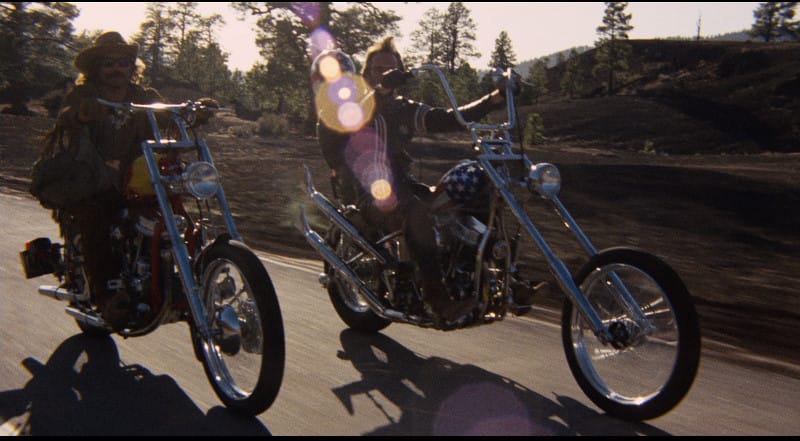
With their previous book Hired Guns acquiring acclaim and prestige for its rare and honest examination of women in music, it seems that the pair are drawing due attention to lesser celebrated areas of culture. So, what do they hope to achieve with The Evolution of American Film Music? Kramer is looking ahead and seeing it as an historical document of a period of art and technology that underwent a seismic shift: “I hope this book succeeds in informing future generations about the changes that took place during this relatively short time span and learn about how they transformed and broadened the role of the composer.” For Byrne, it’s about finding greater meaning in film music: “I would be happy if it inspires readers to hear more in the music, to understand the thematic and subtextual depth that a composer brings to a film. Also important for me is for people to understand how important industrial and cultural factors played a part in ushering in such innovative artistic changes. We wouldn’t have had the blaxploitation genre and its great music without the progressive political moments that went on at the time; nor would we have had the New Hollywood era and the iconic musical moments of Easy Rider, The Graduate, Harold and Maude, Midnight Cowboy, Head, etc, without the countercultural movement in American society. Those shifts in society ushered in a significant change in how the film industry did business and how much freedom it afforded filmmakers. And I’m always fascinated by what external and internal factors motivate artists.”
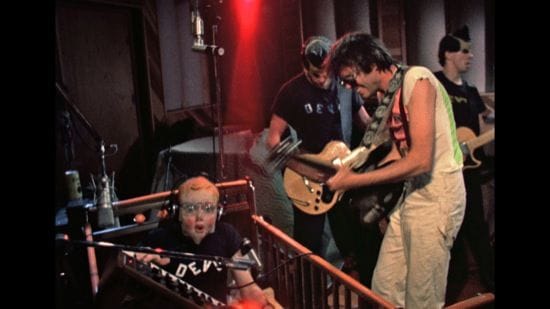
Just as the book is hitting the shelves, Kramer is getting ready to return to life on the road with The Psychedelic Furs for an extensive concert tour across the United States. As she travels the country entertaining thousands of music fans, Byrne will be getting back to the business of books in his customarily hectic style. Over the past decade he has made it standard form to juggle several books in various stages of progress and production. His packed upcoming slate includes a sociological analysis on Class and Culture in American Cinema; a career overview of legendary filmmaker George A. Romero; and a third collaboration with Kramer, their follow-up to Hired Guns focusing on notable male touring musicians. Apparently not happy enough with all that, Byrne even suggests a Woody Allen book could be in the works. “It is a lot! But it helps when you write about art that you love. That’s the fuel. If I don’t love it, I can’t do it. By the end of 2026 I will have written twelve books in ten years without any respite, so when I finish those three, and perhaps the Woody Allen one, it will be time for a good, long break.”
We’ll believe that when we see it, Mr. Byrne!
The Evolution of American Film Music, 1960s – 1990s will be published by McFarland and released on 26th April 2026.


