
Blending the visual language of photography with the immediacy of documentary filmmaking, filmmaker Niamh Barry captures the beauty and unpredictability of the natural world in her latest short, tracing the life of a woman drawn to its extremes. Sitting down with Will Penn, she discusses how Something in the Air is evolving from short film into feature, reflecting on the creative challenges of working across mediums, the realities of independent filmmaking, and the possibilities of allowing a story to unfold on its own terms.
You've won awards at Manchester Film Festival, Docs Ireland, and GAZE. What has that recognition meant to you?
Niamh: Manchester was my first film festival ever. Winning the category was a little cherry on top. It boosted my confidence because I was like, “Whoa, this is really special. It's been well received.” We started on a high, but I've still had rejections from places I thought would be interested. Sometimes it's the most unexpected places where it's done well. It's also boosted the team's confidence, because a lot of the same people are still working on it. It was a risk for them too: we didn't know how it would go, or whether a narrative would be there.
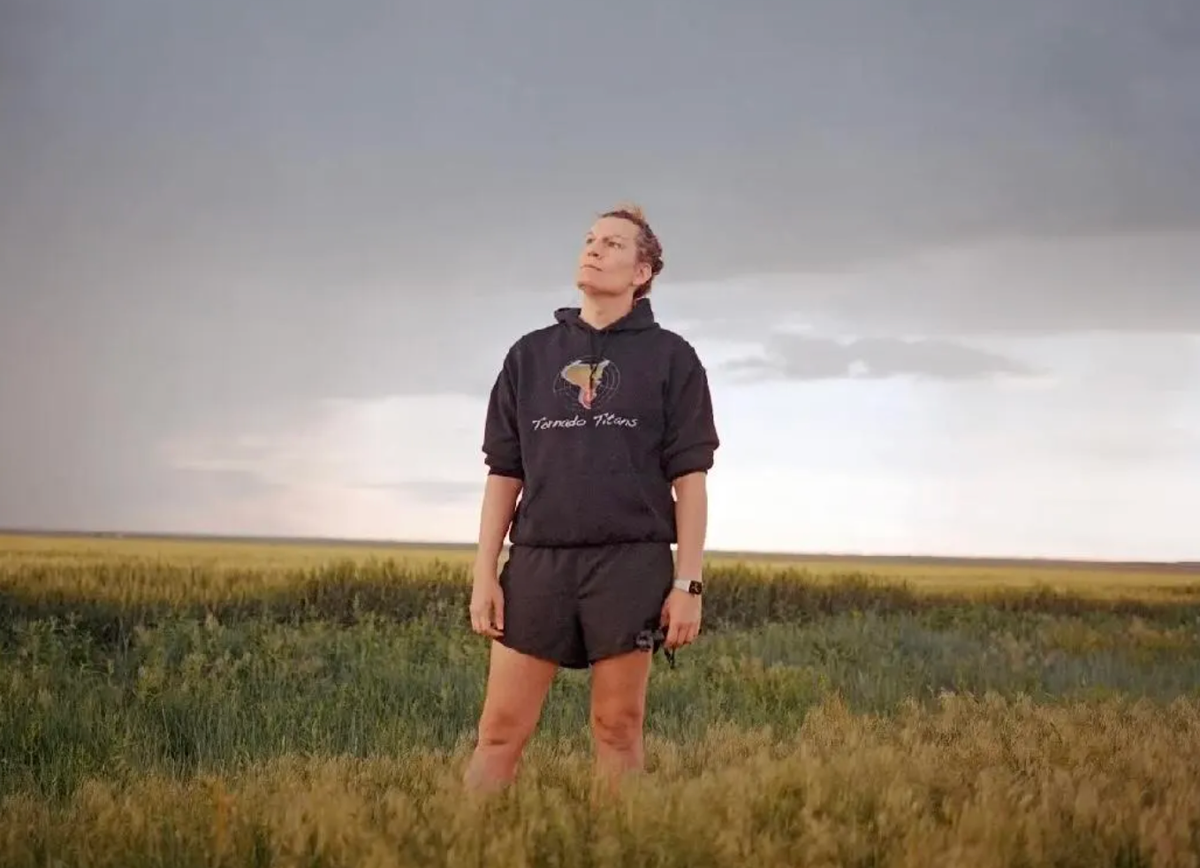
When I was doing some background research, I saw that your piece is being shown in the National Portrait Gallery.
Niamh: Yeah, in London. It used to be called the Taylor Wessing Prize, and now it's called the Winston Taylor Prize. I've submitted to that open call for three years. I remember first submitting and not getting it. Then I was shortlisted and almost got into it two years ago, but ultimately didn't. With this one, I thought, “I think they'll like this,” because they love portraits and environmental portraits. I thought it was perfect. It got shortlisted into the selection, and then I had to ship it all the way over to London. I was waiting for the news, and I think we were with Raychel in May this year, doing the feature, when I found out. I was like, “Oh my God, we got into the National Portrait Gallery in London!”
The documentary is doing really well, but photography is hard in terms of getting your photos out there. So it was such a nice recognition. Out of all the photos I've taken, that's my favourite to date. I'm glad the photo that got in was Raychel. I love that photo so much.
What's the difference between photography and film as media, and where can you take both?
Niamh: For the main interview, yeah. I was like, “I have to take a photo. I really have to take it.” I think I took the photo before the interview. I remember lighting it with one big continuous light for the photos, and thinking that would be perfect for video. Then, looking back over the interview, I thought, “There's such a massive shadow on her face!” If I could go back and relight the video, I would. I was looking at the screen, but it was in RAW. For photos, you expose for the shadows, whereas I was doing the opposite for video. That's one thing I regret. There is a difference between lighting a photo and lighting an interview. But I've watched it so many times that maybe that's why I notice it. Some people have randomly told me, “I really like how you lit the interview,” and I'm like, “I hate that!”
You were lighting it like a photographer.
Niamh: Yeah, I was. I wanted a shadow here, but because it's film, you can’t so easily adjust for shadows. As soon as you put a colour grade onto your whole film, all of a sudden all the shadows are lifted in the video. Then I was like, “Look, it's not going to be perfect. Nothing is.” That was definitely a difference between those things. Also, every time we're storm chasing, I have about five cameras on my lap, and it's about picking the right one.
How did audiences in Oklahoma respond to seeing somewhere familiar through your eyes?
Niamh: Being at deadCenter was one of the best experiences I've had as a filmmaker. People from Oklahoma were saying, “The way you portrayed it was so beautiful. I look at that every day and don't see the beauty in it as much as someone who's just come here.” It was my first time in those areas, and they're so different to Ireland. Hearing people say they liked the visuals was lovely, because that's what powers the narrative and the language of the whole thing.
You're working in photography and film simultaneously. How do you decide which medium a moment needs?
Niamh: Every time we're storm chasing, I have about five cameras on my lap. It's about picking the right one. I love analogue photography: the grain, the texture, the way it brings out people and the natural world. But I have an intuitive switch that's like, “Okay, this is video.” We wanted to show Raychel's morning routine, putting on a cup of coffee. If you take a video and record the sound, it's a moving image. Then there's a spectacular sunset, and I have to do both. I need a photo and a video. There's a difference between lighting a photo and lighting an interview, too. I lit the portrait with one big continuous light and thought that would be perfect for video. Looking back, I'd relight the interview if I could. But I've watched it so many times that maybe that's why I notice it. People have told me they like the lighting. It's not going to be perfect. Nothing is.
I remember we wanted to show Raychel's routine when she wakes up and puts on a cup of coffee. Why would I take a photo of that? It's a boring photo. You could take a cool photo, but if you take a video and record the sound, it's a moving image. Then sometimes there's a spectacular sunset, and I have to do both. I need to take a photo and a video. That's when I use my tripod, but then you have the wind that could knock it over. There are so many moving elements, and it is stressful. When I went there in May, I was super sick before I went. By the time I got there, I was cleared to travel, but my body wasn't okay for about a week and a half or two weeks. It was hard to lock in. I was almost disappointed in myself, but I couldn't control it. I'd wake up and feel like I needed to go back to sleep because I was so ill.
This is the minutiae of making films: the actual stuff that comes out in the wash of the final product. When you watch it, you don't have any sense of what's going on behind the scenes.
Niamh: For me, having a chronic illness now, it's about how I manage that and shoot and do all of this. People don't know about that, and funders don't really consider it. Some do. The Arts Council are good for including disability allowances in funding, which is amazing. A lot of funds don't even mention that.
Mental health care on set is important too, especially in documentary. It's something I'm learning about: how can we take care of the welfare of Raychel and the crew? It can be heavy, or physically a lot. When your budget is so small, you don't have the capacity to take a day off, because you can't afford to. That's why getting or not getting funding takes a toll on everyone. This would be easier if we could have a day off, or if we had more time to shoot an interview. If we had three days rather than a day and a half, we could all take it easier.
Do you know the narrative while you're shooting, or does it emerge in the edit?
Niamh: Sometimes I know where a scene or sequence might end up, but the focus can change. Something I didn't think about while filming might become more important. That's when it's nice to work with other people. When you're so close to something, it's hard to get out of that mindset. Even if you've shot it as a fly on the wall, you're so in it, and you remember everything. Having some distance from the rushes can be good.
How will you go about expanding the short into a feature?
Niamh: It'll be more observational, rather than talking-head interviews. I want to be very much an outsider, just there. It's about letting the camera roll and seeing what happens. Sometimes it's 20 minutes of people sitting down and eating, but you have to show those things. I might say, “You were talking about preparing the car for storm chasing. Can you talk about it again?” That's the direction I'd give: suggesting the topic and then letting them go. The feature is also expanding in terms of roles, so I can focus more on directing and cinematography. You can't do everything. Having someone else take on production management gives you more space while you're trying to get it done.
Could the photography give the project a life beyond the screen?
Niamh: I could coordinate with festivals and use the photography to expand the world and make it multimedia. You can include things in the photography and writing that didn't make the final cut. It makes killing your darlings a little easier when you're editing.
 Film Ireland Editor