

Khushi Jain reviews GAZE 2026’s New Irish Shorts – a vibrant showcase of brilliant, boundary-pushing filmmaking, queer stories, and a wealth of emerging Irish talent.
New Irish shorts programmes at any and every festival are always a delight. This is likely because the theatres are buzzing with the excitement of the crew, filmmakers, and their loved ones. No other shorts screening at GAZE 2026 can compare to the electricity, which took place in Cinema 1 at the IFI on Friday, 31st July 2026. Seven films, including three documentaries and one animation, were screened to a full house of family, friends, and familiars. Creatives from each project were in attendance and took part in an enthusiastic Q&A moderated by GAZE programmer James Hudson.
The wealth of young Irish talent on display is inspiring. These films reveal themselves to be bold, unafraid to examine the darker sides of characters, yet powerfully telling stories in ways that are wholly innovative. In this programme, the narrative patterns are traditional, but each with a twist, from finding community as a blue giant, to an unorthodox coming-out story, to a parent who cannot understand her queer child. There is an unconscious leitmotif of domestic spaces, and looks at the role played by their specific constructions, dynamics, aesthetics, and politics in relationships.
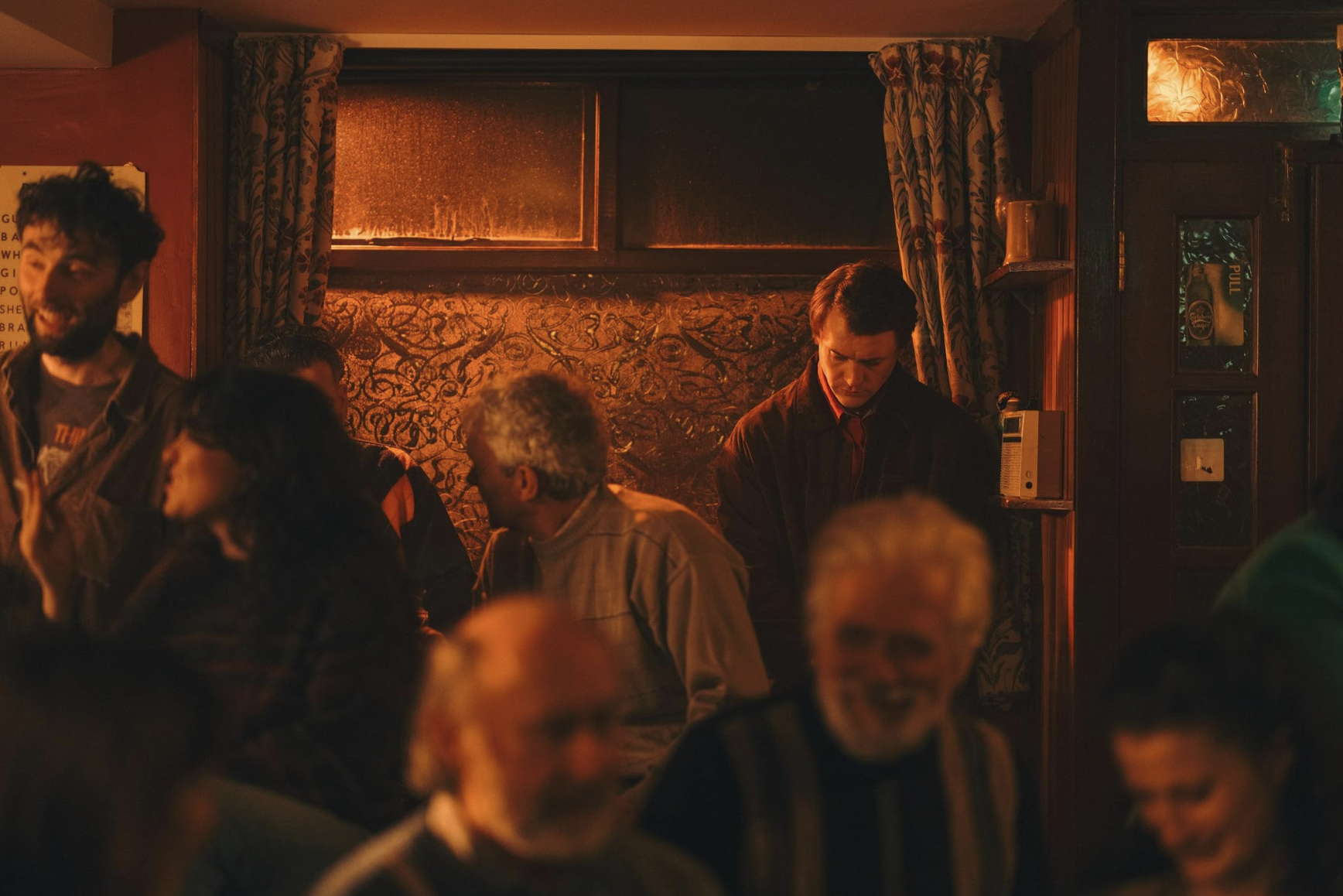
A Song
Dir. Ellius Grace
Somewhere in the 17th-century Irish song Eileanóir na Rún, Cearbhall Óg Ó Dálaigh says something along the lines of ‘as long as I live, I will love you’. This song and this particular phrase are the essence of Ellius Grace’s Screen Ireland Focus short A Song. The film looks at the age-old trinity of the son, the mother, and the lover; the one who leaves and the one who is left behind. The dramatic action unfolds against a backdrop of trad music. Noel (Darragh Shannon) seems to be silently singing ‘as long as I live, I will love you’ throughout, a lament to his mother (Maria Doyle Kennedy), who leaves when he is a child.
These days, her absence is a stark presence in his life and the only figure corporeally present is his lover, James (Desmond Eastwood). James begins to heal the emotional wounds left by Noel’s mother, but her return threatens to reopen them. Although estranged, Noel and his unnamed mother are intrinsically tethered by more than a maternal bond; she is a professional singer, while he is a music teacher. The pair are sewn together in song, andEileanóir na Rún is the song in question. Writer Shaun Dunne gives the film its own individual character, separate from, but honouring, its source material, Colm Tóibín’s short story Song from the 2006 collection Mothers and Sons, by expanding and deepening Noel’s network of relationships. Alongside Dunne, an award-winning filmmaker and theatre maker himself, acclaimed cinematographer Narayan van Maele imbues A Song with dreamlike imagery washed in warm yellows and reds.
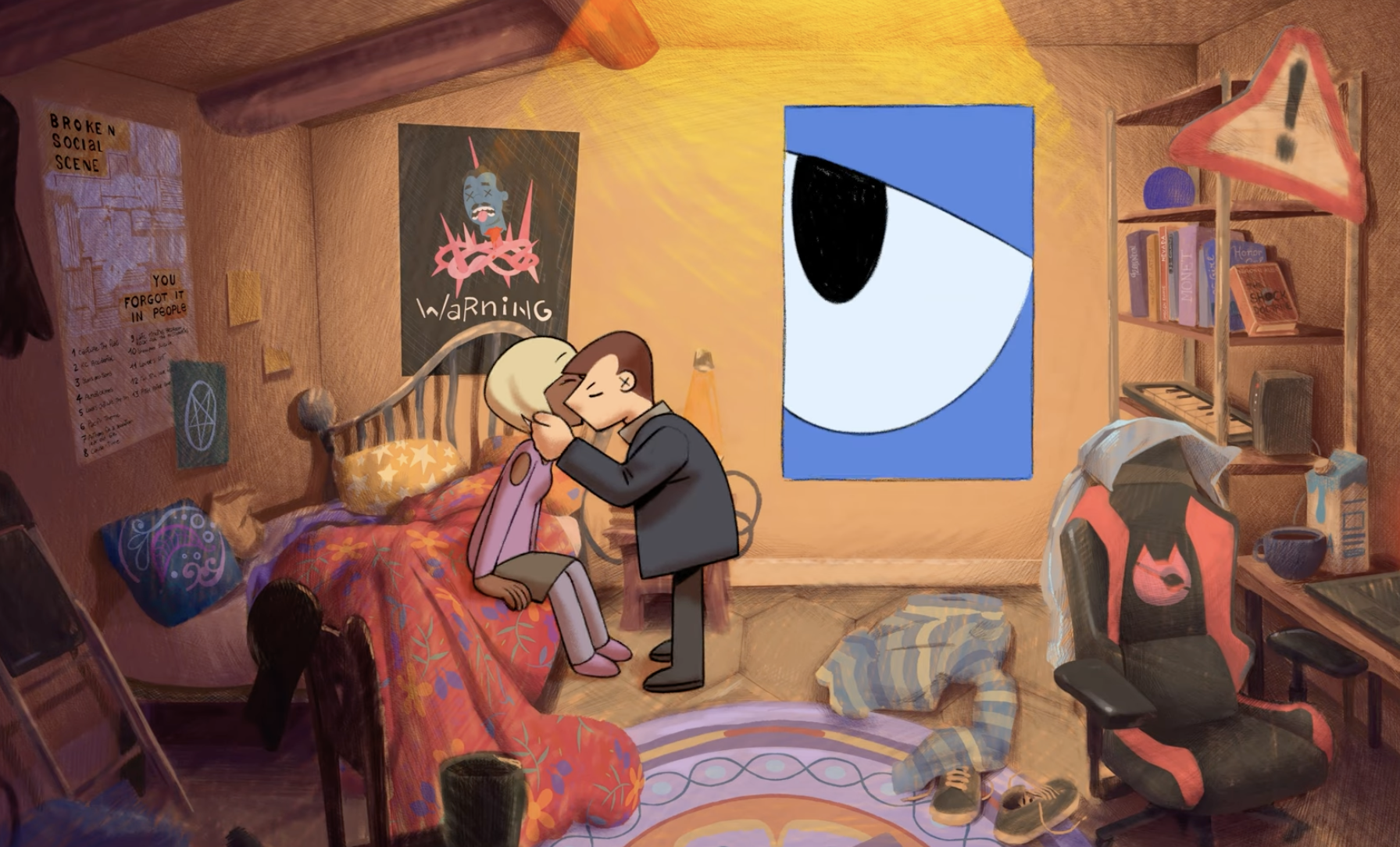
placeholder
Dir. Elisa Beli Borrelli
While it is a shame to see only one animation among the queer new Irish shorts, Borrelli’s seven-minute creation is such a treat that I completely forget about the other films, animated or not, this one is my favourite of the bunch. After a successful run at festivals like Animation Dingle, DAMnation, and Kaboom, placeholder comes to GAZE with the story of Tomas, a young transmasc, or a sad blue giant, for that’s what he feels he is. From an unspecified country, Tomas comes to Dublin, because ‘anywhere but home would be okay’. But Tomas finds that Ireland has its own prejudices, pushing the sad blue giant further into his shell.
Borrelli places their protagonist on a complicated intersection of identities: the sad blue giant is a trans immigrant. Let’s also add lonely and scared to this. He then meets Grainne, a fellow being in many senses, and learns that he has as much right to the stars of the night sky as anyone else. But he has to fight for it. Borrelli are trans and immigrant themselves, and notes that every person who works on placeholder is also trans. Their animation style is a wonderful balance of the playful and the poetic. placeholder is especially adept at using negative space in a way that challenges key notions of cinema. A moment that leaves a distinct imprint is a cigarette on a black screen, slowly fizzling out, its burnt end emitting sparkles. For all the heavy subjects tackled, ultimately placeholder is a little victory, a fine piece of animation and, notably quite funny. It’s available to watch here.
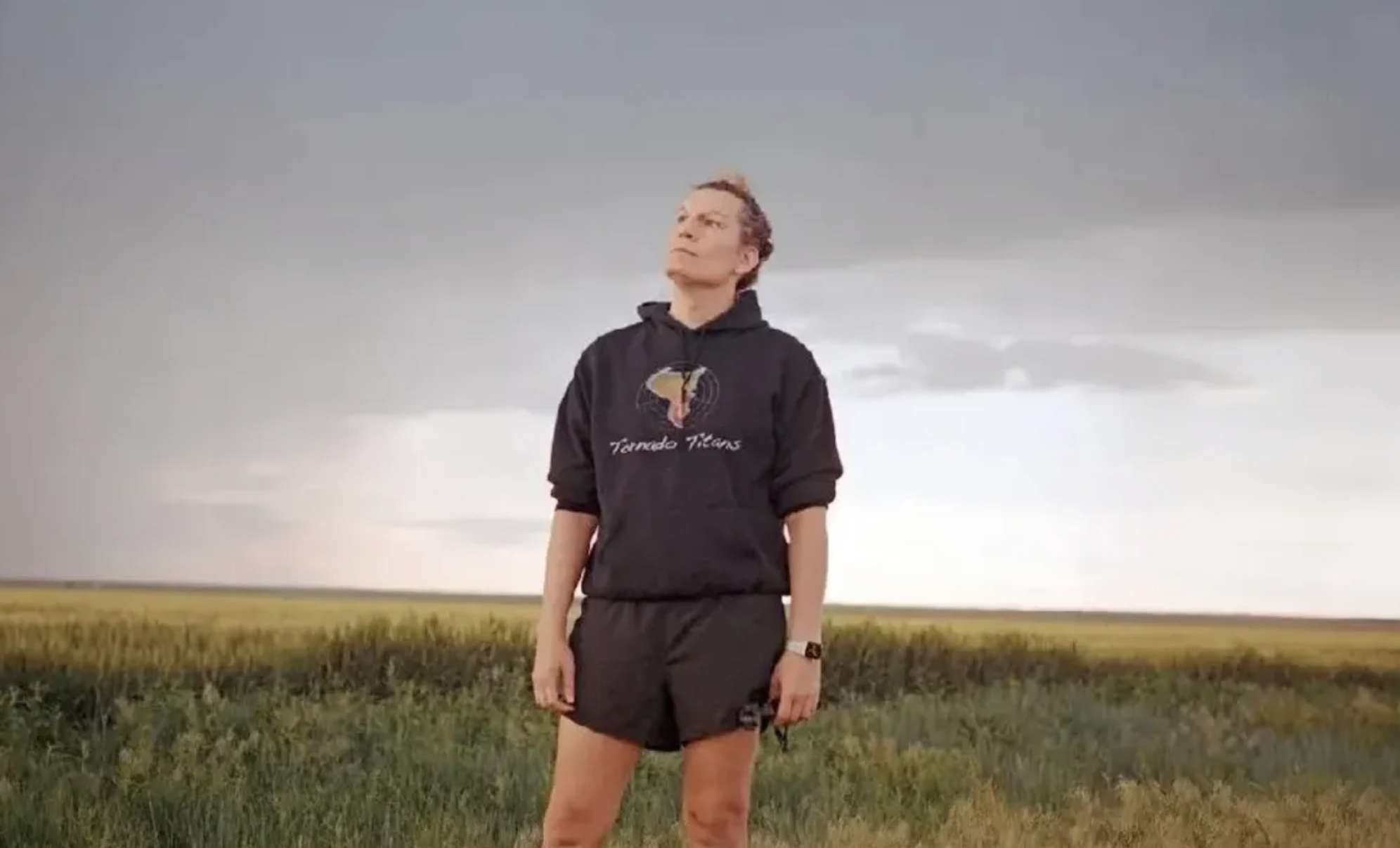
Something in the Air
Dir. Niamh Barry
There isn’t much that I can say that hasn’t already been put forward by fellow Film Ireland critic Will Penn in his review of Niamh Barry’s Something in the Air (backed by the Arts Council and Photo Ireland Museum). This short doc accompanies Raychel Sanner as she pursues tempests and continues building a community with her followers on her online platform, 'Tornado Titans'. Based in Oklahoma, USA, Sanner is a professional storm chaser and environmental advocate who lives by the mantra ‘but the weather is for everyone’.
Barry, who also shoots the film, makes space for her subject to fill the screen and tell her story, both visually and aurally. Shots of roads leading into the horizon and skies overwhelmingly enormous are overlaid on narrative tracks of Sanner’s voice. Barry’s camera work is appreciated by many, including the jury at GAZE, who gave her this year’s Craft Award. However, equally as deserving of praise is the film’s editor, Annie Walsh. Walsh has worked on Don’t Forget to Remember (2024), For the Love of Women (2025), Caged Rabbits (2026), and The Race (2026).
Something in the Air owes much to her for her skilful juggling of contrasting settings – the open road, the closed home, the liminal car – which she scrapbooks together to bring Sanner’s voiceover to life. The rhythm that Walsh imbues the film with is that of the calm before the storm, then tense and nervous, absorbing and exciting.
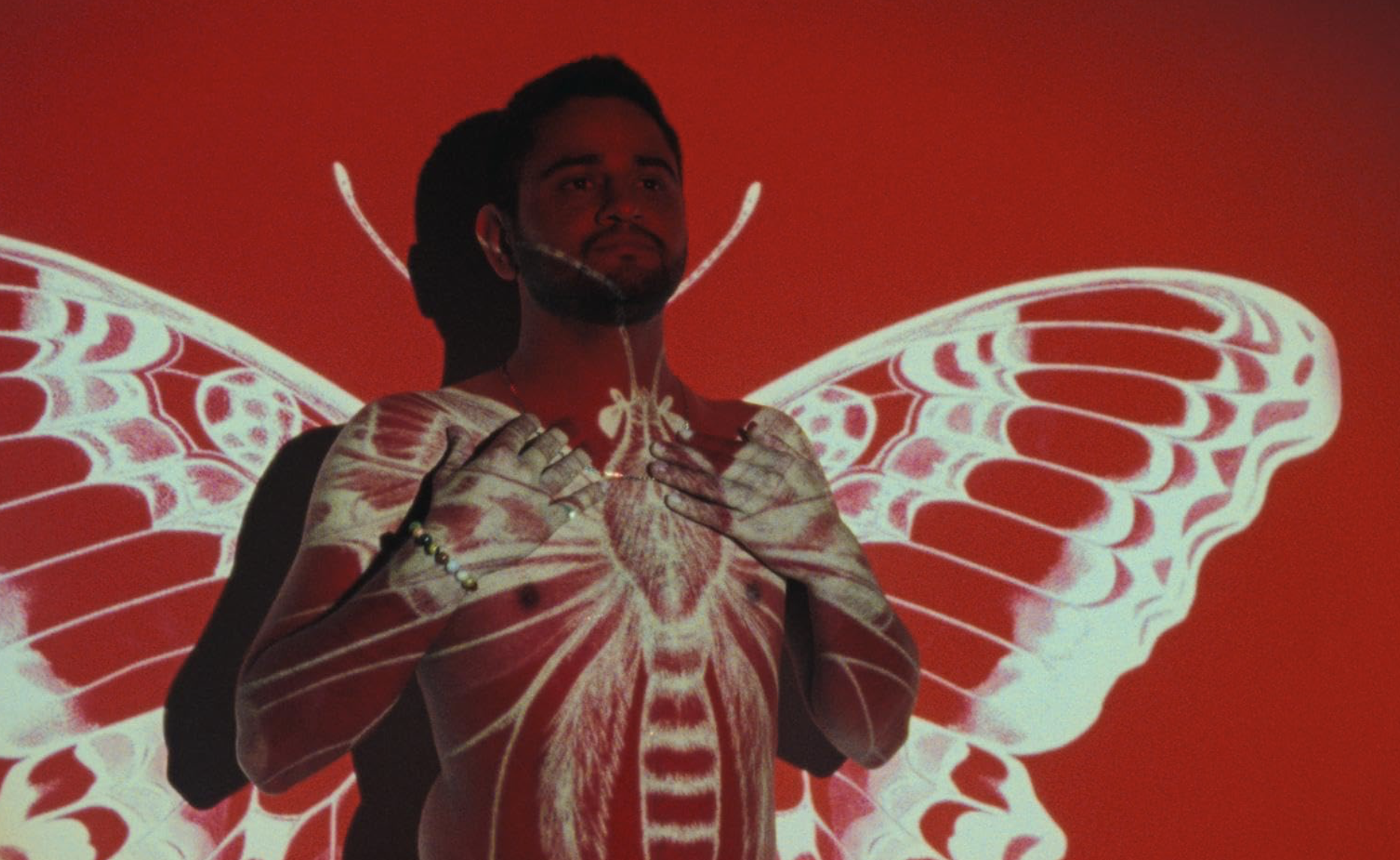
Out of Shadows
Dir. Pradeep Mahadeshwar
When Mahadeshwar goes looking for funding for his project, he is told that his film doesn’t look Irish enough. Out of Shadows thus comes from a place of anger. It is a sumptuous and stylishly composed piece of storytelling that gives centre stage to three queer men living with HIV, who call this country home. Jordi Moya Roset from Barcelona, Luis Noguera Benitez from Venezuela, and Prateek Bhardwaj from northern India are the very real stars of this film. Immense credit goes to the film’s make-up artists, Aisling Doyle and Grace McClair, and colourist Dave Hughes for turning bodies that are so often marginalised into works of emphatic art. Credit also goes to Veda Lady’s wardrobe for Benitez’s costume.
Poetic imagery, of course, is very much a part of Mahadeshwar’s filmmaking, but it is never far from the political. In Out of Shadows, it is the politics that pours forth the poetry amidst the mountains of Wicklow and in the city of Dublin, all on 16mm. The experimental short doc raises important awareness about HIV, the queer migrant experience, and systems that have failed those who live here but don’t look Irish enough. It goes on to play at festivals in Canada, India, and the UK, and is the jury’s pick for honourable mention at GAZE.
His House, Home
Dir. Aisling O’Regan Sargent
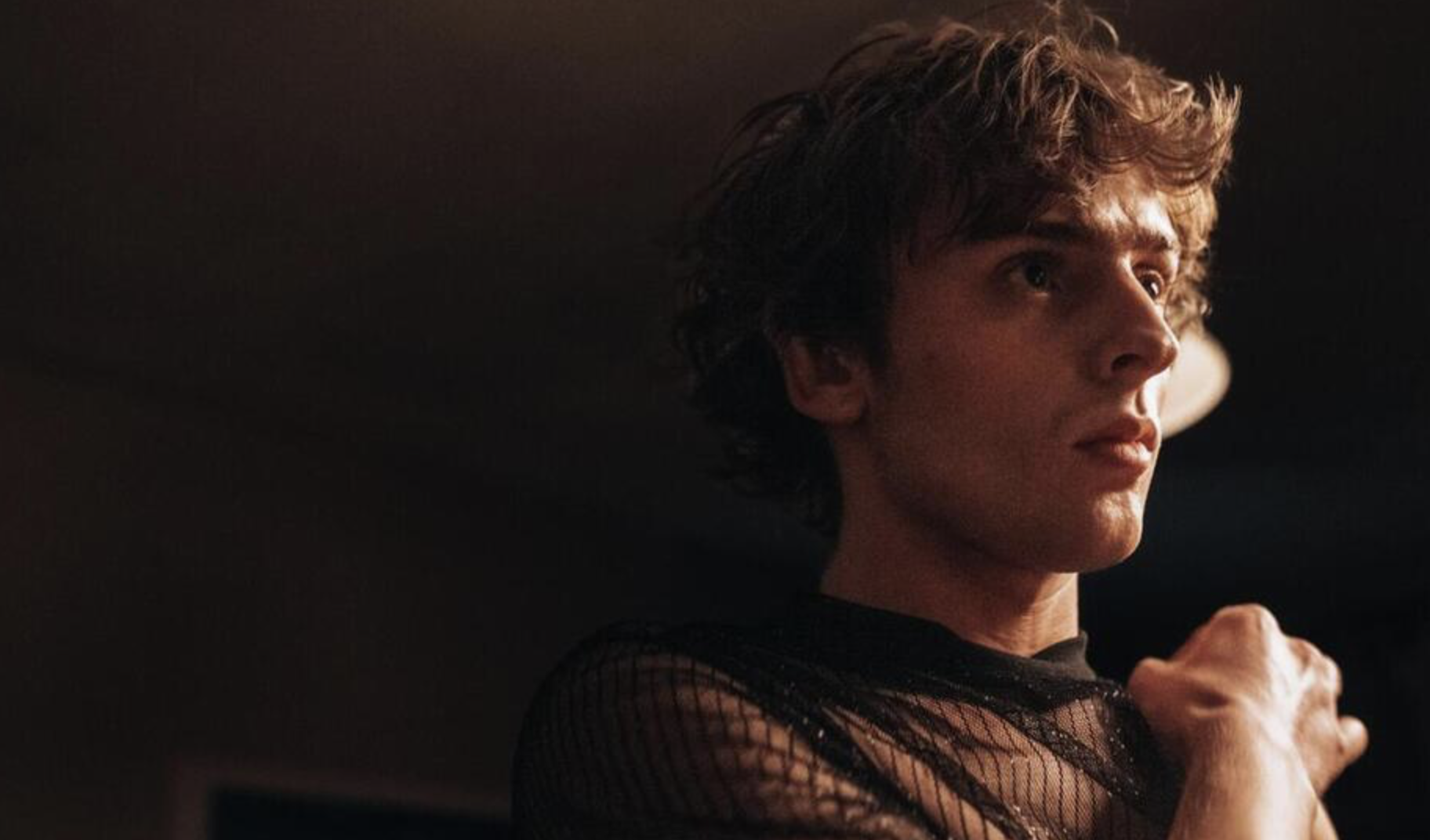
Sargent’s Screen Ireland-supported His House, Home is the much younger and darker cousin of Darren Thornton’s Four Mothers (2024), only, there are no mothers in it. Instead, there is a single dad with MS, his young gay (but in-brackets) teenage son, and a new queer caregiver. Luke (Oskar Smith) spends his days looking after his father, Malcolm (David Layde), and working in the shops. When a new carer, Hermes (played by Rodrigo Ternevoy), arrives in a black leather jacket, riding pillion on his boyfriend’s motorbike, Malcolm says, ‘I don’t think I want to be dressed up by a queer’. At the screening, the whole theatre, including myself, audibly gasps at this line. But the real surprising parts of Philip Emo’s script are not in its dialogues; they are in its quietness. The quietness is surprising because it carries the potency of being both suffocating and comforting. Luke silences his sexuality in fear of his father, whom cinematographer Fionnuala McCormack shows through half-open doors, gradually and wordlessly letting Hermes take care of him. Hermes, by the way, responds to the quiet by softly humming.
Towards the end, in a memorably incredible performance by Smith, Luke tries to come out, to fill that infected silence between him and his father, but all that he is able to do is cry. Malcolm reads the sentences in his sobs and holds him, understanding the words that were never said. In all of this, Hermes is the rock that anchors both father and son, in his affection without preconception and a solid sense of self. It is thoroughly refreshing to see a brown character holding it together so gracefully amidst messy white folk. Sargent composes a technically excellent, non-traditional coming-out story in His House, Home, a film that finds its own home on screens across festivals, including Tribeca, Santa Barbara, and DIFF.
Queen Lizzy
Dir. David McDonagh
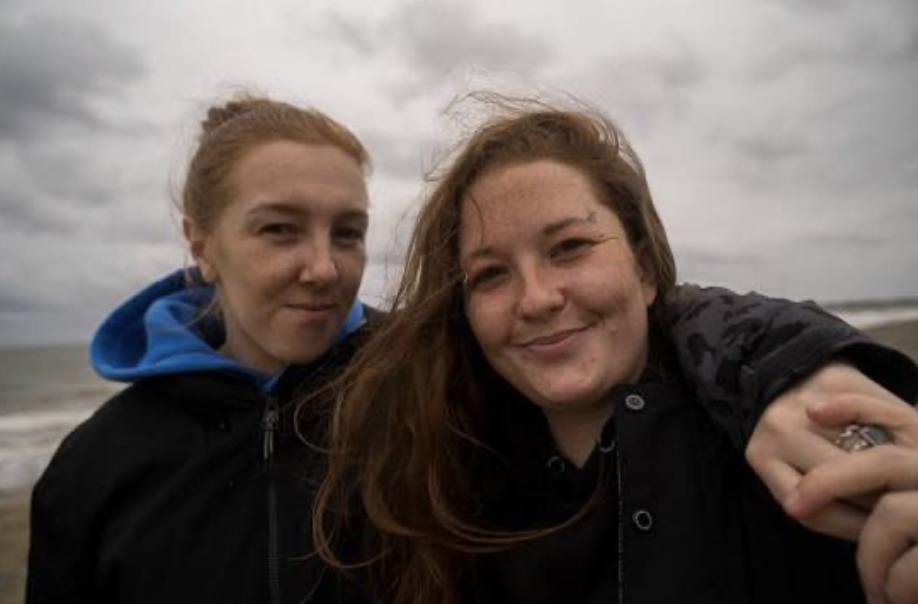
The third documentary in this programme is also the most raw and honest. A deserving winner of Best Irish Short at GAZE, David McDonagh’s film is everything and then some more. The film is Queen Lizzy, and Queen Lizzy is the film. Elizabeth Connors is a queer Traveller woman, but only sometimes. Mostly, she is a rapper and spoken-word artist very much in love with her fiancé. Queen Lizzy is funny, dauntless, and charismatic. In bright yellow subtitles and single takes, she converses with the camera and performs on stage. The film is edited by McDonagh like a dialogue in a narrative, going back and forth. These conversations are not always fun; instead of avoiding the negative, the film confronts it head-on.
In an interview with Lizzy’s family, for instance, someone close to her says that being gay is much like autism, it is ‘a mental illness without a treatment’, to which Lizzy responds: ‘you shouldn’t be interested in what genitalia your child is interested in’. It is this wit and attitude of Lizzy’s that prevents the film from descending into darkness despite its commitment to unfiltered truth. There is terrific chemistry between Lizzy, the subject, and McDonagh, the documentarian, and together they create a riotous and entertaining portrait of a queer female Irish rapper. The film actualises the belief that McDonagh had started with, ‘reality is your biggest ally’, as he says himself.
Marguerite
Dir. Paul Webster
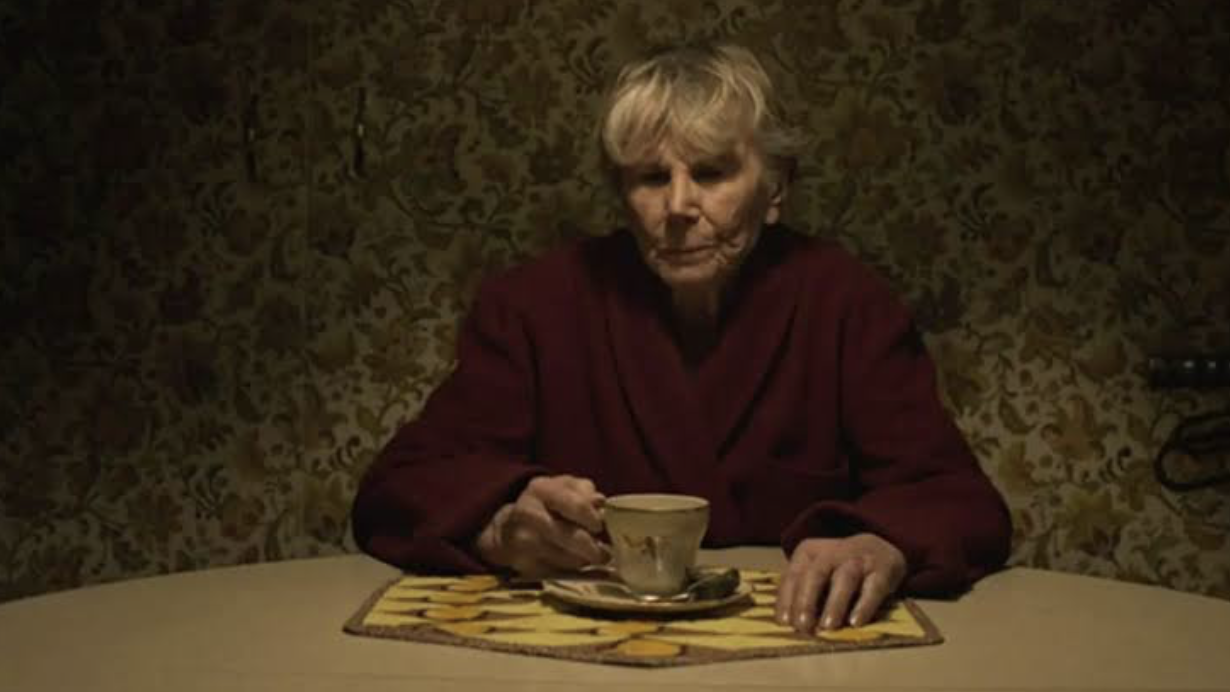
Marguerite is an anti-heroine levelled up to 10. With the support of Screen Directors Guild of Ireland, Paul Webster writes a film with a protagonist who is a fascist, anti-immigrant, right-wing political writer and thinker, worried of the ‘woke-mind virus’. Marguerite (Norma Sheahan) believes that the ‘very powerful sources’, ‘agendas of the elites’, and policies of ‘mass plantation’ are corrupting Ireland, and that the education system is spreading a ‘queer propaganda’. She is preparing to speak on an American podcast when the bell rings and she finds her estranged daughter Tara on the doorstep, with her child and wife. Marguerite is dying to meet her grandchild, but Tara is only there to pick up her birth certificate, as the family is migrating to New Zealand.
At the screening, Webster, who has a baby himself, speaks of ‘the power that these little humans have’, the power that makes Marguerite realise that her politics have pushed her lesbian daughter and Tara’s whole family away. As a result, her grandchild will now be growing up halfway across the world from her. She desperately asks Tara to stay a bit longer, but it’s hard to get onside with Marguerite. Her silence at the end comes not from an awareness of the harm that her beliefs are causing, but a sense of personal loneliness and abandonment.
Production designer Saoirse O’Shea and composer Rafino Miguel Murphy come together to create an appropriate mise-en-scène for her character, cold, clean, and closed-off. The narrative is set entirely in the complex of a house, and Marguerite lives on this tiny fenced speck of land in the big wide world. Her ideas come from and go to the internet, insulated from real people. All in all, Marguerite is a difficult film to watch; it shows you where you stand and why.
New Irish Shorts screened at the Irish Film Institute in Cinema 1 on 31st July 2026 as part of Gaze International LGBTQIA Film Festival.


