
Ireland’s screen industry is making waves internationally, but can our success be sustained without greater investment? Producer Niall Murphy explores the funding challenges facing Irish film and television, the importance of supporting regional productions, and why protecting Irish stories matters.
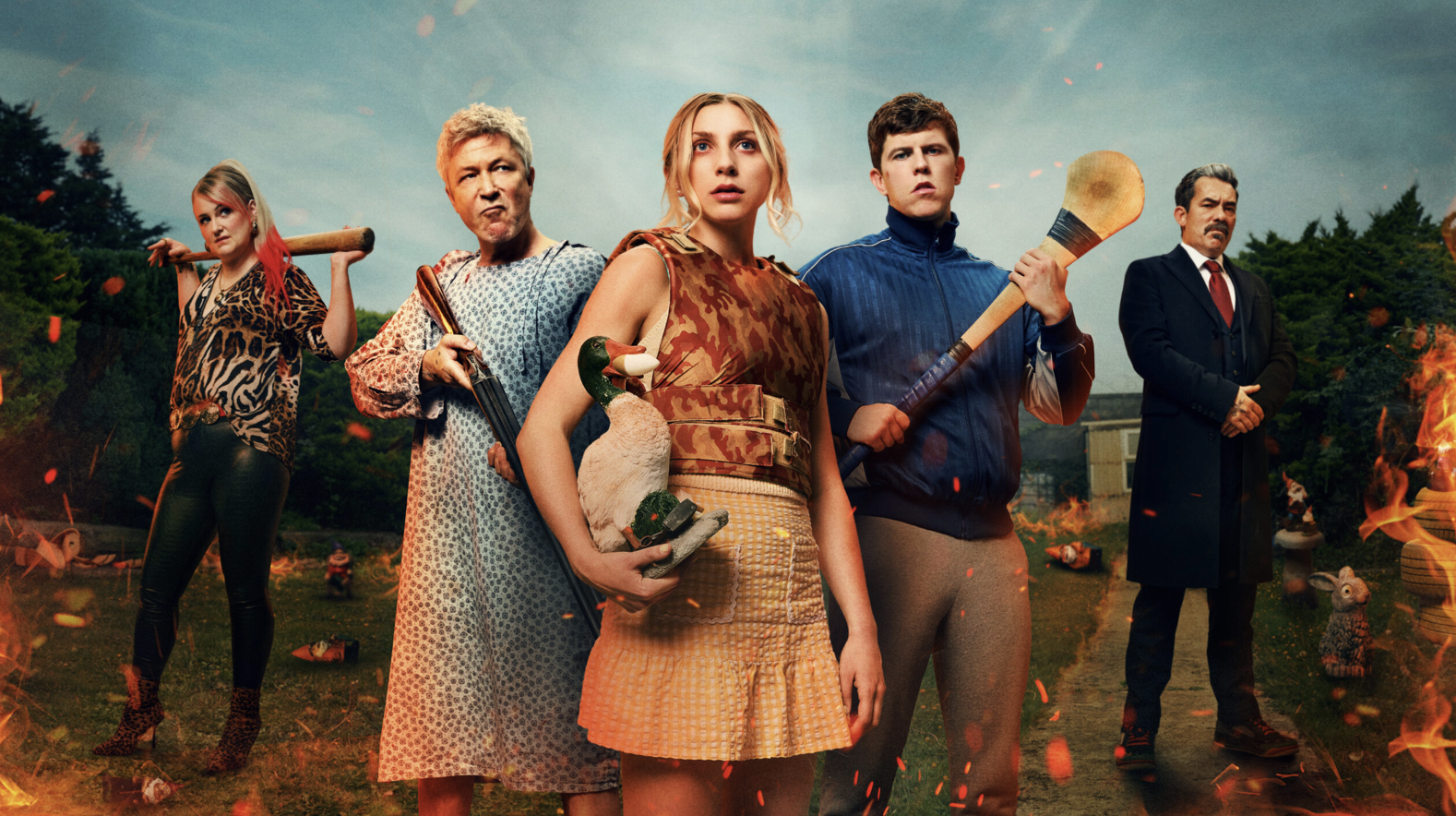
In the last year or so, an Irish animated short, Retirement Plan, was nominated for an Oscar. Jessie Buckley won the Best Actress Oscar for Hamnet. In Berlin, Grant Gee’s Everybody Digs Bill Evans won the Silver Bear for Best Director. Kneecap, a film mostly in Irish, collected six BAFTA nominations. This small country is making cinema that the whole world wants to watch.
The numbers are good, too. A record €544 million* was spent making film and television in Ireland in 2025, up 26% on the year before. Netflix and Prime Video shows fill the studios in Wicklow. Screen Ireland’s chief executive, Désirée Finnegan, welcomed the figure, saying that despite the challenges across the international industry, “Ireland has experienced continued growth.” (Screen Daily, 29th January 2026)
But how much of that success is reflected in the funding the State gives Irish filmmakers?
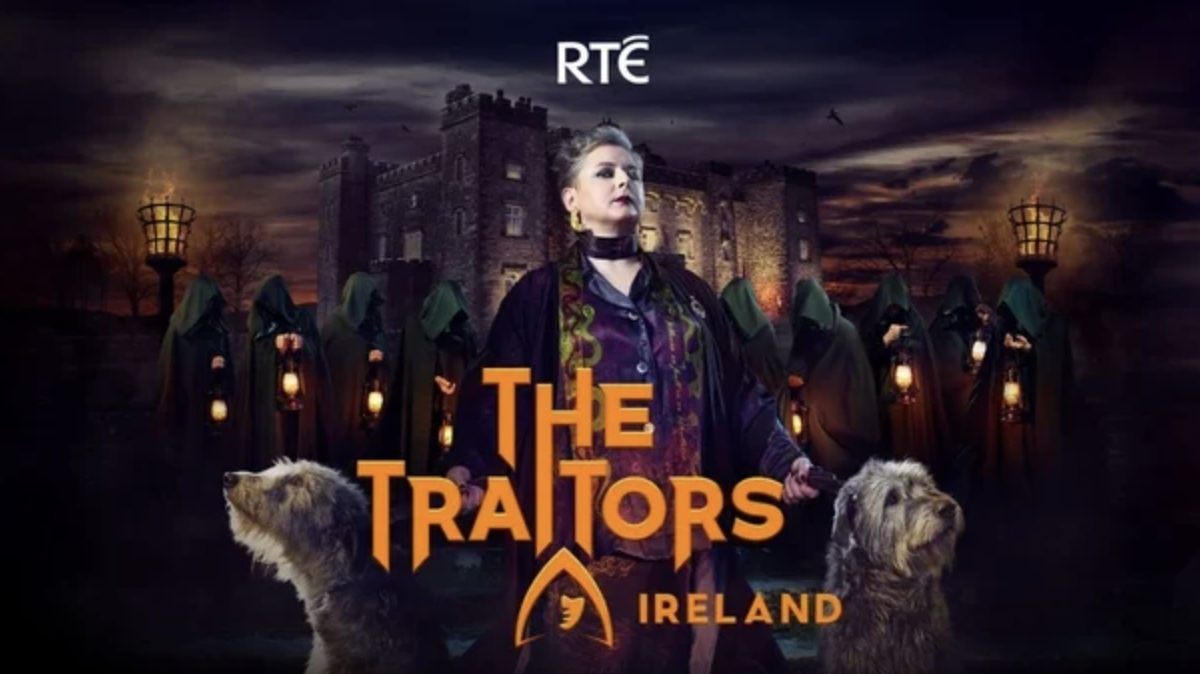
Despite a lot of criticism, and often despite themselves, RTÉ is doing a lot with its money. In 2025, our national broadcaster worked with more than 100 independent production companies. The Traitors Ireland, made by Kite Entertainment, was the seventh most-watched programme of the year, with 818,000 viewers for its best episode. The Walsh Sisters, from Metropolitan Films and House of Juno, brought Marian Keyes's world to the small screen. Hidden Assets, from Saffron Moon, and Obituary, from Tua Films, both had new series, and DJ Carey: The Dodger, from Fine Point Films, rounded off a busy year.
In July, RTÉ announced a record 160 hours of Irish drama for 2026, up from 142 hours in 2025. Steve Carson, RTÉ’s Director of Video, cited it as “our biggest ever year for new Irish drama” and noted how this slate will support hundreds of jobs across the industry. Kin, a hit with viewers and critics, returns for a third series, produced by Metropolitan Pictures and House of Juno, while The Walsh Sisters returns for a second. Among the new offerings is Tall Tales and Murder, penned by Stuart Carolan, the writer behind Love/Hate, alongside The Galway Bay Murders, a new crime thriller. Younger audiences are also catered for, with The Unreal, Do Not Watch Alone, and Tales of Terror. There are multiple productions filming across Galway, Dublin, and Cork.
Under a three-year deal agreed in 2024, RTÉ was promised €260 million for 2027. Yet, in the week before the budget, Patrick O'Donovan, the Minister for Culture, Communications and Sport warned Minister for Public Expenditure Jack Chambers that the Government would “renege” on the agreement. Then this month’s budget set the figure at €240 million. O’Donovan denies that this amounts to a cut, and insists that the wider funding package and RTÉ’s need for reform justify the allocation. RTÉ’s Director general Kevin Bakhurst said RTÉ had received only about three hours’ notice before the official announcement was made adding: “It came as a shock to us.”
TG4 and Screen Ireland earn their money. TG4 recorded a fifth consecutive year of audience growth in 2025, achieving its highest share of viewers since 2009. In 2025, TG4 spent €36.4 million commissioning 910 hours of programming, from drama such as CRÁ to entertainment shows including Hector OZ/NZ and Glór Tíre, alongside extensive live sports coverage. Its regional impact is also significant: €30.2 million of the €32.1 million investment in independent-sector content in 2024 went to Ireland’s regions. Screen Ireland were equally busy, and invested over €120 million in 116 features, 64 TV series, and 120 short films between 2021 and 2024, supporting projects like Small Things Like These, starring Cillian Murphy, the second series of The Dry, and Bring Them Down, starring Barry Keoghan.
Making films and television costs more every year. If line items such as fuel, accommodation, wages, and equipment all rise in price, a stagnant budget buys less and less. TG4 asked for an extra €11 million and got nothing. Its budget remains unchanged. Meanwhile Screen Ireland, which backs Irish films, series, and animation, is also frozen at just over €42 million. At the time of writing, its production budget for 2026 was fully allocated by July.
A freeze, a moratorium: you can call it whatever you like. But in reality this is a cut.
Alan Duggan, chief executive of the Galway-based screen organisation Ardán, makes the same point: “Standstill funding for Screen Ireland and TG4 represents a cut amid rising costs, threatening regional production ecosystems.” Ireland spends 0.08% of its national income on public service media, which is low. The EU average is 0.14%. Wales funds its Welsh-language broadcaster, S4C, at £88.85 million a year, and their funding is set to rise in line with inflation until 2028. In this budget, TG4 only received €65.4 million. (Ardán Pre-Budget Submission).
This can affect people who might never even watch an Irish film. These three bodies fund Irish drama, Irish documentaries, children's programmes, agus gach clár teilifíse i nGaeilge. RTÉ had planned to spend about €60 million with independent producers in 2027. In 2025, its €43 million of new television commissions attracted a further €56.6 million from other funders, including €11.6 million in Section 481 credit, so a cut at RTÉ reaches well beyond Donnybrook. When a broadcaster has to save money, smaller shows go first: factual series, one-off documentaries. Shows with bigger budgets can be affected too, and the next series of something like Kin could be delayed. Those jobs belong not only to camera crews, editors or runners, but also to the caterers who feed them, the drivers who transport equipment, and the local hotels, shops and businesses that support productions across the island of Ireland.
Why location matters
From Foundation and Game of Thrones back through The Tudors, King Arthur and The Count of Monte Cristo, to landmark productions such as Braveheart, Excalibur and Barry Lyndon, decades of international productions have developed the skills, experience and expertise of Irish crews. This has built strong infrastructure and talent that continues to attract major international projects today. Who could forget Matt Damon and his shopping bag off the Dalkey coast while filming Ridley Scott’s The Last Duel? Now Wednesday (whose second season generated €50.2 million in production spending and employed 337 people through its Irish production company) is shooting its third season at Ashford Studios. Young crew learn on sets like these and carry those skills into our indigenous projects. Screen Ireland says more than 6,000 skills placements were taken up in the last year.
One of the main reasons Ireland attracts films and shows of this calibre is our tax credit, known as Section 481. It covers 32% of eligible expenditure in Ireland. It works: more than 100 productions received payments in the first half of this year alone. But because of the infrastructure already in place, this money goes further here: the studios and the majority of production companies are already established in Ireland. In 2025, around 82% of Section 481 expenditure went to Leinster. One Wicklow company accounted for a third of the national total, while regions outside Leinster received only around 14% of Section 481 expenditure.
The government once attempted a fix, but it was flawed. From 2019 to 2023, there was a regional uplift in the credit, peaking at 5% for productions filmed outside Dublin and the surrounding counties. The issue was in how it worked. To qualify, a production had to train local people, and ‘local’ meant living within 45 kilometres of the area. I saw this first-hand on Smother, a series I worked on, where a substantial amount of that qualifying area was extended out into the sea. A 2023 Oireachtas committee heard how this criterion was hard to meet in rural areas and recommended 75 kilometres or more. In my view, the limit came from a misreading of European state aid rules, the EU rules on how far governments can help businesses. The uplift was also designed to shrink year by year, and it did: 3%, then 2%, then 0 from 2024 onwards. Regional spend under the credit fell from €160 million in 2020 to €53 million in 2023.
The crews we had trained were forced back to Dublin to find work.
Producers across the country are asking for a permanent 8% regional uplift. Last year, Patrick O'Donovan said he would like to revisit this. In this budget, he said it was "under discussion" with the Department of Finance. In the same period, the Government introduced new tax incentives for feature films, visual effects, and unscripted shows. While this is certainly good news for the industry, and I welcome it, these are areas that are already working. The biggest beneficiary of the unscripted credit so far is Troy Studios in Limerick, where the unscripted company BiggerStage has taken a multi-year lease. The hub is reported to be worth about €10 million over four years, with 200 direct jobs and up to 400 more supported around it. The company itself called the move a big proof point for the credit. BiggerStage's chief executive, Pat Kiely, said: "Europe's first unscripted tax credit will help Ireland compete more effectively on the world stage."
So incentives do help, and they can bring work to the regions. Wide Eye Films shot Once Upon a Time in a Cinema in Limerick, hiring about 70% of its crew locally, and Adam Brody is due to film A Night at Claridge's there this autumn. Projects like these are exactly why a permanent regional uplift is worth having.
A regional fund called WRAP was set up in 2017 by the Western Development Commission and six local councils to back screen companies in the west. By its own count, it put €2.69 million into 32 projects and generated €33 million in spending in the region. Unfortunately, the fund ended in June. In my view, it never reached its true potential for two reasons. The councils stopped backing it. And from the start, the Western Development Commission judged film companies by the same profit tests it uses for any other business. A shop knows what it will sell. A film company spends its money first and finds out later whether anyone will buy the film. Judged like a shop, most film companies look like a bad bet. A fund built that way was always going to struggle.
The west now has no dedicated screen fund and no regional tax uplift.
But who really benefits from by what we make?
There is a wider risk behind underinvestment in these crucial areas. Much of the money flowing into Ireland’s screen industry comes from major international productions, like Mercenary for Netflix and Bloodaxe for Prime Video, which are filming here now. The industry refers to this as inward production. While these do create jobs and bring investment into Ireland, the overseas companies behind them retain ownership of the shows and the intellectual property they generate. As a result, most of the long-term commercial value and future profits flow back overseas. A 2023 Screen Ireland study found that 89% of international production expenditure in Ireland could be attributed to the tax credit. While this is most welcome, this type of investment tends to follow the lowest costs and most attractive tax incentives.
In a global market, that means it can leave as quickly as it arrived.
For the screen sector to last and grow, Irish production companies need to retain the intellectual property of what they make, meaning the ideas, the rights, along with the income that follows. Cartoon Saloon, the Kilkenny studio, built its business on its own films, such as The Secret of Kells and Wolfwalkers. As Ronan McCabe, chief executive of Animation Ireland, puts it: "The only way you can build companies of any value is to retain IP." RTÉ says in its 2025 independent productions report that it aims to "continue to develop Irish-owned IP." A country that only hosts other people's shows is always at the mercy of market forces it does not control. However, a company that owns its shows can build a catalogue, earn over many years, and plan ahead.

Irish producers also depend on money that does not come from Dublin. Creative Europe’s MEDIA programme, the EU’s main fund for film and television, has awarded €11.4 million to Irish companies and organisations since 2021. Of that, €5 million went on 20 slate development awards to companies including Element Pictures, Samson Films, Blinder Films and Deadpan Pictures. From 2028 the programme is due to be replaced by AgoraEU, a wider programme for culture, media and democracy. The European Commission proposed €8.6 billion for AgoraEU.
In October the Irish Presidency of the EU put forward a budget text that cuts it to €6 billion, a reduction of 30%. Its film and television part, Media+, would get €2.23 billion, against €2.44 billion for Creative Europe programme for the cultural and creative sectors over the last seven years. A substantial drop. The AgoraEU version adds a commitment to also cover news media, which was not part of the current MEDIA strand. Sixteen European film and television bodies, including the producers’ association CEPI, called the cut “devastating” (Screen Daily, 16th October 2026). France, Spain and Poland oppose the cuts, Germany wants deeper ones, and a deal is expected by the end of the year. Irish companies have been good at winning this money, so a smaller pot costs us more than most.
There is also a cultural argument, which matters just as much as the economic one. A nation should be able to tell its own stories, in its own voice, and see its own lives reflected on screen. Irish productions have shown how powerfully those stories can travel. Normal People made Irish characters and Irish lives familiar to audiences around the world. An Cailín Ciúin, a film in our native tongue, was acknowledged on the world stage with an Oscar nomination. Kneecap, filmed largely in Irish, won acclaim at international festivals then returned home to become a hit with audiences here. None of these stories would have been told the same way by someone else. Each came from Irish writers, Irish producers, and Irish crews who understood the people on screen. That is what is lost when funding for Irish work is cut back: not only jobs, but the capacity to tell our own stories, on our own terms.
Big subscription services, like Netflix, Amazon, and Disney take a substantial amount of money from Irish subscribers every month, and so does Sky. In fact, I am told that if a levy on the sector were introduced, Sky, rather than the streamers, would be the biggest single contributor. Its Irish business generated about €637 million in revenue in 2025. Across Europe, around fifteen countries, including France, Spain, and Italy, require streaming services to contribute to film and television production. This is either through levies, direct investment, or in some cases both. The Irish Government laid the legal groundwork to implement policy around this in 2022.
However in 2025, Minister O’Donovan insisted that people were “paying enough” and moved to ensure that any levy would require his approval before it could be introduced. An Oireachtas committee nevertheless backed the levy, which was estimated to raise around €20–25 million a year for Irish production. But the committee’s support did not oblige the Minister to proceed. The Broadcasting Bill now before the Dáil leaves the decision in his hands. His worry about the cost of living is fair, although those in support of the levy would argue that it comes from streamers' revenue, not from your subscription. Susan Kirby, chief executive of Screen Producers Ireland, called the cost argument "a misnomer" and said a levy would be a "game changer" for the industry. Either way, the money would go to telling Irish stories.
What would help the future and sustainability of Ireland’s screen industry is not complicated:
- Pay RTÉ what the Government agreed to pay it.
- Give TG4 and Screen Ireland multi-year funding, so they can plan, as the European Media Freedom Act says public media should be able to.
- Bring back the regional tax uplift and make it permanent.
- Make the streamers contribute.
Through sharing our talent and stories, Ireland has built a screen industry that the world admires. The challenge now is to ensure its future. This year, audiences around the world were moved by the thoughtful animation Retirement Plan, enthralled by the drama of Everybody Digs Bill Evans, and delighted by Jessie Buckley’s Oscar triumph. Behind that success were Irish writers, directors, actors, and crews. This did not happen by chance, and it cannot be taken for granted. With the right investment and long-term support, the Government can help ensure that the next generation of productions made here reflect our Irish identity, and create opportunities that uplift communities across the country. Ireland has proved what it can achieve. Now we must secure the conditions to keep achieving it.
*€544m on productions eligible for Section 481, the euro spend across the Irish screen industry is likely higher.
Disclosure: I advise independent production companies, including companies in the regions, and I have lobbied TDs for the regional tax uplift.
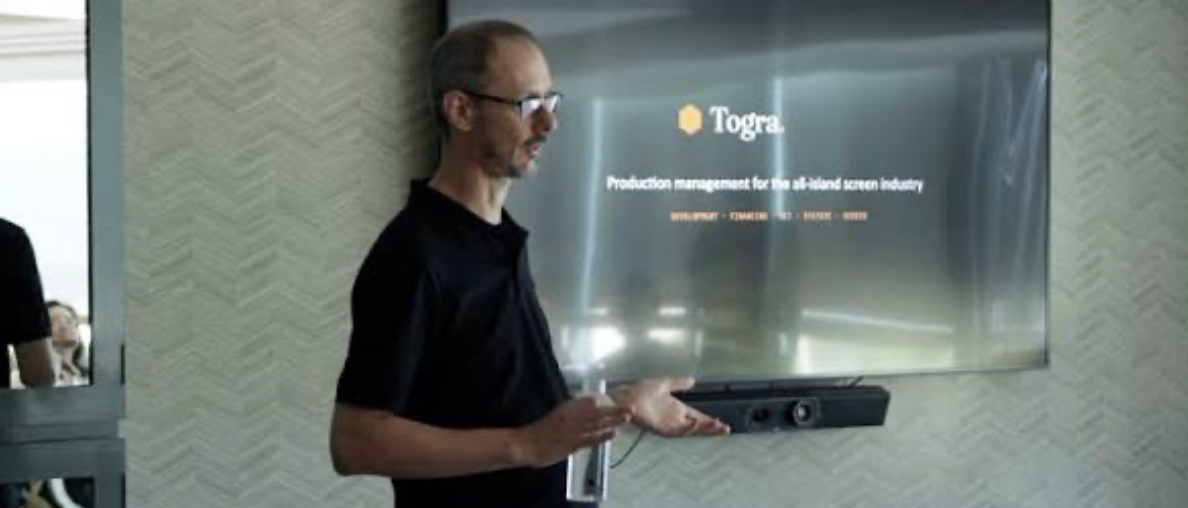
About the Author: Niall Murphy is an independent executive producer, screenwriter, and business and legal affairs consultant to Irish and international production companies. He is developing a slate of original film and TV projects. He was previously Head of Business and Legal Affairs at ShinAwiL and Treasure Entertainment, and has edited Irish screen industry publication Scannain since 2007. He sits on the boards of Screen Producers Ireland, Raising Films Ireland and Young Irish Film Makers, and advises numerous industry bodies. He is represented for his writing by Christina Pickworth at Imagine Talent.


