

It's time for the shovel, as Iveta Rusinova looks at Alejandro G Iñárritu’s latest feature.
It’s hard to imagine the first thing you hear in a film featuring Tom Cruise is not the Mission Impossible theme. For the majority of his career he’s been punching aliens, travelling back and forth through time, and jumping off buildings with motorbikes, yet Digger opens up in a very theatrical way. Thick petrol-green curtains part, revealing a lavish set design with meticulously crafted miniatures, as well as a suspiciously hissing fissure, bubbling underwater.
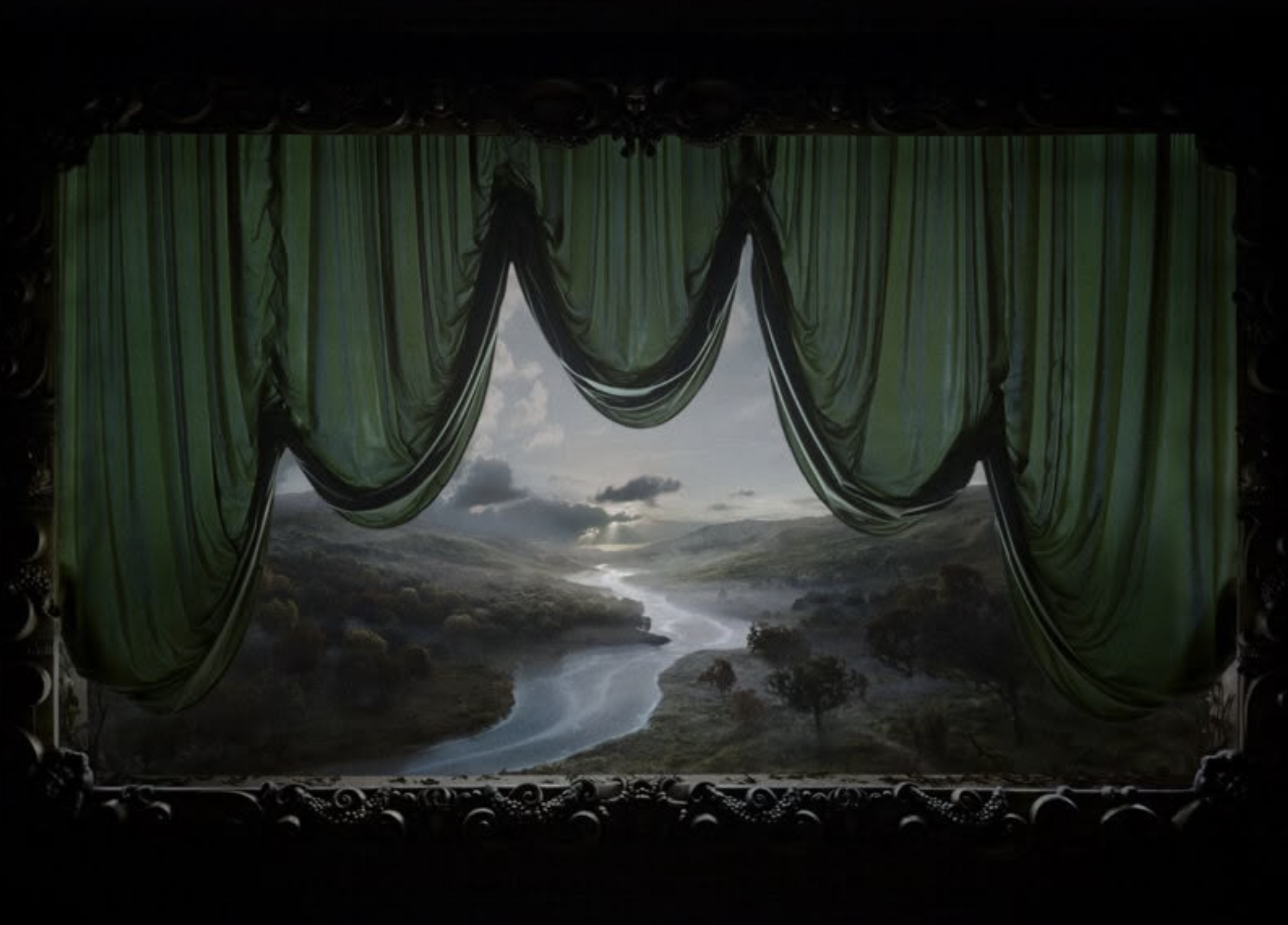
We meet Digger Rockwell (Cruise), an ambitious, wealthy oil tycoon with a questionable attachment to his moribund pet cat, Maggie. His eccentric morning routine of bathing Maggie is interrupted by an incoming video call from near Greenland. A scientist delivers the news that Rockwell’s drilling platform has been damaged and is a potential threat of colossal scale. Despite the scientist’s pleas, Digger ignores the warning and hangs up. Next thing, a fatal blast sets off a slow-moving ecological disaster, threatening to destroy Europe as a result. US President Compson (John Goodman) calls Digger into his office, demanding that he solve the problem he was responsible for. And so with the help of a reasonable scientist Ganesh (Riz Ahmed), Digger struggles more and more to maintain his grip on power.
This is Alejandro G Iñárritu’s return to English-speaking cinema after a decade-long break, the last film being The Revenant. It's been 7 years since he pitched Digger to Cruise. Instead of emailing, Alejandro spent a few days reading the script personally to the actor. In interviews, he compares this project to a mango, saying it’s “an acidic film, but also a bit sweet; outwardly it seems one thing but inside it contains surprises, and it needs time to ripen. Like a mango, its flavor can’t be explained.” However, many critics might argue that Digger is more like an avocado that, from the outside, it may seem perfect for consumption, but when you dig in, it’s overripe.
Narratively, the film is layered, with the non-linear storytelling characteristic of Iñárritu’s filmography not only adding further nuances to the plot, but this time pushing the boundaries of cinema as a medium. The dialogue is sharp, with a particularly hyperbolised mordant humour that leans in to the satire. At a certain point during an emergency summit, a person of higher power uses a vulgar insult, which makes the president flinch. His response is for everyone to mind their language, as there are ladies present. The camera then pans to reveal there are no women in the room. Despite the big fuss around Cruise’s 10-minute one-shot monologue, it’s actually the smaller confrontational ensemble scenes like this aforementioned one that show off the pointedness of the script.
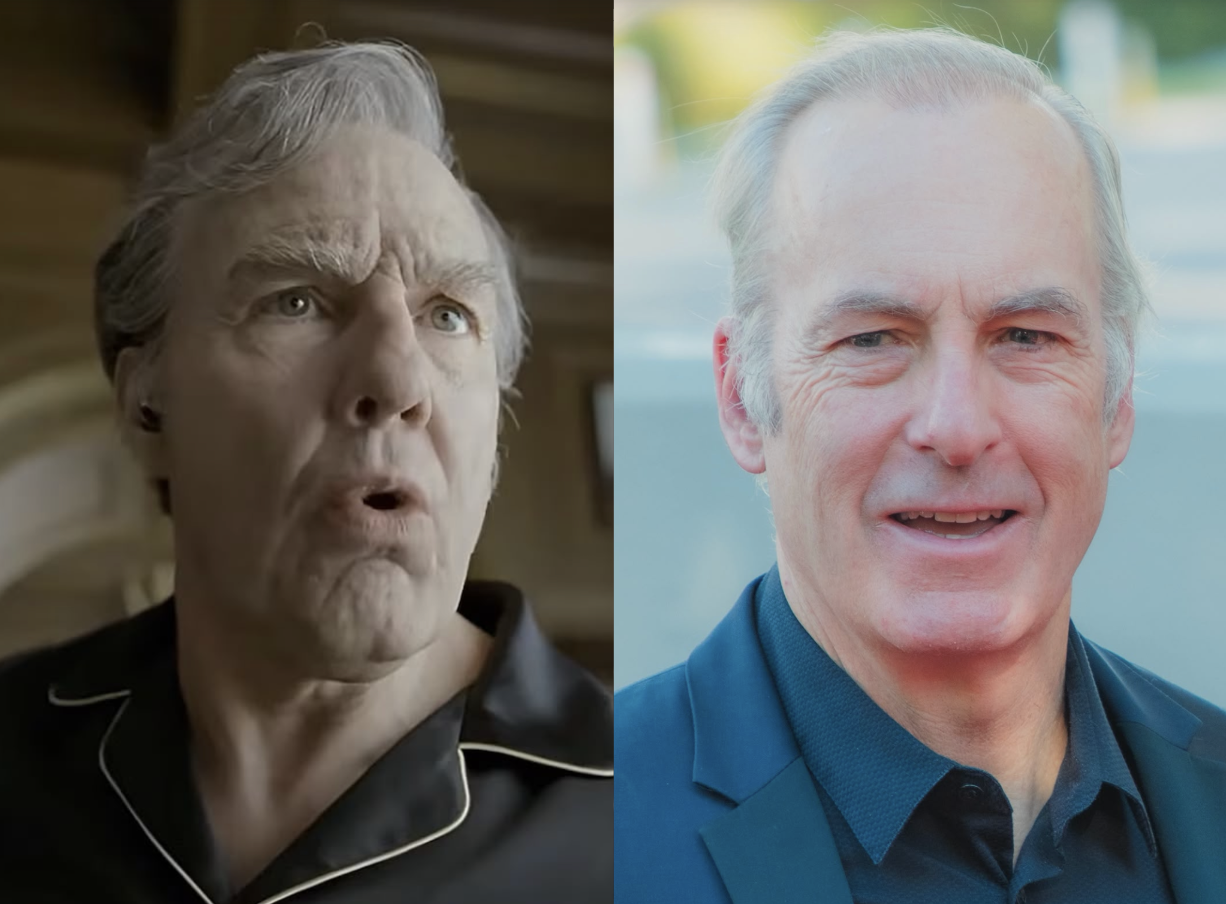
For this film, Cruise undergoes a physical transformation, initially requiring a 6-hour make-up session, only to turn him into an unflattering alternate version of Bob Odenkirk. There are enjoyable moments: Cruise’s rowdy and mercurial portrayal, with his overblown drawl as he wields his granddaddy’s relic shovel, and very impressive work from the make-up department. Yet underneath all the prosthetics, it all remains quite shallow. This prompts the question: is this simply an attempt for Cruise to secure a long-awaited prestige award (which he arguably deserved for his career-best performance in PTA’s Magnolia)?
There are a couple of scene-stealers in the cast, such as Riz Ahmed as the scientist and Jesse Plemons, who plays a sort of corporate security executive. Plemons’s monologue about art offers a meaningful outlet for navigating collective grief and is arguably stronger than Cruise’s. On the other hand, we have Sandra Hüller (Anatomy of a Fall, The Zone of Interest), playing Digger’s half-sister and business partner, Emma Rockwell. This is a role of limited depth, with most of her already limited screen time spent sitting passively in the background, with scarcely anything to do. Could her character’s role have been reduced in the editing process, particularly given reports that the film’s running time had been cut by 30 minutes from its originally reported length? As an actor in other works, Hüller’s often grounded, naturalistic approach is strongly influenced by her time in the German theatre. However, what we see here is a rather over-the-top ode to Looney Tunes-esque physical comedy. At first, her occasional shrieks and tripping over Digger’s shovel might seem jarring, but later seem to stand out more as something more deliberate.
One thing about Iñárritu’s work is that, no matter the language, it’s always very male-centred. There’s nothing wrong with exploring male dynamics, as long as your female characters are more than vessels for male redemption. There are fewer women in Digger than there are fingers on my hand, and they are reduced to comic relief as Digger’s secretary or a narrative tool to move the plot forward. In fact the only major female character, who stands at the core of Digger's motivations doesn’t even make a physical appearance on screen. As far back as 21 Grams, Iñárritu’s women lack emotional independence, remaining tied to the male characters and sidelined by their narratives. While the men are afforded greater psychological complexity and meaningful development, the women remain comparatively static and superficially characterised – a pattern repeated in Digger, and most notably through Emma Rockwell.
There is no denying, that the film’s merit is in its perturbing imagery, skilfully depicted by cinematographer Emmanuel Lubezki. There’s a playful aspect ratio change to separate its storylines, but it’s the colour palette that stands out as a major storytelling device. Iñárritu explains he took inspiration from painters, notably Vermeer and the Danish painter Vilhelm Hammershøi for colour, with Hopper and Rembrandt for contrast. Hammershøi’s influence seems to prevail on screen, as his work is easily defined by his use of empty grey spaces. Iñárritu describes how he used grey as a tool to portray how, the more Digger prevails over the narrative, the more the colour washes out, giving it this fatigued, faded final look. The rich, grand scale of the production design by Dennis Gassner and Richard Johnson features numerous antlers and taxidermy on the walls of Digger’s ostentatious mansion, perfectly depicting it as a villain’s lair. Later in the film, the scenography reveals itself as an additional layer to the intricacy of the plot.
Iñárritu once again gives animals a symbolic role. In his own words, “animals are a projection of ourselves”. Previously giving the spotlight to dogs in Amores Perros, horses in The Revenant, and birds in Birdman. Now it's the feline turn. Digger’s cat Maggie becomes a brutal metaphor for climate change, denial, and selective empathy, and a symbol of Digger’s need to be in control and eagerness to overcome nature by force of will.
Despite the film's disjointedness, Digger does something a major studio film rarely does in the era of the prevailing IP project, and this is taking a risk. The film’s mise-en-scène is unconventional and pushes the boundaries of the medium, embodying cinema’s very essence: the fearless subversion of convention, regardless of the result. There are many meta moments that blur the line between fiction and reality, taking the immersive experience beyond the screen itself.
The film’s predominant theme of the prevailing of art through crisis is genuinely reassuring, suggesting that art can transcend disasters and time, serving as a remedy and a tool for making sense of catastrophe – as a way to cope, as a way to heal, and as a way to remember.
An artist is not “caged” by the conventions of their chosen medium, although the sophistication of their approach can sometimes come across as pretentious or even hypocritical. And hypocrisy is a big, predominant theme in the film. As a satire, it condemns people and companies in their abuse of higher power and their carelessness about the climate and future, yet ironically, Digger has an officially reported budget of 125 millions, funded by Legendary Pictures (that was later reported by a studio insider via Page Six to be pushing 200 million). In his 10-minute monologue, Digger confronts the disgruntled masses, exposing the contradiction between their opposition to oil drilling and their dependence on its everyday conveniences. In doing so, Iñárritu holds a mirror up to audiences who criticise mainstream cinema for its lack of imagination, yet reject something as unconventional as Digger. Much like those Digger confronts, audiences demand change in theory but resist it in practice, exposing the gap between what they claim to want from cinema and what they are actually willing to accept. But even if the director himself is admitting the film’s potential to flop, pushing the project as almost too good for the general audience, this leaves the question: who, then, is the film targeted at? Digger’s message often feels too on the nose. Ultimately, the film seems less aimed at its audience than at Iñárritu himself, making its self-absorption all the more evident.
In the end, Digger might provoke and start conversations, as it certainly excels in its auteur footprint, yet it still leaves a bitter aftertaste and remains a bit lost in its own high-mindedness.
Digger is in cinemas 2nd October 2026.


