

Tim Curry was so much more than just a performer. He was a force of nature - equally at home as a camp icon, comic genius, Broadway star or terrifying villain. Conor Bryce looks back at five roles that capture the sheer range of his extraordinary career.
Tim Curry had one of those faces we didn’t really deserve, but were gifted anyway. A permanently cocked eyebrow, a grin that looked ready to devour you, a smoky purr of a voice. When he was onscreen, there was never a dull moment. Sometimes he was sex on legs, sometimes the savviest guy in the room, sometimes the embodiment of menace. And sometimes he was all three, in the same breath.
His passing in August hit a lot of movie-goers hard. What was the secret to this multi-generational appeal? Maybe it was because he never felt like he belonged to just one era. Maybe because he reached so many different fan bases. Or maybe it was because he simply could not be typecast. He was a queer icon to some, a source of childhood nightmares for others, and a killer comedic talent for anyone smart enough to seek out his work in Clue, his bonkers turn in Congo, his acclaimed stage run in musical Spamalot, and many more offbeat projects. The one thing that never changed was the sheer appetite in all his roles. He always seemed to seek out characters who craved – be it power, pleasure, escape, attention.
The five performances below aren’t the full story. Many classic Curry movie characters are missing, from his small but unforgettable role in Home Alone 2 to Muppet Treasure Island, where he acted alongside - in Curry’s own words - his “one true love” Miss Piggy. This is a tribute to the roles where he burned brightest, five performances that show why he mattered, and why the world now feels a lot less fun without him in it.
Goodbye Tim, you magnificent bastard.
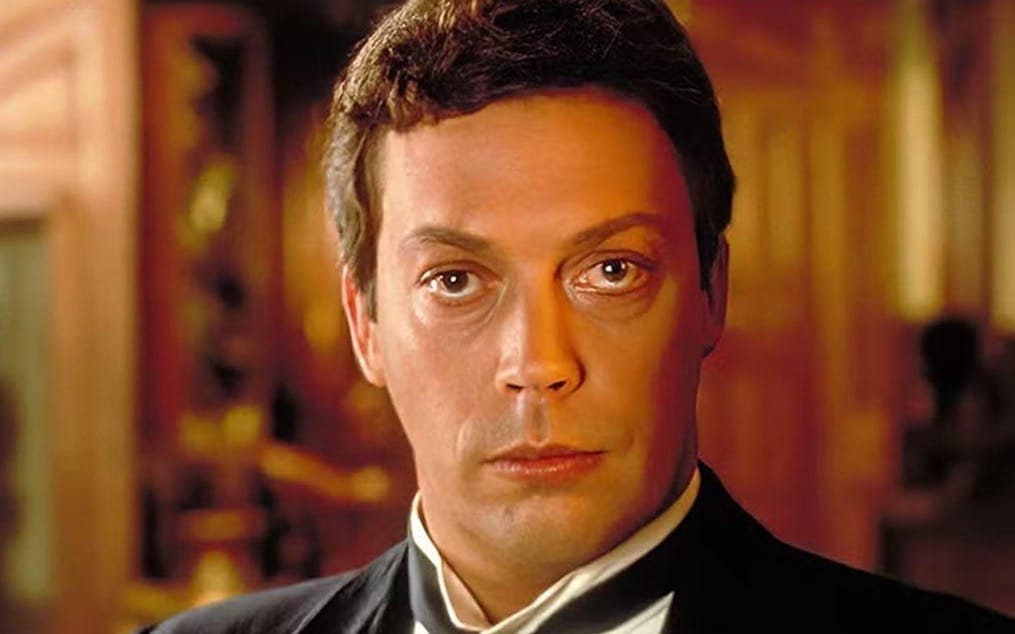
Clue (1985)
Some actors steal a scene. In Clue, Curry stole a whole mansion and left everyone else running in circles, too out of breath to keep pace.
It really shouldn’t have worked. A movie based on a board game is rarely a good idea (*cough* Battleship *cough*). Yet Jonathan Lynn’s breathless screwball murder-mystery machine absolutely slaps. Curry is surrounded by comedy heavyweights – and I mean heavyweights. Madeline Kahn, Lesley Ann Warren, Eileen Brennan, Christopher Lloyd, Michael McKean, Martin Mull; all could flatten regular actors with a glance. Yet as butler and master of ceremonies Wadsworth, Curry is the one you can’t take your eyes off.
What makes Wadsworth so memorable is Curry’s decision not to play him as he appeared in Jonathan Lynn and John Landis’ screenplay - the straight man, the exposition source, the audience’s anchor. Sure, he starts polished and proper, but from the first scene there’s this restless energy thrumming under the surface that you can’t wait to see inevitably burst out. He just keeps picking up speed - pauses for breath are abandoned, gestures get bigger, eyes wilder and wider. Every so often he gives a sly wink to the camera just to remind us that he’s Tim fucking Curry. By the time he’s re-enacting all the murders in fast-forward, you’re in need of a seatbelt.
On its release, Clue’s multiple endings - screened randomly at different theaters - felt like a gimmick. Now, they feel necessary. One paltry climax would’ve been an insult to Curry. He’s the engine of the movie, turning anxiety into art, whirling feverishly around but never derailing. It’s a perfect example of how effortlessly he combined unabashed fun with undeniable craft.
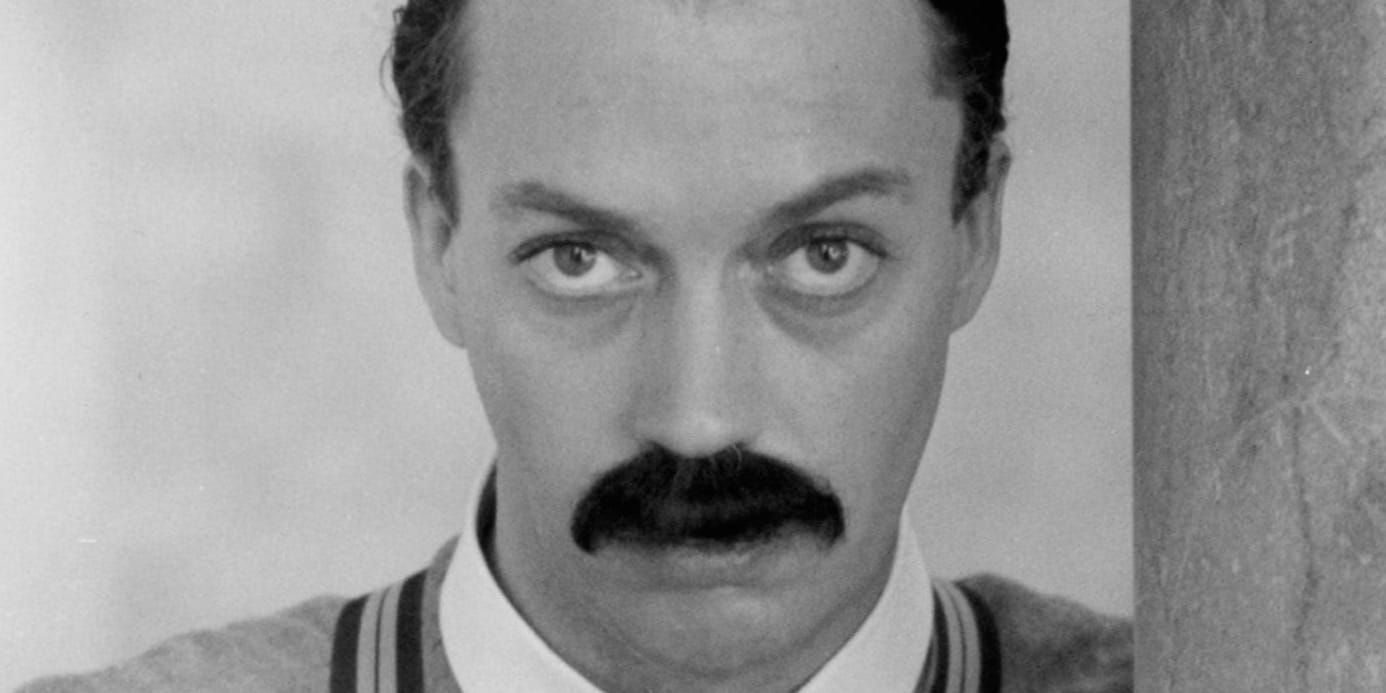
Annie (1982)
John Huston’s brassy musical adaptation is an odd mashup of cheerful fantasy and capitalist satire. It starts off sweet, perhaps too sweet. But then Curry slithers in as Rooster Hannigan, all oiled hair and dangerous charm, and the movie gets a desperately needed shot of sleaze and electricity.
Rooster isn’t Annie’s only villain - Carol Burnett gets all the big moments as his sister, and Bernadette Peters is a sparkly, conniving hoot as his girlfriend Lily. Curry wisely doesn’t try to out-act or out-scream either. He plays Rooster like a shark in a rented tux, a creep trying to look dead fancy by tilting his hat a bit. He doesn’t care if he looks ridiculous, and he often does, but he’s also got a nasty streak a mile wide. Watch the way he circles and sizes people up, pure grifty smarm with a sly intelligence underneath. And let’s forget that by the end of the movie, he’s hell bent on killing the eponymous redhead. He’s the edge the movie needs.
The performance of “Easy Street” is a perfect showcase of Curry’s Broadway chops. Originally conceived and partially shot as a huge, elaborate sequence, the decision to cut it down in scope might have been down to the need to keep costs down, but it ended up being a stroke of genius. Grandstanding songs like “Tomorrow” and “Hard Knock Life” got more attention, but the villainous trio’s mean little vaudeville act is far more fun. Curry capers through it like a psychotic clown (more on that later), singing like a guy selling dodgy tickets outside the theatre while thinking - knowing - he should’ve been given the leading role. It’s a performance with teeth, belted out from a mouth fixed in a hungry grin. It’s pure Curry.
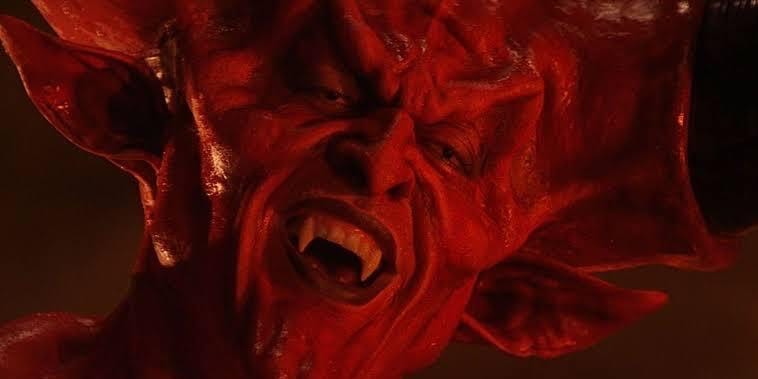
Legend (1985)
If subtlety had wandered onto the set of Legend, Tim Curry’s Darkness - Satan in all but name - would’ve eaten it alive, bones and all. A lot gets written about the makeup job (and it is incredible: three-foot high horns, red-hot skin that seems to glow, all sharp hooves and sharper abs), but here’s the thing - most actors would’ve let a costume like that swallow them up. Curry does the opposite. He fills every inch of it, making Darkness feel more alive than any of the lighter costumed actors sharing the screen, a fresh-faced Tom Cruise included.
Legend has plenty of problems - a muddled plot, odd fairy-tale dialogue, the theatrical version cut to shreds - but it also gives Curry plenty of room to grandstand. Darkness is pure ego, pure arrogance. His voice drips through the movie, endlessly quotable. From the poetic (“the dreams of youth are the regrets of maturity”) to the downright flirty (“we are all animals, milady”) he serves up a feast, and savours every word. That makeup wasn’t easy to wear, reportedly taking up to eight hours to apply daily, but you’d never know it. Every gesture feels regal, every cloven step feels fluid, every curled lip makes us shield our eyes…then unshield them a bit, just a bit, to steal a glimpse or four.
Oh yes, there’s something undeniably sexy about Darkness, the awakening of many an 80s goth kid. He seduces, woos, offers Mia Sara’s princess Lily everything: power, jewels, a spotlight, a worthy mate. He’s excessive, dangerous and impulsive. By the end, he’s more interesting than all the heroes combined, and he’s clearly having the time of his life. That’s Curry’s real trick. Villains shouldn’t just be obstacles. Sometimes, the villain is the reason to keep watching. Plenty of stars have played the Devil in the past, all bringing a unique take. Here, Curry stakes his claim as the best.
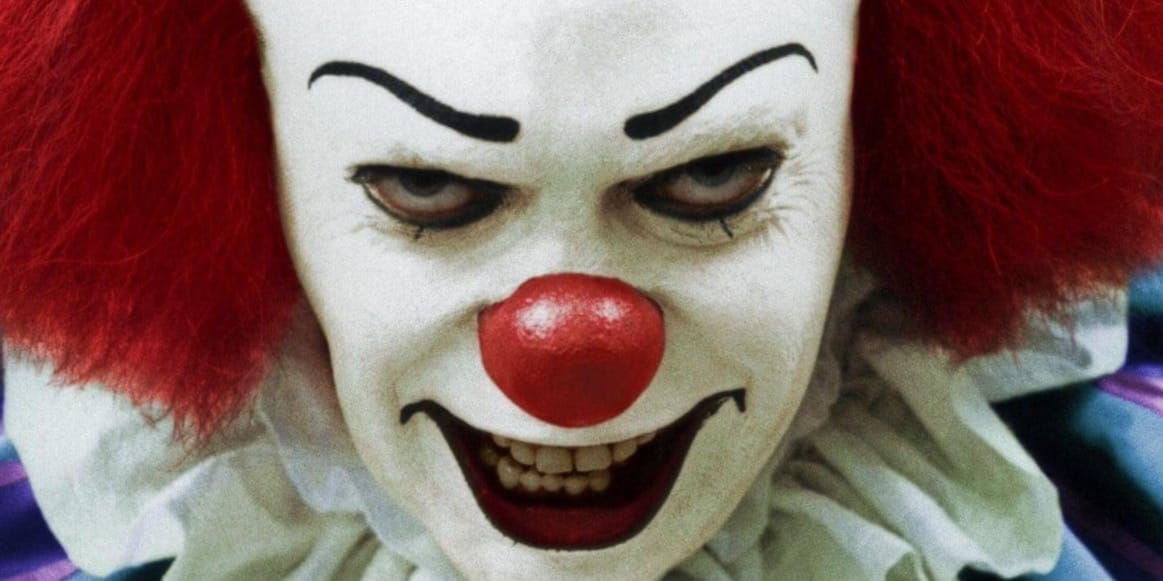
Stephen King’s IT (1990)
Okay so it’s not technically a movie, but who cares? In 1990 Curry’s killer clown crawled out of our TVs and has been living rent-free in our nightmares ever since. In an era where Stephen King’s shopping list would get an adaptation, IT aired as a two-part miniseries with all the small screen’s limitations: cramped pacing, melodramatic acting, cheap effects, and a goofy finale everyone tries to forget. But Pennywise stuck out, then stuck around. Children’s birthday party entertainment was never the same again.
IT’s villain could’ve been a straight-up monster - check out Bill Skarsgård’s take if this is more your bag - but Curry made a nastier choice, much more in line with King’s brilliant source material. He’s silly, bright, friendly. His voice is an invitation to the circus. His facepaint smiles before he does, and you can’t help smiling back. He’s the sort of clown a lost kid would seek out. When the inevitable switch comes, it happens so fast you lose your balance. The smile becomes an upside-down scream. The eyes deaden. The cheerfulness curdles…and the teeth come out.
The miniseries feels dated, but it still nails IT’s main theme of kids growing up in a town that refuses to see how bad things really are. Pennywise survives because the adults don’t care, and Curry gets that. He knows exactly how to turn his appearance into a weapon, his performance all bad jokes and capering buffoonery. He acts innocent and caring to get close enough to kill, and it works - that’s what makes us squirm, even over three decades later.
People love to compare Curry and Skarsgård’s performances, but it’s really apples and bananas. Skarsgård, the star of a two-part movie adaptation and an ongoing series, leans inhuman and unpredictable, an alien in an uncomfortable human suit. Curry plays Pennywise as something at home in a shiny jumpsuit, something that has no problem taking time to build trust before feasting. Sometimes he’s just standing in the daylight, holding a balloon and laughing uproariously. But even before the turn there’s something in his eyes that makes us second guess his charm. It’s a shame the kids don’t notice. Clowns have always been a bit creepy. Here, Curry was ahead of the game in being flat-out terrifying.
The Rocky Horror Picture Show (1975)
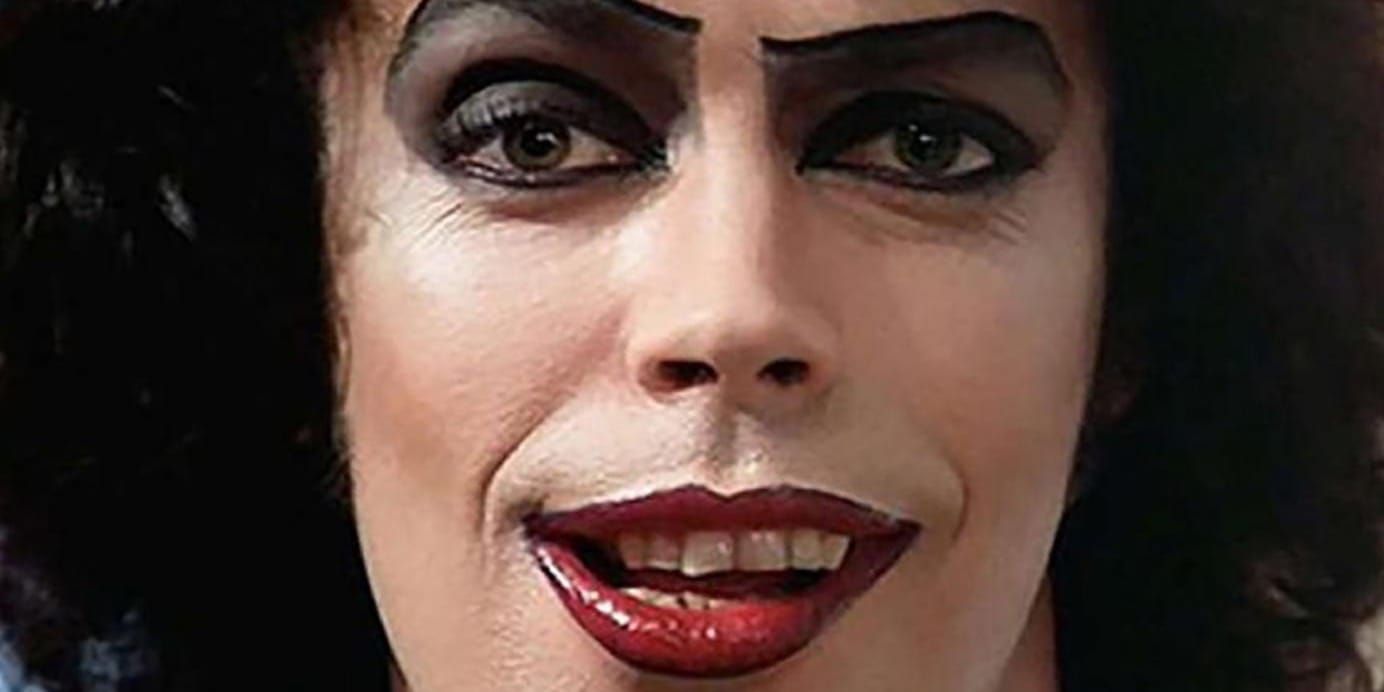
If Curry’s career has a single performance that feels like pure mastery - complete command of voice, body, character, and audience - The Rocky Horror Picture Show’s Dr. Frank-N-Furter is it. He plays the role with the kind of precision that feels effortless. Everything about him reads as being, not acting - the timing of his expressions, the exact calibration of charm and provocation, the way he can shift from playful to commanding in the same breath.
Rocky Horror is outrageous and anarchic, but Curry keeps it anchored. Frank-N-Furter isn’t just camp or bizarre for the hell of it; he’s someone with taste and intention. He doesn’t cruise along on style alone, he’s got momentum and purpose, ensuring that a character who could’ve easily been a gaudy pastiche is never reduced to one.
His vocals? Hot DAMN. Curry uses his voice like an instrument - smiling through lines, biting into syllables, using song and dialogue as tools. He understands the difference between being entertaining and being unforgettable - and he’s never not aiming straight for unforgettable. Upon rewatch, it becomes glaringly obvious that the movie is a bit of a slog until he shows up and starts belting out “Sweet Transvestite”. No insult to Susan Sarandon, Barry Bostwick et al, but until Frank-N-Furter graces us with is presence, we’re just shivering with antici…
The performance is also a remarkable feat of physical acting. Every strut, turn, and pose extends the character’s personality. His movement has both freedom and precision, creating a confidence that makes the audience understand why Brad, Janet and nearly everyone else fall into his orbit.
The Rocky Horror Picture Show stands at the top of Curry’s career. Its enduring appeal is inseparable from his fearless commitment, and no other role displayed his gifts so completely. Clue showcased his comic timing, Legend his operatic menace and IT his talent for turning theatricality into frights. The good wicked doctor demanded all those qualities at once, along with exceptional singing, physical confidence and emotional openness. Broadway has struggled to find a worthy successor ever since. Perhaps they’re looking in the wrong places. Or perhaps he’s just irreplaceable. Curry met every demand and made the character impossible to imagine without him. It remains his finest creation.
Tim Curry sadly passed on the 25th August 2026, leaving behind him not only a powerful legacy of work but a profound impact on cultural identity.


