
Following four stories, Whatever A Sun Will Always Sing is an experimental hybrid documentary which meditate on the tenderness of young women's journeys into adulthood.
On location at Cannes Festival Correspondent Shannon Cotter catches up with acclaimed director Sophie Power to discuss her experimental hybrid documentary.
I think I've read that over 3,000 shorts are submitted to Cannes every year. Your short is showing. Can you tell me about your Cannes experience so far and what it was like getting in?
Sophie: Yes, so I'm screening my short as part of Cinéma de Demain Short Film Corner in their experimental category. It's part of a curated catalogue by Cannes Film Festival, and it's really exciting. I've been going to lots of different talks and we had a directors' brunch and networking event where we got to meet with various directors, distributors and festival representatives, so we are getting to speak with a lot of different people we wouldn’t usually have access to.
Whatever A Sun Will Always Sing was shortlisted for a Student Academy Award. What an amazing achievement. Tell me about that experience.
Sophie: It was honestly something that I'd always aspired to, so when we submitted the film and received the news, I was delighted. To be recognised by the Academy in any capacity is a big honour and it felt especially meaningful because of how much work went into making it happen. We had a crew of about 40 people, working across an intense four-day period with multiple location changes, which made for a very ambitious and logistically challenging shoot. Despite the pace and complexity, everyone was incredibly committed. There was a real sense of trust and collaboration, and it genuinely felt as though we were all working in complete symbiosis towards the same goal. To get the shortlist for the Academy then was a dream come true and I’m grateful for the talent that came together to make that happen.
It’s a very female-focused short which has also seemed to connect with a lot of women. Where did the idea formulate from?
Sophie: I always knew I wanted to do a story based on women's experiences. It was just sitting there in my subconscious, and I really wanted to get it out. I realised that I wanted to direct something very experimental and non-traditional. I’m currently working for the Oscar-nominated documentary company Loki Films and my background is in documentary specifically, yet I’ve always been drawn to narrative and cinematography. When I was thinking about the style best suited for this film, I decided to create a hybrid blend of fiction and documentary which placed an emphasis on magical realism.
One of my biggest inspirations is actually from an Irish directing duo called ‘Luna’. I saw one of their films called Skin to Skin. It’s a very experimental film, and it deep dives into confessions around a scene that's very hidden in Ireland, which is the culture around dating apps, specifically in the LGBTQ+ community.
I loved how they told beautiful, compassionate pieces through anonymity and they used actors to recreate that. Every time I watched it, I was moved to tears. So when I thought about using a confessional question, I was like, “What is it that I really want to say?” What is it about women's stories that I want to share? A lot of our stories are often hidden, silenced or shrouded in shame, so I wanted to give women an opportunity to share their experiences without fear or judgement.
At last it came to me. I decided to ask the same simple question: “What was the pivotal moment you were forced to grow up?” For everybody, the answer was different. You might grow up earlier. You might grow up later. I interviewed 50 women for this film across a cross-section of society, all different ages, all different backgrounds, and they grew up at different points and had different stories to share.
What’s surprising is you would expect it sometimes to be a little traumatic, but what I captured in my documentation was that there was a wide range of what it means to become a woman in this day and age. There were feelings of grief. There were feelings of becoming one’s self in their sexuality. There were feelings of being observed. I wanted to capture the myriad of emotions that you can feel. So that's what this film does. It goes through all the ranges of emotions of what it is to become a woman.
Did you find when you were looking at all these different experiences, did that make you look introspectively at things you hadn't thought of before?
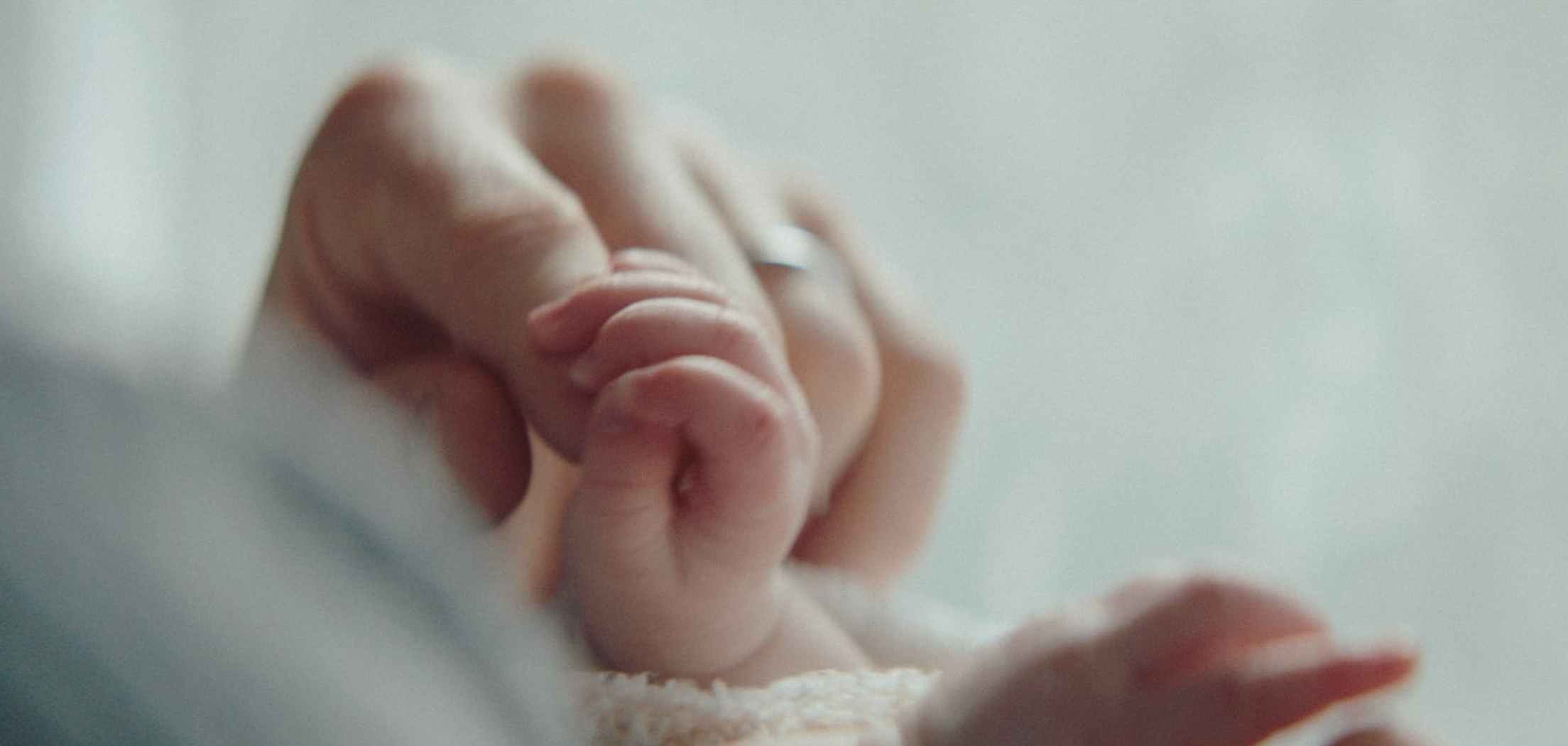
Sophie: Well, the funny thing is that I didn't even plan to share my own story. I didn’t contemplate my own side until much later into the development process, and then I realised I was partially doing this because I had something I wanted to share. So the fourth story is actually my own personal story of when I was forced to grow up. It’s the moment that I went from being cared for to becoming the carer.
I think that’s a common experience in many women’s lives, so that story is the most emotional one for me. When I watch the film, I always find that's where my heart starts to tighten. But I guess then, in a sense, the film for me was a cathartic film, as it was also a form of catharsis for the women who decided to be involved. Everyone that I interviewed knew their moment was going to be visualised on screen with actors, and it was a way to exchange and share experiences with each other and stimulate conversation.
I always say this film was made as a way to invite the viewer to pause and reflect upon their own defining moment of change, and to hopefully spark conversation in the audience.
When you were interviewing these women, how did you narrow down which stories you wanted to tell on screen?
Sophie: The thing is sometimes their stories overlapped. I interviewed 50 women, and there were a couple of things that were repetitive. Grief or love, or falling in love for the first time, or losing a parent, or there were unfortunately uncomfortable instances involving sexual assault or similar. So while there was a big range, there were definitely patterns.
In the end, I decided to pick the ones that felt the most emotional, and maybe what I connected with the most as well. But I truly wanted to make sure that this anthology was diverse in terms of backgrounds and tried to capture stories from women of all ages. One of the stories is actually from a woman in her 70s, and it's her reflecting on her time in the 1960s when she was growing up with her best friend as a teenager, so we’re even going back in time as well. (laughs)
How did you find the shift from moving from documentary to fiction? Now, this is a very interesting take as it’s based on real-life experiences, but do you see yourself venturing fully into fiction in the future?
Sophie: I definitely plan to stay in the documentary world. I've been working in it since 2019. Before documentary I was primarily a producer in the advertising space, working with brands like Nike, Carhartt and Converse, that kind of thing. But for the last seven years, I've been very focused on documentary.
What really got me into it is I worked on a feature documentary on the astrophysicist Stephen Hawking. I had always enjoyed reading his scientific work so much. So when we received first access to his family after his passing and interviewed his immediate family, I knew that that’s the direction I wanted to go in forever. There was something so enthralling about being so close to history.
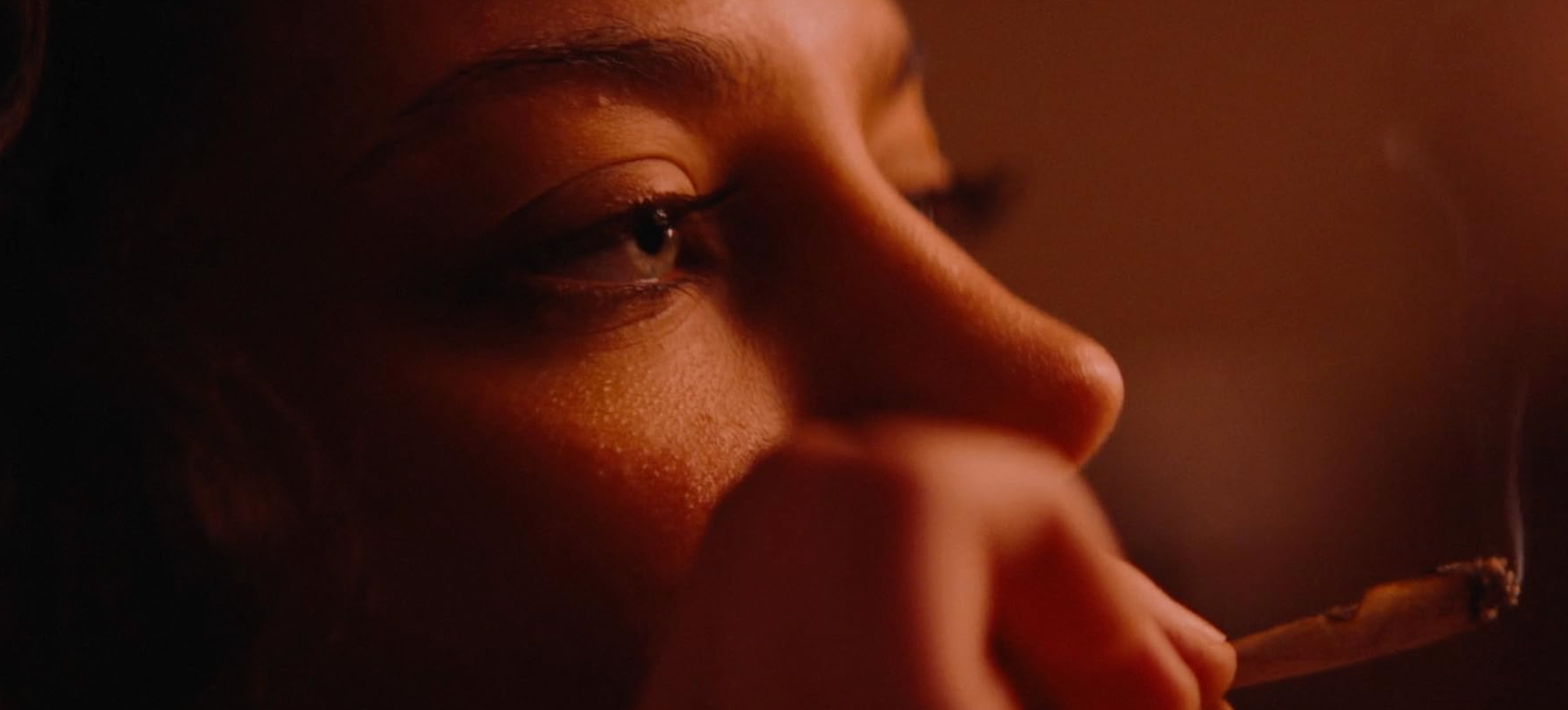
Documentary is my future, yet I’ll always have a soft spot for cinematography and fiction. The DP that I worked with, Evan Burris Trout, he’s so talented. Anything he pointed his camera at turned into magic. Working with actors honestly was also such a joy. Finding the cast, planning the roles, taking the story and then trying to match it up with an actor who would resonate best with the story was an amazing process. It was fascinating to bring the documentation into this hybrid format.
I understand there's a variety of ages as well in the film. How did you find the cast you were looking for? What was the audition process like?
Sophie: The casting process was challenging. As mentioned, one of the stories is actually based on my own life, so I actually had to cast myself across multiple ages. That’s definitely a tricky one. This fourth story is essentially about the relationship between a father and a daughter. The title of the film hints to this and comes from a love poem by E. E. Cummings called I Carry Your Heart With Me. There’s a sentence in that poem that describes the author’s love as being as eternal and as permanent as the sun, akin to the eternal love between a parent and a child.
I had to cast a father as well as a daughter across multiple ages: a baby, a six-year-old, and a woman in her thirties. But I have to say that the baby, Sofia Eckard, was fantastic. I've never worked with a baby on set before, but she was smiling and laughing the entire time. (laughs)
I also ended up asking a friend who’s an actress to play me at my age because she’s from Cork, actually. I was like, “She's Irish, as well as from Munster, she’ll be perfect.” I just knew she would handle the story with care, and I could trust her.
As for the other stories, the casting process was intuitive. One of the first stories is about a Japanese immigrant living in New York. In the casting process I came across Minami Ando. She's a talented ballerina and actress in her own right, and she's super expressive with her body. I watched her dance, and I was like, "She's just captivating." She grew up in Japan, so that story really resonated with the casting process for her.
And for the remaining stories, it was always just like a little hint of something going back to the original person. The second story is played by Summayya Wagenseil, who’s from the South, and that story was originally told to me by somebody who's from Texas. It was like there were little hints guiding me, and I felt comforted by the fact that these talented actors wished to do the stories justice.
It’s almost like you had this tiny kind of blueprint that you could use for casting, but you had a set of 40 people, and if I understand, it was your first time directing. How did you find that?
Sophie: Loved it. It's brilliant. I've directed documentary productions in the past, but not of this scale. Although I’ve produced for a long time, while it’s creative, it often makes more use of the left side of your brain. You're very logical. You're managing people, crew and multitasking. On this, I worked with a really great co-producer called Taha Aziz, who was the on-set producer, and 1st AD Aja Knight, who allowed me to just focus on the right side of my brain while shooting. While working with Evan, it just felt so natural, and I felt like I was in a flow state. Granted, it was a big production, but I really could tap in and relax and try to look for the emotion of each moment. It was just a joy to let intuition take over on the spot.
That sounds so intriguing. You also worked with an intimacy co-ordinator, which is becoming more and more integral to the industry.
Sophie: Kyra Moskowitz was the name of our intimacy co-ordinator. Memories of this kind often hold traumatic ties and are extremely intimate in nature, so I knew from the very beginning that I wanted to be ethical in how I approached it. Also, on set, I wanted to make sure everyone was always comfortable. For instance, in one of the stories there are two girls falling in love. Myself, Kyra and the two actresses met a week before and went through the script. We asked the girls what they would be comfortable with, what were no-gos for them, and we were very open with each other about how far things would go.
For Kyra, she says most of her job happens before the shoot, in getting consent and making sure everyone's happy. I think having an intimacy co-ordinator really helped facilitate the scenes we wanted, and I was incredibly grateful to have her expertise on set.
When you first had the finished product, or even when you were filming, did you know that it was something special? It’s funny, sometimes I’ll talk to people and they’ll say a film they worked on that they assumed would be really good turned out to be bad, but also vice versa. Obviously, this film has reached far and wide. Did you sense that you were making something special during the making of it, or was it only after release?
Sophie: Without revealing too much of the story, during filming I was going through a pretty hard time, and I was tapping into a lot of grief. At the time, I said to a friend that I wasn’t too sure what to pick as the subject of it, that I had all these ideas, and she told me to just tap into the depths of what I was feeling right now and let it flow out. I realised she was right. Once the grain of the idea was planted, and this question came to me, everything started flowing out. It just started to pour out of me.
Once the film was made, I didn't really have time to reflect. It happened so quickly. It felt like it was a special film to me personally, one hundred per cent, but I didn't know if it was going to be as well received. I knew that we had a strong team, and it felt like it was something that I wanted the world to see. I'm just really grateful that it landed.
Obviously, your short is now showing in Cannes, which is a phenomenal achievement. What do you want to do next?
Sophie: I think the ultimate goal is to become a director of documentary features. As a documentary producer, I’m obsessed with the process. I find developing story, spending time with a subject over a long period of time, deep-diving into research and digging into archive to be so rewarding. I feel privileged to be in an industry where each project presents a new opportunity to broaden your perspective. Continuously learning as you go.
You’re at a brilliant festival for documentary features. Yesterday I saw Tin Castle, which is a documentary about an Irish Traveller family. It was lovely to see it garner such a warm response, and I wonder how that has felt in respect to your own work?
Sophie: I’ve had some really lovely responses. I think the ones that I’ve enjoyed the most are when I have had someone turn to me afterwards and say they could really resonate with a specific emotion. People have told me that knowing someone else has gone through the same thing made them feel less alone. What I would love to happen is to keep showing it and hopefully continue to have women share their memories and experiences with one another. If it can spark honest, open conversations and keep that dialogue going, then I feel it has achieved its goal.
Sophie Power is a NYC-based documentary director/producer and self-shooter. Power was shortlisted by the Academy for a Student Academy Award for directing hybrid documentary Whatever A Sun Will Always Sing (2025). She has directed and produced short documentaries for Radical Media and worked on Sundance-winning documentary The Legend of Luis Valdez (2026) and Sundance and SXSW-winning documentary Selena y Los Dinos (2025). Power has produced campaigns for clients including Nike, Carhartt and Converse, as well as filmed interviews for Rolling Stone Magazine. In 2024, she was nominated for a BAFTA scholarship and qualified as a Netflix Documentary Talent Fund finalist. She has worked on feature documentaries which have broadcast on National Geographic, Paramount+, Netflix, PBS and Sky Documentaries.


