
On location in Galway, Festival correspondent Shannon Cotter talks to filmmaker Seán Treacy about sci-fi drama Save Me From Heaven, grief, and his upcoming short Where We Left Off.
You screened at the Galway Film Fleadh yesterday. How are you feeling?
Surprised. I feel surprised. I shot Save Me From Heaven in January 2025, finished it in April, and it premiered at Offline Film Festival at the end of last year. It feels like it had its life in a way. I've had the prep and production and now afterlife of it – using the term ironically there – and I think the reason I really acutely feel that is because I've just finished my most recent short film, Where We Left Off, and that's what I'm thinking about right now.
The screening crept up on me a little bit when I entered the Town Hall Theatre yesterday. It caught me off guard when it came on screen. What was great was that I felt like I was watching it with fresh, objective eyes. That's something you can only achieve with one of your own films with great distance, and even still, it's not as objective as the audience watching it.
The response afterwards was the biggest surprise because it was so lovely. Someone from my primary school who I hadn't seen since I was eleven sent me a DM on Instagram saying he really loved the film and that I've come a long way since primary school. That was such a surprise. We also had random people coming up to us and saying such nice things about the film. A lot of the crew were there yesterday, which brought a lot of satisfaction as well. The people you want to make really proud are the crew. To feel so much love for the film yesterday was just a gorgeous surprise.
Something we discussed before the interview was the fact that you were 20 when filming this. Looking back on it now, it was such an ambitious project.
In terms of just getting it done, I speak for all filmmakers when I say that getting the thing made is an achievement in itself. At 20, to have the thought process of making a film like that is a celebration of the arrogance of youth and the audacity of youth, in a really positive way.
With Save Me From Heaven, there were so many obstacles that made it seem impossible. I knew the script was unlikely to receive government funding or funding from a local scheme. I adore local funding schemes, and they made my most recent short film, Where We Left Off, possible with the Wicklow Short Film Award. I'm so grateful we have them in this country.
Because Save Me From Heaven was a sci-fi with a mix of other genres, I found that when I described the film to people as a general pitch, they imagined all sorts of big things and probably thought it wasn't possible on a low budget.
It was actually at the Galway Film Fleadh in 2024, my first time coming here, when I met Tom Hopkins at the National Talent Academy's Short Film Exchange. He really liked the idea, so we talked afterwards about different avenues of production and how we could get it funded. I applied for the DLR First Frames Scheme but didn't get it. I just had this feeling when I was rejected that I wanted to make it anyway. The script was ready and I didn't want to lose that momentum, so I decided to crowdfund it.
I raised €15,000 in 30 days, which I still don't understand. I would never do that now. Sometimes your psyche at the time gets you to do things that otherwise you don't think you can achieve, which is wonderful.
How was the shooting process from then on?
Raising all that money was nearly a production in itself. It felt like, “Oh God, now I've got to make the thing.”
Gathering the cast was a huge moment for me. I felt so blessed. Abby Fitz saying yes was a big one. I'd worked with her on Whitetail, a Keeper Pictures film that went to TIFF last September. She's one of the most talented actors of our generation. I'm floored by her every time I watch the film. Diarmuid Noyes then coming on board was another big win, and it all kind of built from there.
The crew was the hard part. Trying to get people to come and work with you when you're that age, people who are experienced and talented and have reputations to uphold, was really tough. I'm so grateful to the crew who trusted me with this project.
My first time directing a crew of that scale was the best feeling in the world. Better than finishing a marathon. My friend Fiachra [Cotter Ó Cúlacháin], who was doing BTS on the production, said to me, “Look around. This is all here for this idea that you started”. That was such a special feeling. I'll never forget that.
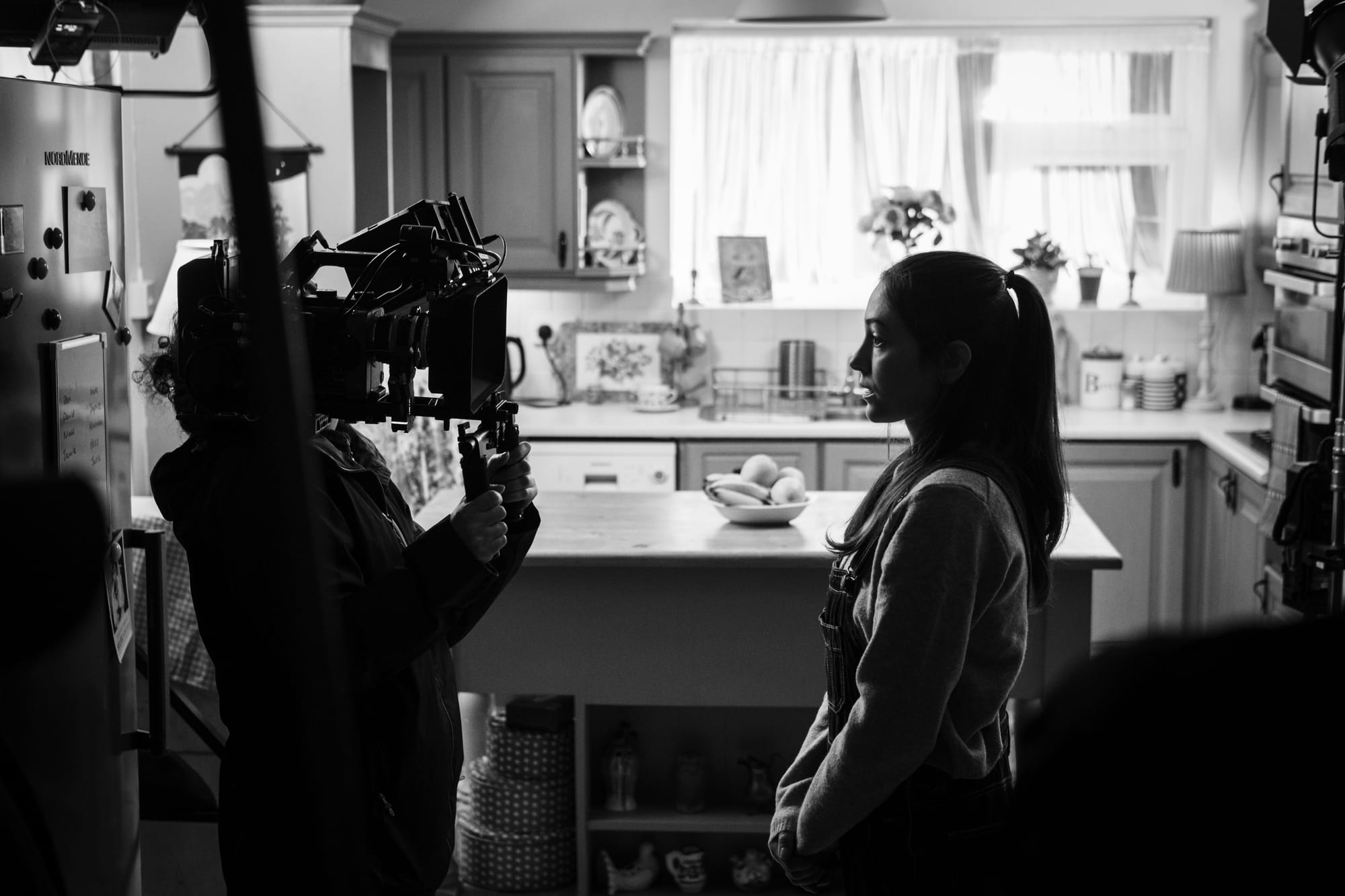
Our first day was the memory sequence in the house, which was a nice way to start. The middle day was tough because it was the forest. We shot everything in that forest in one day in January, when the light only lasts for about six hours. The last day in the office was nicer, intense still, but that middle day was like a baptism of fire for me. I have to thank Fionnuala McCormack, our DP, and Emily McGee, our first AD. They really helped us get it all done. That was a huge feat.
Part of the dream of making this film was screening it at Galway because of the special experience I had here in 2024. We've gone to some other lovely film festivals since, including Fastnet, but getting that stamp of approval from Galway was huge. It was kind of the final tick in the box for me: “Okay, my journey has come full circle with this film. I can nearly move on from it now.” Everything that has happened since, in terms of people appreciating it, has been a gorgeous bonus victory.
You've spoken before about how this film was inspired by your realisation of sudden death at a young age. That's a big thing to comprehend at that age. Did making the film change your relationship with death?
That's a great question. My relationship with grief before Save Me From Heaven was shallow. Death hadn't infiltrated my life in a huge way, so my interest in the film before making it was conceptual.
When I was younger, my dad told me the story about someone he knew who had died from sudden death syndrome. Your heart could be healthy, your brain could be healthy, but you could just die like that. It's the greatest example of “you've no idea what tomorrow holds”.
The idea stuck with me, specifically in a short film format: someone passing away, going into heaven, and being interviewed about their life, similar to a Doctor Who episode I'd seen called “Death in Heaven”.
Now, looking back at the film, it's hard to wrap my head around. Three days before we screened the short film privately, my agent at the time and one of my best friends, Julian Benson, passed away. He had cystic fibrosis his whole life, but he'd been very ill in the two months leading up to that screening. I got a phone call from my friend, and I knew as soon as I heard it ringing that it was very bad news.
On the day that I heard, I was going into the Savoy to hand in the DCP. I had time on the bus to amend the credits and add an “In loving memory of Julian Benson”. Going into that screening three days later, I was thinking only about Julian.
This summer my friend, and the incredible young filmmaker, Max Hendrickson passed away, which sent me for a total spin and really messed with my head because Max was so young. Another very aggressive example of “you could never have seen that coming”. It's very in line with Save Me From Heaven and what Rachel goes through: someone living this beautiful, full, dynamic, diverse life, on such a trajectory.
So, watching the film yesterday and seeing Rachel, and thinking about that, the film has a totally different meaning now. I've had two intense and heavy experiences with grief that I didn't have before the film. I suppose the main change for me has been a shift from conceptual to real, and what's great is I feel the film is sensitive to it. That's what I'm proud of.
Something I found quite interesting – that we’re treating as the canon version for the purposes of this interview – Rachel’s consciousness isn’t a replica and is genuinely her, but everyone else around her is a memory.
Yeah, I think there's kind of a question as to how memories replicate real life. I do have faith that the computer in Save Me From Heaven can achieve that. Max [Hendrickson] read the script and gave me input while we were writing it. He said he loved it, but asked whether the ending was a happy ending or a sad ending. “Is she now stuck in a computer? Is she trapped there forever?” And I loved that. I loved that he thought about it so critically.
It's a double-edged sword. She's in heaven. She's in a computer for the rest of her life. Is that purgatory? Or is that something beautiful?
The software in the film, Horizons, a callback to one of my previous shorts, can accurately replicate the data that it has picked up. It's essentially AI, I suppose. It takes in all the information about the people who have surrounded Rachel throughout her life and replicates that in this virtual afterlife. It makes these avatars around Rachel in Heaven very real to her.
That's not, to me, cynical or scary. In the wrong hands, it could probably be a horrendous thing, but in the context of this film and what it's trying to do, to have all these people and memories with you constantly is a beautiful thing.
You recently wrapped your latest short, Where We Left Off. What was the inspiration behind that story?
Without giving away what the film is about specifically, it comes entirely from my relationship with my male friends growing up and how those dynamics have shifted and changed over time, specifically with regards to this experience we all share in school. You magnetise towards people out of necessity. You have your friends because they're the friends that you need within that environment. It's survival.
When you leave school and move into your vocation, you find people that you magnetise towards in a more profound way, closer to who you are as a person. But then you look back at your school friends and try to process where you stand with those people now, when your connection was based on what you shared rather than necessarily who you were as people.
Now that we've moved on, what happens to those friendships? Does the friendship stay exactly as it was when you were 17, or does it change as you grow?
I notice that you have a co-writing credit.
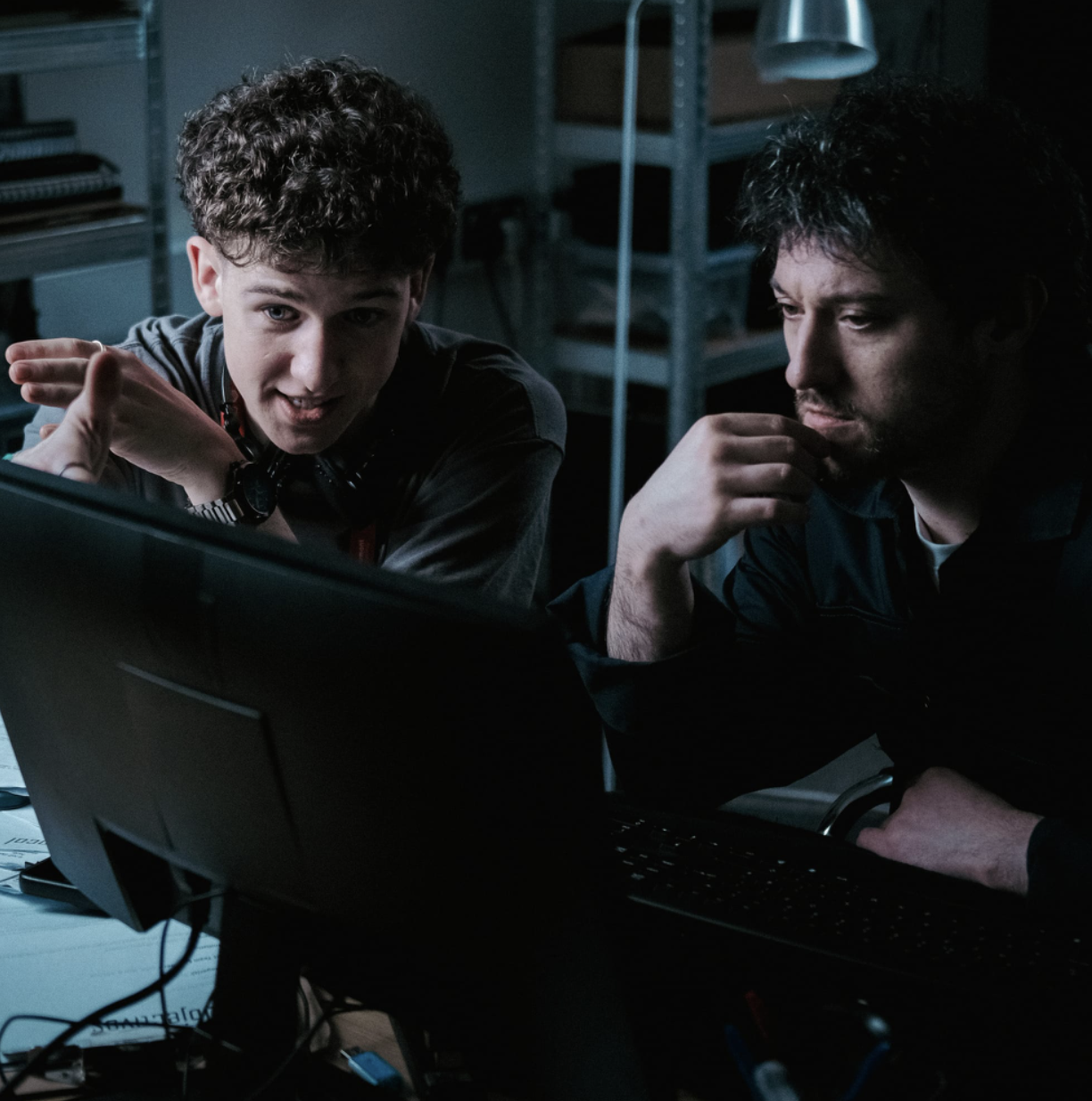
One of the first people I sent the script to was Cal O'Driscoll, my good friend. He came back with such strong feedback, saying, “Seán, you can do better than this. I think there's a much better version of this script that is very different. Do you want to strip it all back and co-write something with me where we explore this together?”
He massively connected with so much of what was in there in terms of the themes and characters. So, we stripped it all back. We kept a lot of the character dynamics, the themes, and the general arc, but made it much more interesting so it could feel more real, like you were stepping into a world.
We wrote the script over December and January and submitted it for funding. Hilariously, when we found out we got the funding from Screen Wicklow, it was the morning of April 1st, if you can believe it. We were like, “Did we? Is this a joke?” Thankfully, no, it wasn't.
We're going into post-production now, and it'll all be wrapped up by the end of this year, with the aim of distribution and festivals in 2027. Cal and Jonathan Heed, Kane O'Connell O'Flynn, and Oliver Finnegan are our four lads, and it was incredible working with them. It was such a privilege and joy, and all of them are now going on to do such exciting things.
That sounds amazing. What's next for you?
There's an idea that I've had for a long time that I want to execute. When I make my next short, I'll have made three big, ambitious, funded, professional short films that I can be really proud of and that should be healthy for my directing portfolio.
I'm embracing the liberty that comes with this level of directing. There's no studio executive telling me what to do. I'm in this gorgeous period of freedom where I'm able to make sure my films are done in ways that I can be excited about and proud of, and work with people I love. I think what I'm trying to do now is get my identity out there as a director as much as possible.
There was probably this fear towards the end of my DIY period of making films where I was worried. I was coming to a point where I thought, “Okay, now it's time for the real world. Everything gets boring, and now it's the real world of filmmaking, and things will get mundane and scary.”
But actually, it's been the opposite. Coming into this part of my life as a filmmaker has included the development of relationships that I know are going to last a while. When you're young, people come in and out of it. People experiment with filmmaking but might not want careers in it. Getting to work with people who are at the beginning of such incredible careers, craftspeople who I haven't thanked or credited half as much as I should have in this interview, is phenomenal.
I do want to eventually make "big films". I'm very inspired by the likes of Richard Peppiatt because you look at a film like Kneecap and the money it was made for and the energy it has. That sense of scale and energy is what I would love to see in my own productions in the future.
Save Me From Heaven screened at Galway Film Fleadh on 8th July 2026.
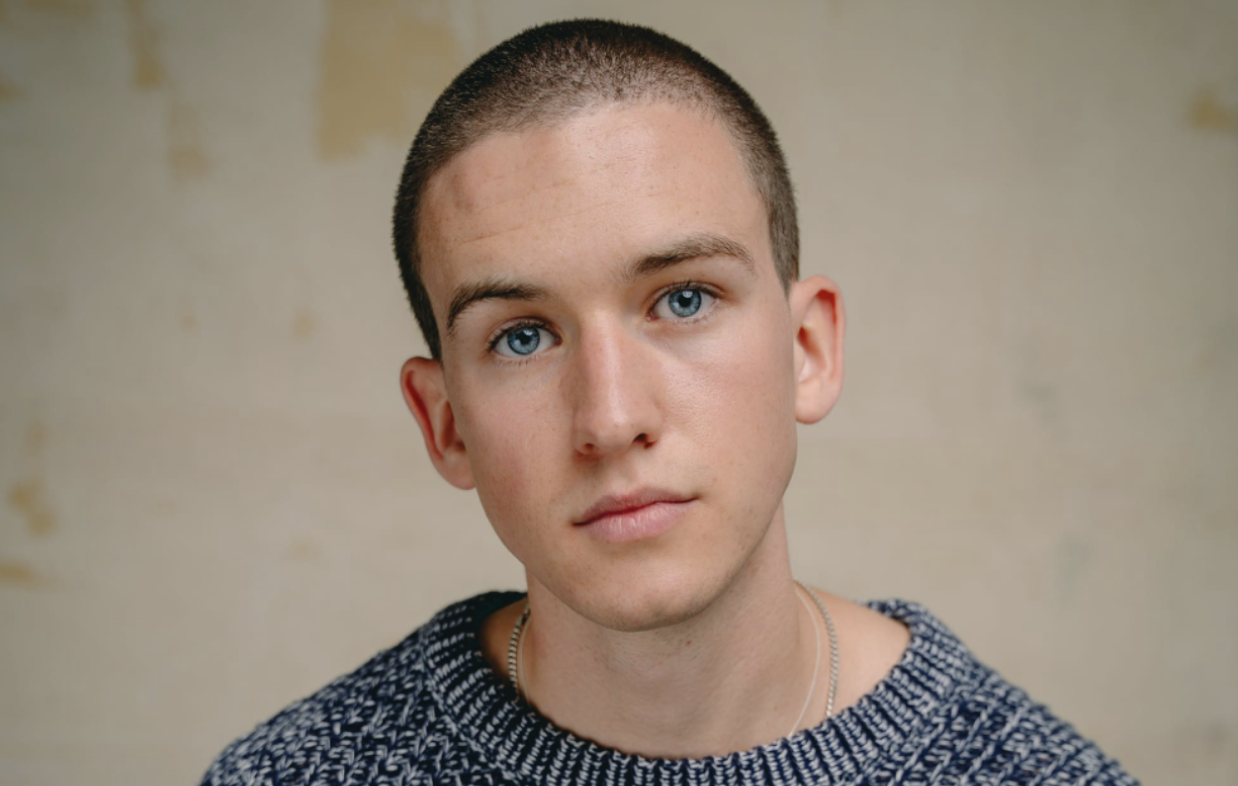
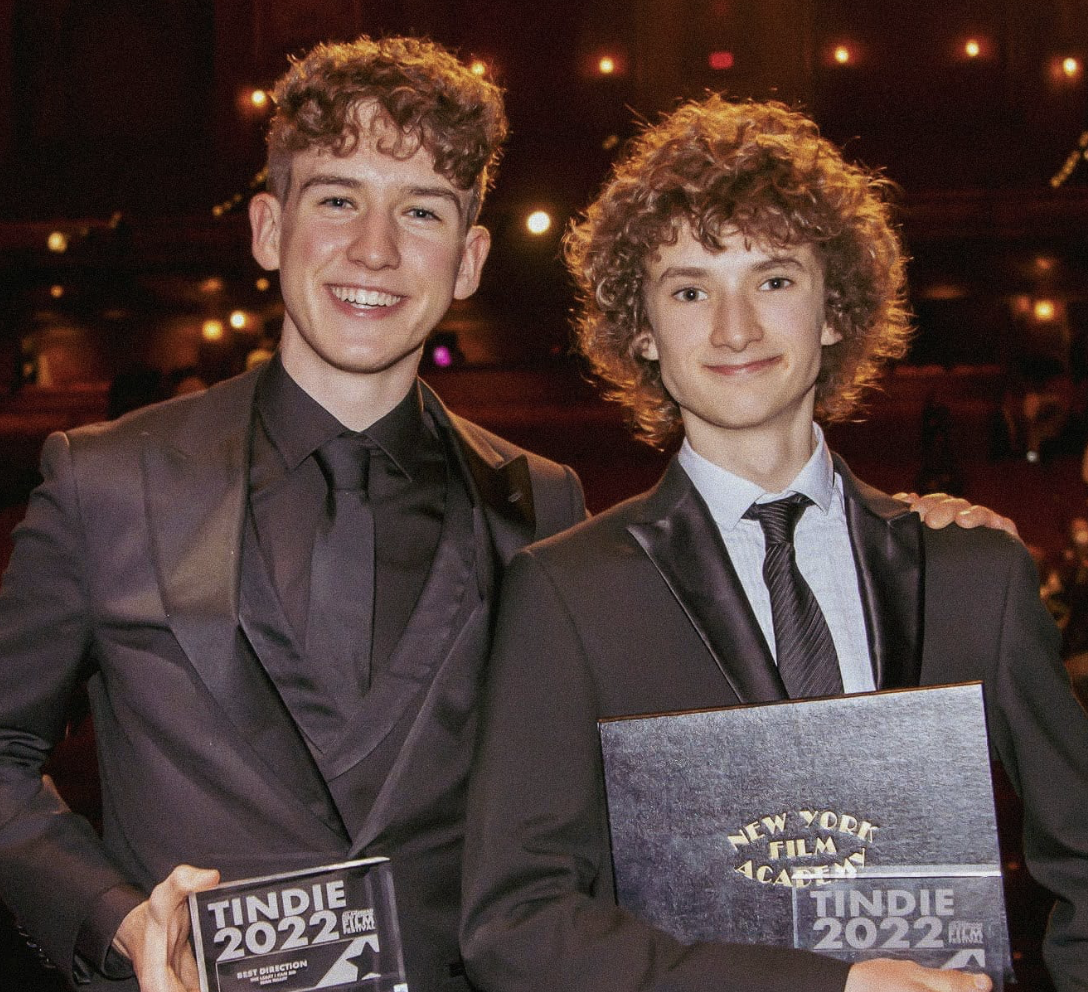
Seán Treacy is a young Irish filmmaker & actor. With numerous narrative short films under his belt as a writer and director, his achievements include being titled 'Ireland's Young Filmmaker of the Year' on three occasions, winning 'Best Direction' at the 2022 All American High School Film Festival in NYC and being awarded the 2024 Ardmore Studios Recognition Award.
His latest short film Save Me From Heaven has been selected for numerous Irish and international film festivals, including the Oscar-Qualifying Foyle Film Festival and the prestigious Trieste Science+Fiction Festival. He also recently produced the short film What You Will, which had its World Premiere at the 2026 Dublin International Film Festival.
Seán has also directed a number of music videos for up-and-coming international artists, as well as the eight-episode kids series 'Ruck And Roll' for Ireland's national Broadcaster, RTÉ.
As a young actor, Seán starred in BBC's Dave Allen At Peace as well as Sky's Four Kids And It, as well as The CW's Reign and The History Channel's Vikings. Recently, Seán starred as Young Oscar in the Dutch-Irish-Belgian co-production Whitetail, which earned an Official Selection at Toronto International Film Festival 2025.


