

For Katarina Kokenyova, Rozkvet is more than a wartime drama. Set in occupied Czechoslovakia in 1943, the film follows two Romani sisters drawn into the resistance against Nazi forces, exploring a history that remains largely overlooked on screen. Drawing on Kokenyova's own experiences and family history, the production also sought to place authentic Roma representation at the centre of its storytelling, both in front of and behind the camera.
Writer and journalist Rachel Walshe sat down with Kokenyova and director Thomas Pollock to discuss how the project came together, the importance of telling stories of Romani resistance, and the challenges and rewards of bringing this little-known history to life.
Is Rozkvet “flowering” in Slovak?
Katerina: Kind of. It means “to bloom”.
Ah, okay, “to bloom”. Throughout the film, nature is used in different ways, from the dandelions Katerina’s son picks at the beginning to Engels (Andrew O’Neill) later describing certain people as weeds. How did you approach bringing these themes from Andrew’s script to the screen?
Thomas: Well, I think flowers are a big symbol in the film, especially because the partisans are using them to communicate. As you've seen, there's a really good analogy: they'll [the flowers] always come back. So the idea is, like seasons, flowers can go, but they'll always come back and bloom the brightest.
And the code that the Partisans have. Is that based on historical fact?
Thomas: It is, actually. Yeah. Andrew could talk more about that, obviously, extensively, but it's interesting.
Katerina: He's done a lot of research. He's a history buff in everything, and he just read so many books and documents, and watched everything. He's done really, really deep research into this, and based a lot of things on real life.
You mentioned that conversations with Andrew about your family’s history helped inspire him to explore the history of Roma resistance during the Second World War. What was it like sharing those stories with him, Katerina?
Katerina: You know, it was never intentional. I never just sat down with him and, you know, went at it. I think it just always came up here and there, bit by bit, and he started to get interested in this part of history.
First, he came up with an idea. It was just meant to be a showreel scene. I was actually looking to upgrade my showreel, and he wanted to write a scene set in Czechoslovakia. Basically, I said to him, “Look, it might be more interesting if I played a Romani woman, because I am one. Then the story would be even more interesting.”
So, he wrote a wee scene, and then it just gathered dust for a while. Years later, he wrote it as a one-act play. Then Thomas and Larry (Cowan, producer) came to see it and had the idea of making a movie out of it. It just expanded massively.
So it was your suggestion to bring the Roma element into the story itself?
Katerina: Yes, it was. And Andrew actually said he wanted to suggest it but wasn't sure how I would react.
I grew up in Slovakia, and the truth is, I experienced racism from a very young age. I grew up with it. It was just a normal thing. So, whenever we moved here to Northern Ireland, I didn't really tell many people about my background. Because, in my head, here I was just an immigrant, the same as other immigrants. I wouldn't experience any additional segregation or reactions because of my Roma heritage. So, I didn't really talk about it, but now I just felt that it was time.
I experienced racism from a very young age. I grew up with it. It was just a normal thing.
There’s very little Roma representation in film, particularly behind the camera. I know there was a real effort to involve people from the Roma community in this production, including casting. What was that process like?
Thomas: Yeah, we did open casting as much as possible. Obviously, we had a lower budget, so we didn't only go to agents and casting directors and stuff. But we did a big casting, went as far as we could, asked everyone we knew. But the most important thing was that all the Roma characters were played by [Roma people].
Katerina: Yeah, that was non-negotiable. We all agreed on that.
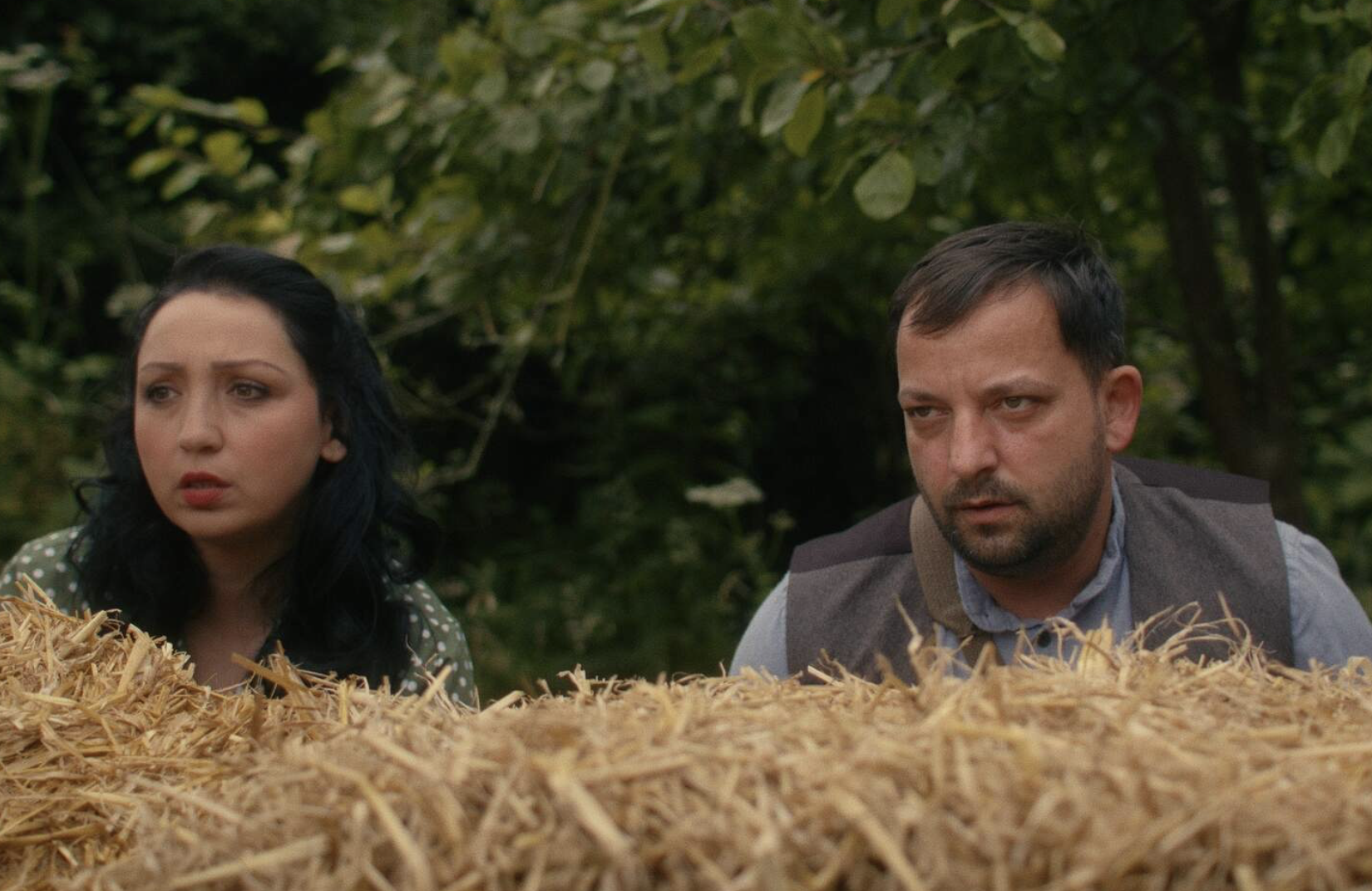
Thomas: And in turn, that ended up being a lot of Katerina's relatives who were non-actors. So the cousin is the cousin, the sister is the sister.
Katerina: Exactly, the character plays my sister. She's actually my sister in real life.
I was looking at you both thinking you were so similar!
Katerina: Yes. And the actor that plays Jan, my cousin in the film, really is our cousin (Ladislav Billo). And another interesting thing, the little boy who plays my son, it's actually my sister's son.
It sounds like there's a lot of art taking inspiration from life with you, Katerina, from your family's history to your family taking on roles. And I know you were one of the co-producers on the film. I saw the film described as having a uniquely female perspective. What was it like kind of having that as part of the overall story, bringing that feminine perspective both in front of and behind the camera?
Katerina: It was incredible, to be fair, because I don't think there's many war movies either that are female-led. So it was really empowering, and just to see everything through a woman's eye, and see and be able to show their strength, it was just incredible. And behind the scenes, it was all new for me because I was always just in front of the camera. So it was really exciting to see (and a bit scary as well to see) how much work goes behind the scenes as well. And just to be able to take part in the casting process and just afterwards, when we were editing the film, just to see how it all comes together in front of our eyes, it was just – it was incredible.
Thomas: Katerina was absolutely invaluable in the whole process. Also, to add to that, I'm obviously directing scenes in a language I don't know, and Katerina knows multiple languages, you know, which is incredible too. But at the same time, I know her sister and her cousin. So the communication process, it was all about rehearsal and just building a relationship. The important thing was to make everyone comfortable.
Katerina: Yeah, I think the good thing for the first-time actors was that there was really enough preparation and a lot of time to rehearse with them before filming. We gave them different tools, and they were just excited and they took it really seriously because they understood how important this story is to tell. And they were so happy that they were able to be part of this story and to bring it to life. So they really just went for it.
Just going back to something you said there at the start, Katerina, it's very true that there aren't a lot of female-centred war stories. Thomas, why is it important to keep talking about stories from World War I and World War II?
Thomas: Well, I think Andrew's definitely more into the World War thing than I am, but I get very drawn into those stories as well. I even did a module on films about the Holocaust at university, and zero mention of Roma. Very interesting. Twelve weeks and you're looking at all these films and not one mention. I think one thing is being transported to a different time and just seeing what kind of values have changed and parallels that are there today.
What is it like directing people in a language that isn't your own as well?
Thomas: It was interesting, but at the same time, when you've done the rehearsal process properly, there's elements other than the words that make you pay more attention to the nuance of how you say things. But different languages, people speak in different, as in, intonations as well. There's little nuances that I'm not going to pick up on. For instance, if a line was missed, Katerina would spot it – quite a few times. And I was like, “That sounded fine to me!”
Katerina, just like your character in the film, is it true you were interpreting in real life as well?
Katerina: I translated the script as well. Andrew wrote it all in English, and then we worked together. That was a very interesting process as well because there were many things I could not translate exactly. I would say, “We just do not say it that way, and it just doesn't work”. So we had to come up with some things that would work in both languages. There was a lot of editing and changing the script. It took a wee while to get it right.
Thomas, as this is your feature directorial debut, what are the key differences you feel taking on that long-form project versus kind of working more in short-form films?
Thomas: I'd say the important thing is, while you can be ambitious, be realistic. Because I'm a director, and not a director-writer, my approach is always very, very practical. You might have to compromise, but I think don't rush it. I understand what that's like, a burning passion. But see, the more time you spend to prepare it, the better it's going to end up being. Because you’d be like, ‘Okay, I need to do this by this year’, and you’d only do about two months’ prep. If you spend six months doing that, you get so many other things.
Never rush into something is probably the advice that I would give because I'm still seeing people do that now who are stepping up towards the features. Try doing five days instead of 10 for this block. Trust me. We did this film in multiple blocks. You know, we didn't just shoot that all at once. We would have killed ourselves.
How did you structure the shoot then?
Thomas: It wasn't split up too much. We said, “Right, we'll do all the outside stuff in the summer, get that out of the way.”
Katerina: We're really lucky with the weather down here.
Thomas: Oh yeah, that was the five good days of the year we got. And then we did all the scenes in the interrogation room, and all that stuff at the facility. That was a big block. This was pretty much about “85–90% of the film. Then we waited about four or five months after, and we shot the final scene.
One of the characters I found particularly interesting was Blanka. There's a real contradiction in her character: you find yourself sympathising with her, but when Erika offers her help, she falls back on the anti-Roma prejudice she's grown up with. How did you approach exploring that contradiction, and what did you want audiences to take away from her character?
Katerina: That’s what’s so beautiful about this film: every single character could have their own movie. They’re all so complex. They’ve been brought up in different ways, with different values, and we get to see that. Every one of them has suffered and experienced their own heartbreak, but they all react differently. That’s what makes it so beautiful. Even if you strip away the war and the story of the Roma people, it’s still a beautiful story about human nature. Blanka’s story, in particular, can be applied to so many different situations in the world. It really makes you think: if you’ve been brought up to believe something, will there ever be a time when you start thinking for yourself? Will you ever change your mind, or will you simply continue to believe what you’ve been taught?
With Blanka, she was brought up to believe that Roma people were bad and dangerous, and she accepted that. She was more scared of her than of the soldiers. So, I think it’s a beautiful and very, very powerful scene in the film.
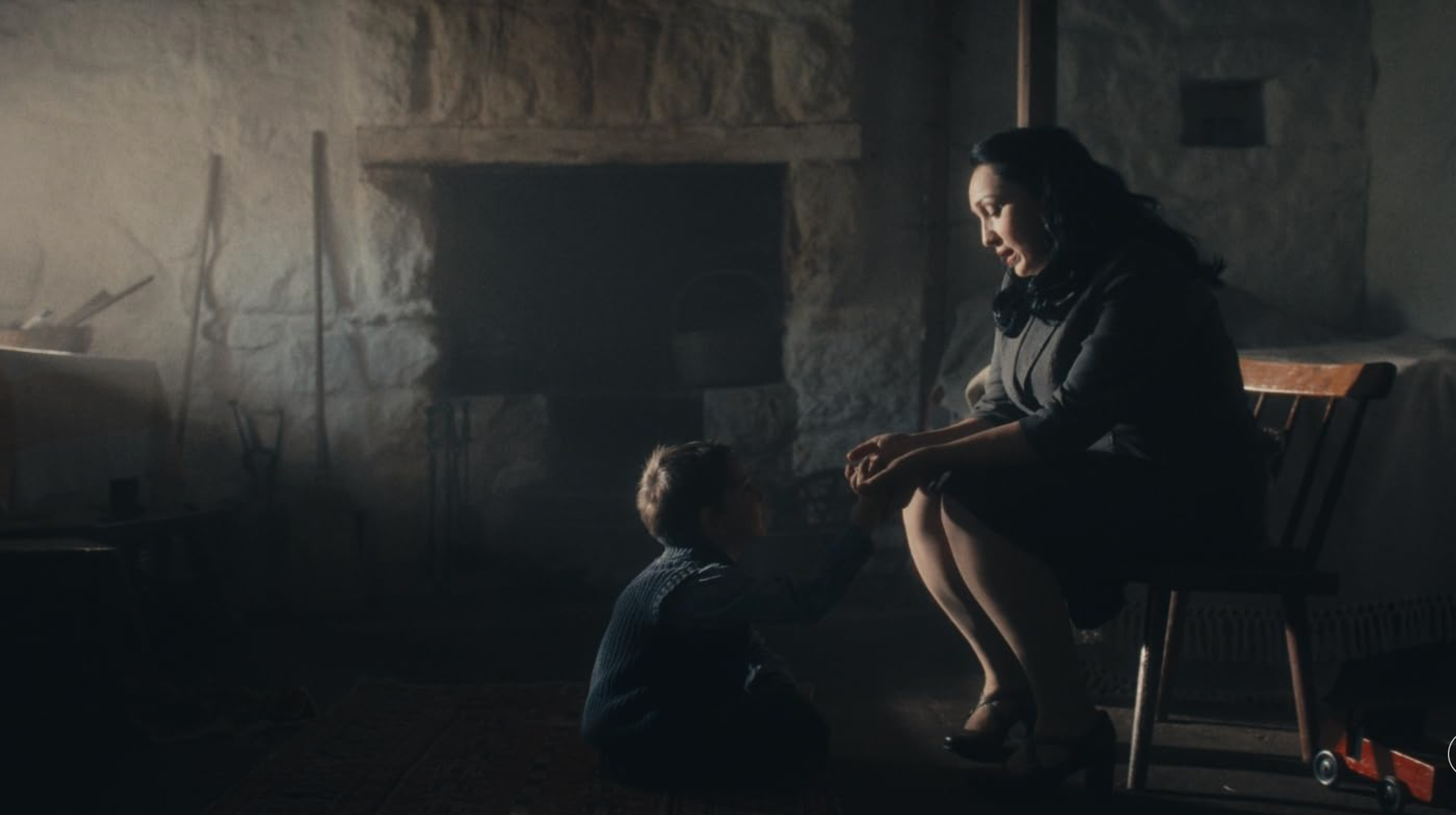
I also noticed in the script, and this is only because I'm a Hunchback of Notre Dame nerd, that there's like one reference within the film, when Engels says, “Gypsies don't do well inside stone walls”.
Katerina: I’m so impressed. I think Andrew’s drawn from that story. As I said, the first time when it was a play everything that happens is in the interrogation room. Just the three of them (Erika, Engels and Silvano Reale, played by Richard McFerran). So yeah, that's impressive.
I know the representation of Roma people in that film is far from perfect, but are there any films or filmmakers you feel offer a good example of Roma representation, outside of this one?
Katerina: This is why I wanted to do a movie. I'm not saying there is not. I obviously haven't seen all the movies with the Roma representation, but the ones I grew up with, it was really stereotypical. When I was a child, whenever I saw Roma people on screen, they were always shown in a very, very negative light. They were criminals or dirty people with nits. Those were the only representation I ever saw on the screen. That's why this story is so important for me. I always said even if one little Roma boy or girl watches this movie - and will feel pride instead of shame - I already won. I really wish I had this representation when I was young, to see this in a film.
Is that part of what you were hoping for too, Thomas? Because I know you said during your course that there was no mention of Romani art or depictions of their experience of the Holocaust.
Thomas: Yeah, and some of these films certainly will play at festivals and stuff locally or across Europe, but then no one picks them up for distribution. They don't get seen anywhere. So it's more about the exhibition and distribution of these things than the making of them. There is a Roma festival in Berlin, for instance. It has been happening in the past few years. I’d like to see this be the start of something. Ultimately, we just want this film to be seen by as many people as possible.
Katerina: The other really important thing that I want to mention, when we say “Roma people”, there's so many different types of Roma people all across the world. I do not want to say that this film represents them all. I was drawing from my personal experiences and from the group that I grew up with, so everything you see in this film is my lived experience. This doesn't mean that all the other people, Roma people, experience the same things.
Thomas: Actually, the Peaky Blinders film, for instance, all of a sudden decided to try and draw upon sort of those Roma themes and again, they're just going back to the usual stereotypes. Fortune tellers and things like that.
Katerina: I know we use dreams quite often in our story; this was all from my personal experience. Honestly, my family and even my friends, the whole community, they just believe so strongly in dreams. Even to this day, my mum would phone me and say, “Look, I had a bad dream, would you be really careful today?” It's just a normal thing, something I grew up in and, you know, I lived it. So that's why we put it in a movie, because this is how we think and how we live. But again, I'm not claiming that all Roma people believe in dreams. This is what I know. So this is what we put in our story.
Is the white horse something that's culturally relevant?
Katerina: Yes. It's well known that if you dream about a white horse, it means death. Again, when Kvetka (Lejla Szajkova) is brushing her hair, and in a dream, if your hair is falling out, it means there's going to be a great sorrow. It's all symbolic. And the good thing is, when we had our private cast and crew screening, and when the people from the Roma community saw it, they understood straight away because they live it, they know it. Other people come to you and ask so you have to explain it.
Thomas: Yes, a lot of people asked, “What’s the horse about?”
Katerina, your character’s appearance changes throughout the film. At the beginning, she has a more traditional 1940s look, with short hair styled in victory rolls. However, in Kvetka’s dream sequence and again at the end, her hair is long. Was this a deliberate reclamation of identity, or was there another significance behind the change?
Katerina: We don't say a whole lot about it in the film, but there's a brief conversation between Jan and Erika where he mentions, “You left us, you changed your hair, your clothes.” We then find out that her husband was from a non-Roma community and that she lived with him in Prague. Obviously, as it was a capital city, she wanted to blend in.
This was the backstory I had in my head: her husband was also a partisan, and she didn't want to draw attention to them. So she thought it was better to blend in. That's why she cut her hair and started wearing those clothes. When her husband was murdered, she had to flee and go into hiding. Logically, the only clothes she would have had with her were the ones she'd been wearing in Prague. So there she was, in the middle of the forest, wearing the only clothes she had. I suppose it was more of a practical reason than anything else.
Because Andrew wrote the script and I guess he obviously cast himself in a negative light (as a Nazi botanist), what was that like having him there in terms of translating the work as the director?
Thomas: I think the real blessing is that Andrew and I have a fantastic relationship. You often hear about directors and writers falling out or arguing, but that's very rarely the case with us. And when we do disagree, it's usually over something quite trivial. We might have different opinions or be a little stubborn, but we never take things personally, and we always manage to reach an agreement.
We're usually on the same page about most things, which really helps. Sometimes I'll push for something a little more, and if I can justify my reasoning, he'll say, “Okay, you know what?” But generally, we agree on most things, which is great.
Katerina: The way Thomas directs is so great because he gives you breathing room and is really open to ideas from the actors as well. None of us ever felt like this was the only way, or something had to be done. He would always listen. And many times, something would pop into your head, and you'd go and talk to him about it. If he liked it, he'd say, “Let's try it that way as well,” and then we'd pick the best approach later in the edit. It felt like co-working, you know? It wasn't just a director and an actor, with this being the only way to do things. He gave everyone so much breathing room, and it was a really great experience on that set. Just the freedom of expression.
Thomas: That's a great TripAdvisor review. Film’s a collaborative medium, that was my philosophy!
Well, I really hope this has a long festival circuit, because it feels very important.
Thomas: Thank you very much. I'm glad you enjoyed it.
Rozkvet will have its world premiere at the Belfast Film Festival on Wednesday 4th November at 8.30pm at the Odeon. Book your tickets here.


