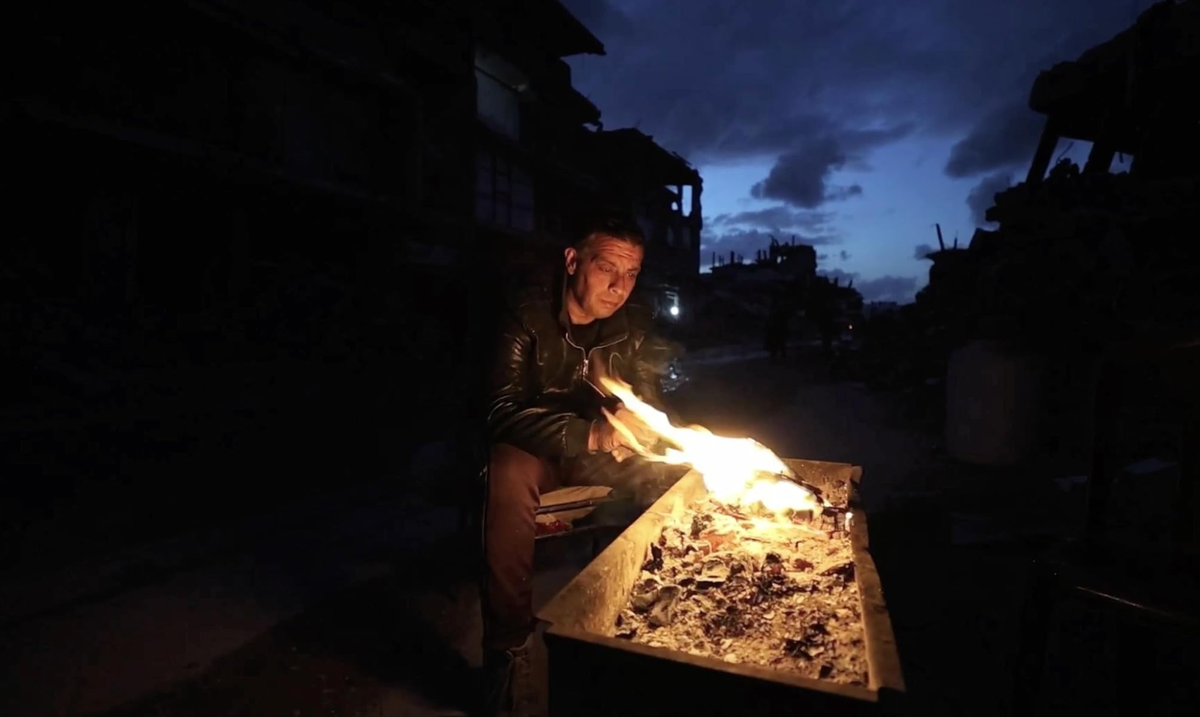

What does it mean to bear witness to a genocide, and what responsibility do filmmakers have to ensure those stories are heard? In Life Support, filmmaker Daniele Rugo brings together the testimonies of doctors who have worked in Gaza, documenting the destruction they witnessed at a time when international journalists were unable to report independently from the ground.
In the second part of this two-part conversation Rugo explores the importance of documentary filmmaking, the responsibility to preserve a record of Gaza beyond its devastation, and how to honour the Palestinian lives and experiences at the centre of the story. In conversation with filmmaker and writer Rachel Walshe, he reflects on the power of collective cinema, the ethics of depicting perpetrators, and the haunting final image of his powerful feature.
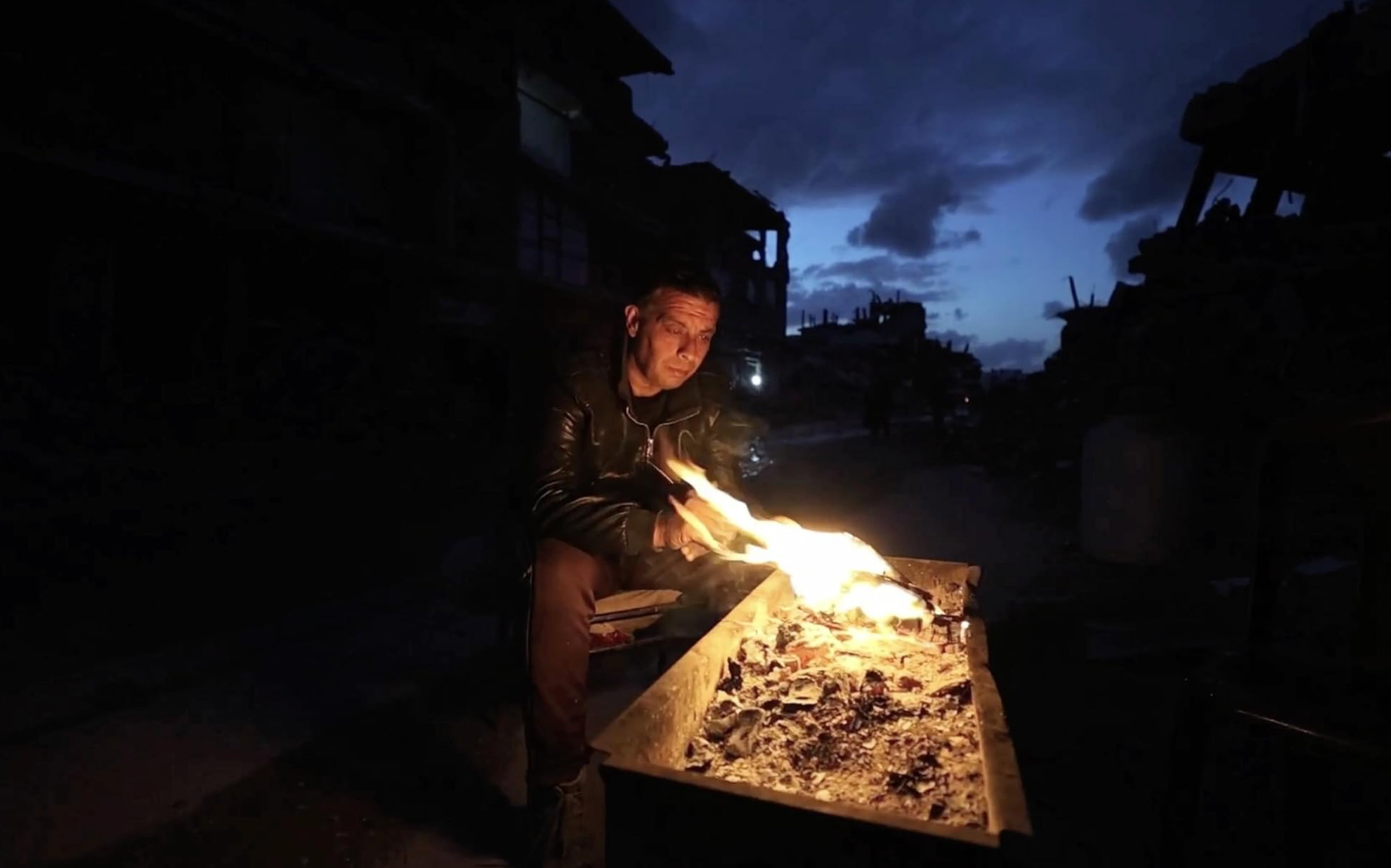
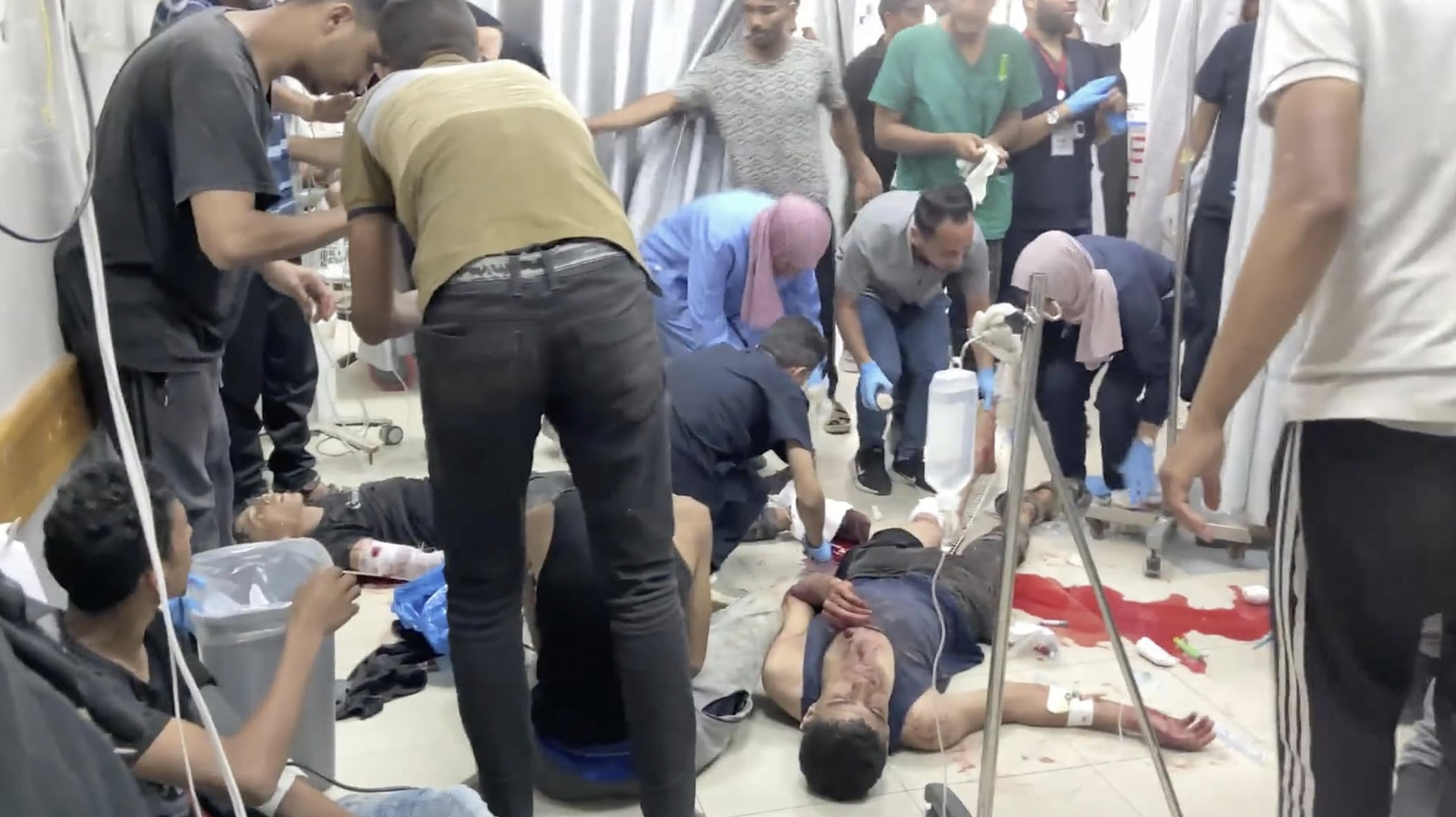
In terms of the doctors themselves, the medics became the media for the lack of presence on the ground, and this film speaks into a gap that has been so prevalent since the beginning. What role do you think this film, and filmmaking more broadly, can play in documenting and bearing witness to events like these?
Daniele: Maybe this is the chief reason why I make documentaries and didn’t go into fiction. Maybe I wouldn’t have been good at fiction anyway, who knows? But I think that, in particular, media environments are extremely controlled, especially when it comes to conflict, and the more sensitive the conflict is, the more polarising it is, the more tightly controlled the media space will be to serve, accompany, and shape one narrative or the other. We’ve seen this with Ukraine, we’ve seen this with Syria, we’ve seen it in the Iraq War in 2003, we see this in every conflict. I think documentary filmmakers, in particular, have the privilege of not having to work within television structures or television funding structures, which can really change the way in which we perceive what these wars are.
You can speak from a position that is not dictated by a particular agenda, and I mean that in two senses. Not dictated by the speed of the news cycle. You know, it takes at least a year, if not two years, to make a feature documentary, so you can’t go by the news cycle anyway. Because by the time you start, there’s a news cycle, and by the time you finish, there’ll be another one. So you need to already think differently. You can’t think, “Oh, I’m going to chase the momentum of this particular story,” because by the time you finish a year out, that story’s gone. It’s been consumed. So you have to think in the longer term.
You’re also not dictated by serving the agenda of a particular master, if you want, an editorial master or governmental master.
Then it’s up to you and the team. It’s always a collective process. It’s up to the whole team to think about which angle you want to cover and why, and to take responsibility for trying to say things that, if the film goes well, will potentially alter, change, or shape the perception that is had. I think with Gaza, the role of filmmakers is extraordinary because in the West there has been a complete blank system of repression and censorship. Not in view of neutrality, but to serve the Israeli propaganda machinery. It’s been openly the case from actors such as the BBC and various other prominent [media outlets]. So here independent filmmakers are working against the grain. We have the power to, I think, reach audiences who feel gaslit, who can’t collectively say, “Look, I told you!” You watch this and you can tell. I think that is the main gap, and we need to give audiences the ability to say, “I’ve known this all along,” and now we can have a collective moment where we all look at each other and say, “Now I have the evidence. It’s exactly as I thought it was.”
It is a weirdly bonding feeling when you do get the opportunity to watch things like this in the cinema, the collective sigh of “We have seen what we have seen”. It’s not something that can be brushed under the rug anymore or dictated by what content is deemed acceptable for a news cycle.
Daniele: The film has been very successful. We keep doing Q&As, and they’re always sold out weeks in advance. We extended the theatrical release in the UK, and people who see the film keep telling us, “This should be on TV. This needs to be seen by as many people as possible.” And it’s on Apple TV, it’s on Amazon Prime, so it got a more general release, but broadcasters just didn’t want to come on board. I reply with, “Yes, absolutely, you’re right. If it was on TV, it would reach a much broader audience,” but you should not really underestimate the power of collective viewing for something like this. To be, even just three hundred people, eighty people, in a room being able to witness this and talk about it afterwards.
That’s the power of mobilisation that watching something on your telephone or TV – distracted while you’re making dinner or doing something else – just doesn’t have. Personally, as a filmmaker, I want to see my films in cinemas. It’s so important to have the big screen, and maybe I’m old, but it’s really important for me to have a collective viewing and a collective spectatorship, because it mobilises like nothing else does.
I think sometimes we take for granted, or don’t think about, the power of making us feel, as you said, that there is a collective there and therefore there is a collection there who have agency. And what we do collectively will make a difference.
I think individualised watching, with TV or streaming platforms, just never really quite gives you that.
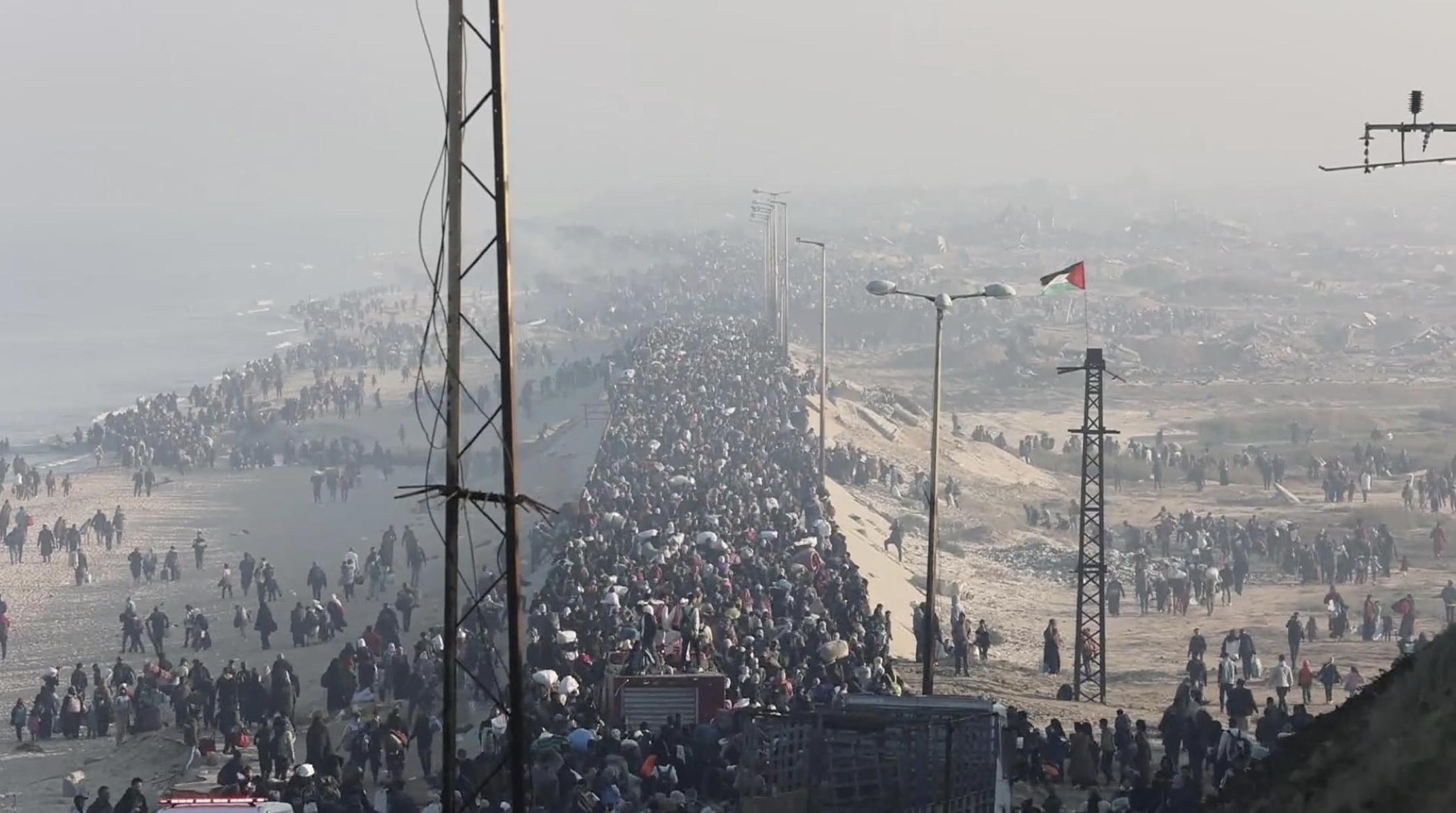
Has that been your experience, then, of watching the film in cinemas with audiences, that it has this kind of effect?
Daniele: Hugely. Absolutely. I’ve watched it so many times, and I sit in just to get the feeling of the audience. And better if it’s a nice cinema, you know, for the technical details, the sound. The Light House was wonderful, such a wonderful screen, but yes, the feeling I get is that people, particularly if we do a Q&A, really want to talk about what action they should take and what they need to do to change the minds of their local MPs or their communities or friends. These people, they really want to mobilise straight after. Now, I don’t know how much of that lasts afterwards. I cannot measure that.
Within the cinema space, you create this very strong, collective moment where people aren’t just enraged, but they want to turn that rage into something. I have an enduring love for cinema in all its forms, and I think it’s because of this power of moving collectively, not individually.
Are you finding that people who are watching the film have an inkling already, or are you finding that it is having the ability, as you said, to put irrefutable evidence in front of people who maybe weren’t able to say that this is a genocide? Do you get a sense of who the audience is?
Daniele: I think it’s a mix. Sometimes you have the impression you’re speaking within an echo chamber, but that in itself, I think, galvanises grassroots movement, and that’s also fine. But at other times, you get people who are curious and say, “OK, maybe I’ll go and see this because it’s different. Maybe I’ll be switched off, but maybe not.” And so, I have also seen accounts of that, people who were like, “Yeah, I knew things were not nice, but this is on a different level than what I thought.” So it’s a mixed bag. Probably more of the people are already on board, but there’s a whole section of the audience, particularly young people, actually, who do come and are marked by the film because they didn’t expect it to be that way.
I think it was Dr Ana Jeelani who said, “We are the vessels for their stories.” This feels like what the documentary is trying to do. It was so beautiful to hear how often the doctors were talking about their Palestinian colleagues, highlighting how much more difficult it was for them. They’d no respite, they were losing family members, they were subject to the same conditions. With conversations surrounding documentaries like Naza – a separate documentary – I wonder whether there’s an element of respectability politics at play, where being outside the situation somehow lends your voice greater credibility. Was that ever something either you or the contributors struggled with?
Daniele: I mean, “struggled with” is an understatement. It was the very core of what we were talking about to each other. There are two or three sides to this question.
First of all, we, who are living in safe, peaceful environments and not being on the receiving end of this violence, have a duty to use the time and safety that we have to do everything we can through film and other means to speak up for Palestinians.
There is a duty, I think, in that. If you’re under bombs or you’re starved, if you’re genocided, it’s a lot more difficult for you to make a film. Because you won’t have electricity, because your primary basic needs have to be met before you can make a film. I think one has a right to the image. Image creation should be recognised as a human right. Living in those conditions makes filmmaking almost impossible, and so what you need to do as someone who lives in safety and has the privilege is to put your time and skills to contribute to that documentation, to that conversation, and to the advocacy.
This is one of the reasons that I think it’s important for people like me, people in the West or elsewhere, to do that and not stop. Secondly, the whole premise of the film is precisely that we were using Western doctors as a decoy or a Trojan horse. You will have to listen to these people because you cannot just not dismiss them. We’re going to use them as the vehicle, as Ana says, for talking about the Palestinian healthcare workers, and we’re also going to put you in front of this very fact. You’ll listen to these doctors just because they’re not Palestinian, and you’re lending their words a lot more credibility precisely because they’re not Palestinian.
This directly allows us to platform the conversation around anti-Palestinian racism and the kind of colonial mentality that is completely at play with everything that has to do with Palestine. The reason that I think you guys in Ireland can understand the Palestinian experience so well is because it is the birthchild of the colonial mentality that you also had to endure, and the reason why so many people find it so easy to get on board with anti-Palestinian racism is because we still live in a colonial framework, where there is a hierarchy of populations and of rights and needs, and of people. Some have more rights to speak than others. That was very, very clear for us.
Then, this is the third element: it was important for all the doctors that they were not the story. The story really is what Palestinians have had to endure. It was very clear that this message had to come through, and as you said, the film is peppered with this, and throughout there is this signposting that this is not about us. We go back, as Dr Rosie said, after two weeks. We can go back and get therapy for the trauma that we’ve been through. We don’t have starving families, we’re not going to be bombed on our way home because we wear scrubs. But because we are in this situation, we need to try and speak for those who are not being listened to and who are being murdered. I see that as a duty rather than an ethical dilemma.
Now, identity politics would want me to say that no, I can’t speak on this because I’m not a Palestinian, I’m not living the genocide. I’m not going to accept that. That, for me, is an instrumentalisation of a kind of liberal mindset that tells you that that matters more than speaking up against a genocide, and I’m not really going to accept that. The question of Naza… I think that’s more problematic because the very perpetrators there are speaking, but I haven’t actually watched the film just yet.
Please don’t feel that you have to comment. I had just noticed there are many films at the moment that are speaking about this. And like you said, I don’t think we should be ignoring our duty to speak up because of identity politics.
Daniele: No, I’m sure it’s not what you’re saying, but I know this argument exists.
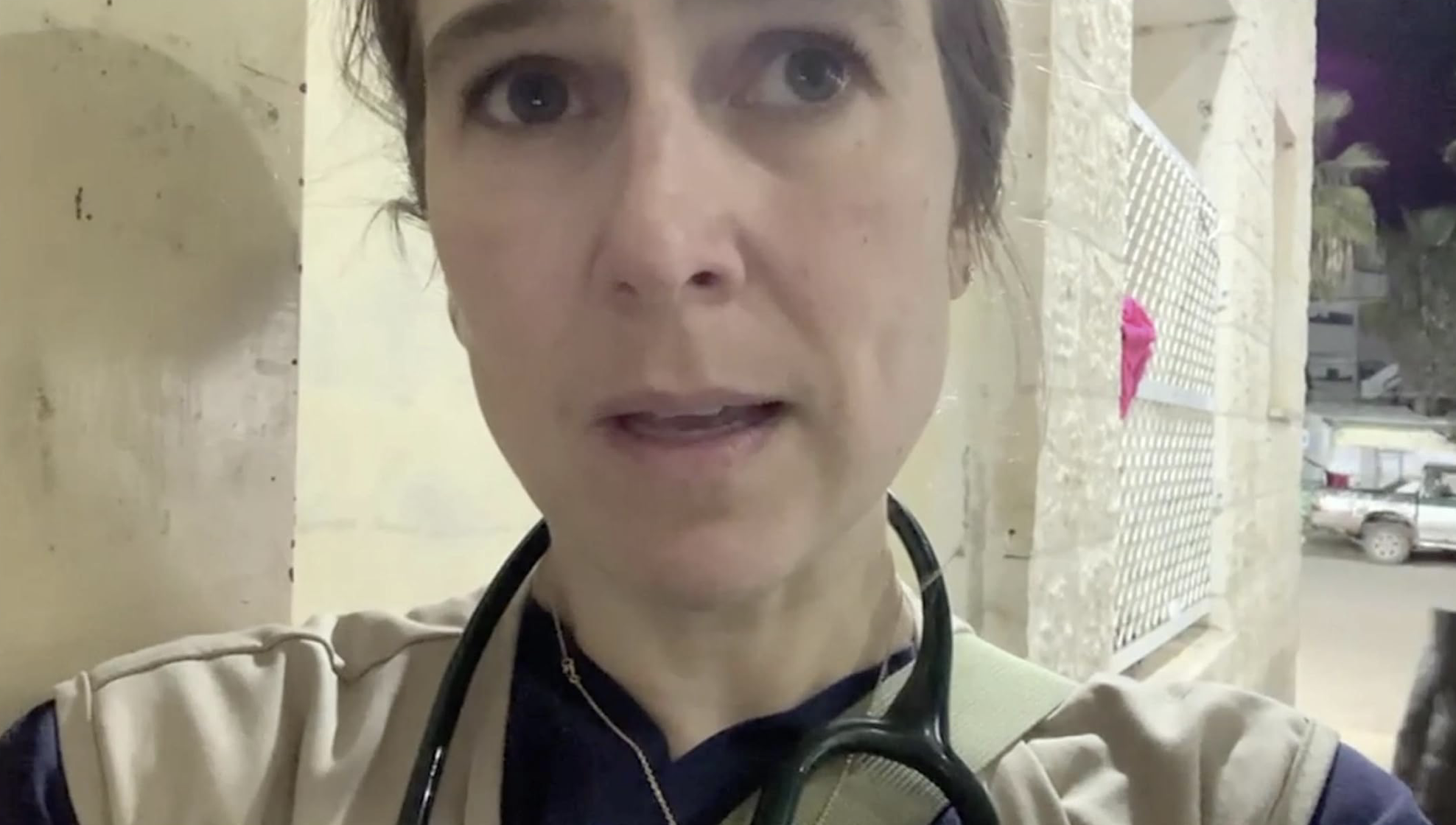
Oh good, but it does feel like there are filmmakers who are using their platforms to be able to speak about what’s happening in Gaza. But at the same time, it’s not always the Palestinians who are getting to speak up about their own genocide, and one of the things I thought was so well done in Life Support was that the last words are given to a Palestinian, Alaa Alqaisi.
Daniele: She’s in Dublin, actually.
Yes, she’s in Trinity!
Daniele: She’s wonderful. Again, that was very important for us. And it’s not just a gesture. You want Palestinians to have the last word, but you also need to be aware of the structural environment that you’re working in and wanting to get the message across. The role I see for myself is contributing to those voices and those stories being spoken about. In general, I think… because this is the world of film, though, which very much lives off spectacle and personal recognition, there is a risk with us and with Naza even more that the attention is drawn to the makers of the film, or the fact I am Italian and the others are Israelis, rather than what the film is trying to do. That is problematic. And Naza is becoming about that, and the reason why I think the Israeli government has moved so quickly to shut the film down is not because of what the film says, but because they want the story to be about the two filmmakers and not about what the film says. In fact, the conversations that I can see around it are mostly about these two poor filmmakers who may get their citizenship revoked.
As opposed to what the film actually says? What is the content that they got out of the whistleblowers, and what can we learn out of that? What can we learn from a legal point of view and mounting a case? Is there something that can be used in South Africa’s genocide case from this? This is what we should really be talking about, and yet the story, unfortunately – the Israeli PR machinery is very good at this – has immediately become about the two of them, not about what the film says. That is the risk, and I think that was the risk with The Voice of Hind Rajab. Beautiful film, but the risk is that it becomes about, “Look at all these executive producers who’ve come on board, Brad Pitt and Joaquin Phoenix and Spike Lee.” But it really should be about the fact that this little girl had been shot 350 times when she was trapped in a car.
That’s the problem I feel more generally with film, the film environment or film world, critics, festivals, programming, and filmmakers too. We tend to really platform individuals and the spectacle that these stories create, much more than the content of the film. I don’t know if we have a remedy for that. I mean, would you have accepted a Khmer Rouge film about the Cambodian genocide at the time of it happening? Or something done by Germans during the Holocaust? I don’t know. It’s a very difficult question. My hope is that Naza helps the cause and then manages to move it further. Not that it is used too much to focus on filmmakers or to say, “Israel is an open society, you can make a film like that.” No, it should really be about what the whistleblowers have said. I’m not sure if we’ll get there.
The film situates us in Gaza. We rarely leave, and we are with the Palestinians and the doctors solely, but there is one segment of what looks like archival footage of the Israeli tanks. Perhaps similarly to films you’ve done previously, we don’t see their faces, only the literal war machine. Was naming the perpetrator here in this segment important for you?
Daniele: We discussed this a lot with Masahiro. The perpetrator had to be there, so there is a shot where you see the flag of the State of Israel when they [the tanks] fire into Gaza. Because this is another common thing around the slow and fast genocide of the Palestinians: slow and fast, depending on when you look. Palestinians die, they are never killed. And when they are killed, it is never by any specific perpetrator, so leaving this out would have meant really playing into that. So it needed to be in, but how is it in? Do you lend a voice to the perpetrator?
At one point, we had that. We had a collection of Israeli voices and authorities: Netanyahu and Gallant talking about Amalek [a story from the Torah in which the Israelites are commanded by God to blot the Amalekites from under heaven] and about destroying Gaza, turning it into tabula rasa. And then that felt like it wasn’t the right thing to do because, in a way, you’re giving a platform to these people, which we didn’t want to do. And really, we wanted it all to be from the point of view of the doctors, so we had to find a sort of compromise, signalling clearly that the perpetrator was there at the beginning of the film, and then withdrawing all attention from that, referencing it only as the agent of violence that we were seeing, without crossing into that camp and giving them the word. So this was a conscious choice.
I don’t know if we’ve got it right or not, but this was the rationale behind it. We wanted to show that there was a perpetrator and that they were physically present on the land. That’s why we got the tanks advancing and not just the planes, drones, and bombs coming from nowhere. But yeah, this is still something I think about, whether we’ve done it right or if we should have done more. It’s a bit ghostly, maybe, at the moment, but we’re not not naming it. It’s something we debated and changed at the very last minute. We reopened the film to make some changes in that section, in discussion with Farah Nabulsi, one of the film’s executive producers, a wonderful British-Palestinian filmmaker. I think the perpetrator needs to be there. We need to find a way for them to be there without feeling like we’re giving them a platform to speak, and the visual rendition in the end, the one that we chose, was the one that we felt was doing what we needed it to do. But that’s maybe open for debate, really.
I will say, it’s brief, but it’s very effective when you realise that this is the IDF’s point of view, the literal point of view of a soldier. But the final image – and maybe this does need to be up to the audience – is of Palestinian children running towards the camera, again back in 2022. We know what’s about to happen, and yet they’re captured in a moment of joy. Was there a note you wanted to leave the audience on with that image?
Daniele: I don’t like those answers because every choice you make is meaningful, and then you go to these press conferences and you say, “The audience can do what they want with it.” No, you clearly wanted something, even if it’s not completely in your mind. There are two reasons for that. One, because that film interestingly unsettles the temporality of the film. It’s in the past, but then the question is whether these people are still alive and whether there’s a future for them if they are still alive, so it brings together these three temporal elements.
These children are not naturally “of the future”, but when we see them, we think about the future.
But they are of the past and have now gone through a genocide, and we don’t know what happened to them. What are they running towards is the idea? Which time do they belong to? And then there’s a filmic reference there which only me and the editor get, but it doesn’t matter. It was important to us. It was a way to replicate the ending of Les quatre cents coups (The 400 Blows) by François Truffaut. It’s a film about children and specifically about a child that comes of age very problematically and finds a certain loneliness, solitude, a way of being himself. It ends with him on the beach and looking into the camera, and there’s this freeze-frame. And we really don’t know what happened to him, what kind of person he became. So it’s very much a question for Truffaut that the audience is meant to leave the cinema with, and we wanted something similar.
That was what I took from it. Maybe not the film reference, as I’m clearly not as much of a film buff in the same league as you and your editor. It was a well-executed shot.
Daniele: I have to say the editor insisted on this finale. We had a number of conversations around achieving that reference, how to have it seem natural and still execute it as we wanted. In the cutting room, you talk so much about so many film references, and often ideas come up in the least expected ways.
Thank you for chatting with us.
Life Support screened at Dublin’s Light House Cinema on 6th and 8th August 2026, and at Galway’s Town Hall Theatre on 8th October 2026 and is available to stream online now.
See upcoming Q&As here and donate to MAP here.
 Film Ireland Editor