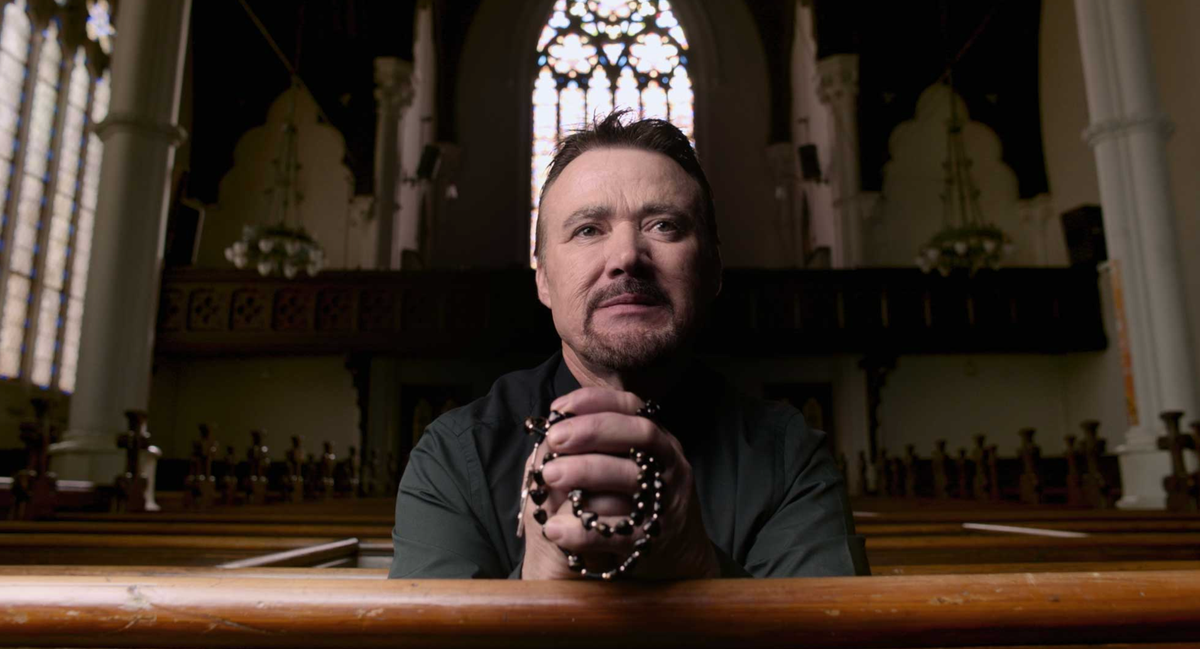

Directed by Ronan O’Leary, A Sunken Place is a dark Irish medical thriller that follows Alice, a brilliant neurologist who discovers a cure for depression, only to find herself opposed by giant pharmaceutical companies determined to crush her.
Intertwined with Alice’s story are the lives of four people affected by depression, creating a dramatic portrait of lost souls, troubled minds, and the complex realities of mental health. Written by and starring Gerard Daly, the film explores the medicalisation of mental-health treatment, the pharmaceutical industry, and the fine line between treatment and control.
Rachel Walshe chats with director Ronan O’Leary and writer and star Gerard Daly about the origins of A Sunken Place, the film’s exploration of mental health, the performances, visual effects, and the challenges of bringing such a complex story to the screen.
How did your collaboration come about?
Gerard, you wrote and produced the film and also starred as Father Larry. Could you expand on where the story first arose from, and how was it being on set watching your script come to life?
Gerard: Our collaboration grew organically. Ronan loved my script. From the get-go, he really wanted to get this project off the ground out of our shared passion for telling stories that explore complex and often overlooked aspects of mental health. From the start, we wanted to create a film that not only entertains but also sparks meaningful conversations. Having worked with Ronan previously, we had a strong foundation of trust and creative synergy that made the whole process fluid and inspiring.
The genesis of the story came from a deeply personal place – both from my observations of how mental health is approached medically and socially, and from witnessing the struggles of those close to me. I wanted to tell a story that captured the complexity of mental wellness, the medical system, and its pharmaceuticals. Being on set and watching the script transform into reality was profoundly rewarding. It’s a unique experience seeing your words and intentions embodied by the cast and crew – each performance adding layers and nuance that you can’t quite imagine on the page.
Ronan: What attracted me to Gerard’s script was the fact that you had one central storyline, that of the female neurologist who has discovered a cure for depression only to be ruthlessly opposed by the giant pharmaceuticals, and intercutting with that storyline were the stories of three characters desperately in need of mental care; and Gerard very skillfully intercuts these four strands of his story.
The film is described as a medical thriller, and there’s a strong critique of pharmaceutical companies and perhaps the medicalisation of mental-health treatment. How much research did you need to do to conceive of the “C20 chip” and, to both of you, what are your thoughts on the current state of mental health services in Ireland? It feels like the film is very much trying to open a conversation.
Gerard: Research was integral to developing the “C20 chip” concept – a fictional device at first, but the science has evolved and changed over the years. I was inspired by a young woman I have known since 2014. The character Kirsti in A Sunken Place was based on her. Sadly, unlike Kirsti in the movie, my friend was not so lucky. She has suffered from depression for years, and ran away from home a number of times. I last spoke to her in late 2018. She was a shell of her former self, shaking and stumbling in her words. “I wish they could put something in my brain instead of meds to stop this horrible feeling,” she told me. It was not long after that she sadly passed away.
I played with the idea of a story about a chip to control human behaviour, about advances and debates in neurotechnology, psychopharmacology, and the fine line between treatment and control. I read extensively about emerging technologies, and reflected critically on how pharmaceutical companies shape mental health discourse. Prescriptions are given out like candy, as the pharmaceutical companies flourish. Also, there are significant challenges – waiting times, stigma, underfunding. Our film aims to shed light on these issues, encouraging dialogue.
What was the importance as well of having a religious aspect to the film, in the form of Father Larry?
Gerard: The religious dimension, embodied by Father Larry, again is based on a good friend of mine who is a practising priest to this day. He has been suffering from persecutory delusions for years. He is managing well through his meditations and aid from his fellow priests. The last time we met in person was in 2025 after a private showing of A Sunken Place. I wanted his approval and hoped he would be happy with the end result. He was a bit taken aback, as he knew Father Larry was based on himself. Thankfully, he expressed his happiness, as it gave him some closure.
The majority of the violence in the film happens to women, whether they are doing it to themselves in the form of self-harm, or it’s being done to them. Was this a conscious choice?
Gerard: Yes, it was a deliberate narrative choice to highlight the particular vulnerabilities women face in terms of mental health and violence. Women’s experiences with trauma, self-harm, and societal pressures are often underrepresented or misunderstood. Portraying this reality was essential to our commitment to authenticity and to raising awareness about the gendered dimensions of mental health crises.
There’s one truly gruesome VFX shot towards the end of the film. How difficult was this to capture, and how would you recommend other filmmakers achieve high-quality VFX when so many are working on shoestring budgets?
Gerard: That VFX shot was definitely a challenge. We had to balance ambition with resourcefulness – utilising practical effects complemented by affordable tools. For filmmakers on tight budgets, my advice is to prioritise story-driven effects rather than spectacle, focus on strong pre-visualisation, and leverage partnerships with emerging talent who can bring fresh, innovative approaches without the high cost.
Each character is dealing with mental illness (of various kinds) in one shape or another, be they suffering themselves, or in the case of Kirsti’s parents, looking on and trying to help. How important were the multi-story arcs for you both, and how did you go about crafting the performances?
Gerard: The multi-story arcs were fundamental to portraying mental health’s complexity – not just as an individual struggle but as a shared and relational experience. It was important to show perspectives from each story. We approached performances with sensitivity and honesty, working closely with actors to delve deep into each character’s emotional reality.
Ronan: Luckily, I was able to access some of the finest actors we have in this country such as: Lorna Quinn, Emma Dargan-Reid, Barry McGovern, and Rachael Dowling, and also introduce new talent: 15 of the 55 speaking roles are played by newcomers.
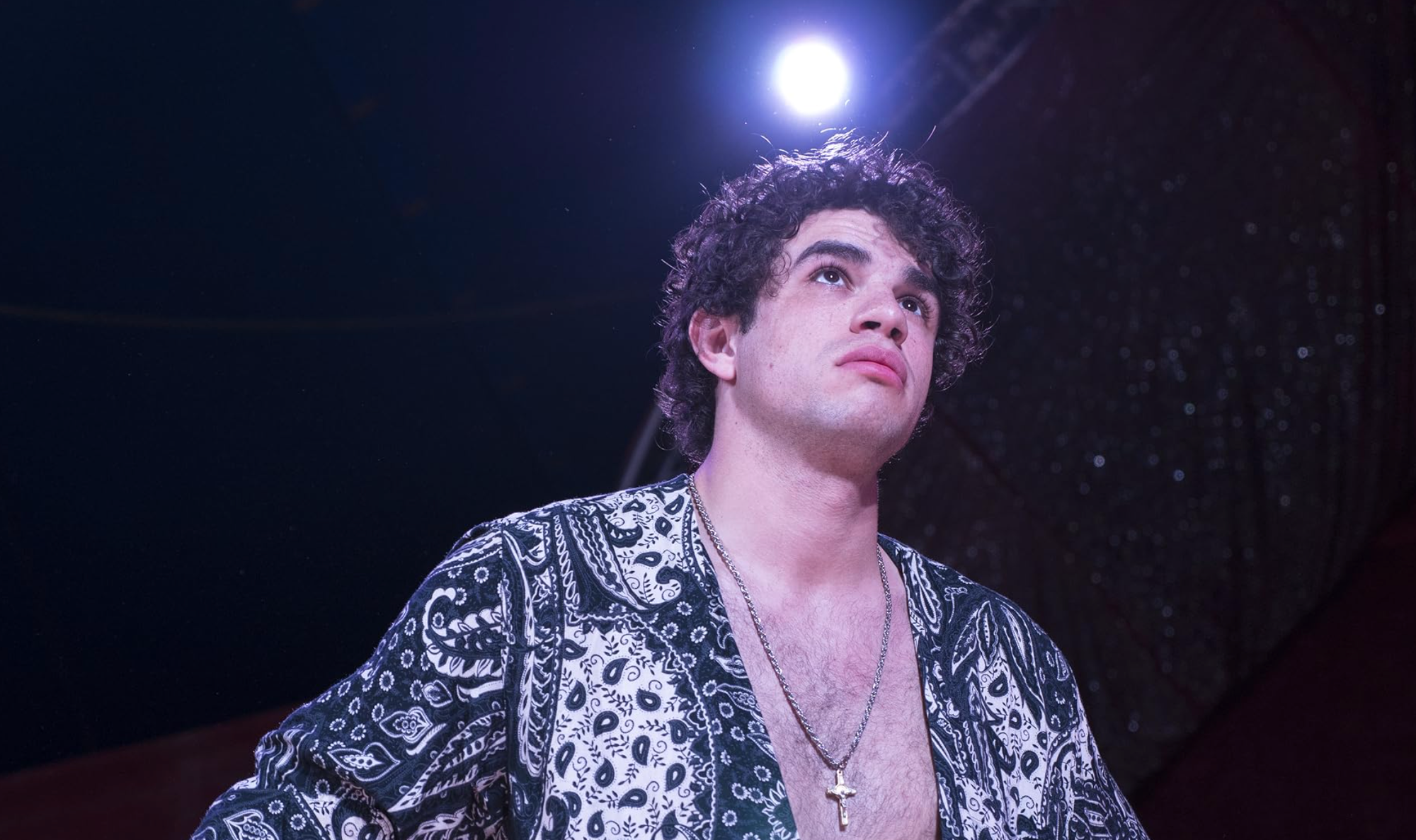
What was the significance of the circus location for Kirsti’s story arc, and what was it like sourcing a circus for the filming?
Gerard: The circus setting metaphorically represses the chaos and performance expected in Kirsti’s life – the juggling act of managing her mental health while navigating external pressures. It also underscores themes of escapism and the blurred lines between illusion and reality.
Ronan: Finding a suitable circus on our budget was a challenge, but thankfully we connected with Courtney’s Circus, who were not only accommodating but enthusiastic about the story.
Whose idea was it to approach Richard Boyd Barrett?
Ronan: In the script, our leading lady seeks the help of “an honest Irish politician”. There were only two people who came to mind: Richard Boyd Barrett and Róisín Shortall. Richard was a natural in the role – not surprising, as his grandfather was Cyril Cusack, his mother is Sinead Cusack, and his father was the late Vincent Dowling from the Abbey Theatre.
The score lends to a heightened sense throughout the film and was striking in its operatic nature. Ronan, what for you are the makings of a great film score and what was important for you in collaborating with composer David Alfred Reilly for the film?
Ronan: David Alfred Reilly was an experimental composer who, like his influencer Mike Oldfield, was capable of playing about 15 different instruments. Gerard and I first worked with him on the score of Gerard’s first feature film Sonny Capone, and then David did the score for my TV drama The Noble Call. For A Sunken Place, I would sit with him and hum out what I had in mind, be it instrumental or choral, and also suggest to him what instruments would most effectively convey the mood that we wanted.
Sadly, David died five days after we finished the recordings, from an ongoing medical issue that he had. He was only 44, and will be greatly missed by both Gerard and me.
How has the reception to the film been in screening?
Gerard: The reception has been incredibly encouraging. Audiences have responded not just to the thriller elements but to the emotional truth and the conversation it opens about mental health. Viewers are finding a mix of joy, sadness, and loss in the film, as well as hope.
Obviously, without spoilers, the film ends on a tragic note. Do you feel that we’ll never get to the “mental utopia” the film hopes for?
Gerard: While the film’s ending is intentionally challenging, it serves as a call to action rather than resignation. Achieving a “mental utopia” may seem distant, but it’s a goal worth striving towards through empathy, reform, and innovation. Our hope is the film inspires ongoing reflection and efforts towards a future where mental health care is compassionate, equitable, and holistic.
So what comes next?
Gerard: My latest project is a satirical comedy about three Irish priests in trouble. It’s called Holy Disconnect, and was shot over a number of weeks in Kimmage Manor and the surrounding grounds.
Ronan: I’m currently the film editor on a Canadian feature film The Time Machine, which is shooting in Toronto, directed by Suresh Pereira, but which is being posted here in Dublin.
A Sunken Place screened in selected cinemas from 18th September 2026.
 Film Ireland Editor