

With One Battle After Another, Paul Thomas Anderson once again builds a cinematic puzzle. His latest film focuses on radical politics, survival and loyalty under pressure. In this essay, Polina Cosgrave digs deep, as she looks at the spiritual battleground beneath the bullets.
The Battlefield is your Soul
Here comes our hero Pat Calhoun aka Rocketman. He is us – the viewer – and he would be a pathetic normie if he did not choose a side. An expert on explosives, a revolutionary with a disoriented look on his face, a great need for following direction, a militant asking questions like a confused boy. There is no confidence in this man, he has no idea who he really is. This is easy to conceal when you have a particular gift, in his case a tech skillset, and choose to belong to a group sharing a certain set of indisputable beliefs, here the radical left.
Pat does not truly subscribe to ideology. His marginality dissolves as soon as his militant lover gives birth to a child. Suddenly family means more to Pat than revolution, and his mask is slipping. His lover’s family addresses him as "unsuitable, less hilarious," while the mother of the child (soon to become a Judas to the movement) comes from a line of revolutionaries, and Pat looks so lost, "she's a runner, you are a stone." It serves as a quick reminder that common people usually mean nothing to revolutionaries, they are but a resource, perhaps a useful tool. The Pats of the world are always paying for the ambitions of the rebellion leaders, and unwillingly take responsibility for the fallout that the implementation of those great ideas brings. Our protagonist is later seen under immense pressure caused by single parenthood and living undercover, while we hear Steely Dan’s Dirty Work on the soundtrack.
Now imagine Pat Calhoun is a student in a monastery. Meditating, battling his own nature, fighting with his own mind. He has to really concentrate on this practice, and question the ideas of duality, time and self. We, the blessed audience, shall follow his path to the centre of the human psyche.
Duality
The Chinese Taoists, he said, had a similar idea, and I will paraphrase it in my own words. In their battle for hearts and minds, discourse workers constantly demand that people answer yes or no. All human thought, like an electric current, must flow between these two poles. In reality, there are always three possible answers: yes, no, and fuck you. Victor Pelevin (shortlisted for the International IMPAC/ Dublin Literary Award in 2001)
As a species we need both elements to survive. Our yearning for the new, for liberation and experiment is as essential as our need for conservation, preserving the status quo, honouring what used to work for millennia. Move too fast, in a manner too chaotic, and your adaptations will be irrelevant in the medium you have to function in. They will stay too rigid and passive, you will be eaten or die of hunger. The ambition for safeguarding and the ambition for change go hand in hand. We must learn to entertain two opposing ideas at the same time to reject the illusion of duality. The infinite dance of preservation and destruction. Polarised against each other, these impulses become ugly and incompatible with life.
In the radical picture PTA paints for us, both the far left (the revolutionaries, the destroyers) and the far right (the white supremacists, the pure Nazis) are losers. His diagnosis is uncompromising. These paths lead to a dead end. Some parts of our psyche, our tribalism and our rebel spirit, if taken to the edge, leave no space for reality. Reality smashes the door and enters anyway, like Col. Steven J. Lockjaw with a battering ram, and breaks our pink glasses just like she did previously, when humanity entertained the most extreme structures of the 20th century, socialism and fascism.
Perfidia Beverly Hills, a representative of one wing, and Steven J. Lockjaw, the representative of the other, have almost too much in common. They are both cowards, they betray their ideologies, because their affiliations were never about actual ideas, but about the obsession with power and the possibility of elevating themselves and being superior to other people, ethnicities, gender, etc. If their biological daughter Charlene aka Willa (the latter name suggests the modal verb will used to indicate future, as well as willpower, a will to act, and the like) is their continuation in a way, their tomorrow, then one of them longs to kill it and the other to abandon it.
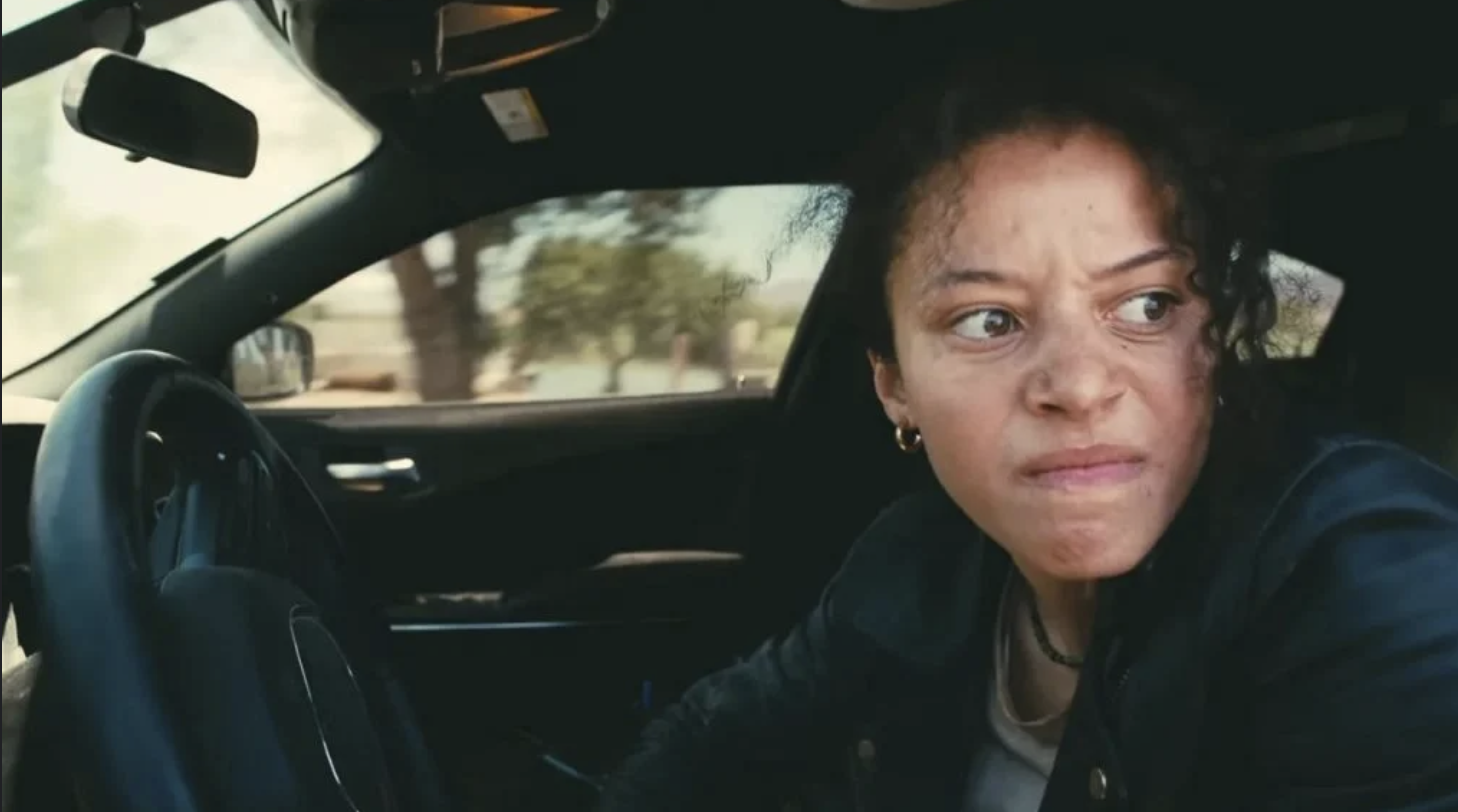
This American girl, the future of the West, is a consequence of a collision between an anarchic militant movement and an archaic social elite one, both dogmatic, rigid and condemned. In the end, Willa is being taken care of by a normie, now a regular Bob Ferguson, the ex Rocketman, but just nominally. Bob lives in fear and in the past, so he is unfit to be anyone’s father. The closest thing she has to a parent is her Sensei Sergio St. Carlos. Coincidentally, he is the single character in this story actually making a difference and looking after the future.
Sensei Sergio is the only adult in the film, apart from Willa, who is about to be initiated into adulthood. He does not announce his struggle for justice, he is not fighting for human rights. He simply does things: quietly, manly and mainly for the others. No ideology involved apart from being courageous and respectful, no self-interest. The unpopular strong silent type. No ego present. Sensei represents the balance in the storm, he is someone we have to find inside of us when the machine is trying to turn us into radicals. His path is paying attention to what is in front of him and doing the best he can. That requires letting go of one’s dualistic views dictated by deep-rooted automatism. We can learn to divert from this line of least resistance and see things for what they are. Sensei’s reaction to Bob’s shouting the ¡Viva la revolución! slogan is one of the most comical moments of the film. His composure and serenity are juxtaposed against Bob’s neurotic insistence on ignoring reality.
Time
After the event X we see the film’s title on the screen. That event is marked by the far left militant group French 75 planting bombs in administration and court, and the movement’s mascot Perfidia Beverly Hills agreeing to meet Steven Lockjaw in order to carry on with her revolutionary pursuits. We hear Pat’s voice informing us and the group that from here on it is one battle after another. Thus, event X is marked as what led to conception, Charlene’s existence. A new world is born through this conflict, this big bang (when the left and the right decide to bang), and as a result an endless battle is set in motion.
This fight is not for the future, but for the past. After Perfidia kills the guard and ends up ratting out her comrades, Pat Calhoun and his daughter Charlene have to pretend to be dead people. They literally become the past. Pat does exactly this for sixteen years, he plays dead. Charlene aka Willa then announces that the world has changed very little during that period. We are introduced to timelessness. In the battle for the soul everything stays the same and nothing is what it seems. Same characters, same structures, same weapons, same slogans.
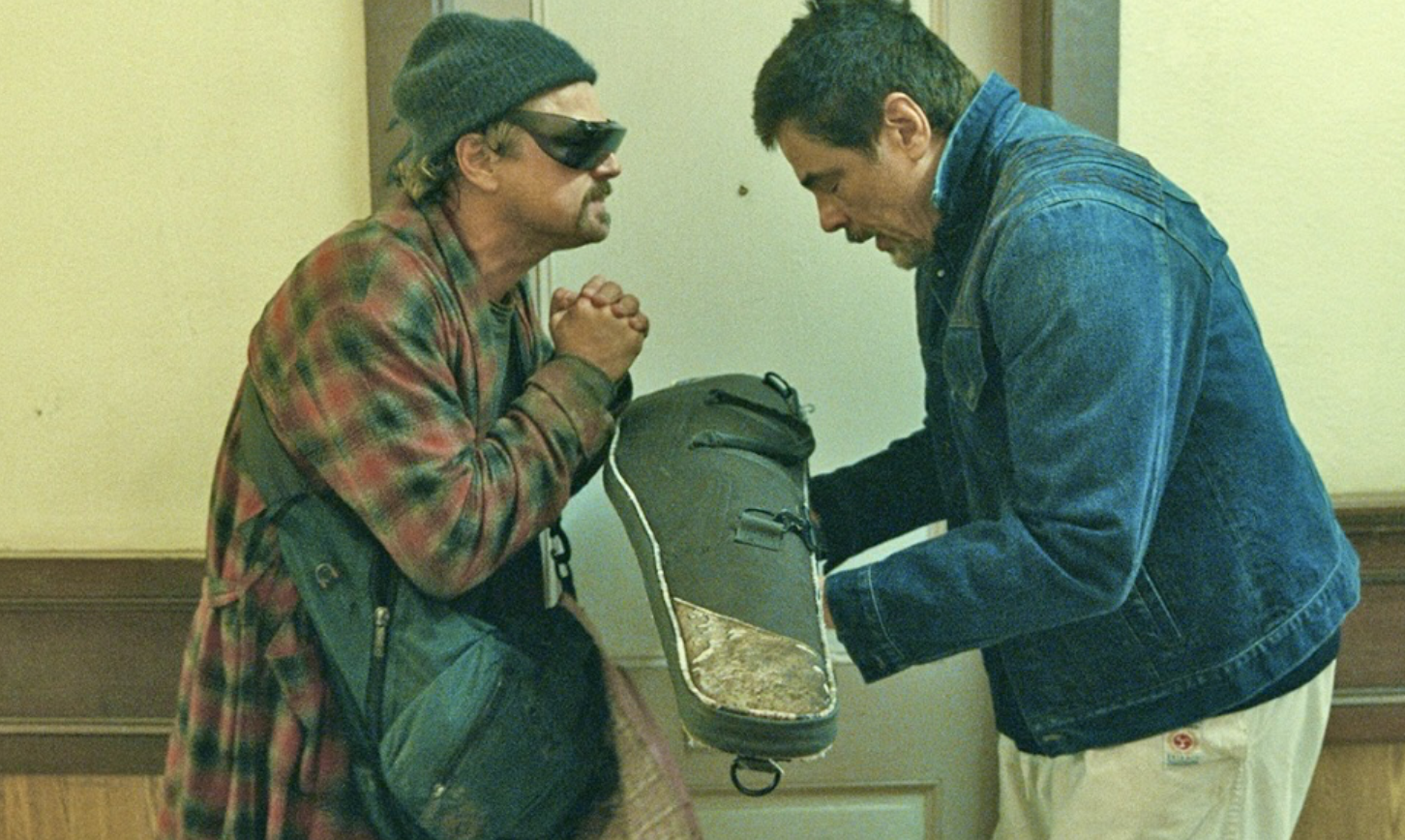
Let us take a look at the hints provided to us in the form of code words: "no hands on the clock because they are not needed." What time is it is the question that Pat/Bob cannot answer, the key question of the underground movement. Call us back when you know the time, he is told. Otherwise he cannot get to the point of the rendezvous to meet his future, his daughter. Sensei knows the time. The time is now: 8:15 (he returns us to the present moment, the only moment there is) and his comical answer in this out of context dialogue reminds us that the question itself is somewhat of a koan. It is used to point out the essence of Time, the illusion of it, to reveal our own buddha-nature. "Time does not exist, yet it controls us anyway." Interestingly, Bob is playing with the Baoding balls while having this phone conversation and it almost looks like a meditation practice in extreme conditions. The two images of tigers in the room embody the fearlessness we need to look past our own delusions. Courage, Bob, says Sensei the first time he leaves the protagonist to do his own work. The second time around he repeats the same message, no fear.
As a viewer, I am convinced that both sides, the white supremacists and the militant revolutionaries live in the past, as well as the modern right and left (in no way directly represented by the characters, but the analogy is hard to deny), and perhaps we desperately need to get over our fantasies and aim at a better future together instead of having one battle after another, meticulously orchestrated by the powers that be. We are human and so easy to manipulate.
I think PTA’s conclusion here is that the far right and far left ideas are completely dead, and what can survive is something new. It is still in the underground, the subconscious, and maybe us, the normies, can stick around to see what is going to happen while the right and the left components we all have in our psyche are fighting each other instead of evolving. Maybe it is still relevant what Sławomir Mrożek once said: either we are both human, or none of us is. Maybe we should stop calling each other far left and far right if yourself and/or your opponent are not ready to risk your life and free a refugees camp or lose half your face (or slaughter your child like Abraham in the name of some higher calling) for your favourite ethos. Get off the high horse, you fellow normie. There is not enough of a psychopath in you. Just yet.
Self
Pat, who is no longer a Rocketman, experiences the death of self in the material world. He thinks of himself as Bob, his daughter exclusively calls him that dead person’s name. Now a grieving drug and alcohol lover, someone who is stuck in the moment of loss, Bob fully mingles with the invented self and refuses to grow up or move on. He lives in the narrative where he is also Willa’s father, but that role is far from real, as she is the one mothering him. Unlike Willa, who did not have a say in the matter, Pat is dealing with his own karma, the result of his faulty thinking process, and he refuses to accept those consequences fully. Fear and paranoia stand in the way of his awakening.
What is Pat? What is he defined by? In Buddhist philosophy the answer is emptiness. The incomprehensible illusion of I is to be experienced through unwavering practice. Pat’s practice is being lost in his weed induced paranoia in a sort of an ashram in the woods, a type of a mental and physical jail, which he has to escape to get back to reality (via sewage, of course).
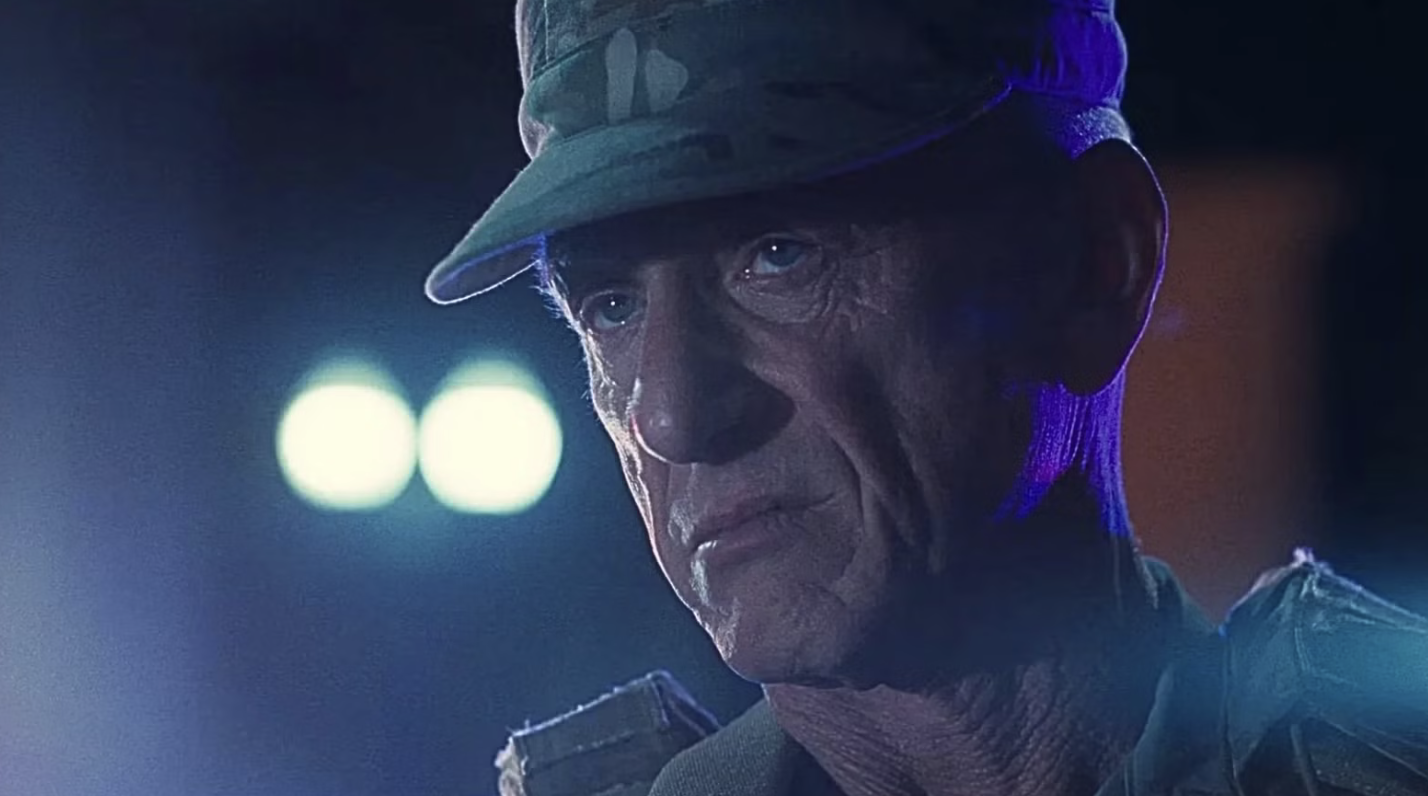
Is our protagonist somehow defined by his enemy? Pat and Steven share the same affliction, this desire for a woman who rejects them. They only meet each other once, briefly, to make this point very clear, and for both characters this love is a more significant factor than the ideologies they subscribe to. Excruciatingly melancholic music plays the moment Perfidia leaves them both to disappear in the shadows, and we suddenly feel the pain not only of the spineless Pat thrown into the void with his little baby, but also of the monstrous military man, whose whole being yearns to submit to something bigger than himself, love. Lockjaw effectively finds himself in a position to finally receive that love from his Christmas Adventurers buddies, and while being killed by gassing he is entertaining moments of pure bliss. Fascinated with the past, he becomes the past, burned in a crematoria like a Jewish prisoner, which somehow rhymes with the fact that the first member of the resistance he orders to murder in his medal of honour awarding operation is the Jewish woman, not only by ethnicity, played by Alana Haim, but also wearing the Star of David in one of the preceding scenes.
If it is not one thing it is fucking another, says Lockjaw in sync with Pat’s previous statement. Just like Pat, he is in deficit of that unconditional motherly love. Oh, mommy, thank you, sir, he whispers while being anointed as one of the Adventurers, accepted by his peers and given his own office. A man’s taste defines him indeed, and that is how they are similar with Pat in their objective. However, unlike Lockjaw, Pat is capable of growing out of it and taking interest in another human being, hence transcending his limitations and the earthly need to belong to a group, to be loved by the other, which in itself is an essential and good natured part of being human, unless your whole life rotates around it and you lose your individuality and/or replace it with a group identity.
Both Pat and Steven are secretly disloyal to their group. Pat, confronted by the reality of parenthood, calls his daughter’s friends fucking freaks, including the non-binary Bobo, who ends up being a rat, confirming Pat’s instincts. He also refers to the man on the phone refusing to give him the life saving coordinates as a "liberal fucking prick", showing yet again that individual human behaviour is what is important here, not affiliation with the movement, when comrade Joshua carries on like your regular red tape perpetrator, prioritising the text of the rebellion even if it harms a real person. It is no coincidence that Perfidia shoots a working black guy right after the slogan shouted by Jungle Pussy, "This is what black power looks like."
Pat aka Bob is asked on the phone "Who is this?" and the way he finally confirms his identity and reclaims the part of himself that is Rocketman (however phoney and pussy whipped, still brave, skilful, a warrior, a humanist at heart) is not by code words, but by being a friend and a confidante in connection to another human, and knowing that his comrade’s favourite pussy is "Mexican hairless." "Do not get selfish," is what the Sensei asks of Pat. We have been under a siege for a hundred years, you did nothing wrong, because history repeats itself, and as a practical mind Sensei knows that the battle is indeed infinite. "You win some, you lose some," and "ocean waves" are the only working methods in this war for your soul.
Leaving Sanctuary City for the trial of his spirit in the desert, Bob admits he got lazy and was not paying attention, the only real currency of an individual and a seeker, the only thing that we can choose to control, give and take. Sensei affirms it is not the end of the line for our protagonist and pushes him further. When about to reunite with Willa, she asks Pat in a state of shock, "Who are you?". He fully steps into the present answering, "I am your dad." Transformed by the events, Bob, Pat, Rocketman, (you? me?) gives up the self and bestows closure upon his daughter, to whom he has been lying for years about Perfidia being a war hero.
Bob’s main act of enlightenment is writing a letter from the name of Willa’s mother, therefore healing his daughter’s wound. Some lines from the letter are quoted from an actual documentary about the Weather Underground. It contains a hello from the other side of the shadows, which is important, as Bob managed to leave the darkness himself and step into the light. In an attempt to revive the love Charlene lost for her mother when she found out that Perfidia was indeed a rat (ironically, Lockjaw also talks about the militant in what he thinks is an inspiring way to his biological child, calling her a righteous warrior of freedom who fought the weak), he gives the imaginary Perfidia a sense of regret (disconnected from my family, pretended to be strong, too late after all my lies). All the emotional depth that the actual character lacks is painted onto her image in the letter with the help of Bob’s newfound unconditional love and bravery. An interest in her child’s well being (do you have love in your life) and some sort of legacy (will you try to put the world right, we tried, we failed). That beautiful acceptance and forgiveness, somewhat Christian, elevates Bob to a different level. He is no longer asleep, no longer afraid, no longer in the shadows. He has been transformed by the love within him and while he returns to the same world and the same habits, he has achieved that enlightenment by sacrificing his false self, by returning something to Willa that should have been hers by birthright, but something neither of them ever had, her mother’s love. This is more of a gesture than simply protecting his daughter from his bad karma. He sees her. He sees himself. He knows who he is. He knows that the time is now.
New Mission
Apart from the sign Genesis over Bob’s head when he is trying to charge his phone, the weed growing nuns, the locations like Sanctuary City, Old Mission Road and Baktan Cross having some links to Christianity, along with the running theme of disloyalty, as Perfidia (perfidy, it is in the name) does not only betray her faith, ideology and her peers, she also betrays her child, there is a curious thread leading from the Saint Nick’s modern Nazi group meeting.
When the liquidator/executioner’s character is introduced, we see him walking to the hideout of the social elite group while the Christmas Carol Hark! The Herald Angels Sing plays, announcing the birth of the new king, the messiah, who will bring the big change. The pastoral scene with the Nazi elders around the table with a painting as a background depicting a pheasant and some picturesque idyll is packed with religious motifs. The way they speak, the phrases they use, their lingo almost reminds us of King Herod ordering the massacre of the innocents. A ridiculous reason for a killing, the sin of being a father of a mixed race child, and this appears to be so dangerous for the group that the child needs to be wiped off the face of the Earth as well. Maybe they have invertedly created that messiah by overreacting, just like Jesus is impossible without Herod or Judas, Willa is made by this moment of the white supremacists deciding her destiny as much as by her mother’s betrayal. Perhaps we are witnessing a birth of a new star prompted by the Christmas cult, creating a real trial of body and spirit for Willa. After all, if she symbolises future, then her qualities are so different from those of her parents. She is confused, yes, and sometimes scared, but also self sufficient and manages to get on well by herself, solve her own problems, take responsibility for both her input and output as the Sisters of the Brave Beaver would put it.
Notably, the road scene, one of the most masterful and artful moments of the film, is turning our attention to Willa’s stamina, her doubts, her despair. It could be that the sequence is deliberately this long to connect us with the temptation of Christ narrative. The trial takes place in a desert, wilderness, emptiness, and the big revelation is that the modern messiah fights back, she kills her enemy. Kills for the same reason her mother once killed an innocent man, the assassin does not know the password, thus he is not one of us. Evidently, when Willa takes the assassin’s life it is merely for her own survival, but the trigger is what unites the occasions.
Willa is a confident leader, full of energy, she may become the rebirth of the left idea. Her soft side is perfectly balanced with her strength. She is a talented martial artist, and simultaneously she is a sweet kid playing with a dog, she has a motherly impulse to take care of her childish father, she wears combat boots, leather jacket and a feminine blue fluffy skirt.
PTA clearly empathises with the revolutionaries. While the left side is going astray, and his verdict for its present is unpromising, maybe the liberal idea has a chance if implemented anew. As we watch Willa embarking on a new journey, leaving for Oakland where protests take place, in her image we see the passion of her mother, the discipline of her Sensei, and the humanity of the man she calls dad. Will that help her escape the social dissociation? Will she give in to the sweet oblivion of group thinking? Bob, the normie (ourselves) is about to find that out.
For now, let us just take a selfie and relax on a sofa. Pause our righteous fight on the Internet (which is still not a real location) with the imaginary fascists and libtards. Maybe we should all get off the tatami at times. Wake up. Smoke some weed or something. Hold our kids closer. They are very real after all.
One Battle After Another is in cinemas 26th September 2025.


