
Thirty-three years after its release, The Wedding Banquet (1993) remains one of cinema's more tender explorations of love, family and compromise. With this thoughtful analysis, Khushi Jain revisits Ang Lee's landmark queer film through the powerful details that capture the depth of ordinary moments so well.
Like all good parties, let’s begin with a toast, to the big black mobile phones of the 90s.
Around eleven minutes into Ang Lee’s 1993 The Wedding Banquet, Taiwanese immigrant Gao Wai-Tung (Winston Chao) and his white American boyfriend, Simon (Mitchell Lichtenstein), are filling out an elite singles’ club form, courtesy of Wai-Tung’s parents (Gua Ah-leh and Lung Sihung). The two specify that his ideal wife would have a PhD (no, two PhDs), be an opera singer and speak five languages, when Simon pulls out a gift wrapped in red paper. It is a big black mobile, Wai-Tung’s very own, so that he doesn’t have to keep going to payphones, which involves paying both for the call and for the terrible busker to stop busking for a moment. Wai-Tung tries the mobile, calling their landline. Simon picks it up right next to him. And the call ends with a reciprocated ‘I love you’.
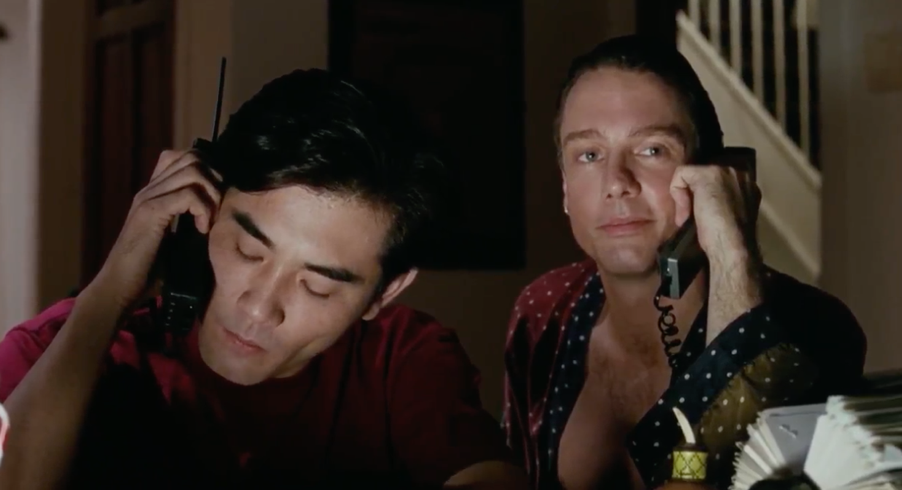
The big black mobile phone becomes a subtle metaphor for Wai-Tung and Simon’s relationship. After Wai-Tung agrees to marry the Chinese artist Gu Wei-Wei (May Chin), to help her with a green card and get his nagging family off his back, his parents pay him a surprise visit to meet the new bride, give their blessings to the couple and, most importantly, hold a wedding banquet. Amidst all this chaos, Simon is reduced to being Wai-Tung’s landlord and friend. The lovers live in the same house but sleep in different rooms, each pretending to be something he is not, to keep Wai-Tung’s parents happy and secure about their very not straight son’s very straight marriage. Amidst the moments of intimacy that they are able to steal is a call from Wai-Tung’s big black mobile phone to Simon’s landline.
The Wedding Banquet is the second instalment in what has been termed Lee’s ‘Father Knows Best’ trilogy, a set of stories exploring the conflict between older and younger generations. It premiered in Berlin, receiving the Golden Bear, and in Taiwan became an enormous commercial success, on top of winning five Golden Horse Awards. Last year, it was remade by Andrew Ahn under the same title, starring Bowen Yang and Lily Gladstone, among others. The disappointing remake (which did address some of Lee’s more dated narrative choices) made apparent exactly what it was that had, and continues to, make Lee’s film a delicate triumph.
The film is about secrets: the secret of Wai-Tung and Simon’s love, the secret of Wei-Wei’s pretence, the secret of hearing another language but not understanding it, the secret of who has actually cooked the meal, the secret that Wai-Tung’s parents are hiding, and the secret of knowing and not knowing. The narrative doesn’t move to expose these secrets but to share them, with fragile affection, between a select few characters. Secrets are embraced, never spilled. As technically brilliant as The Wedding Banquet is, it is a film that is anything but mechanical; writing an essay about it and all its secrets is almost akin to committing an act of violence against what makes the film: feelings. What happens between Wai-Tung, his parents, Simon and Wei-Wei cannot, and should not, be forced into an analytical argument.
The Wedding Banquet is not about understanding the feelings but feeling the understandings.
A film that I cannot write about is a rare treat. So, this is not an essay with a premise, hypothesis and conclusion. It is instead a big black mobile phone from the 90s, trying to call the landline, in the hope that someone will pick up. Or perhaps it is a set of secrets, like the film itself; secrets that will be shared in their soft, eggshell, tender and ordinary glory, and secrets that will remain secrets.
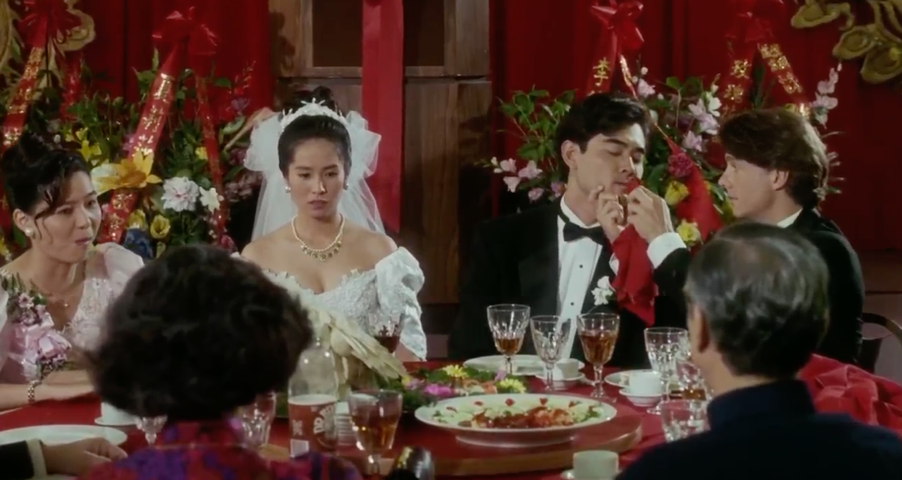
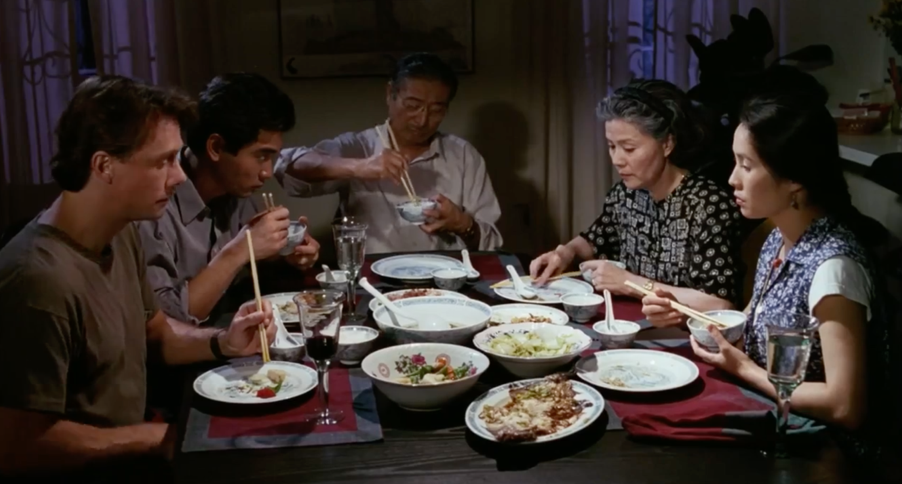
The phone was a secret, one that slipped with careful carelessness without you or me realising. The second secret is the red napkin with which Simon abrasively wipes Wai-Tung’s lips after he is compelled to kiss the bride on the day of the banquet. The action is one of intense love and jealousy, and displays ownership. Wai-Tung and his kisses belong to Simon, and Simon alone. The third secret is in the dinner that Simon cooks for the Gaos and the dishes that are then done by Wai-Tung’s father. Mr. Gao, just returned from the hospital, is recuperating from a second stroke. ‘I’ll do the dishes,’ he announces to everyone at the table. ‘Simon cooked, I’ll wash.’ Wai-Tung, Mrs. Gao and Simon stand speechless, watching him clean plates on his unsteady feet. Participating in the domesticity as Simon’s complement, he is discreetly building something here. The traditional ex-military Mr. Gao is beginning to forge a little family with his beloved son’s white American boyfriend.
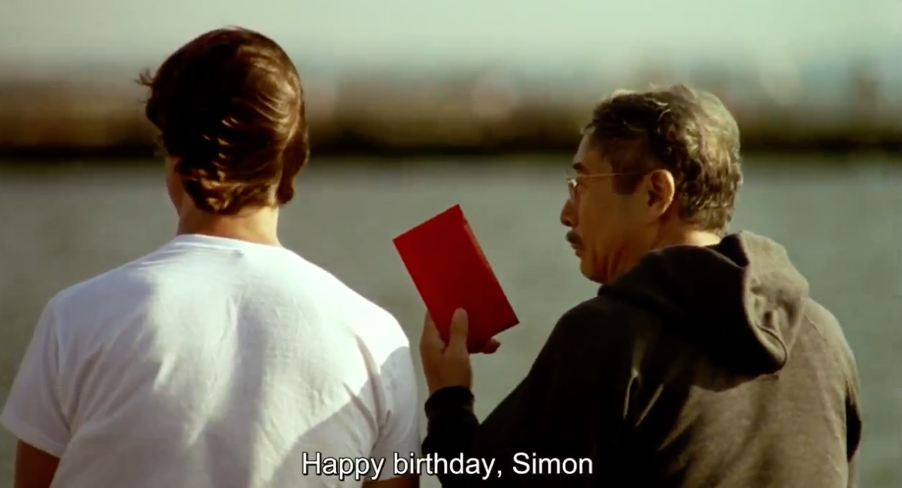
This secret family is sealed with another secret, a hongbao. Simon, a physiotherapist by profession, helps Mr. Gao recover from the stroke by taking him on walks and massaging his legs. On one such outing, the two stare at the sea with their backs to the camera and Mr. Gao, wishing Simon a happy birthday, hands him the red envelope. Simon realises that Mr. Gao knows about him and Wai-Tung. ‘I watch, I hear, I learn,’ Mr. Gao says in English, giving each word sufficient time to root itself and settle down. ‘Wai-Tung is my son, so you are my son also.’
Throughout this exchange, never once does the camera face them, keeping their secret a secret even from us.
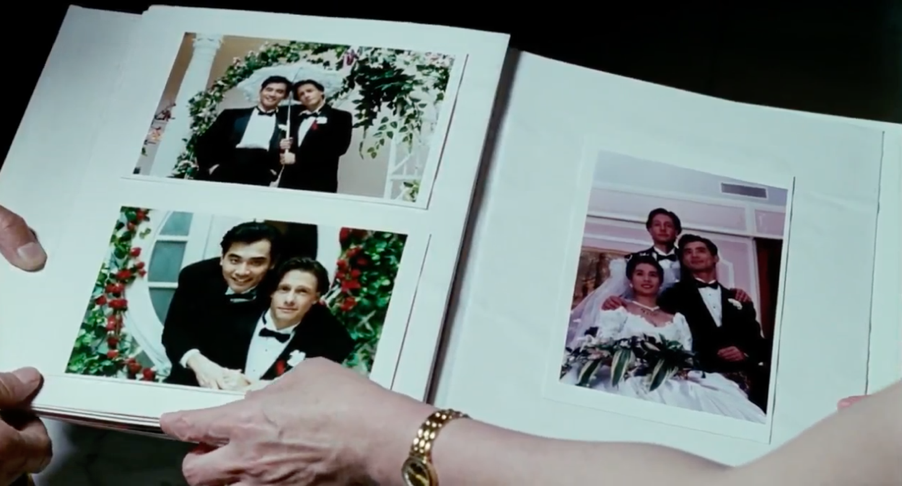
The fifth secret is the photo album of the banquet that is opened at the airport. Wei-Wei, Simon and Wai-Tung stand while Mr. and Mrs. Gao are seated between them, all looking down at what seem to be pictures from Simon and Wai-Tung’s wedding, and not Wei-Wei and Wai-Tung’s. There is a bittersweet acceptance in this retrospective flipping through of the celebrations.
The tactile materiality of the moments is also a nod to how the reality of these characters has changed.
In this photo album that the Gaos are carrying with them to Taiwan, they are also taking the memories of truth about their (now) two sons and daughter.
Ian McClanan's video essay offers interesting insights on the role of photography in the film in general.
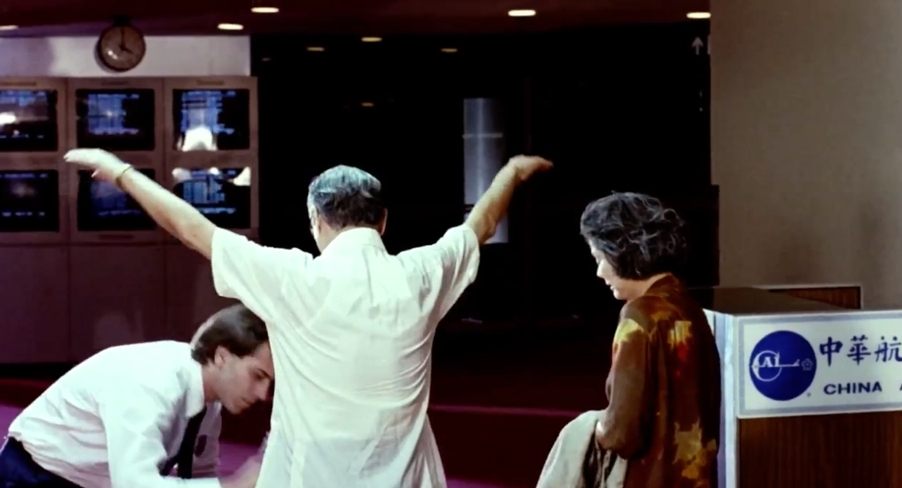
The final secret is the final image of The Wedding Banquet, the ambiguous image that Lee and Mr. Gao leave us with. Like us, Wei-Wei, Simon and Wai-Tung watch Mr. and Mrs. Gao walking towards their plane. An airport personnel member with a scanner comes up, and Mr. Gao raises his arms so as to be searched. Yes, he has been stopped for a scan, but his gesture is also one of triumph. What it really means is not for us to know. This secret is Mr. Gao’s.
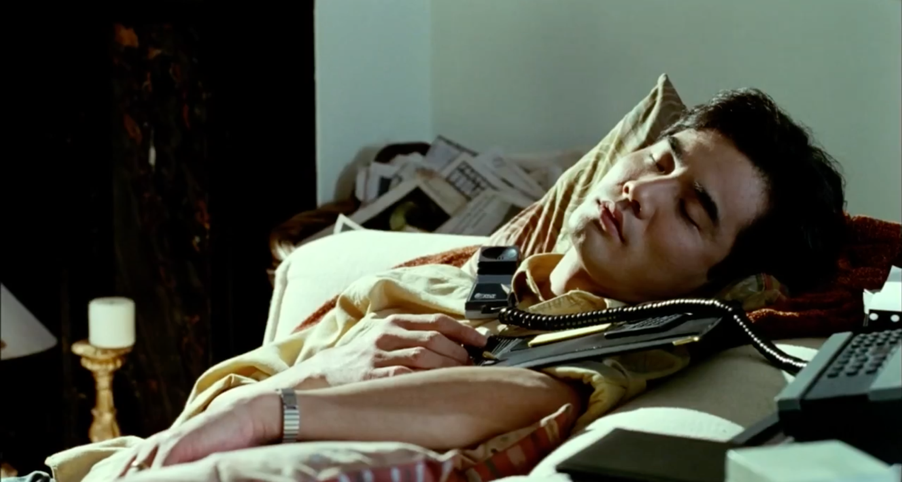
Before the Gaos fly back to Taiwan, Lee shows us slivers of life in the house. Mr. Gao naps on a chair while Mrs. Gao tends to the garden. Wei-Wei holds multiple brushes between her fingers and leaves passionate strokes on a canvas. Wai-Tung falls asleep with the landline on his shoulder, which Simon picks up to see who’s on the other end, before putting the receiver back in its place.
The big black mobile phone has been rendered metaphorically futile. Wai-Tung no longer needs it to talk to Simon, for Simon and Wai-Tung are home, together and truly.